Chemistry Exam 3
 Call Kai
 Learn
 Practice Test
 Spaced Repetition
 Match
 Flashcards
 Knowt Play
1/38

There's no tags or description
Looks like no tags are added yet.
39 Terms
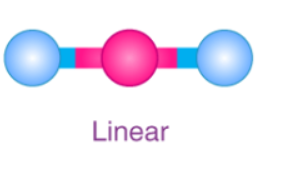
Electronic geometry, hybridization, and bond angle for 2 electron groups
Linear electronic geometry, sp hybridization, and a 180∘ bond angle
Electronic geometry, hybridization, and bond angle for 3 electron groups
Trigonal planar electronic geometry, sp2 hybridization, and a 120∘ bond angle

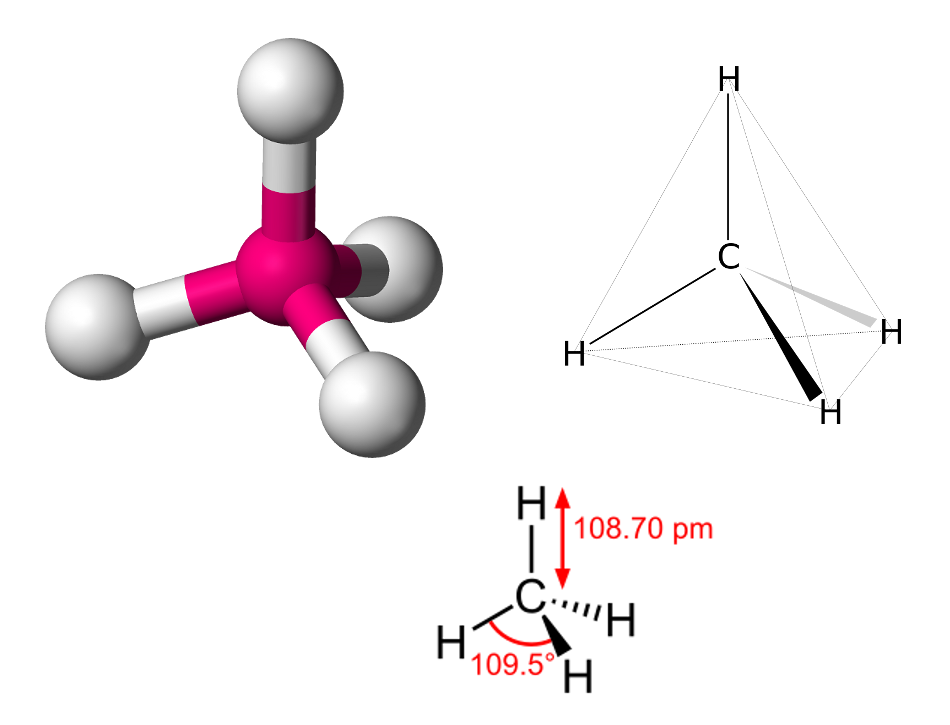
Electronic geometry, hybridization, and bond angle for 4 electron groups
Tetrahedral electronic geometry, sp3 hybridization, and a 109.5∘ bond angle

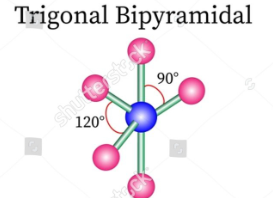
Electronic geometry, hybridization, and bond angles for 5 electron groups
Trigonal bipyramidal electronic geometry, sp3d hybridization, and bond angles of 90∘ and 120∘
Electronic geometry, hybridization, and bond angle for 6 electron groups
Octahedral electronic geometry, sp3d2 hybridization, and a 90∘ bond angle

Molecular shape for 2 bonded pairs and 0 lone pairs (2 electron groups)
Linear

Molecular shape for 3 bonded pairs and 0 lone pairs (3 electron groups)
Trigonal planar

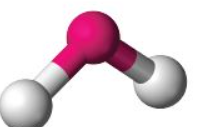
Molecular shape for 2 bonded pairs and 1 lone pair (3 electron groups)
Bent
Molecular shape for 4 bonded pairs and 0 lone pairs (4 electron groups)
Tetrahedral
Molecular shape for 3 bonded pairs and 1 lone pair (4 electron groups)
Trigonal pyramidal

Molecular shape for 2 bonded pairs and 2 lone pairs (4 electron groups)
Bent
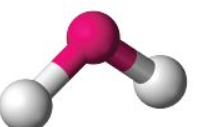
Molecular shape for 5 bonded pairs and 0 lone pairs (5 electron groups)
Trigonal bipyramidal

Molecular shape for 4 bonded pairs and 1 lone pair (5 electron groups)
Seesaw
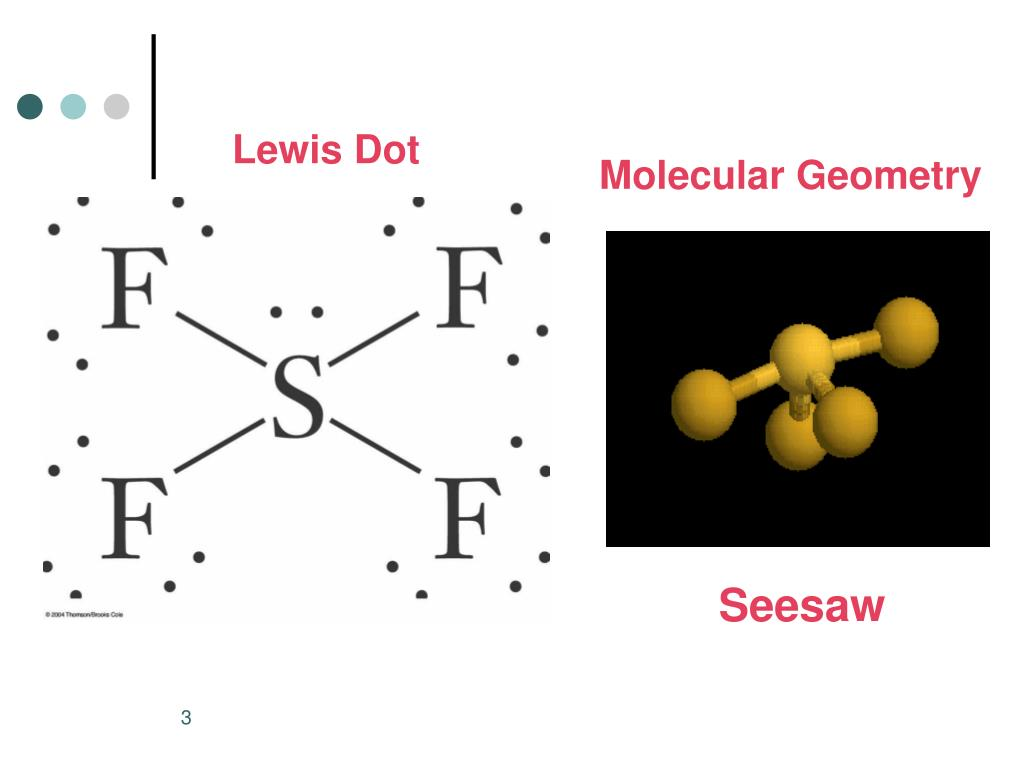
Molecular shape for 3 bonded pairs and 2 lone pairs (5 electron groups)
T-shaped

Molecular shape for 2 bonded pairs and 3 lone pairs (5 electron groups)
Linear

Molecular shape for 6 bonded pairs and 0 lone pairs (6 electron groups)
Octahedral
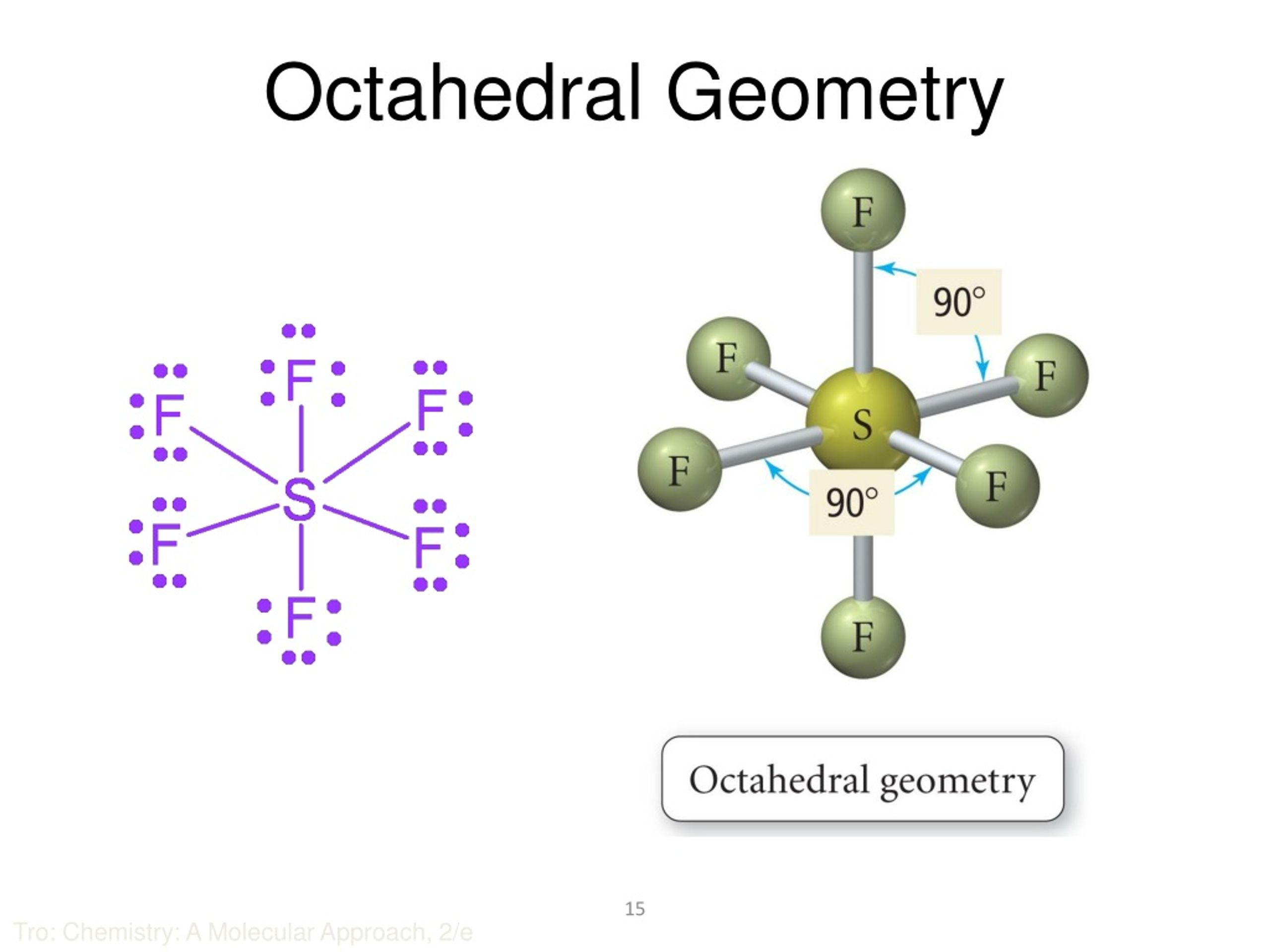
Molecular shape for 5 bonded pairs and 1 lone pair (6 electron groups)
Square pyramidal

Molecular shape for 4 bonded pairs and 2 lone pairs (6 electron groups)
Square planar

Boyle's law
Pressure is inversely proportional to volume at constant temperature and number of moles: P1V1=P2V2
Charles's law
Volume is directly proportional to absolute temperature at constant pressure and number of moles: T1V1=T2V2
Gay-Lussac's law
Pressure is directly proportional to absolute temperature at constant volume and number of moles: T1P1=T2P2
Avogadro's law
Volume is directly proportional to the number of moles at constant temperature and pressure: n1V1=n2V2
Ideal gas law
Combines all the major gas laws into a single equation of state: PV=nRT
Gas constant (R) values
0.08206dm3atmmol−1K−1 or 8.314Jmol−1K−1
Graham's law of effusion
The rate of effusion of a gas is inversely proportional to the square root of its molar mass at constant temperature and pressure: r2r1=M1M2, where r is the rate and M is molar mass
Principal quantum number (n)
Indicates the main energy level and relative size of an orbital; takes positive integer values 1,2,3,…
Azimuthal (angular momentum) quantum number (l)
Defines the subshape of an orbital; takes integer values from 0 to n−1, where 0=s, 1=p, 2=d, and 3=f
Magnetic quantum number (ml)
Specifies the orientation of an orbital in space; takes integer values from −l to +l, including 0
Spin quantum number (ms)
Describes the intrinsic spin direction of an electron; takes values of +21 or −21
Molecular orbital energy order for B2, C2, and N2
and atomic number/ electron is less than 14
σ2s<σ∗2s<π2px=π2py<σ2pz<π∗2px=π∗2py<σ∗2pz
Molecular orbital energy order for O2, F2, and Ne2
atomic number/ Electrons >= 14
σ2s<σ∗2s<σ2pz<π2px=π2py<π∗2px=π∗2py<σ∗2pz
When to use the gas constant 0.08206dm3atmmol−1K−1
Use 0.08206dm3atmmol−1K−1 when pressure is given in atmospheres (atm) and volume is given in liters or dm3.
When to use the gas constant 8.314Jmol−1K−1
Use 8.314Jmol−1K−1 when energy is measured in joules, such as when pressure is given in pascals (Pa) or kilopascals (kPa) and volume in m3.
Z< 8 (Atomic Number)

Z > = 8 (Atomic Number)

We use the heteronuclear MO Diagram when
we have two different atoms, an example would be NO

homonuclear is
two identical atoms
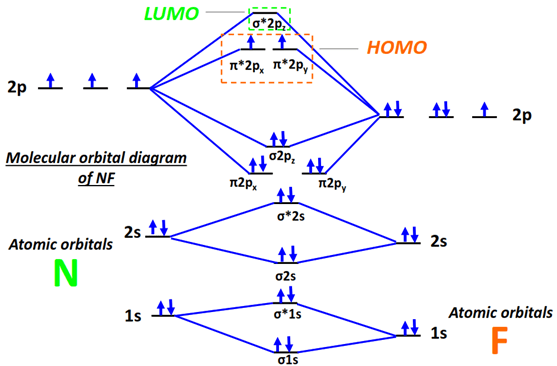
Paramagnetic
Has unpaired electrons
Diamagnetic
Only has paired electrons