EXAM 1 Integrated non-ruminant metabolism & energy
 Call Kai
 Learn
Learn Practice Test
 Spaced Repetition
 Match
Match Flashcards
 Knowt Play
1/15

There's no tags or description
Looks like no tags are added yet.
Name | Mastery | Learn | Test | Matching | Spaced | Call with Kai | Chat |
|---|
No analytics yet
Send a link to your students to track their progress
16 Terms
Energy for growth
Simultaneous growth of muscle, bone, viscera, and adipose tissue
Energy from the diet must be adequate to support growth of all these
Protein from the diet must be adequate to support muscle protein accretion
Organ growth, enzyme, and hormone synthesis
T or F: Energy is not provided to animals as a single chemical entity (ATP) but in the form of nutrients
True
Different from amino acids, minerals, most vitamins, & water
Energy is supplied by 4 sources:
Simple carbohydrates
Complex carbohydrates
Lipids (triglycerides)
Amino Acids (carbon skeletons)

Fate of Pyruvate and Acetyl CoA is Key!
Metabolic pathways for G-6-P in the liver
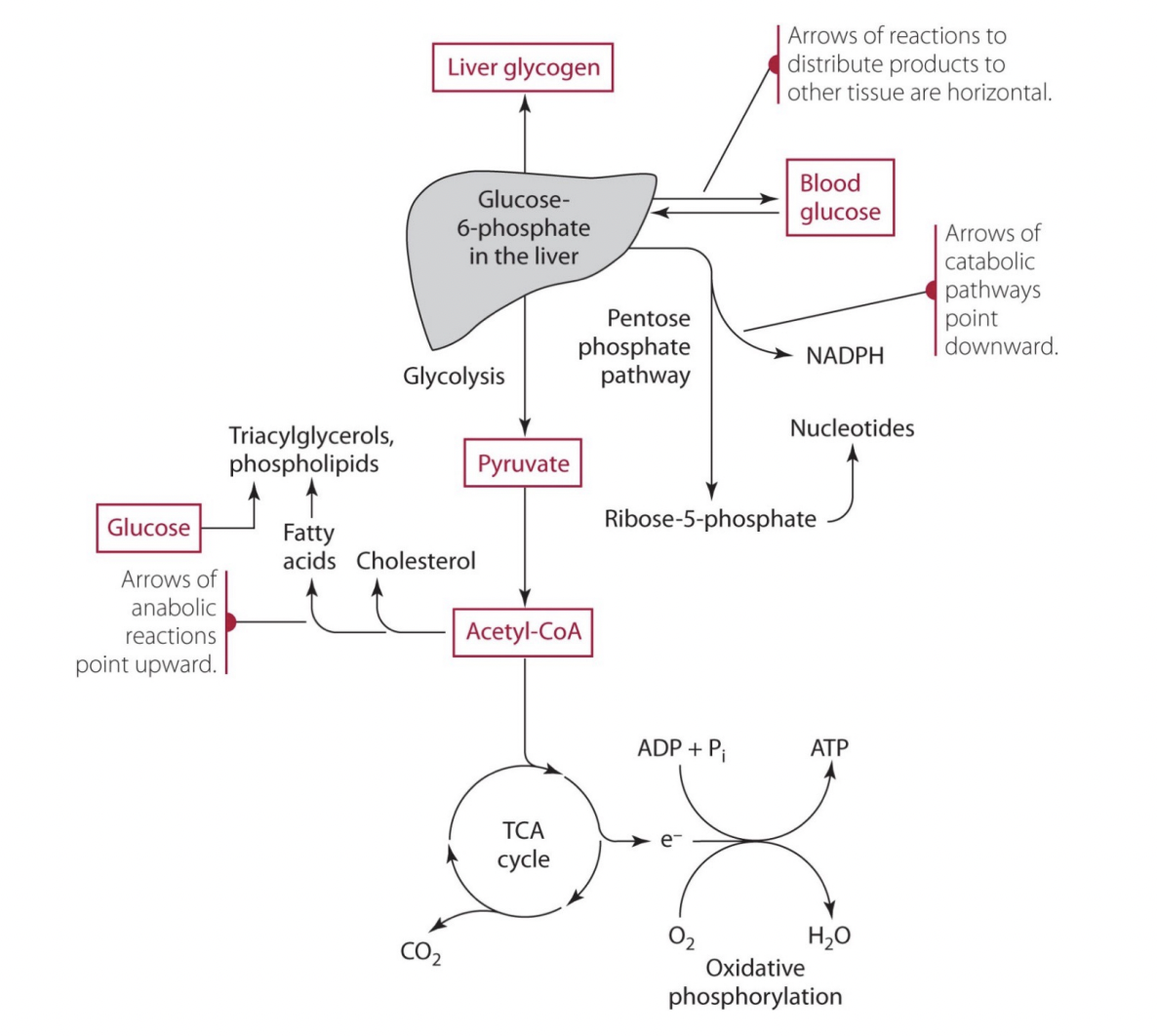
Metabolic pathways for FA in the liver

Metabolic pathways for amino acids in the liver

Key events in metabolism:
Carbohydrate metabolism (glycolysis, TCA cycle, electron transport, gluconeogenesis)
Lipid synthesis & degradation (lipogenesis & lipolysis…beta-oxidation)
Protein synthesis & degradation
Vitamins as coenzymes in metabolism
Minerals play structural roles or are cofactors in metabolism
Insulin
Master regulator in fed state
As animals consume feed, carbohydrate digestion and absorption leads to an increase in blood sugar (primarily glucose)
Blood sugar is sensed by the pancreas (ß-cells) which synthesize and secrete insulin
Insulin pt. 2
Stimulates insulin-responsive cells (adipocytes, myocytes) to take up glucose via GLUT4
Stimulates insulin-responsive cells (hepatocytes, myocytes) to take up amino acids via specific transporters
Suppresses gluconeogenesis in hepatocytes
Stimulates lipogenesis (FA & TAG synthesis)
Suppresses lipolysis in adipocytes (bc this would be a futile cycle!)

Dietary glucose, AA< and fat in fed state

Glucagon
With negative energy balance, glucagon is released from α-cells of pancreas
Glucagon stimulates lipolysis (and mobilization of glycogen)
In liver, stimulates gluconeogenesis and ketogenesis
Macronutrient metabolism in fasted state
Glycogen stores depleted* first within 24 hrs
Gluconeogenesis then becomes primary source of blood glucose using precursors like:
Amino acids from muscle breakdown (especially alanine) as stimulated by epinephrine, thyroxine, & glucagon
Glycerol from triglycerides
Lactate from RBC and muscle
Ketogenic amino acids (like leucine, lysine) and fatty acids converted to Acetyl-CoA then to ketone bodies as alternative fuel
T or F: Lipids, carbohydrates, & proteins all contributed to body energy
True
(we don’t feed ATP)
Energy homeostasis is under hormone regulation
Insulin is anabolic (stimulates energy storage)
Glucagon is catabolic (breakdown)