Lithuania: Military History and Notable Events
 Call Kai
 Learn
 Practice Test
 Spaced Repetition
 Match
 Flashcards
 Knowt Play
1/36

There's no tags or description
Looks like no tags are added yet.
37 Terms
1245 - 1618 - Lithuanian-Muscovite Wars (All Facts)

1410 - Battle of Grunwald (All Facts)
Battle in which Jagello and his Polish forces, with help from the Lithuanian forces, defeated the grand master and knights of the Teutonic Order, thus ending its two centuries of rule in the region
Battle which lasted for a day and resulted in the death of some 200 Teutonic Knights
Battle before which both sides had been preparing for a decisive battle for some time, and had even submitted their cases to public opinion throughout Europe in memoranda sent to several countries, including England
At the same time military preparations were also going on, with the order recruiting Western knights and the Poles enlisting some Czech (Bohemian) mercenaries
Battle in which the Polish and Lithuanian forces were not as experienced but nonetheless outnumbered the larger Teutonic Knights’ forces
Battle in which Jagello decided to thrust at the Teutonic Order’s capital at Marienburg, with the Polish gentry finally having carried the day when the German grand master’s charge failed

1512 - 1522 - Fourth Lithuanian–Muscovite War / Ten Years’ War (All Facts)
War in which Vasily III and his Muscovite forces, with the help of Mikhail Glinsky and Lithuanian rebels, defeated Sigismund and his Polish-Lithuanian forces
War in which Vasily III and his Muscovite forces gained control of Smolensk after two bloody but abortive previous attempts to take it
War which ended with an armistice conceding control of Smolensk to Vasily III
War whose armistice treaty was also a diplomatic coup for Vasily III

1515 - First Congress of Vienna (All Facts)
Meeting attended by the Holy Roman Emperor Maximilian and the Jagiellonian brothers, King Vladislaus II of Hungary and Bohemia, and King Sigismund of Poland and Grand Duke of Lithuania where they all forged an alliance with one another
Meeting in which Holy Roman Emperor Maximilian married off his children Ferdinand and Mary to King Vladislaus II of Hungary and Bohemia’s children Louis and Anne
Meeting in which the Kingdom of Hungary, given its absence of a direct heir to King Louis II, was inherited to Archduke Ferdinand of Austria and the House of Habsburg
This partially protected them from the Ottoman Empire
Meeting after which the hereditary territories of the Habsburgs were united amongst Austria, Bohemia, and Hungary
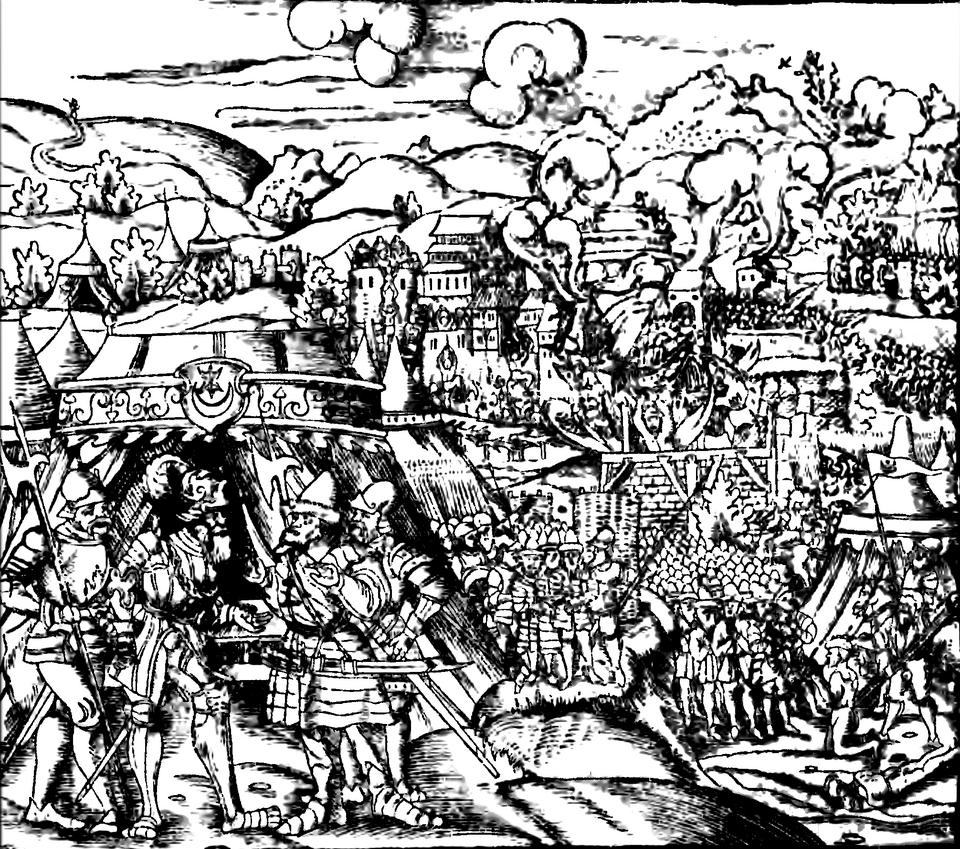
1534 - 1537 - Fifth Lithuanian-Muscovite War / War of Starodub (All Facts)
War in which King Sigismund of Poland and Grand Duke of Lithuania and his Lithuanian-Polish forces failed to regain Smolensk and lost it to Russia
War after which Prussia still remained a fief of Poland

1558 - 1583 - Livonian War (All Facts)
War in which Tsar Ivan IV and his Russian forces were defeated by Poland, Lithuania, Denmark, Norway, Sweden, Transylvania, and the namesake confederation
War which Tsar Ivan IV began due to
his ambition to transform Russia, which, at the time, had a rudimentary agriculture and little industry; by taking control of the Baltic and its ports, as they had already become, at the time, important centers of international trade and offered the prospect of benefit from the more advanced western countries of the time
War in which Tsar Ivan IV
sent his troops into the namesake kingdom / confederation in a lightning strike designed to secure the Baltic region for Muscovy (Russia) and give it an outlet to the west
War in which Tsar IV and his Russian forces
seized several large towns and fortresses
disputed with one another in Moscow and ultimately destroyed their momentum
may have overreached themselves during that period of the Tsar’s imperial expansion, but the Baltic region would have been a considerable prize nonetheless
War which saw
The Siege of Narva
The Siege of Pskov
War during which
the namesake Order of Knights managed to improve its military and diplomatic posture, still being the area’s main defense force
Riga (modern-day Latvia; of the namesake confederation / order) put itself under the protection of Poland
the namesake confederation was partitioned as Sweden and Denmark were poised to take over (modern-day) Estonia and Courland
War which ended when Russia made peace with Poland gave up its claims to the Baltic state of Livonia the namesake confederation was partitioned as Sweden and Denmark were poised to take over (modern-day) Estonia and Courland

1563 - 1570 - Northern Seven Years’ War (All Facts)
War in which Sweden fought against Denmark, Norway, Poland, Lithuania, and Lubeck
War which ended with the Treaty of Stettin

1569 - Union of Lublin (All Facts)
Policy which officially established the Polish-Lithuanian Commonwealth
Policy in which
Poland and Lithuania
(officially) allied themselves to form a vast union stretching from the Baltic Sea to the Dniester River
agreed to accept each others’ religions and those of West Prussia and of Lithuania’s dominions in (White) Russia and Ukraine
declared Catholicism to be the official religion, but were made to be tolerant towards Protestants, Orthodox, and Jews
Policy which provided Lithuania protection from
raids of the Crimea Tartars
Muscovite imperialism, especially considering the Lithuanian-Muscovite Wars
Policy which provided Lithuanian nobility
enormous political, legal, and economic privileges enjoyed by their Polish counterparts in the new namesake union
Policy which made it so that the Grand Duchy of Livonia became formally united with Poland (and the Polish-Lithuanian Commonwealth)
1570 - Treaty of Stettin (All Facts)
Peace Treaty signed between Denmark and Sweden, which ended the Northern Seven Years’ War and restored the prewar frontiers of the states involved

1581 - 1582 - Siege of Pskov (All Facts)
Battle in which the Russian forces defeated the Polish-Lithuanian forces during the Livonian War

1591 / 1593 - 1606 - Long Turkish War / Thirteen Years’ War / Fifteen Years’ War / Sixth Habsburg-Ottoman War (All Facts)
War in which Murad III, Mehmed III, and Ahmed and their Ottoman forces fought against Holy Roman Emperor Rudolf II and the Habsburgs (Holy Roman Empire and Spain) and their allies; which ended in a stalemate
War during which Ottoman forces captured the fortress of Raab in Hungary

1595 - Siege of Esztergom (All Facts)
Battle in which Habsburg forces defeated Ottoman forces during the Long Turkish War Thirteen Years’ War / Fifteen Years’ War / Sixth Habsburg-Ottoman War
1596 - Union of Brest / Union of Brest-Litovsk (All Facts)
Synod which was responsible for the creation of the Ruthenian Uniate Church
Synod in which the Jesuit Order managed to unite the Roman Catholic and Orthodox Churches in modern-day Ukraine, a region of the Polish-Lithuanian commonwealth at the time, after only a year of negotiation
1597 - 1599 - War Against Sigismund / Battle of Stangebro (All Facts)
War / Battle in which Duke (and soon to be King) Charles IX and his Swedish forces defeated King Sigismund and his Polish-Lithuanian forces
War / Battle in which Duke Charles IX, having gained the support of the Lutheran states against the members of the Swedish council, inflicted a defeat on his Catholic nephew

1609 - 1618 - First Russo-Polish War (All Facts)
War in which King Sigismund III and his Polish-Lithuanian forces defeated Tsar Vasily IV and his Russian and Swedish forces
War in which King Sigismund III proclaimed that his own son, Ladislaus IV, be the new Tsar of Russia
War during which the Poles pressed home their advantage by occupying Moscow while the Swedes entered Russia
War during which the Russians forced the invading Poles to capitulate and, incensed by Polish and Swedish advances into their lands, the Russian people organized against them
This operation was undertaken by Kuzma Minin and Dmitry Pozharsky
War during which Poland had Smolensk in its possession by the end of the “Time of Troubles” and used it as the base for the offensive
At one point during the war, this caused serious concern to Tsar Michael, who had been grappling with a host of domestic problems which he inherited when he assumed the throne
Somehow, in response to this development, Moscow withstood the assault by the Polish forces
War which ended with the Truce of Deulino, which was signed after the failure of the offensive which brought Polish troops near Moscow after they ran short of ammunition and provisions and withdrew

1609 - 1611 - Siege of Smolensk (All Facts)
Battle in which King Sigismund III of Poland-Lithuania and his Polish-Lithuanian and Cossack forces defeated Russia and their combined Russian and Swedish forces in the Russo-Polish War
1618 - Truce of Deulino (All Facts)
Peace Treaty signed between Russia and Poland-Lithuania, which ended the Russo-Polish War of 1609
Peace Treaty in which
Poland retained the provinces of Smolensk and Seversk
recognized the “election” of Michael Romanov to the throne of the Tsardom of Russia, in succession to Poland-Lithuania’s Ladislaus IV (despite not having yet renounced a claim to that throne which stemmed originally from the “Time of Troubles")
1620 - 1621 - Second Polish-Ottoman War (All Facts)
War between Osman II of the Ottoman Empire and King Ladislaus IV of Poland-Lithuania, which ended in a stalemate
War in which the Janissaries were unwilling to fight for Osman II, yet they blamed him for the failure to take Poland

1621 - 1625 - Fourth Polish-Swedish War (All Facts)
War in which Gustavus Adolphus and his Swedish forces defeated King Sigismund III and his Polish-Lithuanian forces
War which began when King Sigismund III of Poland-Lithuania claimed the throne of Sweden
1621 - Siege of Riga (All Facts)
Battle in which Gustavus Adolphus and his Swedish forces defeated the Polish-Lithuanian forces during the Fourth Polish-Swedish War
Battle in which the sight of Gustavus Adolphus digging assault trenches spurred the Swedish army to victory as the namesake (modern-day Latvian) city surrendered after a hard-fought siege
Battle in which Gustavus Adolphus, ever at the forefront of his men, came close to death on at least one occasion as his troops advanced under a creeping artillery barrage and stormed the walls
Battle in which the burghers of the namesake town parleyed, but angered Gustavus Adolphus by describing him as “ruling prince in the kingdom of Sweden” rather than “King of Sweden”
While this affront could have meant a full-scale sacking by the Swedish army, Adolphus relented but still claimed the namesake city for Sweden

1626 - 1629 - Fifth Polish-Swedish War (All Facts)
War in which Gustavus Adolphus and his Swedish forces defeated King Sigismund III and his Polish-Lithuanian forces
War which ended with the Truce of Altmark

1629 - Truce of Altmark (All Facts)
Truce signed between Poland-Lithuania and Sweden, which ended the Fifth Polish-Swedish War
Truce which marked the annexation of the coast of Livonia by Sweden

1632 - 1634 - Smolensk War (All Facts)
War in which King Ladislaus IV and his Polish-Lithuanian forces defeated the Russian forces

1632 - 1633 - Siege of Smolensk (All Facts)
Battle in which King Ladislaus IV and his Polish-Lithuanian forces defeated the Russian forces during the namesake war
Battle which was begun by the Russians but whose namesake town remained in Polish hands
Battle during which King Ladislaus IV arrived later to relieve the namesake town, having obtained the support of the Dnieper Cossacks after they were disillusioned by Russia’s failure to come to their aid previously
Battle which ended when the Russian forces accepted an armistice from King Ladislaus IV and the remaining 8K Russian forces were permitted to retire
1648 - 1666 - The Deluge (All Facts)
Series of military campaigns which coincided simultaneously within Poland-Lithuania during the namesake years, ending Poland’s “Golden Age”
Period during which invasion, war, plague, slave raids, and mass murdered reduced the Polish population by almost half
Period which began when the Cossacks invaded Poland on two fronts after swearing an oath of allegiance to Tsar Alexis of Russia when King John II Casimir failed to make an agreement with them
Period in which Sweden was alarmed by the Cossack invasion of Poland, and so they descended on Poland themselves from Pomerania and Livonia
Period in which Brandenburg-Prussia and Transylvania also descended on Poland as a result of Sweden’s actions
Period during which John II Casimir was in continual conflict with the Sejm over money and constitutional issues
Period during which many towns throughout Poland were destroyed

1648 - 1657 - Khmelnytsky Uprising / Cossack Revolution / Cossack-Polish War (All Facts)
Conflict in which the namesake and his Cossack forces revolted against the Polish-Lithuanian Commonwealth and their Polish Catholic landlords
Conflict in which the namesake was joined by thousands of Orthodox peasants who banked on the Cossacks to free them from their Polish Catholic landlords
Conflict which led to the creation of the Cossack Hetmanate (Cossack Ukraine)
Conflict during which the namesake and his Cossack forces murdered Jewish citizens of the Cossack Hetmanate (Cossack Ukraine)
Conflict in which the namesake eventually abandoned the fickle Tartar alliance to put himself under Russian protection, representing a belated victory for the (Ukrainian) Cossacks

1654 - 1667 - Russo-Polish War (All Facts)
War in which Tsar Alexis and his Russian forces and Bohdan Khmelnytsky and his Ukrainian Cossack forces defeated John II Casimir Vasa and his Polish forces
War during which the Ukraine comes under Russian domination
War after which Russia emerged as a major European power

1655 - 1660 - Northern War (All Facts)
Series of conflicts which began when Charles X Gustav of Sweden decided to invade Poland-Lithuania and took Warsaw, in a preemptive attack to protect Sweden from a Russian attack
Series of conflicts over the Baltic Sea, which, like the Mediterranean Sea, was a vital route for seaborne trade, especially with southern Europe, and which
possessed prized resources for trade with Mediterranean countries including
iron
copper
salt-herrings (a vital source of food at the time)
grain (for the rest of Europe)
wood
naval supplies (that were in great demand)
was of such strategic and economic importance that other European countries supported Denmark-Norway to prevent Sweden from gaining complete control over the Baltic Sea, including
the Netherlands
the Holy Roman Empire and Brandenburg-Prussia
Russia
Series of conflicts in which
Charles X Gustav of Sweden broke off his campaign against Poland to turn on Denmark-Norway in the First Dano-Swedish War
Denmark declared war on Sweden in the Second Dano-Swedish War
Series of conflicts which thus included
The First Dano-Swedish War
The Second Dano-Swedish War
Series of conflicts in which were signed
The Treaty of Konigsberg
The Treaty of Roskilde
The Treaty of Valiesar
Series of conflicts which ended with
The Treaty of Oliva
The Treaty of Copenhagen
The Treaty of Cardis

1660 - Treaty of Oliva (All Facts)
Peace Treaty signed between the Holy Roman Empire, Brandenburg-Prussia, Sweden, and Poland-Lithuania; which ended the Northern War
Peace Treaty which
gave Sweden no additional territory
allowed Sweden to keep Livonia
confirmed the Duchy of Brandenburg’s sovereignty over the Duchy of Prussia
Peace Treaty in which
John II Casimir of Poland gave up his claim to the Swedish throne
1666 - 1671 - Polish-Cossack-Tatar War (All Facts)
War in which John III Sobieski and his Polish-Lithuanian forces defeated Petro Doroshenko and his Cossack forces and Sultan Mehmed IV and his Ottoman forces and their combined Crimean forces, in which Poland-Lithuania regained control over Ukraine

1672 - 1676 - Fourth Polish-Ottoman War (All Facts)
War in which John III Sobieski and his Polish-Lithuanian forces fought against Sultan Mehmed IV and Köprülüzade Fazıl Ahmed Pasha and their Ottoman forces, which ended in a stalemate
War during which Michał Korybut Wiśniowiecki and Poland-Lithuania was forced to sign the Treaty of Buchach
1672 - Treaty of Buchach (All Facts)
Treaty which Michał Korybut Wiśniowiecki was forced to sign during the Fourth Polish-Ottoman War, in which Poland-Lithuania
recognized Petro Doroshenko as sole hetman of the (Ukrainian) Cossack Hetmanate
agreed to become vassals of Sultan Mehmed IV and the Ottoman Empire

1673 - Battle of Khotyn (All Facts)
Battle in which John III Sobieski and his Polish-Lithuanian forces defeated the Ottoman forces during the Fourth Polish-Ottoman War
Battle which made John III Sobieski a Polish war hero and upon which he was eventually bestowed the title of “Defender of the Faith” by the Papacy, it catapulted him into winning the successive election to the Polish-Lithuanian throne

1683 - 1699 - Great Turkish War / Eighth Ottoman-Habsburg War (All Facts)
War during which the armies of the Holy League were drawn from the Republic of Venice, Poland, Malta, Tuscany, and the Papacy and moved steadily across Hungary to force the Ottoman Empire out of Hungary
War in which the Ottoman Empire suffered a major reverse at the hands of Holy Roman Emperor Leopold’s Habsburg forces which boldly fought their way across the plains to occupy much of Hungary and Transylvania (Romania) in the namesake campaign
War which saw the
Battle of Vienna / Battle of Kahlenberg
Siege of Buda
Battle of Mohacs
(First) Siege of Belgrade
(Second) Siege of Belgrade
Battle of Zenta
Third Russo-Turkish War
Sixth Ottoman-Venetian War / Morean War
War during which the Ottoman Empire lost control of Albania, the latest Balkan outpost of the weakened empire to succumb to a rising tide of nationalism as
Albania began to revolt following the Ottoman forces and their defeat in the Battle of Vienna / Battle of Kahlenberg
Albanian rebel forces seized Kamina, Vlore, and Medun (the citadel) in insurrection against the Ottoman Empire
Albanian anti-Ottoman resistance during the namesake war was primarily based on an unusual coalition of urban Muslims and rural Christians
War during which the Ottoman Empire lost control of Montenegro, another Balkan outpost of the weakened empire to succumb to a rising tide of nationalism
War which ended with the Treaty of Karlowitz

1683 - Battle of Vienna / Battle of Kahlenberg (All Facts)
Battle in which John III Sobieski and his Polish-Lithuanian forces and Charles V of Lorraine and his Holy Roman and Austrian forces defeated Kara Mustafa Pasha and his Ottoman forces in the Great Turkish War / Eighth Ottoman-Habsburg War
Battle in which 70K Christian forces led by John III Sobieski and Charles V (of Lorraine) routed the vast Ottoman army that had been encamped around Vienna for eight weeks prior to the namesake battle
Battle in which there was no effective opposition the moment Kara Mustafa Pasha’s Ottoman forces marched towards Vienna and besieged it
Battle in which the Viennese (Austrian forces) had an advantage in artillery and had a 13K-strong garrison which resisted strongly, but could not survive the Ottoman siege forever
Battle which turned around when Kara Mustafa Pasha made fatal errors, including his having allowed his relief forces to cross the Danube River and occupy the Kahlenberg Heights (the latter namesake mountain range) where he then tried to repel the attacks with cavalry alone and did not commit his main force of Janissaries until it was too late, and the initiative had been lost

1699 - Treaty of Karlowitz (All Facts)
Peace Treaty signed between the Holy Roman Empire, Austria, Poland-Lithuania, the Republic of Venice (Italy), the Papacy, Russia, and the Ottoman Empire; which ended the Great Turkish War / Eighth Ottoman-Habsburg War
Peace Treaty in which, after its signing, Central Europe was no longer controlled by the Ottoman Empire but by the Holy Roman Empire / Habsburg Dynasty
Peace Treaty in which the Ottoman Turks ceded
Transylvania and Hungary to Austria
Morea and Dalmatia to Italy (Venice)
Part of Ukraine to Poland (Poland-Lithuania)