PS 101 Exam II Comprehensive Review: Learning, Memory, Cognition, and Development
 Call Kai
 Learn
 Practice Test
 Spaced Repetition
 Match
 Flashcards
 Knowt Play
1/105

Earn XP
Description and Tags
Comprehensive practice flashcards covering key vocabulary, empirical studies, theoretical frameworks, and neurobiological mechanisms from PS 101 lectures on Classical & Operant Conditioning, Memory Systems, Attention & Decision-Making, Physical Development, and Socio-Emotional & Cognitive Development.
106 Terms
Associative Learning
The process of learning the relationship between two distinct stimuli, actions, and/or events, which forms basic mental building blocks through conditioning.
Classical Conditioning
A form of associative learning pioneered by Ivan Pavlov where primarily unconscious associations are formed between two stimuli.
Unconditioned Stimulus (UCS)
In classical conditioning, a stimulus that naturally, innately, and automatically triggers an unlearned biological response (such as food).
Unconditioned Response (UCR)
In classical conditioning, an innate, unlearned reflexive reaction elicited by an unconditioned stimulus (such as salivation in response to food).
Conditioned Stimulus (CS)
In classical conditioning, an originally neutral stimulus that, after repeated pairing with an unconditioned stimulus, comes to trigger a conditioned response.
Conditioned Response (CR)
In classical conditioning, the learned response elicited by a conditioned stimulus after acquisition has occurred.
Stimulus Generalization
In classical conditioning, the tendency of an organism to exhibit the conditioned response to stimuli that resemble or are similar to the original conditioned stimulus.
Stimulus Discrimination
In classical conditioning, the learned capacity of an organism to respond strictly and exclusively to the specific conditioned stimulus while ignoring similar stimuli.
Extinction (Classical Conditioning)
The gradual reduction and eventual elimination of a conditioned response when the conditioned stimulus is repeatedly presented without the unconditioned stimulus.

Spontaneous Recovery
The sudden reappearance of an extinguished conditioned response upon presentation of the conditioned stimulus after a rest interval of hours or days, showing the underlying memory trace persists.
Operant Conditioning
A learning paradigm formulated by Edward Thorndike and B.F. Skinner where voluntary behaviors are shaped, strengthened, or weakened by their environmental consequences.
Positive Reinforcement
An operant conditioning consequence in which a rewarding stimulus is applied or added, thereby increasing the future frequency of the target behavior.
Negative Reinforcement
An operant conditioning consequence in which an aversive or undesirable stimulus is removed, thereby increasing the future likelihood of the behavior.
Positive Punishment
An operant conditioning consequence in which an unpleasant or aversive stimulus is applied or added, thereby decreasing the future occurrence of an undesirable behavior.
Negative Punishment
An operant conditioning consequence in which a desirable or wanted stimulus is removed, thereby decreasing the future occurrence of an undesirable behavior.
Operant Conditioning Matrix
A four-quadrant framework organizing behavioral outcomes into positive reinforcement, negative reinforcement, positive punishment, and negative punishment based on whether a stimulus is applied or removed and whether behavior increases or decreases.

Fixed-Ratio Schedule
An intermittent reinforcement schedule where a reinforcer is delivered only after a specific, predetermined number of behavioral responses have occurred.
Variable-Ratio Schedule
An intermittent reinforcement schedule where reinforcement is delivered after an unpredictable, varying number of responses around an average (e.g., slot machines).
Fixed-Interval Schedule
An intermittent reinforcement schedule where reinforcement becomes available for the first response made after a fixed, constant amount of time has elapsed.
Variable-Interval Schedule
An intermittent reinforcement schedule where reinforcement becomes available after fluctuating, unpredictable intervals of time have passed.
Observational Learning
The acquisition of knowledge or modification of behavior resulting from observing the actions, modeling, and consequences of others, as highlighted in Albert Bandura's Bobo doll studies.

Mirror Neurons
Specialized cortical neurons that fire both when an individual executes a specific motor action and when they observe another individual performing that same action.
Sensory Registers
Memory stores that briefly hold detailed mental representations of raw sensory perceptions for approximately 0.5 to 2 seconds before being attuned to and encoded into short-term memory.
Iconic Storage
The visual sensory register that holds a precise visual representation or mental snapshot of perception for less than 1 second.
Echoic Storage
The auditory sensory register that holds verbal and acoustic memory representations for less than 4 seconds.
Haptic Storage
The tactile sensory register that holds physical touch-based representations for less than 2 seconds.
Working Memory
Our conscious mental process and workspace that temporarily holds and manipulates information for roughly 20 to 30 seconds, with an average capacity span of 7±2 items.
Chunking
A cognitive memory strategy that expands working memory capacity by organizing individual items into larger, meaningful, and coherent units.
Maintenance Rehearsal
A memory maintenance strategy involving the continuous, rote repetition of information in its original form to prevent rapid decay in short-term memory.
Elaborative Rehearsal
A deep processing strategy involving the formation of meaningful connections and associations between new items in short-term memory and existing long-term knowledge.
Primacy Effect
The cognitive tendency to display superior recall for stimuli presented earliest in a sequence because they have been rehearsed and transferred into long-term memory.
Recency Effect
The cognitive tendency to display superior recall for stimuli presented most recently at the end of a sequence because they are still active in working memory.
Serial Position Curve
A U-shaped graph demonstrating that recall accuracy is high for items at the beginning (primacy effect) and end (recency effect) of a list, but low for items in the middle.

Procedural Memory
A non-declarative long-term memory store for 'how-to' knowledge, motor habits, procedures, and conditioned associations, primarily dependent on the basal ganglia and cerebellum.
Declarative Memory
A long-term memory system holding conscious knowledge of facts and personal experiences, anatomically supported by the hippocampus, amygdala, and prefrontal cortex.
Semantic Memory
A subcategory of declarative memory consisting of general world knowledge, facts, and abstract linguistic concepts independent of personal life events.
Episodic Memory
A subcategory of declarative memory that records personally experienced autobiographical life events, tied to specific spatial and temporal contexts.
Engram
The physical or biological trace of memory in the brain, pursued by Karl Lashley whose maze-lesion experiments in rats revealed memory is distributed rather than localized.
Implicit Memory
The retrieval or behavioral expression of previously learned information that occurs without conscious effort or deliberate awareness, including priming and motor skills.
Explicit Memory
The conscious, deliberate recollection of stored facts and events, measured behaviorally through recall tasks (e.g., fill-in-the-blank) or recognition tasks (e.g., multiple choice).
Priming
An implicit memory phenomenon where exposure to an initial stimulus unconsciously activates related neural nodes and influences the processing of a subsequent stimulus.
Encoding Specificity Principle
The retrieval principle stating that memory performance is optimized when the physical context, environmental cues, or psychological state during testing match those during learning.
State-Dependent Memory
The finding that memory retrieval is most successful when an individual is in the same internal state of consciousness or mood during testing as they were during encoding.
Flashbulb Memory
A vivid, emotionally charged recollection of learning about a shocking public event; experiments by Ulrich Neisser show these memories are reconstructed and plastic rather than permanent.
Ebbinghaus Forgetting Curve
A quantitative curve documented by Hermann Ebbinghaus showing that forgetting of learned nonsense syllables occurs rapidly within the first 24 to 48 hours before leveling off.

Attention
A selective cognitive filter that maintains alertness, orients toward important stimuli, and controls which environmental inputs enter conscious awareness while ignoring others.
Cocktail Party Phenomenon
The ability to selectively focus auditory attention on a single speaker amid competing background chatter while unconsciously processing other inputs, allowing salient cues like one's name to grab attention.
Early Filter Model
Donald Broadbent's 1958 attention model proposing that incoming sensory information is filtered out based on physical properties prior to perceptual and meaning analysis.
Attenuation Model
Anne Treisman's 1960 attention model proposing that unattended inputs are not completely blocked, but rather attenuated (weakened), allowing highly salient stimuli to reach awareness.
Late Filter Model
Deutsch & Deutsch's 1963 attention model proposing that all sensory signals are processed through perceptual and meaning analysis before a filter decides what enters short-term awareness.
Attention Filter Models
Theoretical models (Broadbent's early filter, Treisman's attenuation control, and Deutsch & Deutsch's late filter) that propose different anatomical and operational stages where sensory information is filtered before awareness.

Inattentional Blindness
The failure to consciously notice a fully visible, unexpected stimulus in the visual field because attention is intensely engaged elsewhere (e.g., the invisible gorilla task).
Change Blindness
The inability of observers to detect large, significant visual changes in an environment when the change is paired with a brief disruption, visual cut, or occlusion (e.g., the door study).
Concept
A mental representation of a category that groups objects, events, or qualities sharing common properties, which can be well-defined or ill-defined.
Prototype
An abstract, generalized mental representation containing the average, most frequent, and central features of a category against which new examples are compared.
Exemplar
A specific, actual instance of a category stored in memory that serves as an ideal standard against which new instances are evaluated.
Basic Level of Categorization
The intermediate, most natural hierarchical category level (e.g., 'dog') at which objects share distinctive common attributes, positioned between superordinate ('mammal') and subordinate ('collie') levels.

Schema
An organized cognitive framework or outline built from preexisting knowledge that helps predict environmental events, interpret novel stimuli, and reconstruct memories (e.g., the Brewer & Treyens office study).
Script
A specific type of schema that dictates the appropriate behavioral sequence and procedural steps expected in a given social situation.
Inductive Reasoning
A bottom-up reasoning process that projects specific instances or empirical observations to formulate a generalized conclusion about a broad population.
Deductive Reasoning
A top-down logical process where specific claims and conclusions are necessarily derived from more general assumptions and premises using formal logic.
Analogical Reasoning
The cognitive process of understanding a novel event, problem, or stimulus by mapping structural similarities to a familiar, known situation.
Framing
A cognitive bias where decision-making is altered by the presentation context, leading individuals to be risk-averse when evaluating gains and risk-seeking when evaluating losses.
Anchoring
A decision-making bias characterized by the tendency to overly rely on the first piece of information encountered (the anchor) as a baseline reference point when making estimates.
Heuristic
An informal mental shortcut or 'rule of thumb' used to make fast, efficient judgments with minimal cognitive effort, though prone to systematic errors.
Availability Heuristic
The tendency to estimate the probability, frequency, or likelihood of an event based on how easily and rapidly matching examples come to mind.
Representativeness Heuristic
The tendency to judge the likelihood of an entity belonging to a category based on how closely it matches the prototype of that category, often neglecting base rates.
Base Rate
The objective frequency or statistical prevalence at which a given event or characteristic occurs across the general population.
Developmental Psychology
The scientific discipline studying the psychological, physical, and cognitive continuities and changes that occur across the entire human life-span.
Maturation
The biological growth and developmental unfolding of an organism across the life-span following an orderly, genetically guided timetable.
Critical Period
A specific biological developmental window during which specific environmental inputs are strictly necessary for the normal development of a particular psychological or physical domain.
Imprinting
A rapid, biologically restricted form of attachment occurring during a critical period early in life where precocial animals attach to the first moving stimulus they encounter.
Cross-Sectional Study
A developmental research design that assesses and compares differences among cohorts of different ages at a single point in time.
Longitudinal Study
A developmental research design that tracks, observes, and measures the exact same group of individuals repeatedly across an extended time span.
Germinal Period
The first prenatal phase of development, spanning conception to approximately 2 weeks, where a single fertilized zygote divides into a blastocyst.
Embryonic Period
The prenatal developmental stage lasting from approximately the 3rd to the 8th week, marked by cellular differentiation, organogenesis, and susceptibility to neural tube defects.
Fetal Stage
The prenatal developmental stage extending from approximately 9 weeks until birth, characterized by rapid growth, structural refinement, and the attainment of independent viability around 28 weeks.
Teratogen
Any harmful environmental agent, chemical, radiation, maternal disease, or drug that crosses the placental barrier to disrupt embryonic or fetal development.
Fetal Alcohol Syndrome (FAS)
A clinical developmental syndrome caused by maternal alcohol consumption during pregnancy, resulting in distinctive facial malformations (smooth philtrum, thin upper lip), microcephaly, and growth retardation.
Synaptogenesis
The rapid neurodevelopmental surge in the creation of synaptic connections between neurons occurring primarily during the first 0 to 2 years of life.
Synaptic Pruning
The neurodevelopmental process lasting through adolescence where active neural connections are maintained while unused, non-essential synapses are systematically eliminated.
Adolescent Brain Development Model
A neurobiological model illustrating that emotional limbic structures mature ahead of executive prefrontal cortical regions, creating an asymmetric developmental window marked by heightened risk-taking during adolescence.

Presbycusis
The gradual, progressive deterioration of auditory functioning and high-frequency hearing loss that commonly accompanies normal biological aging in adulthood.
Attachment
The strong emotional bond formed between a young child and their primary caregiver(s), characterized by proximity seeking, comfort in the caregiver's presence, and separation distress.
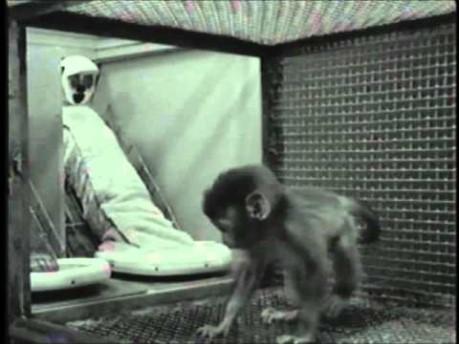
Contact Comfort
The physical, tactile comfort provided by a caregiver, demonstrated by Harry Harlow's rhesus monkey experiments to be more foundational to attachment bond formation than food provision.
Strange Situation
Mary Ainsworth's standardized laboratory procedure involving brief separations and reunions between an infant (ages 12-18 months), caregiver, and a stranger to classify attachment styles.
Secure Attachment Style
An attachment pattern in the Strange Situation where the infant is distressed by the caregiver's departure but readily comforted and approaches the caregiver upon their return.
Avoidant Attachment Style
An insecure attachment pattern where the infant shows minimal outward distress when the caregiver departs and ignores or avoids the caregiver upon reunion.
Ambivalent Attachment Style
An insecure attachment pattern where the infant is intensely distressed by separation and displays mixed anger and clinging upon reunion, resisting efforts to be soothed.
Disorganized Attachment Style
An insecure attachment classification arising from trauma or major disruption where the infant displays disoriented, confused, or contradictory behaviors during reunions.
Trust versus Mistrust
Erik Erikson's first psychosocial stage (0 to 18 months), during which infants learn whether the world is dependable and nurturing or unpredictable and unsafe.
Identity versus Identity Confusion
Erik Erikson's fifth psychosocial stage occurring during adolescence, in which individuals synthesize values, vocational roles, and beliefs to develop a unified sense of self.
Sensorimotor Stage
Piaget's first cognitive developmental stage (ages 0 to 2), during which infant thought and action are identical, knowledge is gained through sensory and motor exploration, and egocentrism prevails.
Object Permanence
A foundational cognitive milestone of Piaget's sensorimotor stage where infants recognize that physical objects continue to exist even when concealed or out of sight.
Preoperational Stage
Piaget's second cognitive stage (ages 2 to 7), characterized by the development of symbolic thought and language, but constrained by egocentrism and an inability to perform mental operations.
Egocentrism (Piaget)
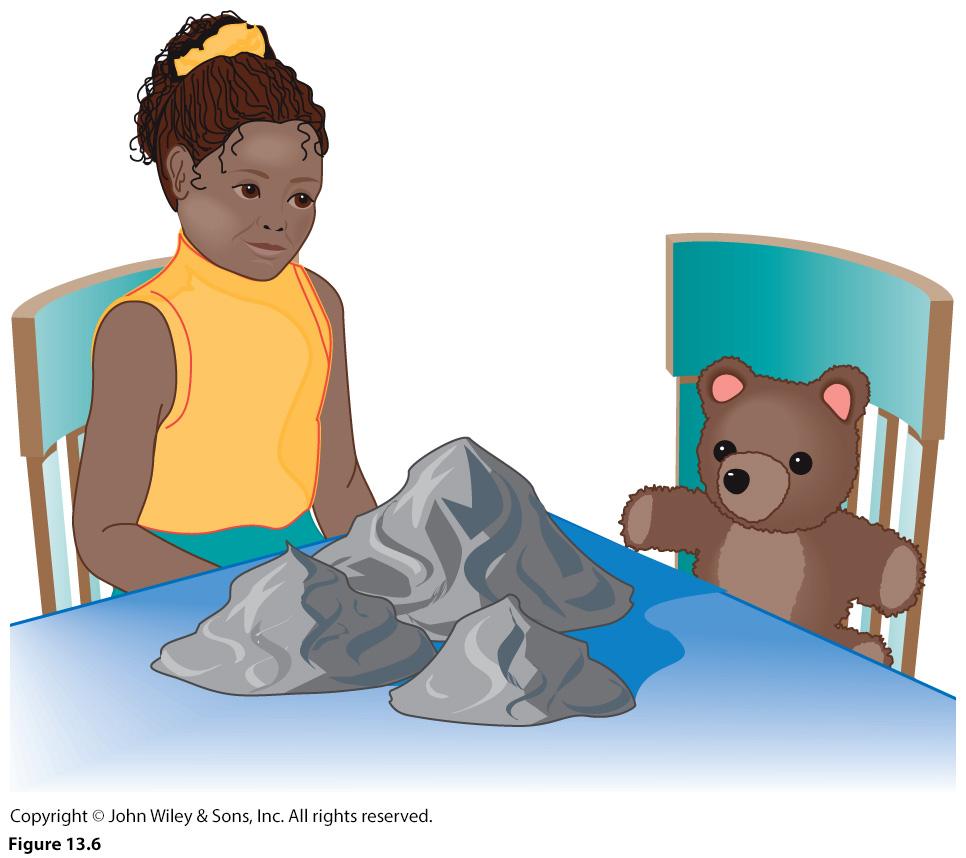
The cognitive limitation common to preoperational children where they perceive the world strictly from their own vantage point and cannot adopt the visual or cognitive perspective of another.
Three Mountain Task
An experimental protocol developed by Piaget and Inhelder demonstrating preoperational egocentrism, where children fail to select pictures showing how a table of mountains appears from a teddy bear's perspective.
Concrete Operational Stage
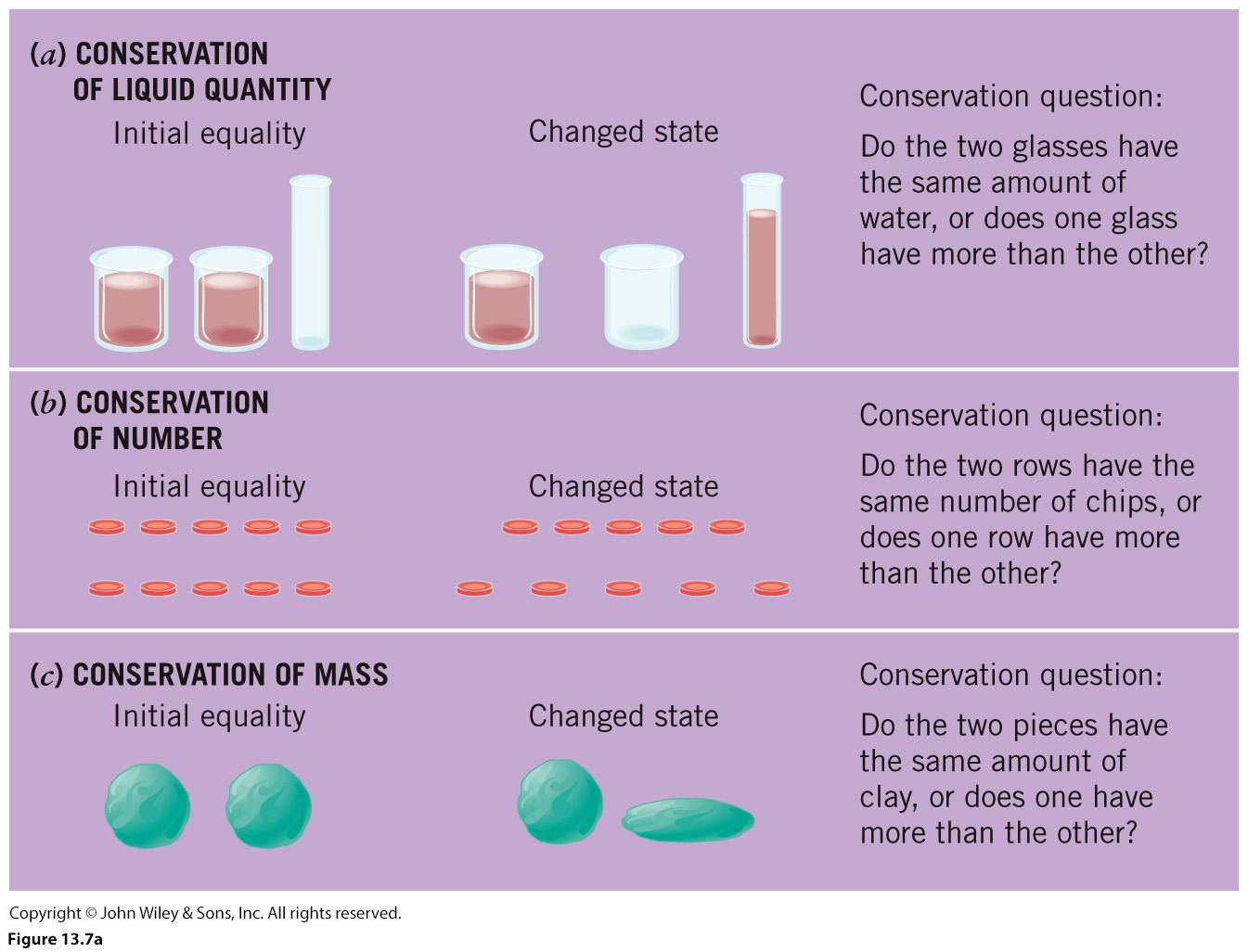
Piaget's third cognitive stage (ages 7 to 12), in which children master reversible mental operations on concrete representations, understanding conservation and class inclusion.
Conservation
The Piagetian principle that fundamental properties of an object or substance (such as volume, number, or mass) remain constant despite superficial changes in physical appearance.
Formal Operational Stage
Piaget's final cognitive stage (ages 12 and older), characterized by the emergence of abstract, scientific, and hypothetical-deductive reasoning.