AP Bio Unit 1
 Call Kai
 Learn
Learn Practice Test
 Spaced Repetition
 Match
Match Flashcards
 Knowt Play
1/95

There's no tags or description
Looks like no tags are added yet.
Name | Mastery | Learn | Test | Matching | Spaced | Call with Kai | Chat |
|---|
No analytics yet
Send a link to your students to track their progress
96 Terms
Descriptive Statistics
Statistics that allow researchers to describe and quantify differences between data sets.
Mean
The average of a data set, calculated by summing all data points and dividing by the total number of points.
Median
The middle number in an ordered range of data points; it is useful for data sets with extreme values or outliers because it is not distorted by extreme numbers.
Mode
The value that appears most frequently in a data set.
Variability
A measure of how far a data set diverges from its central tendency, or how spread out the data points are.
Range
The difference between the largest and smallest values in a data set, where a larger range indicates greater variability.
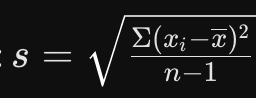
Standard Deviation
A measure of how spread out the data is relative to the mean.
Empirical Rule
In a normal distribution, approximately 68% of data falls within plus/minus 1 (standard deviation) of the mean, 95% falls within plus/minus 2 (standard deviation), and 99% falls within plus/minus 3 (standard deviation).
Low Standard Deviation
Indicates that data points are clustered close to the mean, suggesting the independent variable is likely driving the changes.
High Standard Deviation
Indicates that data points are widely spread out from the mean, suggesting factors other than the independent variable may be causing changes.
Standard Error
A calculation used to determine the precision of and confidence in the sample mean relative to the population mean.

Error Bar Overlap
If error bars on a graph overlap, the difference between data groups is not statistically significant; if they do not overlap, the difference may be significant.
Matter
Anything that takes up space and has mass.
Element
A substance that cannot be broken down into other substances by chemical reactions.
Compound
A substance consisting of two or more different elements combined in a fixed ratio
Essential Elements
Carbon, Hydrogen, Oxygen, Phosphorus, and Nitrogen
Trace Elements
Elements required by an organism in only tiny quantities.
Atomic Number
The total number of protons in an atom's nucleus.
Atomic Mass
The total number of protons plus neutrons averaged over all isotopes of an element.
Periodic Table Groups
Vertical columns, determine the number of valence electrons.
Periodic Table Periods
Horizontal rows, determines the number of electron shells.
Octet Rule
The tendency of elements to gain, lose, or share valence electrons to achieve a full outer shell of 8 electrons and become stable.
Electronegativity
A measure of an atom's ability to attract shared electrons to itself.
Covalent Bond
A chemical bond formed when two nonmetal atoms share valence electrons.
Nonpolar Covalent Bond
A covalent bond where electrons are shared equally between two atoms.
Polar Covalent Bond
A covalent bond where electrons are shared unequally due to differences in electronegativity, creating partial positive and partial negative charges.
Ionic Bond
A bond formed by the attraction between oppositely charged ions with a complete transfer of electrons.
Cation
A positively charged ion.
Anion
A negatively charged ion.
Hydrogen Bond
A partially positive hydrogen atom in a polar covalent molecule is attracted to a electronegative atom in another molecule.
Cohesion
The attraction between molecules of the same kind
Adhesion
The attraction between molecules of different substances
Capillary Action
The upward movement of liquid through narrow spaces driven by cohesion, adhesion, and surface tension (occurring when adhesion is stronger than cohesion).
High Specific Heat
Water's ability to resist temperature changes because heat must be absorbed to break hydrogen bonds before kinetic energy increases.
Evaporative Cooling
As liquid water evaporates, the surface cools down because the highest kinetic energy molecules escape into the gas phase.
Ice Density Anomaly
Water expands and becomes less dense as it freezes, allowing ice to float
Universal/Versatile Solvent
Water is an effective dissolving agent because the partial negative charges on oxygen surround positive ions while the partial positive charges on hydrogen surround negative ions to dissolve them.
Monosaccharides
Simple sugars with molecular formulas that are multiples of CH2O. (Glucose)
Disaccharides
Two monosaccharides linked together by covalent bonds (Sucrose)
Polysaccharides
Long polymers of monosaccharides formed by dehydration reactions
Amino Acid
Monomer of proteins containing central carbon bonded to an amino group, carboxyl group, a hydrogen, and a side chain
R Group (Side Chain)
The variable part of an amino acid that causes unique physical and chemical properties.
Peptide Bond
Covalent bond formed between the carboxyl group of an amino acid and amino group
N-terminus
A free amino group end in a polypepetide
C-terminus
A free carboxyl group end in a polypeptide
Primary Protein Structure
The linear sequence of amino acids in a polypeptide chain
Secondary Protein Structure
Coils and folds formed by hydrogen bonding between atoms along the polypeptide backbone
A-Helices
Coils in a polypeptide, common in secondary protein structure and onward
Beta-pleated Sheets
Folds in a polypeptide, common in secondary protein structure and onward
Tertiary Protein Structure
The 3D shape of a protein formed by interactions between amino acid R groups
Quaternary Protein Structure
The overall protein structure that results from the creation of two or more polypeptide chains
Disulfide Bridge
Strong covalent bonds formed between the sulfur atoms of two amino acid side chains
Nucleic Acid
Macromolecules that sore, transmit, and express information in living organisms
Nucleotide
The monomer of nucleic acids, consisting of 5-carbon sugar, nitrogenous base, and one or more phosphate groups
Pyrimidines
Nitrogenous bases composed of a 6 ring
Purines
Nitrogenous bases composed of a 5 ring
Phosphodiester Linkage
The covalent bond linking nucleotides between 3 prime hydroxyl group of one sugar end and the 5 prime phosphate group
DNA Structure
A double helix composed of two antiparallel polynucleotide strands held together by hydrogen bonds between complementary base pairs (A&T ; C&G)
RNA Structure
A single stranded polynucleotide that can form shapes via internal base pairing (A&U ; C&G)
Lipids
Nonpolar, hydrophobic molecules that do not form true polymers. (Fats, phospholipids, and steroids)
Fat Structure
Composed of a single glycerol molecule joined to three fatty acid tails via ester linkages.
Saturated Fatty Acid
A fatty acid chain with no double bonds between carbon atoms allowing it to be saturated with hydrogen atoms.
Unsaturated Fatty Acid
A fatty acid chain containing one or more double bonds causing a bend or kink in the chain
Phospholipid
A lipid consisting of a hydrophilic glycerol/phosphate head and two hydrophobic fatty acid tails forming the primary structure of cell membranes
Steroid
A type of lipid with a carbon skeleton of four fused rings with attached functional groups
Null Hypothesis
A hypothesis stating that there is no significant difference or effect, and any differences are due to chance
Alternative Hypothesis
A hypothesis stating that an observed effect or difference is real and caused by a specific variable rather than chanc e
Independent Variable
The factor in an experiment that is changed by the researcher
Dependent Variable
The factor that is measured or observed in response to changes in the independent variable
Experimental Control
A test group or baseline condition used for comparison ensuring that results are due to the independent variable
Acid
A substance that increases the concentration of hydrogen ions in a solution lowering its pH
Base
A substance that decreases the concentration of hydrogen ions in a solution, raising its pH
Hydrocarbon
An organic molecule consisting entirely of carbon and hydrogen atoms
Functional Groups
Specific groups of atoms attached to carbon skeletons that participate in chemical reactions and cause specific chemical properties
Hydroxyl Group
Composed of hydrogen atom bonded to an oxygen atom (—OH)

Carbonyl Group
Composed of a carbon double bonded to an oxygen(—CO)

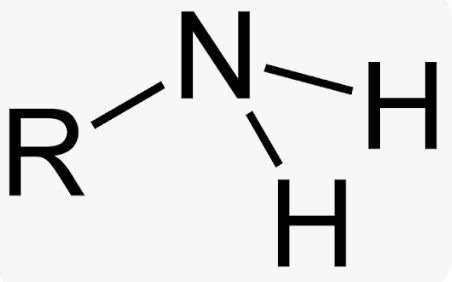
Amino Group
Composed of a nitrogen atom bonded to two hydrogen atoms (—NH2)
Phosphate Group
Composed of a phosphorus atom bonded to four oxygen atoms, two negative. (—PO4)

Methyl Group
Composed of carbon and three hydrogen. (—CH3)
Sulfhydryl Group
A sulfur atom bonded to a hydrogen atom. (—SH)

ATP
An organic molecule that stores energy within its phosphate bonds to power cellular processes.
Dehydration Reaction
A chemical reaction that links monomers together to form a polymer by removing a water molecule
Hydrolysis Reaction
A chemical reaction that breaks covalent bonds in polymers to yield monomers by adding a water molecule
Monomer
A small molecular unit that serves as the building block for larger polymers
Polymer
A long molecule consisting of many similar or identical monomers linked together by covalent bonds
Glycosidic Linkage
The covalent bond formed between two monosaccharides through a dehydration reaction
Amphipathic
A molecule that possesses both hydrophobic and hydrophilic regions
Denaturation
A process in which a protein loses its native shape and function due to the disruption of weak chemical bonds. (Caused by extreme pH, high temperature, or salt concentration)
Glycogen
A highly branched storage polysaccharide made of glucose monomers found in animal liver and muscle tissue.
Starch
A storage polysaccharide made of glucose monomers found in plants
Cellulose
A structural polysaccharide made of glucose monomers that forms the rigif cell walls of plants
Ester Linkage
The covalent bond formed between a hydroxyl group of glycerol and the carboxyl group of a fatty acid in lipids
Antiparallel Strands
The orientation of the two strands in a DNA double helix, running parallel to each other but in opposite 5 prime to 3 prime directions
Gene
A specific sequence of nucleotides along a DNA molecule that contains the instructions to synthesize a functional polypeptide or RNA
Nucleoside
The portion of a nucleotide consisting only of nitrogenous base attached to 5 carbon sugar lacking a phosphate group.
Carboxyl
A carbon double bonded to an oxygen and bonded to a hydroxyl. (—COOH)
