NBCE Part 1 - Pathology
 Call Kai
 Learn
 Practice Test
 Spaced Repetition
 Match
 Flashcards
 Knowt Play
1/114

There's no tags or description
Looks like no tags are added yet.
115 Terms
This type of necrosis is usually seen in ischemic injury to CNS
A. Liquefactive
B. Coagulation
C. Fatty
D. Caseous Necrosis
A. Liquefactive
Which of the following causes a defect in collagen synthesis?
A. Gaucher's disease
B. Tay Sachs disease
C. Echlers's Danlos Syndrome
D. Krabbe's disease
C. Echlers's Danlos Syndrome
Note:
Echlers Danlos Syndrome= bone softening disorder or CT disease
Gaucher's disease= excess glucocerebrosides in the brain, liver, and spleen.
Tay Sachs disease= Increased gangliosides in the brain. Rare genetic disorders passed from parents to child
Krabbe's disease= excess galactocerebroside in white matter

Which of the following is the most common tumor in females?
A. Cervical Cancer
B. Leiomyoma
C. Breast Cancer
D. Enchondroma
B. Leiomyoma (uterine fibroids)
Note:
Leiomyoma= uterine fibroids
* The question did not say malignant.
The most malignant would be Breast Cancer for boards.
Which of the following could cause projective vomiting in a newborn?
A. Phenylketonuria
B. Pyloric stenosis
C. Hirschsprung's disease
D. Esophageal atresia
B. Pyloric stenosis
Note:
Most common cause
- Pyloric= relating to the pylorus = stomach
- Think vomiting, think the stomach
What neurotransmitter is attributed to Alzheimer's?
Acetylcholine
Note:
decrease in acetylcholine
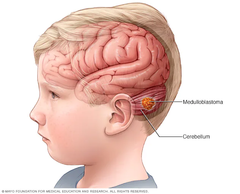
Which of the following is the MC cerebellar tumor in children
A. Astrocytoma
B. Oligodendroglioma
C. Glioblastoma
D. Medulloblastoma
D. Medulloblastoma
Which of the following are decreased in agammaglobulinemia of Bruton?
A. B Cells
B. T Cells
C. Neutrophils
D. Monocytes
A. B Cells
Note:
When you see Bruton, immediately think B-Cells
- M/C primary immunodeficiency at birth. X-linked, characterized by the absence of mature B-Cells.

Which of the following cells make antibodies?
A. Plasma cells
B. WBC
C. Macrophages
D. T Helper
A. Plasma cells
Note:
B-lymphocytes transform into plasma cells which then make antibodies.
B Cells -> Plasma Cells -> Antibodies
Which of the following causes a deficiency in T cells and affects the thymus?
A. DiGeorge
B. SCID
C. Brutons Agammaglobulinnemia
D. Aplastic Anemia
A DiGeorge
Note:
"DiGeorge is 22 and still does NOT like Tea"
- Primary T-Cell Deficiency at birth on chromosome 22
Notes cont'd:
- SCID (Severe Combined Immune Deficiency) = Newborn without proper B or T Cells. Bone marrow problem.
- Brutons Agammaglobulinnemia = B Cells
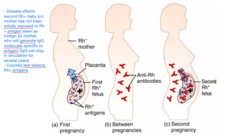
What is the cause of erythroblastosis fetalis?
A. Rh + Mother, Rh- Father, Rh- Baby
B. Rh + Mother, Rh+ Father, Rh- Baby
C. Rh- Mother, Rh+ Father, Rh+ Baby
D. Rh- Mother, Rh+ Father, Rh- Baby
C. Rh- Mother, Rh+ Father, Rh+ Baby
Note:
type of anemia in which the red blood cells (erythrocytes) of a fetus are destroyed in a maternal immune reaction resulting from a blood group incompatibility between the fetus and its mother.
Which artery does giant cell arthritis commonly affect?
A. Subclavian Artery
B. Temporal Artery
C. Carotid Artery
D. Vertebral Artery
B. Temporal Artery

PCCE changes to stratified squamous in the lungs of a smoker, what disturbance of growth would this be an example of?
A. Hypertrophy
B. Hyperplasia
C. Metaplasia
D. Atrophy
C. Metaplasia
Note:
Metaplasia= Change
Which disturbance of growth is the increase in the size of an organ due to an increase in demand?
A. Hypertrophy
B. Hyperplasia
C. Metaplasia
D. Atrophy
A. Hypertrophy
Note:
Hpertrophy= increase of size due to an increase in demand, think muscle hypertrophy.
Which disturbance of growth is precancerous and the last reversible stage that makes changes in size, shape or function of a cell?
A. Dysplasia
B. Hyperplasia
C. Metaplasia
D. Atrophy
Dysplasia
Note:
Dysplasia= Pre-Cancer
What is the order of disturbance in cell growth that leads to cancer?
A. Metaplasia -> Dysplasia -> Anaplasia
B. Anaplasia -> Dysplasia -> Metaplasia
C. Dysplasia -> Metaplasia -> Anaplasia
D. It can occur in any order
A. Metaplasia -> Dysplasia -> Anaplasia
Note:
"My Damn Ass got cancer!"
Metaplasia -> Dysplasia -> Anaplasia
Which disturbance of growth is a complete disorganization of a cell?
A. Dysplasia
B. Hyperplasia
C. Metaplasia
D. Anaplasia
D. Anaplasia
Note:
"complete", think cancer.
What is the most common cause of lung cancer?
Squamous Cell Carcinoma

Which of the following is associated with RA?
A. Subchondral Sclerosis
B. Swan neck deformity
C. Positive HLAB27
D. MC in males
B. Swan neck deformity
Note:
In addition...
- Haygarths Nodes (MCP), Boutonneire (Hyperflexion of PIP), and Swan (Hyperflexion of DIP, Hyperext of PIP).
- Rat bite erosions

Which of the following is NOT a seropositive arthritides?
A. Rheumatoid Arthritis
B. Ankylosing Spondylitis
C. SLE
D. Scleroderma
B. Ankylosing Spondylitis
Note:
RSSS -> RA, Sjogren's, Scleroderma, SLE (Systemic Lupus Erythematosus)

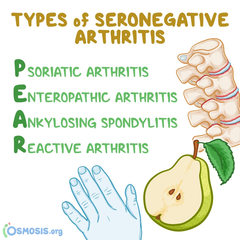
Which of the following is NOT a seronegative arthritides?
A. Psoriatic Arthritis
B. Ankylosing Spondylitis
C. Enteropathic Arthropathy
D. Scleroderma
D. Scleroderma
Note:
PEAR-> Psoriatic Arthritis, Enteropathic Arthropathy, Ankylosing Spondylitis, Rheumatoid Arthritis
Which of the following is MC leukemia in children?
A. Acute lymphoblastic leukemia
B. Acute myeloblastic leukemia
C. Chronic Lymphocytic leukemia
D. chronic
A. Acute lymphoblastic leukemia
Note:
"ALL the little children."
How is a tumor graded after biopsy?
A. Metaplasia presence
B. Rx to medication
C. Interaction w/ Chemotherapy
D. Degree of anaplasia
D. Degree of anaplasia
Note:
Remember anaplasia=cancerous
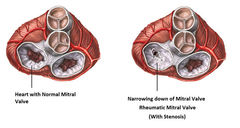
Which valve is damaged by rheumatic fever?
A. Aortic
B. Mitral
C. Pulmonic
D. Tricuspid
B. Mitral
Note:
"Oh MI, I got the rheumatic fever!"
- Damage to the aortic valve= syphilis (stenosis caused by syphilis can be associated with the thickening of the aortic wall)
Overuse and trauma to the joints can cause which of the following?
A. Osteoarthritis
B. Rheumatoid arthritis
C. Chronic osteomyelitis
D. Gouty arthritis
A. Osteoarthritis
Which of the following is a genetic disorder that does not present with symptoms until 30-50 years old?
A. Huntingtons Chorea
B. Systemic Lupis Erythematosus
C. Muscular Dystrophy
D. Charcot Marie Tooth Disease
Huntington's Chorea
Note:
- Muscular Dystrophy: younger population
> Duchene's muscular dystrophy= pseudohypertrophy of calves
- Charcot Marie Tooth: younger population
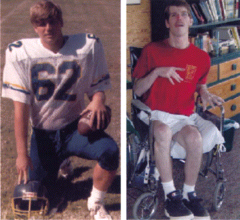
Which of the following is NOT associated with AS?
A. SI Joint ossification
B. Ossificaiton of ALL
C. Spinal fusion
D. Purulent abscess
D. Purulent abscess (puss-filled abscess, associated with infections)
Note:
- Low back pain with morning stiffness
- Starts in SI joints and works it way up (TQ)
- Bilateral SI joint fusion
- Associated with iritis
- Seronegative Arthritide

Bowing of the legs and bumpy skull could be indicative of?
A. Scurvy
B. Osteomalacia
C. Rickets
D. Paget's Disease
C. Rickets
Note:
bumpy skull with leg bowing= rickets

A decrease in intrinsic factor producing gastritis can result in which of the following?
A. Microcytic anemia
B. Pernicious anemia
C. Megaloblastic anemia
D. Normochromic anemia
B. Pernicious anemia
Note:
- a decrease in red blood cells that occurs when the intestines cannot properly absorb vitamin B12.
Which of the following is a primary immunodeficiency disease?
A MS
B. Myasthenia Graves
C. Syringomyelia
D. Muscular dystrophy
B. Myasthenia Graves (hypersensitivity rx)
Note:
Type II Hypersensitivity RX.
[this is a bad q but it is the closest associated with immunodeficiency. it is associated with an immune problem.]
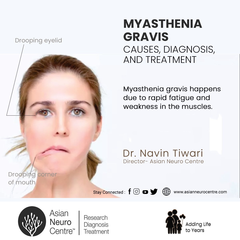
Which condition forms antibodies that block the Ach receptors at the myoneural junction and present as tired eyes?
A MS
B. Myasthenia Graves
C. Syringomyelia
D. Muscular dystrophy
B. Myasthenia Graves (hypersensitivity rx)
Note:
- Enlarges the thymus
- Autoimmune in females ages 20-40

Which condition is described as aplasia during fetal development resulting in absence of an organ or tissue?
A. Agenesis
B. Metagenesis
C. Dysgenesis
D. Acute Lymphoblastic Leukemia
Agenesis
Atrophy
Decrease in size of an organ resulting from a decrease in the mass of preexisting cells.
What is the death of bone due to lack of blood supply?
A. Osteoporosis
B. Avascular Necrosis
C. Rickets
D. Osteoarthritis
B. Avascular Necrosis

What are the names of the different types of AVN and their locations?
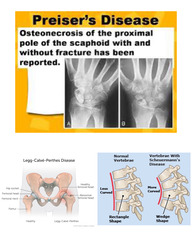
1. Preiser: Carpal Scaphoid
2. Scheuermann's: Vertebral End Plate Epiphysis; rounding of shoulder. Think scoliosis.
3. Legg Calve Perthes: Femoral Epiphysis; AVN of the femoral head. MC found in boys 4-9 +/-
Note:
There are also...
Kohlers: Tarsal Navicular
Keinboch's: Carpal Lunate
Coagulative necrosis results from what condition and affects what type of tissues?
Myocardial infarction. Affects solid tissues except the brain.
Note:
Sudden cut-off of blood supply to an organ.
This type of necrosis is characterized by the digestion of tissue and is seen in the CNS or skin. i.e. syphilis, leprosy, brain melts
A. Liquefactive
B. Coagulation
C. Fatty
D. Caseous Necrosis
A. Liquefaction
This type of necrosis is marked by a "cheese-like" consistency, seen commonly in TB
A. Liquefactive
B. Coagulation
C. Fatty
D. Caseous Necrosis
D. Caseous Necrosis
Note:
- When you see "caseous", immediately think TB
*Picture shows cheese like presentation

This type of necrosis is enzymatic and is seen in conditions like nutmeg liver and tabby cat heart:
A. Liquefactive
B. Coagulation
C. Fatty
D. Caseous Necrosis
Fatty necrosis
This type of necrosis refers to the way peripheral nerves die when severed
A. Wallerian
B. Coagulation
C. Fatty
D. Caseous Necrosis
A. Wallerian degeneration
This is an irregular accumulation of blood vessels and is responsible for port-wine stain birthmarks.
A. Osteochondroma
B. Hemangioma
C. Chondroblastoma
D. Oateoma
B. Hemangioma
Note:
Hema, like hemo= blood

What is the most common benign tumor of the appendicular skeleton (extremities)?
A. Osteochondroma
B. Hemangioma
C. Chondroblastoma
D. Oateoma
A. Osteochondroma
Note:
- Hereditary Multiple Exostosis are multiple osteochondromas TQ
- Characteristics: Peduncled, Sesile

If we have multiple osteochondromas, what is it called?
HME: Hereditary Multiple Exostoses
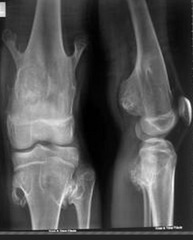
Besides osteoid osteoma, what other conditions have pain at night relieved by aspirin?
A. Osteoblastoma
B. Neurofibromatosis
C. Brodie's Abscess
D. Aneurysmal Bone Cyst
C. Brodie's Abscess
Note:
Brodie's Abscess is AKA Chronic Osteomyelitis

Which condition presents with a ground glass appearance and is seen with fibrous tissue infiltrating the bone which can cause Sheppard Crook deformity in the femur?
A. Osteoblastoma
B. Neurofibromatosis
C. Fibrous Dysplasia
D. Aneurysmal Bone Cyst
C. Fibrous Dysplasia
Note:
- "rind sign" TQ
- "ground glass appearance"
- cafe au lait spots or coast of maine
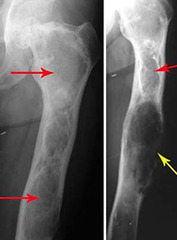
What is the disease associated with multiple enchondromas?
A. Albright's Disease
B. Ollier's Disease
C. HME
D. Von Recklinghausen's Disease
B. Ollier's Disease
Note:
- 10-50% rate of malignant degeneration TQ
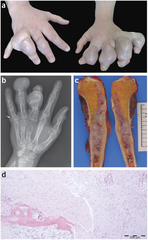
Which is the most common benign tumor of the clavicle?
A. Aneurysmal Bone Cyst
B. Giant Cell Tumor
C. Simple Bone Cyst
D. Chondroblastoma
A. Aneurysmal Bone Cyst
Note:
- Diaphyseal/metaphyseal location
- Eccentrically located (off to one side)
-

Which condition presents with a "soap bubble appearance" and is most commonly found in the knee?
A. Aneurysmal Bone Cyst
B. Giant Cell Tumor
C. Simple Bone Cyst
D. Chondroblastoma
B. Giant Cell Tumor
Note:
- "Quasi-malignant": can undergo malignant degeneration
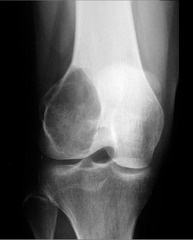
What condition is neurogenic arthropathies MC seen with:
Diabetes
Note:
- Diabetic neuropathy is nerve damage that is caused by diabetes.
- Sensation destroyed
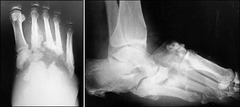
Over 20 years old, soap bubble epiphyseal lesion
Giant cell tumor
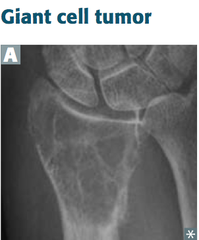
The two bone tumors that occur at the epiphysis are:
How do you differentiate?
Giant cell tumor: >20 (older than "Giant in age"
Chondroblastoma:
The rind sign is associated with:
fibrous dysplasia

There are only two conditions that cause deformity for national boards, what are they?
1. Fibrous Dysplasia: light densities
2. Pagets: Cortical thickening

In the fourth stage of Paget's, what does the malignancy become?
Osteosarcoma
What is the pathological cell of Paget's?
Osteoclastic Cell
If you see cortical thickening and a picture frame vertebrae, what malignancy are you thinking of?
Paget's Disease

What is the most common benign tumor of the hand?
Enchondroma
Note:
Think you "enter" a room by using your hand, to open a door.

Benign cartilaginous tumor of hands and feet (commonly)
Multiple is called Ollier disease
Enchondroma
If we have multiple enchondromas, what is the name?
Ollier's disease
Note:
Think "Oll(all) in the hands, multiple".

What appearance is seen with fibrous dysplasia?
ground glass appearance

Fibrous dysplasia with early puberty is called:
Albright's disease

What is the name of the deformity in the shin?
Saber Shin Tibia

What is the name of the deformity in the femur?
Sheppard's Crook

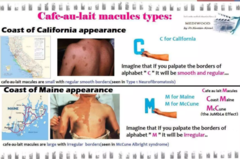
Cafe au lait spots are associated with two conditions, what are they? How do you differentiate?
Fibrous dysplasia - irregular border (Coast of Maine)
Neurofibromatosis - smooth border (Coat of California)
Tumor of dense, mature bone, commonly on skull
Osteoma
Young nidus, pain worse at night dramatically relieved by aspirin
Osteoid Osteoma

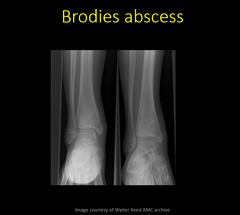
Besides an osteoid osteoma, what other condition has pain worse at night dramatically relieved by aspirin?
Brodies Abscess (Chronic Osteomyelitis)
What is the most common cause of osteoid osteoma?
Staph Aureus
What is the term for the death of bone due to lack of blood flow?
Osteonecrosis "Avascular Necrosis"
AVN of the scaphoid is called what?
Preiser's

AVN of the lunate is called
Kienbock's disease

AVN of tarsal navicular
Kohler's disease

AVN of femoral head
Legg-Calve-Perthes disease
Note: fragmentation of femoral head "crescent sign"
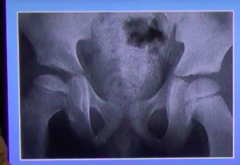
In a child, a fragmentation of the femoral head "crescent sign"
Legg-Calve-Perthes disease
What is the most common benign tumor that expands the neural arch?
Osteoblastoma
Note:
- Think, "Blasts" off the head (neural arch)!

What is the most common benign tumor of the skull? Where is it most commonly located?
Osteoma, Frontal Sinus

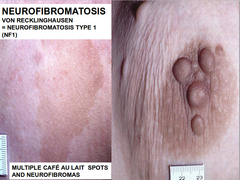
What is the AKA for neurofibroma?
Von Recklinghausen's disease
Note:
Think " Von has neurofibromatosis type I"
What is the most common primary malignancy of bone in adults?
Multiple Myeloma
Note: multiple dark lucencies, "punched out" lesions
Remember the most common osseous primary lesions:
1A: Multiple Myeloma: adult
1C: Osteosarcoma: child
2A: Chondrosarcoma: adult
2C: Ewing Sarcoma: child

A raindrop skull is seen with what malignancy?
Multiple Myeloma

Inclusion Bodies/ Russel Bodies are seen with what malignancy?
Multiple Myeloma

Malignancy of plasma cells,
M protein
Bence jones protein
Punched out lesions
Over 55
Motheaten
What is malignancy?
Multiple Myeloma
What malignancy is associated with russell inclusion bodies, punched out lesions and raindrop skull?
Multiple Myeloma
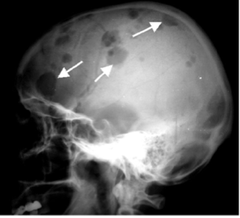
What malignancy is associated with a "swiss cheese" appearance?
Lytic Mets
Note:
- Many dark spots is what I think so a bunch of holes like swiss cheese
- Lytic Mets= Swiss cheese appearance
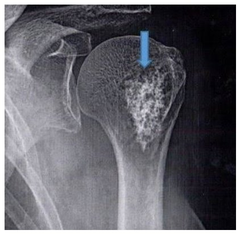
What is the primary demographic for Hodgkin's disease?
Caucasian Males aged 20-40
What is the best special test to diagnose Hodgkin's Disease? What would it confirm?
Biopsy. Reed Sternberg Cells.
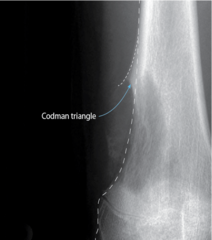
Codman's triangle is seen with what condition:
Ewing's Sarcoma
Note:
Think "wing" = triangularish...
What is the most common bone malignancy in children aged grouped 10-30?
Osteosarcoma
Note: will have a spiculated (radiating) sunburst appearance

Where is a chordoma most commonly found?
Sacrum
Clivus of Occiput
Note:
- Chordoma is a slow-growing cancer of tissue found inside the spine. Chordoma can happen anywhere along the spine. It is most often found near the tailbone (called a sacral tumor) or where the spine meets the skull (called a clival tumor). Chordoma is also called notochordal sarcoma.

Young, Fever, increased WBCs, and slight anemia.
Multi-paralleled onion skin periosteal response with bone expansion.
Ewings sarcoma
Note:
- Onion Skin think "eww" for Ewings because it tastes nasty to eat onion skin.

What are the seropositive arthritides?
RA
Sjogren's
Scleroderma
Systemic Lupus Erythematosus
Note:
(All RA Latex Positive)
RA in children is called?
Still's disease
Swan neck and boutonniere deformity is caused by what condition?
caused by chronic RA, swan neck- flexion contracture of metacarp. boutonniere- knuckle looks as if pushed
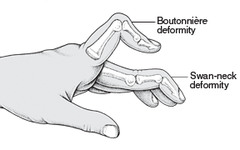
When RA presents with dry eyes and dry mouth it is called:
Sjogren's

A 55-year-old female comes into the office with bilateral red, hot, swollen MCP. The patient has uniform loss of joint space with rat bite erosions. What condition does she have?
Rheumatoid Arthritis
What is the AKA for Ankylosing Spondylitis
Marie Strumpell Disease
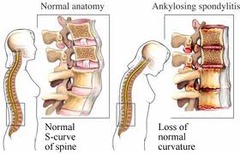
Our Seronegative, HLA B-27 conditions are:
Psoriatic Arthritis
Enteropathic
Ankylosing Spondylitis
Reactive Arthritis
What are the marginal and non-marginal syndesmophytes?
Non-Marginal: Psoriatic Arthritis & Reactive Arthritis
Marginal: Enteropathic & Ankylosing Spondylitis
Note:
- "M" comes before "N", just like "A/E" comes before "P/R"
What are the primary benign bone tumors?
Enostoma
Osteoma
Osteopoikilosis
Osteoid Osteoma
Osteoblastoma

What are the primary benign cartilage based tumors?
Enchondroma
Osteochondroma
Chondroblastoma
What are the primary benign tumors of connective tissue?
Fibrous Xanthoma
a. Fibrous Cortical Defect (4-8yo)
b. Non-Ossifying Fibroma (8-20yo)

What is the condition caused by the overproduction of uric acid (an increase in purines) found most commonly at the MTP of the big toe?
A. Neurogenic Arthropathy
B. Osteomyelitis
C. Tophi
D. Gout
D. Gout
Note:
- Tophi crystals may be seen
