Bus Law Final good different prof
 Call Kai
 Learn
 Practice Test
 Spaced Repetition
 Match
 Flashcards
 Knowt Play
1/456

There's no tags or description
Looks like no tags are added yet.
457 Terms
Primary Authority
"It Governs" Constitutions, Statues, Cases (Judicial Opinions), and Administrative Regulations.
Sometimes Mandatory, Sometimes persuasive (weight)
Secondary Authority
"Commentary or Analysis of the law" Legal Encyclopedias, Uniform Codes / Model Acts, Legal periodicals.
Always Persuasive, never mandatory. (will never control the outcome)
What determines weight of authority?
Level of Court and Jurisdiction
Mandatory Weight
binding, the court is obligated to folllow
Persuasive Weight
Non-binding, the court may follow but doesn't have too.
Weight of Jurisdiction
Outside of your jurisdiction: Always persuasive, never mandatory.

Primary, Secondary, Mandatory, Persuasive In relation

Codification
Organizing subject matter into "codes" (both federal and state)
Congress
On our 119th, Lasts from Jan 3rd 2025-2027.
Step One in Publishing Federal Statues
As Slip Laws:
In a separate book/pamphlet
Identified by public law number:
-Pub. L. 116-136

Step Two in Publishing Federal Statues
As Session laws:
Chronologically in the United States Statues at Large
Identified by its volume and page number
- ___ Stat ___
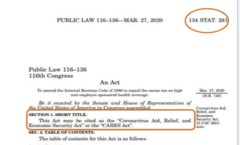
Step three in publishing federal statues
As Codified Laws (NON ANNOTATED):
Integrated into the USC by subject
Identified by US Code Title and section number
- 15 U.S.C. double S (section) 9001 et. seq.
Types of Annotated United States Code
USC (United States Code) - Govt. Publishing Office
USCA (United States Code Annotated) - West
USCS (United States Code Service) - Lexis
How many titles are in the USC
54
Types of Public Records
United States Report is the only publication to contain the opinions of the United States Supreme Court
Federal Supplement is publication that contains Court of Appeal opinions
Federal reporter is publication to contain District court opinions
What is original jurisdiction?
A court's authority to hear and decide a case for the first time before any appellate review occurs.
Which type of courts typically have original jurisdiction?
Trial courts.
What do courts with original jurisdiction decide?
Questions of fact.
In a jury trial, who decides questions of fact?
The jury.
In a bench trial, who decides questions of fact?
The judge.
What is an example of a question of fact in a criminal trial?
Whether or not the defendant is guilty.
What is appellate jurisdiction?
The power to review previous judicial decisions to determine whether trial courts made an error in decisions.
What type of questions do appellate courts primarily decide?
Questions of law, concerning the interpretation/application of the law.
Can appellate courts decide questions of fact?
Yes, but they generally overturn a trial court's decision only if their findings were clearly incorrect.
Personam Jurisdiction
Refer to a courts power to render a decision affecting the rights of the specific persons before the court.
Rem jurisdiction
Refers to a courts power to render a decision affecting the specific property before the court.
Executive Federal Jurisdiction
Admirality cases, bankruptcy cases, federal criminal prosecutions, lawsuits between states, and claims against the US.
Concurrent Federal Jurisdiction: Both state and federal
Diversity of Citizenship:
Different States of Citizenship and controversy exceeds 75K
Federal Question:
An interpretation of the US constitution, federal statues, or federal treaties.
Venue
Geographical location where a court will hear the case.
Forum Selection Cause
contractual agreement that designates the court and locations where the parties would like to have their legal dispute decided.
Forum Selection Case Study:
Atlantic Marine Construction Company v. U.S. District Court for the Western District of Texas, 134 S.Ct. 568 (2013).
Facts: ✓ Atlantic, based in Virginia contracted with J-Crew Management, based in Texas and J-Crew brought a suit in Texas for failure to pay.
✓ Atlantic moved to dismiss the suit, arguing the forum selection clause in the contract required disputes to be litigated in Virginia.
✓ The District Court for the Western District of Texas denied Atlantic's motions to dismiss the suit as improper under 28 U.S.C.S. § 1406(a).
✓ The U.S. Court of Appeals for the Fifth Circuit denied Atlantic's petition for a writ of mandamus. ✓ The U.S. Supreme Court granted a writ of certiorari.
Issue: ✓ Whether the forum selection clause give Atlantic the ability to dismiss the case
Holding: ✓ Defendant in contract dispute held entitled to venue transfer under 28 U.S.C.S. § 1404(a)--where contract clause designated alternative federal forum for disputes concerning contract--unless extraordinary circumstances unrelated to convenience of parties clearly disfavored transfer.
Reasoning: ✓ The U.S. Supreme Court rejected Atlantic's argument that a forum selection clause could be enforced by a motion to dismiss the case and held that a forum selection clause should be enforced by a motion to transfer under § 1404(a). (28 U.S.C. § 1404 (a) provides for the change of venue. "For the convenience of parties and witnesses, in the interest of justice, a district court may transfer any civil action to any other district or division where it might have been brought or to any district or division to which all parties have consented.")
Three Threshold Requirements
Standing: Capacity of a party to bring a lawsuit to the court.
Controversy: An actual Dispute
Ripeness: Readiness of current facts of a specific case.
What are informal negotiations in the pretrial stage of civil litigation?
Discussion/negotiation between parties and consultation with attorneys.
What is the purpose of pleadings in civil litigation?
To officially initiate a lawsuit and for the plaintiff to file a complaint.
What is the service of process in civil litigation?
The requirement that the defendant must be notified of the lawsuit with due process.
Default Judgement
If the defendant doesn't appear in court, court may make judgment favoring the plaintiff.
What is an affirmative defense in civil litigation?
An affirmative defense is made where the defendant indicates additional facts that justify their actions and provides legally sound reasons to deny relief to the plaintiff.
What can a defendant file if they believe the plaintiff cannot prove their case?
A defendant can file a motion to dismiss.
What is a counterclaim in civil litigation?
A counterclaim is the same as a complaint filed by the defendant against the plaintiff.
What can a plaintiff file in response to a counterclaim?
A plaintiff can file a reply by admitting, denying, or claiming a lack of accuracy of the facts of the counterclaim.
What is the purpose of pretrial motions in civil litigation?
To provide parameters on how the trial will be conducted.
What is a motion for judgment on the pleadings?
A pretrial motion requesting the court to decide the case based solely on the pleadings.
What is a motion for summary judgment?
A pretrial motion requesting the court to rule in favor of one party based on the evidence presented, without going to trial.
Steps in civil litigation : pretrial stage : A motion for judgement on pleadings:
Designed to dispose of cases before trial where the material facts are not in dispute
a judgement on the merits can be rendered by looking to the substance of the pleadings and any judicially noticed facts.
When can a motion for judgment on the pleadings be filed?
After the pleadings are closed but must be filed early enough not to delay trial.
What must the movant demonstrate in a motion for judgment on the pleadings?
That there is no genuine dispute as to any material fact and the movant is entitled to judgment as a matter of law.
What is a motion for summary judgment?
A motion for summary judgment is a request for the court to rule that the other party has no case because there are no facts at issue.
When can a motion for summary judgment be filed?
A motion for summary judgment can be filed anytime until 30 days after discovery closes.
What is the legal standard for a motion for summary judgment?
The moving party must clearly establish that no material issue of fact remains to be resolved and that it is entitled to judgment as a matter of law.
What stage occurs after the pleadings have been filed?
Discovery (Pre-trial stage)
What is the purpose of discovery in a legal context?
The exchange of relevant documents and evidence by the parties.
What are some discovery devices used in legal proceedings?
Interrogatories, requests to produce documents, depositions, and requests for admission of facts.
What is a Pretrial Conference?
An informal meeting where the parties may reach an agreement or prepare for what will/will not take place at the trial.
What details are discussed during a Pretrial Conference?
Details such as length, witness, and any pretrial stipulations of fact to law to which the parties agree.
Voir Dire
The Process of questioning potential jurors to ensure that the jury will be made up of unbiased individuals
What must exist for an appeal to succeed?
A prejudicial error of law
What type of evidence can be considered by an appellate court?
Only the record
How many appeals are typically allowed to an intermediate court of appeal for most cases?
Only one
Alternative Dispute Resolution
The resolution of legal disputed through methods other than litigation, such as negotiation, mediation, arbitration, summary jury trials, mini-trials, neutral case evaluations, and private trials.
What is a reason why a business may prefer Alternative Dispute Resolution over litigation?
ADR methods are generally faster and less expensive than litigation.
Why might a business want to avoid litigation in favor of Alternative Dispute Resolution?
A business may wish to avoid uncertainty associated with a jury decision.
What is a reason businesses may choose Alternative Dispute Resolution to avoid setting legal precedents?
Businesses may wish to avoid setting precedent through court decisions.
What is an advantage of Alternative Dispute Resolution regarding confidentiality?
Businesses may prefer the confidential nature of ADR.
How might Alternative Dispute Resolution help preserve business relationships compared to litigation?
ADR might better allow parties to preserve business relationships.
What is an advantage of mediation regarding professional relationships?
Helps disputing parties preserve their professional relationships.
What does mediation provide the possibility of?
Finding creative solutions to dispute.
What level of autonomy do participants have in mediation?
High levels of autonomy.
What is a disadvantage of mediation regarding power imbalances?
It appears to be an equal process and solution, thereby hiding power imbalances that could lead to the party with greater power securing a more beneficial agreement.
What is a potential misuse of mediation by some parties?
Some enter mediation with no intention of finding a solution and use it as a delay tactic.
What is an advantage of arbitration compared to litigation?
More efficient and less expensive than litigation.
What control do parties have in arbitration?
Parties have more control over the process of dispute resolution.
What can parties choose regarding the arbitrator in arbitration?
Parties can choose an arbitrator with expertise in the specific subject matter of the dispute.
What flexibility does an arbitrator have in arbitration?
Arbitrator has greater flexibility in decision making. (Compared to decision-making authority of a judge)
What happens to the efficiencies and lower cost advantages of arbitration as its use increases?
They decrease.
What is a difficulty associated with arbitration awards?
Difficulty of appealing an arbitration award.
What is a potential loss when opting for arbitration instead of litigation?
Loss of civil rights and remedies available through litigation.
How can companies or employees use arbitration to their advantage?
They may effectively hide disputes through arbitration.
What is a Binding Arbitration Clause?
A provision in a contract mandating that all disputes arising under a contract must be settled by arbitration.
What does a Binding Arbitration Clause typically state?
How the arbitrator will be selected.
What must parties do if they have a Binding Arbitration Clause?
They must settle the dispute through arbitration.
Federalism
Authority is divided between the federal and state governments. "Checks and Balances"
The Constitution
Is the supreme law of the land.
Supremacy Clause
Article VI : Gives Federal Preemption - When the fed govt. has expressed an intent to provide exclusive regulation of an area and a state attempts to regulate this area, the state law will be struck down.
Commerce Clause
Article I, Section 8
US Congress has the power to regulate commerce with foreign nations and among the several states.
Police Power
Refers to residual powers retained by the states to enact legislation to safeguard the heath/welfare of their citizens (ex: sanitation standards)
Dormant (Negative) Commerce Clause
Refers to the prohibition, implicit in the commerce clause, against states passing legislation that discriminates against or excessively burdens interstate commerce.
Taxing / Spending Clause
Article I, Section 8
The congress shall have power to lay and collect taxes, duties, imports and excises, to pay the debts and provide for the common defense and general welfare of the united states. (All duties, imports, and excises shall be uniform throughout the US)
Privileges and Immunities Clause
Artice IV, section 2
Prohibiting states from discriminating against citizens of other states when those nonresidence engage in ordinary and essential activities.
Full Faith and Credit Clause
Article IV, Section 1
Each state must recognize, respect, and enforce the public records, legislative acts, and judicial decisions of the other states.
Contract Clause
Article I, Section 10
Prohibits the Government from unreasonable interfering with an existing contract by passing any law impairing the obligation of contracts.
Tort
Refers to a civil wrong or injury to another, other than breach of contract, giving the injured party the right to bring a lawsuit against the wrongdoer to recover compensation for economic/physical damages.
Goals of Tort Law
Provide Compensation for injured parties
Maintain order in society by discouraging private retaliation by injured parties.
Gives citizens a sense that they live in a just society.
Intentional Torts
Occur when the defendant takes action intending that certain consequences will result, or knowing they are likely to result.
Negligent Torts
Occur when defendant acts in a careless way that subjects other people to unreasonable risk of harm.
Strict liability Torts
Occur when defendant undertakes an "inherently dangerous" action. (Action that cannot be undertaken safely, no matter what.)
Assault
Situation when one person places another in fear/apprehension of immediate, offensive, and/or harmful bodily contact
Battery
An unintentional, unwanted, offensive or harmful bodily contact.
Consent (In terms of defenses for Battery)
Mitigates the element of unwanted
Self-Defense (Defense for Battery)
Responds to the force of another with comparable force to defend yourself.
Defense of Others (Defense for Battery)
Defend another by the same degree of force you would use to defend yourself