Inorganic Chemistry
 Call Kai
 Learn
Learn Practice Test
 Spaced Repetition
 Match
Match Flashcards
 Knowt Play
1/104

There's no tags or description
Looks like no tags are added yet.
Name | Mastery | Learn | Test | Matching | Spaced | Call with Kai | Chat |
|---|
No analytics yet
Send a link to your students to track their progress
105 Terms
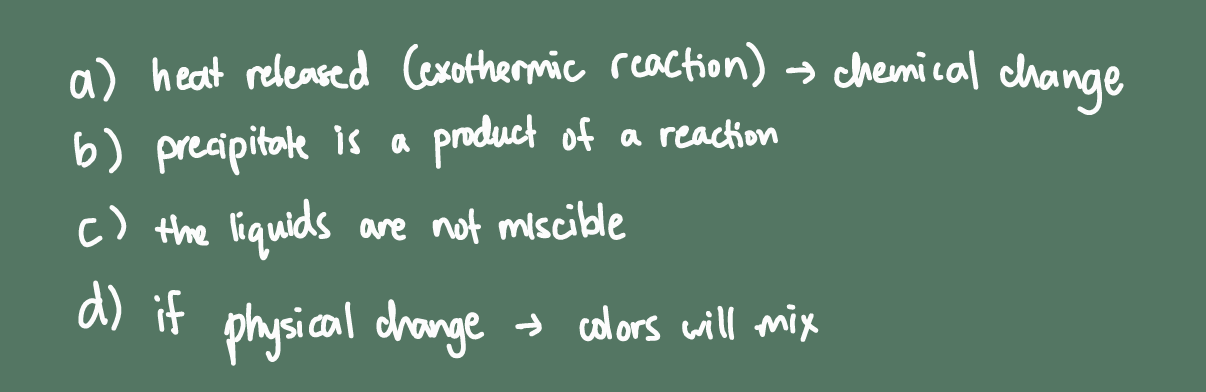
1. Colorless liquid and a yellowish liquid were mixed in a test tube. Which statement is incorrect?
A. There will be no reaction if the test tube becomes hot.
B. There will be a reaction if a precipitate forms.
C. There will be no reaction if the liquids remain on top of each other.
D. There will be a reaction if the yellow color drastically disappears.
A. There will be no reaction if the test tube becomes hot.
2. The empirical formula of a compound is CH. If its molar mass is approximately 78 g/mol, what is its molecular formula?
A. C₂H₂
B. C₆H₆
C. C₈H₈
D. None of the above
B. C₆H₆
3. What is the formal charge of nitrogen in NH₄⁺?
A. −1
B. 0
C. +1
D. +4
C. +1

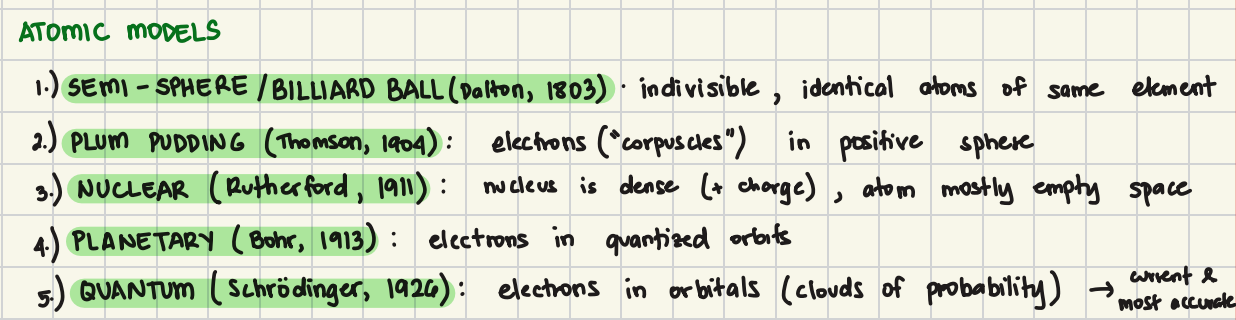
4. Whose atomic model illustrates negative charges scattered throughout an atom?
A. Dalton
B. Rutherford
C. Bohr
D. Thomson
D. Thomson
5. What is the name of Fe(NO₃)₃?
A. Iron nitrate
B. Iron(II) nitrate
C. Iron(III) nitrate
D. Ferric nitrite
C. Iron(III) nitrate

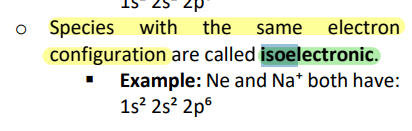
6. Which species is isoelectronic with neon?
A. F⁻
B. Cl⁻
C. Na
D. Mg
A. F⁻
7. Which group reacts with water at a slower rate to form basic hydroxide solutions?
A. Group 1
B. Group 2
C. Group 16
D. Group 7
B. Group 2

8. Consider the reaction:
2H₂ + O₂ → 2H₂O
If 3.0 mol H₂ reacts with 2.0 mol O₂, which reactant is limiting and how much H₂O forms?
A. H₂ is limiting; 3.0 mol H₂O forms.
B. H₂ is limiting; 1.5 mol H₂O forms.
C. O₂ is limiting; 4.0 mol H₂O forms.
D. O₂ is limiting; 2.0 mol H₂O forms.
A. H₂ is limiting; 3.0 mol H₂O forms.
9. What is the name of HIO₄?
A. Periodic acid
B. Iodous acid
C. Iodic acid
D. Periodous acid
A. Periodic acid

10. Compounds have been prepared from which noble-gas elements?
A. He only
B. He and Ne only
C. He, Ne, and Ar
D. Kr, Xe, and Rn
D. Kr, Xe, and Rn

11. The addition of potassium chloride, a nonvolatile solute, to water:
A. Increases the boiling point of water
B. Decreases the boiling point of water
C. Increases the freezing point of water
D. Increases the vapor pressure of water
A. Increases the boiling point of water
12. The following chemical formulas are correctly named EXCEPT:
A. BaCl₂, barium chloride
B. CsNO₂, cesium nitrate
C. Fe₂O₃, ferric oxide
D. Mg(HCO₃)₂, magnesium bicarbonate
B. CsNO₂, cesium nitrate

13. Which is NOT a possible set of quantum numbers (n, l, ml, ms)?
A. 2, 1, 0, +1/2
B. 2, 0, 0, +1/2
C. 3, 1, 2, −1/2
D. 3, 1, −1, −1/2
C. 3, 1, 2, −1/2
14. What is the molecular geometry of NH₃?
A. Trigonal planar
B. Trigonal pyramidal
C. Tetrahedral
D. Bent
B. Trigonal pyramidal

15. Tin(II) fluoride, SnF₂, has a molar mass of 156.7 g/mol and is added to toothpaste to prevent tooth decay. What is the mass of fluoride in 24.6 g of SnF₂?
Atomic mass of F = 19 g/mol.
A. 0.31 g
B. 2.98 g
C. 5.97 g
D. 101.4 g
C. 5.97 g
16. What is the usual relationship between temperature and the solubility of a solid in a liquid?
A. Inversely proportional
B. Directly proportional
C. No relationship
D. Geometric
B. Directly proportional
17. Which process is a chemical change?
A. Melting ice
B. Crushing glass
C. Boiling water
D. Rusting iron
D. Rusting iron
8. Which property represents the energy required to increase a liquid’s surface area?
A. Vapor pressure
B. Surface tension
C. Compressibility
D. Density
B. Surface tension

19. Among the following noble gases, which has the strongest intermolecular forces?
A. Kr
B. Xe
C. Ne
D. He
B. Xe

20. What intermolecular forces are present in acetone?
I. London dispersion forces
II. Dipole-dipole forces
III. Hydrogen bonding between acetone molecules
A. II
B. III
C. I and II
D. I, II, III
C. I and II

21. Which is the most ideal gas element?
A. Helium
B. Neon
C. Nitrogen
D. Oxygen
A. Helium

22. Which of the following is true?
A. Heterogeneous mixtures have phase boundaries.
B. Compounds have only one type of atom.
C. Elements can be chemically decomposed.
D. Solutions are considered pure substances.
A. Heterogeneous mixtures have phase boundaries.
23. The substance that performs the dissolving and constitutes more than 50% of a solution is the:
A. Solvent
B. Solute
C. Mixture
D. Solution
A. Solvent
24. Which species corresponds to the electron configuration 1s²2s²2p⁶?
A. Na
B. Na⁺
C. Cl
D. Cl⁻
B. Na⁺
25. What is the formula of aluminum sulfate?
A. Al₂(SO₄)₃
B. AlSO₄
C. Al₂SO₄
D. Al(SO₄)₃
D. Al(SO₄)₃

26. The total volume of an average adult’s expanded lungs is approximately 6 L. Calculate the pressure of 0.05 mol oxygen at 37°C.
A. 0.0253 atm
B. 0.308 atm
C. 2.58 atm
D. 0.212 atm
D. 0.212 atm
27. An element has the notation shown in the image. How many neutrons does it have?
A. 18
B. 22
C. 40
D. 58
B. 22
28. A student has stock solutions of A at 2000 ppm, B at 1500 ppm, and C at 1000 ppm. The student transfers 10 mL of each solution into a 200 mL volumetric flask and dilutes to volume. What are the final concentrations?
A. 50 ppm A, 32 ppm B, 25 ppm C
B. 100 ppm A, 75 ppm B, 50 ppm C
C. 75 ppm A, 75 ppm B, 50 ppm C
D. 100 ppm A, 25 ppm B, 25 ppm C
B. 100 ppm A, 75 ppm B, 50 ppm C
29. Which substance is expected to have the highest vapor pressure?
A. Water
B. Pentane
C. Butanone
D. Methylbutane
D. Methylbutane

30. Along the third period, which arrangement shows increasing affinity for electrons?
A. Na < Mg < Cl < Ar
B. Ar < Na < Mg < Cl
C. Cl < Mg < Na < Ar
D. Ar < Cl < Mg < Na
D. Ar < Cl < Mg < Na

31. Which substance will require the greatest amount of work to increase its surface area?
A. Butanol
B. Butanal
C. Pentane
D. Diethyl ether
A. Butanol

32. Aqua regia is a/an
A. Solution
B. Colloid
C. Element
D. Alloy
A. Solution
33. What is boiling-point elevation?
A. The boiling point of a solution
B. The difference between the boiling points of a pure solute and a pure solvent
C. The sum of the boiling points of a pure solvent and a solution
D. The difference between the boiling point of a solution and that of the pure solvent
D. The difference between the boiling point of a solution and that of the pure solvent
34. A metal sample has a mass of 54.0 g and occupies 20.0 mL. What is its density?
A. 2.70 g/mL
B. 34.0 g/mL
C. 74.0 g/mL
D. 0.370 g/mL
A. 2.70 g/mL
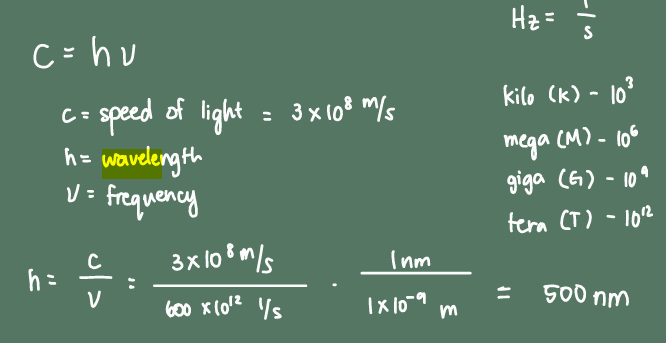
35. What is the wavelength of light in nanometers if its frequency is 600 THz?
A. 500 nm
B. 1800 nm
C. 180 nm
D. 5000 nm
A. 500 nm
36. What is the name of MgH₂?
A. Magnesium hydroxide
B. Magnesium dihydride
C. Magnesium(II) hydride
D. Magnesium hydride
D. Magnesium hydride
37. What is the value of the universal gas constant in cal/mol·K?
A. 4.184
B. 3.973
C. 1.986
D. 8.314
C. 1.986

38. Predict the product of the following acid-base reaction:
NH₃(aq) + HNO₃(aq) →
A. NH₂OH(aq) + HNO₂(aq)
B. NH₄NO₃(aq)
C. NH₄OH(aq)
D. No reaction
B. NH₄NO₃(aq)
39. Which molecule is polar?
A. CO₂
B. BF₃
C. CH₄
D. H₂O
D. H₂O
40. It is the measure of hydrogen-ion activity in aqueous solutions.
A. Conductivity
B. Viscosity
C. pH
D. Solubility
C. pH
41. Which compound is primarily covalent?
A. NaCl
B. MgO
C. CO₂
D. CaF₂
C. CO₂

42. If the absolute temperature of a confined gas is doubled while volume is held constant, what happens to the pressure?
A. It doubles.
B. It becomes half as large.
C. It becomes four times as large.
D. It cannot be determined.
A. It doubles.
43. Elements or groups of elements that have more protons than electrons are called:
A. Anions
B. Cations
C. Isotopes
D. Isobars
B. Cations

44. A solution was prepared by transferring 60 mL of 85% v/v H₃PO₄ and diluting it to 1.0 L. What is the concentration of the new solution?
A. 10.10%
B. 9.25%
C. 12.2%
D. 5.10%
D. 5.10%
45. What normally happens to the viscosity of a liquid as its temperature increases?
A. It decreases.
B. It remains constant.
C. It becomes infinite.
D. It increases.
A. It decreases.
46. Which element has a valence-electron configuration of 5s² 5p³?
A. Silver
B. Antimony
C. Cesium
D. Chlorine
B. Antimony
47. Which chemical may be used to neutralize waste containing caustic soda?
A. Potassium hydroxide
B. Ammonia
C. Hydrochloric acid
D. Buffer 10 solution
C. Hydrochloric acid
48. Arrange the following scenarios according to the scientific method.
I. Different solvents are used in trials to process raw material X.
II. Raw material X yielded more products than the original material.
III. A previous study suggested the use of a different raw material X.
A. I, II, III
B. III, II, I
C. III, I, II
D. I, III, II
C. III, I, II
49. When the pressure of a gas is increased and its temperature is lowered, which becomes applicable?
A. Van der Waals forces become evident.
B. Molecular motion speeds up.
C. No change occurs.
D. Ideality is achieved.
A. Van der Waals forces become evident.

50. Which chemical may be used to neutralize waste containing phosphoric acid?
A. Hydrochloric acid
B. Sodium hydroxide
C. Distilled water
D. Acetone
B. Sodium hydroxide
51. Which condition produces the greatest deviation from ideal-gas behavior?
A. High pressure and low temperature
B. Low pressure and high temperature
C. Low pressure and low temperature
D. High pressure and high temperature
A. High pressure and low temperature
52. What is the molar mass of an unknown gas if 1.60 g occupies 2.24 L at STP? Assume the gas is ideal.
A. 160 g/mol
B. 81.0 g/mol
C. 16.0 g/mol
D. 35.8 g/mol
C. 16.0 g/mol
53. What is the partial pressure of methane in a 100 g mixture of methane and argon if argon constitutes 10% by mass and the total pressure is 250 torr?
Molar mass of Ar = 39.95 g/mol.
A. 225 torr
B. 239 torr
C. 111 torr
D. 250 torr
B. 239 torr
54. The following are characteristics of gases EXCEPT
A. Pressure exerted by a gas decreases as temperature increases.
B. Attractions between particles of an ideal gas are negligible.
C. Gases can be compressed by applying pressure.
D. Gases diffuse and spontaneously mix.
A. Pressure exerted by a gas decreases as temperature increases.
55. What are the smallest whole-number coefficients for the following reaction?
Al + O₂ → Al₂O₃
A. 1, 1, 1
B. 2, 1, 1
C. 2, 3, 2
D. 4, 3, 2
D. 4, 3, 2
56. The standard atmospheric pressure at sea level is:
A. 1 atm
B. 760 mmHg
C. 760 torr
D. All of the choices
D. All of the choices
57. What is the chemical formula of cobaltous oxide?
A. CoO
B. CoO₂
C. Co₂O
D. Co₂O₃
A. CoO
58. Convert 250 μL to milliliters.
A. 250,000 mL
B. 0.0250 mL
C. 0.250 mL
D. 2.50 mL
C. 0.250 mL
59. A compound contains 40.0% carbon, 6.7% hydrogen, and 53.3% oxygen. What is its empirical formula?
A. CHO
B. CH₂O
C. C₂H₄O
D. C₂H₄O₂
B. CH₂O
60. What is the molecular geometry of the chlorate ion, ClO₃⁻?
A. Trigonal pyramidal
B. T-shaped
C. Tetrahedral
D. Trigonal planar
A. Trigonal pyramidal

61. A reaction has a theoretical yield of 10.0 g and an actual yield of 8.00 g. What is the percent yield?
A. 20.0%
B. 80.0%
C. 100%
D. 180%
B. 80.0%
62. In the chlorate Lewis structure shown, what is the formal charge of the rightmost singly bonded oxygen atom?
A. 0
B. +1
C. −1
D. −2
C. −1
63. How many significant figures are there in 4.200 g?
A. 1
B. 2
C. 3
D. 4
D. 4
64. What is the mass percent of oxygen in H₂O?
A. 11.1%
B. 50.0%
C. 88.9%
D. 94.1%
C. 88.9%
65. A liquid with strong intermolecular forces generally has
A. High vapor pressure
B. Low boiling point
C. Low vapor pressure
D. Low surface tension
C. Low vapor pressure
66. A gas occupies 2.00 L at 300 K. What volume will it occupy at 450 K under constant pressure?
A. 1.33 L
B. 2.00 L
C. 3.00 L
D. 4.50 L
C. 3.00 L
67. Which pair is inversely proportional?
A. Bond order and bond energy
B. Bond strength and bond order
C. Bond length and bond energy
D. None of these
C. Bond length and bond energy

68. Sodium carbonate is also known as
A. Baking soda
B. Soda ash
C. Caustic potash
D. Caustic soda
B. Soda ash

69. What is the name of BF₃?
A. Boron fluoride
B. Boron trifluoride
C. Boronic fluoride
D. Boronous fluoride
B. Boron trifluoride

70. Which arrangement shows increasing atomic size?
A. Cs < Ca < O < Ne
B. Cs < O < Ca < Ne
C. Ne < Ca < O < Cs
D. Ne < O < Ca < Cs
D. Ne < O < Ca < Cs

What is the empirical formula of a compound which contains 2.05% H, 32.65% S, and 65.30% O?
A. H₂SO₄
B. HSO₄
C. H₂SO
D. None of the above
A. H₂SO₄
He discovered the nucleus with his “Gold Foil” experiment.
A. John Dalton
B. J.J. Thomson
C. Ernest Rutherford
D. Eugen Goldstein
C. Ernest Rutherford

Which of the following elements (Br or Cu) has the higher ionization energy?
A. Both elements
B. Cu
C. None of these
D. Br
D. Br
Bromine has a higher ionization energy than copper because its valence electrons experience a greater effective nuclear attraction.
Which of the following elements is more electronegative: Cl, S, or Mg?
A. None of these
B. S
C. Mg
D. Cl
D. Cl
Electronegativity generally increases from left to right across a period, making chlorine the most electronegative among the three.
Methane is an example of __________.
A. Heterogenous mixture
B. Element
C. Homogenous mixture
D. Compound
D. Compound
Agua regia is a/an __________.
A. All of these
B. Suspension
C. Solution
D. Colloid
C. Solution
Aqua regia is a homogeneous solution formed by mixing concentrated hydrochloric acid and nitric acid.
What is the molarity of a solution formed from 6.75 g of NaCl (58.4 g/mol) dissolved in water to make a solution with a total volume of 452 mL?
A. 0.256 M
B. 0.799 M
C. 0.412 M
D. 0.872 M
A. 0.256 M
Which of the following is not an example of observable physical property?
A. Texture
B. Color
C. Mass
D. Odor
C. Mass
Mass is a physical property that must be measured, while texture, color, and odor can be directly observed using the senses.
Which has a larger ionic size (Na⁺ or Mg²⁺)?
A. Mg²⁺
B. Na⁺
C. Both ions
D. None of these
B. Na⁺
Na⁺ and Mg²⁺ are isoelectronic, but Mg²⁺ has more protons and therefore pulls its electrons closer, making Na⁺ larger.
Group 7A is a family of __________.
A. Noble gases
B. Alkaline Metals
C. Halogens
D. Alkali Metals
C. Halogens
Which of the following elements is more reactive: Li, Rb, or Fr?
A. Rb
B. Fr
C. Li
D. None of these
B. Fr
Alkali-metal reactivity generally increases down Group 1 because the valence electron becomes easier to remove.
What is the empirical formula of a compound which contains 52.94% Al and 47.06% O?
A. Al₃O
B. Al₂O₃
C. Al₃O₂
D. AlO₂
B. Al₂O₃
A solution that completely dissolves, leaving no remaining substances.
A. Saturated solution
B. Supersaturated solution
C. Unsaturated solution
D. None of these
C. Unsaturated solution
An unsaturated solution can still dissolve additional solute because it has not reached its solubility limit.
He is credited with the discovery of electron in an atom.
A. J.J. Thomson
B. Eugen Goldstein
C. John Dalton
D. Ernest Rutherford
A. J.J. Thomson
J.J. Thomson discovered the electron through experiments using cathode rays.

The seven horizontal rows in the periodic table are called __________.
A. Groups
B. 000
C. Valence
D. Periods
D. Periods
The horizontal rows of the periodic table are called periods, while the vertical columns are groups.

If a mixture of gases contains 7.50 g of H₂, 3.25 g of O₂ and 5.55 g of N₂, what is the mole fraction of the oxygen gas?
A. 0.049
B. 0.925
C. 0.673
D. 0.0253
D. 0.0253
Which subatomic particle determines the identity of an element?
A. Electron
B. Neutron
C. Proton
D. Nucleus
C. Proton
The number of protons determines the atomic number and uniquely identifies an element.
A solution with solute that dissolves until it is unable to dissolve anymore, leaving the undissolved substances at the bottom.
A. Unsaturated solution
B. Supersaturated solution
C. None of these
D. Saturated solution
D. Saturated solution
A saturated solution contains the maximum amount of dissolved solute at a given condition, so additional solute remains undissolved.
A solution is prepared by dissolving 464 g of NaOH (40 g/mol) in water and then diluting to 1 L. The density of the resulting density is 1.37 g/mL. What is the % mass of NaOH?
A. 33.87%
B. 11.60%
C. 50.33%
D. 12.80%
A. 33.87%
He arranged the elements in the periodic table in groups of 3’s or triads also known as “Law of Triad.”
A. Dmitri Mendeleev
B. Johann Wolfgang Dobereiner
C. John Newlands
D. Julius Meyer
B. Johann Wolfgang Dobereiner
Döbereiner grouped chemically similar elements into sets of three known as triads.
Which of the following is an extensive property?
A. Weight
B. Melting point
C. None of these
D. Density
A. Weight
Weight is an extensive property because it depends on the amount of matter present.
Sodium carbonate is also known as?
A. Caustic potash
B. Caustic soda
C. Soda ash
D. Baking soda
C. Soda ash

A compound is 85.69% C and 14.31% H. If the molar mass is 56 g/mol, what is the molecular formula of the compound?
A. CH₂
B. C₄H₈
C. CH₄
D. CH₄H₁₀
B. C₄H₈
Which of the following is an intensive property?
A. Volume
B. Mass
C. None of these
D. Density
D. Density
Density is intensive because it does not depend on the amount of substance present.
A substance that has the ability to dissolve or disperse one or more substances?
A. Crystal
B. Solute
C. Solvent
D. None of these
C. Solvent
A solvent is the substance that dissolves or disperses the solute in a solution.
Atoms of the same element with varying number of neutrons
A. None of these
B. Element
C. Ions
D. Isotopes
D. Isotopes
Isotopes have the same number of protons but different numbers of neutrons.
Brass is an example of __________.
A. Homogenous mixture
B. Heterogenous mixture
C. Compound
D. Element
A. Homogenous mixture
Brass is a homogeneous alloy composed mainly of copper and zinc.
Calculate the molality of a solution prepared from 29.1 g of toluene (92 g/mol) dissolved in 832 g of benzene.
A. 0.114 m
B. 0.380 m
C. 0.787 m
D. 0.567 m
B. 0.380 m
Calculate the % Ca in Ca(OH)₂
A. 54.09%
B. 2.73%
C. 26.7%
D. 43.18%
A. 54.09%
It is the most ideal gas element.
A. Neon
B. Sulfur
C. Helium
D. Oxygen
C. Helium
Helium behaves very nearly as an ideal gas because its atoms are small and have extremely weak intermolecular attractions.