CLST 24 Test 2
 Call Kai
 Learn
 Practice Test
 Spaced Repetition
 Match
 Flashcards
 Knowt Play
1/105

There's no tags or description
Looks like no tags are added yet.
106 Terms

WHAT: Roman society in Historical Period
TIME PERIOD: few ventures after the 6th c. BCE (i.e. historical period)
LOCATION: Rome
SIGNIFICANCE: Extremely hierarchical, can provide some insight into structures of the prehistoric period

WHAT: Leopard Spots
TIME PERIOD: Iron Age
LOCATION: various places in central Italy
SIGNIFICANCE: clusters of settlements from Bronze Age, not cities, strategic location

WHAT: chamber tombs
TIME PERIOD: 6th/7th c BCE
LOCATION: Etruria
SIGNIFICANCE: rise of display of surplus wealth

WHAT: diffusion of urban centers
TIME PERIOD: 6th century
LOCATION: peninsular Italy
SIGNIFICANCE: Western (Tyrrhenian side) dotted with cities

WHAT: Statue of Athena & Herculus
TIME PERIOD: 6th c. BCE
LOCATION: Sant Omobono, Rome
SIGNIFICANCE: blend of Etruscan, Greek, native influence - lots of comparanda, not specific to place, general theme of elites showing off power/wealth

WHAT: Terracotta lions
TIME PERIOD: 6th century BCE
LOCATION: Sant Omobono, Rome
SIGNIFICANCE: blend of Etruscan, Greek, native influence
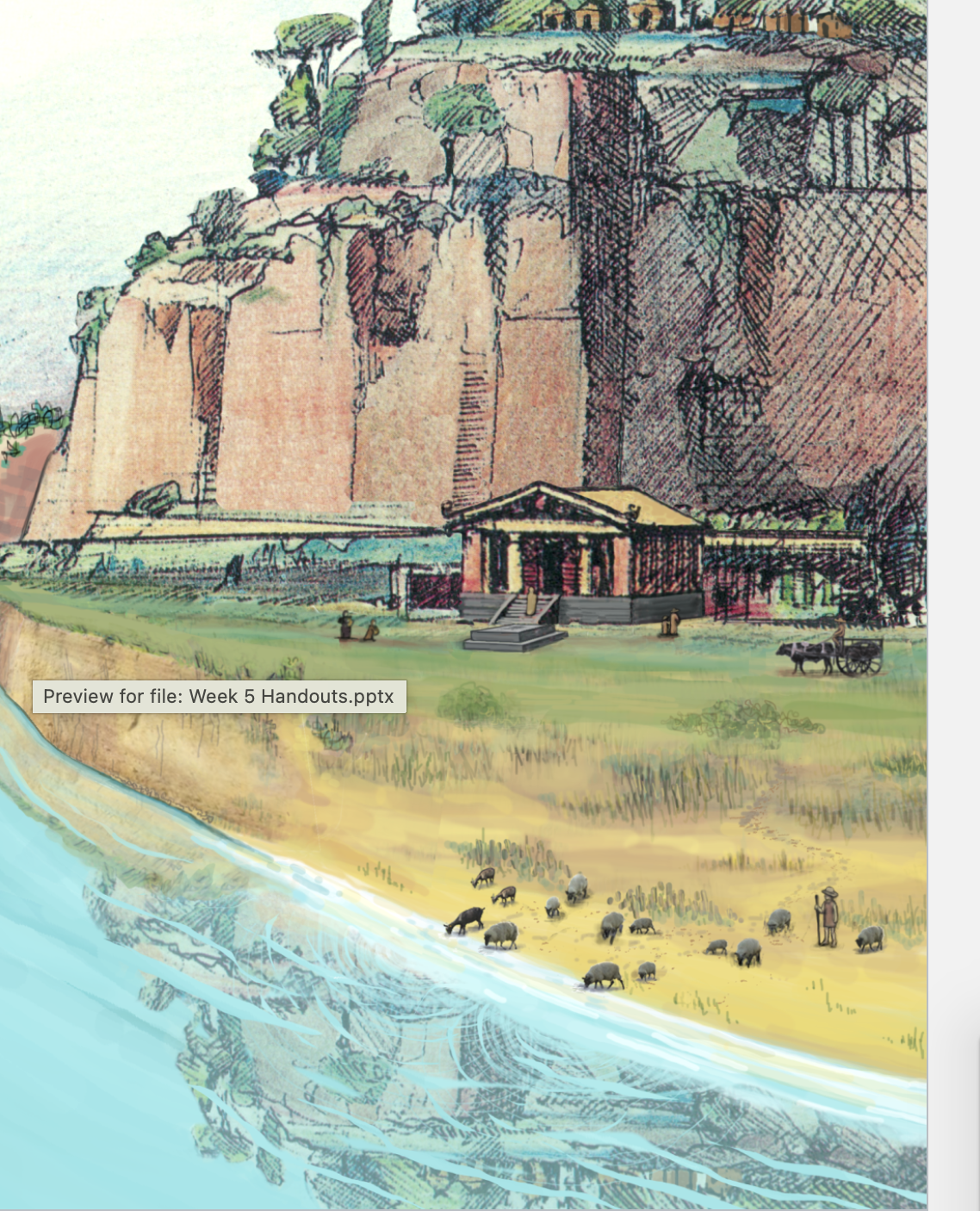
WHAT: Sant Omobono temple
TIME PERIOD: 6th century BCE
LOCATION: Rome
SIGNIFICANCE: first temple in Rome, capellacio quarried from sides of Capitoline hill, welcoming traders/visitors from Tiber and/or a place to pray for safe travel

WHAT: Products and the specializations related to them
TIME PERIOD: 8th to 7th century BCE
LOCATION: Latium
SIGNIFICANCE: evidence of specialization and social stratification (products for elite), creation of a non-elite class that produces things for the elite

WHAT: Terranoto’s model for social structures in prehistory
TIME PERIOD: Emerging city state - EIA
LOCATION: Rome
SIGNIFICANCE: heterarchy of clans that choose to share power, maybe rankings within clans but somewhat equal between clans

WHAT: Aristocratic homes
TIME PERIOD: late 6th century
LOCATION: North Slope of Palatine Hill, Rome
MATERIAL: capellacio & stone, quarried by Rome
SIGNIFICANCE: evidence of an elite class, maybe regal residence, complexity of materials & architectural formation
Also - Carandini reconstructed as historical Roman house, but this is questionable

WHAT: Terranato’s picture of social dynamics in Rome
TIME PERIOD: Early Iron Age
LOCATION: Rome
SIGNIFICANCE: heterarchy (influenced lots of European societies in this time period), multiple clan groups that were unranked or ranked in different ways, unclear what is happening on boundary spaces
EVIDENCE: multiple necropolii showing multiple families in competition with one another

WHAT: ashlar masonry
TIME PERIOD: 6th century
LOCATION: Homes on Palatine and elsewhere in Rome
SIGNIFICANCE: Permanence, complexity in materials & architectural formation
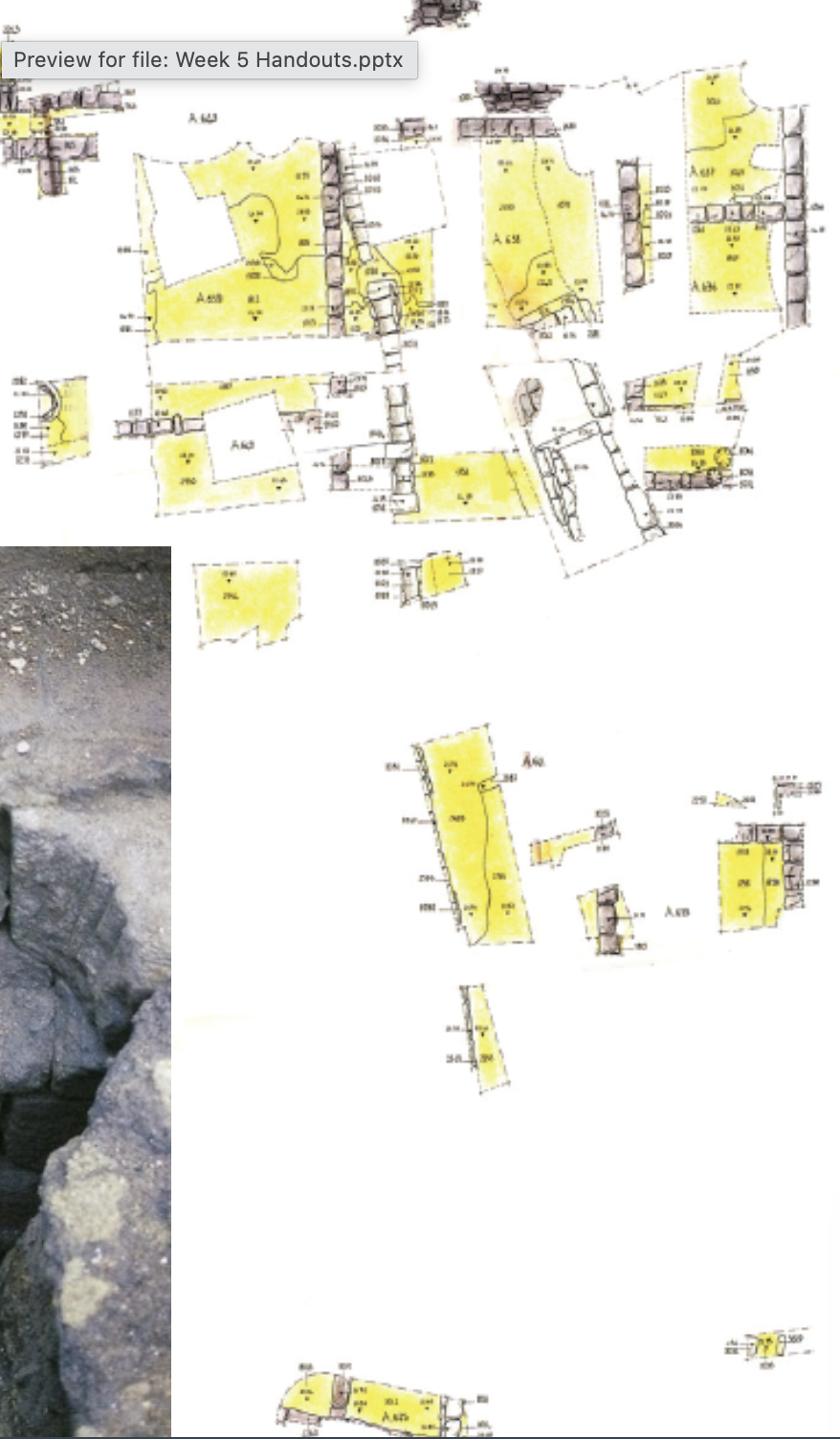
WHAT: Plans of houses
TIME PERIOD: late 6th century
LOCATION: North Slope of Palatine Hill, Rome
SIGNIFICANCE: development of an elite class, permanent and more complex building construction

WHAT: Atrium house
TIME PERIOD: 1st century BCE
LOCATION: Pompeii
SIGNIFICANCE: tells us a lot about the historical home, but Carandini uses this teleologically to reconstruct homes on the Palatine

WHAT: Atrium in the House of the Silver Wedding
TIME PERIOD: 1st century BCE
LOCATION: Pompeii
SIGNIFICANCE: Again, this tells us a lot about the HISTORICAL home but not necessarily prehistoric homes - Carandini uses this teleologically

WHAT: cities
TIME PERIOD: Iron Age & Archaic periods
LOCATION: central Tyrrhenian Italy
SIGNIFICANCE: development of urban centers along the central Tyrrhenian coast in the EIA and Archaic periods

WHAT: Terracotta plaques from domestic structures
TIME PERIOD: 6th century BCE
LOCATION: Acquarossa
SIGNIFICANCE: investment into domestic sites, evidence of banquets (elite activity)

WHAT: stone foundations
TIME PERIOD: 6th century BCE
LOCATION: Acquarossa
SIGNIFICANCE: evidence of investment into more advanced domestic space, supported mud brick walls and terracotta

WHAT: terracotta plaque from domestic structure
TIME PERIOD: 6th century BCE
LOCATION: Acquarossa
SIGNIFICANCE: investment into domestic sites, evidence of dances and processions (elite activity)

WHAT: terracotta plaque from domestic structure
TIME PERIOD: 6th century BCE
LOCATION: Aquarossa
SIGNIFICANCE: investment into domestic sites, military activity, evidence of roof tile industry (local and regional production) - tiles didn’t move around very easily, so probably local

WHAT: terra-cotta plaque from domestic structure
TIME PERIOD: 6th century BCE
LOCATION: Aquarossa
SIGNIFICANCE: investment into domestic sites, military activity and mythological representations, local roof tile industry

WHAT: site plan of building and with tile roof and terracotta acroteria sculptures
TIME PERIOD: 6th century BCE (destroyed at end)
LOCATION: Murlo
SIGNIFICANCE: more advanced domestic space, pieces of burned down structure put into a votive pit, evidence of tile production and votive activity
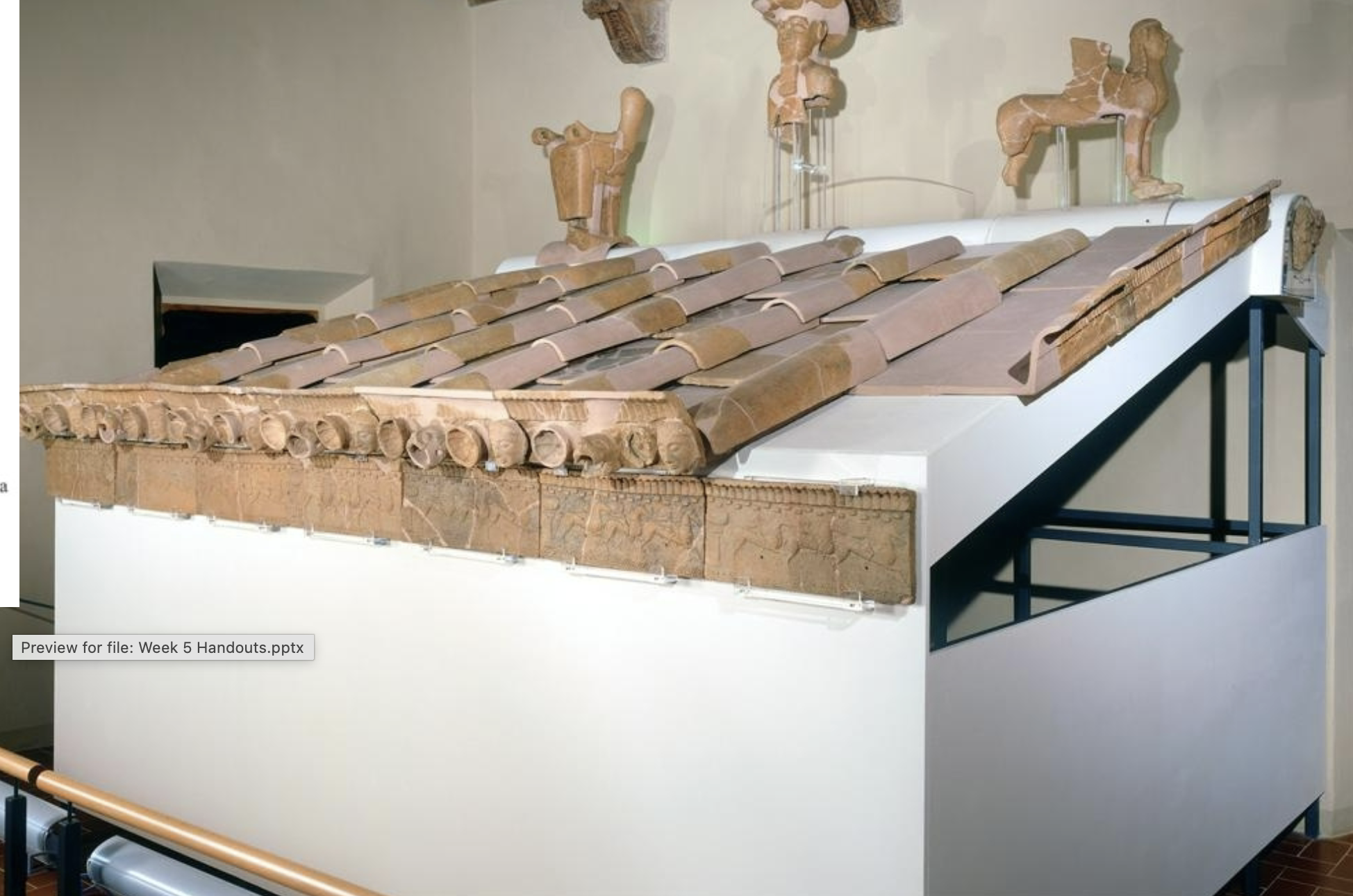
WHAT: tile rood from building with acroteria structures
TIME PERIOD: 6th century BCE (destroyed at end)
LOCATION: Murlo
SIGNIFICANCE: more advanced domestic space, pieces of burned down structure put into a votive pit, evidence of tile production and votive activity

WHAT: terracotta acroteria
TIME PERIOD: early 6th century BCE
LOCATION: Murlo
SIGNIFICANCE: odd, can’t find comparisons, local “flair”, maybe elite representation

WHAT: terra-cotta roof tile
TIME PERIOD: early 6th century BCE
LOCATION: Murlo
SIGNIFICANCE: evidence of advanced domestic structures and banquets (elite activity), tile production

WHAT: drawing of terra-cotta rood tile
TIME PERIOD: early 6th century BCE
LOCATION: Murlo
SIGNIFICANCE: evidence of advanced domestic structures and banquets (elite activity), tile production

WHAT: site plan of Satricum
TIME PERIOD: c. 500 BCE
LOCATION: Satricum
SIGNIFICANCE: development of religious architecture (more monumental, made of stone, etc), stone of dedication found to Mars here
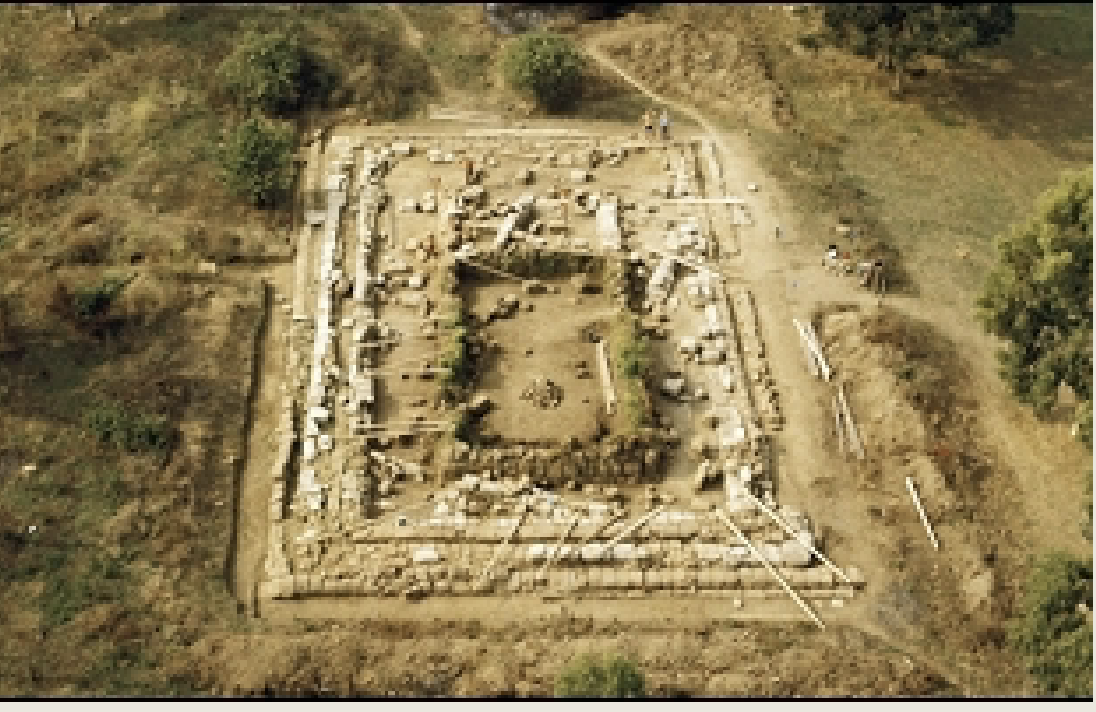
WHAT: remains of Satricum
TIME PERIOD: c. 500 BCE
LOCATION: Satricum
SIGNIFICANCE: development of religious architecture (rectangular plans w/ stone foundations, more monumental), stone of dedication here

WHAT: Lapis Satricanus
TIME PERIOD: c, 500 BCE
LOCATION: Satricum
SIGNIFICANCE: dedication from “companions of Publius Valerius” might represent development of elite class, dedication to Mars represents more monumental religious architecture/formalization of religion

WHAT: Roman man and a Mafia leader
TIME PERIOD: Iron Age and Archaic Period
LOCATION: central Italy (esp. Rome)
SIGNIFICANCE: Iron Age clan leaders and pater families similar to mafia leaders, used the state to influence things in their favor (protect his family’s wealth, power, and land), deliberate decision to share power and to negotiate/form alliances

I
WHAT: The Dawn of Everything book
TIME PERIOD: 2021
LOCATION: n/a
SIGNIFICANCE: Rome attains statehood between 6th and 8th centuries, but the debate is where the term an be used
Book discusses recognizing process of urbanization/state formation in archaeological record, relationship between urbanization and state formation

1
WHAT: Lapis Niger
TIME PERIOD: 1st half of the 6th centuries
LOCATION: Roman Forum
SIGNIFICANCE: recei, archaic form of the dative case of rex, indicates presence of kings

WHAT: inscription on Lapis Niger
TIME PERIOD: 1st half of 6th century
LOCATION: Roman Forum
SIGNIFICANCE: recei, archaic form of the dative case of rex, indicates presence of kings

WHAT: inscription on Lapis Niger
TIME PERIOD: 1st half of 6th century
LOCATION: Roman Forum
SIGNIFICANCE: recei, archaic form of the dative case of rex, indicates presence of kings

WHAT: museum exhibition and catalogue
TIME PERIOD: (about) late Archaic period before Republican period, published 1990
LOCATION: Rome
SIGNIFICANCE: a lot of amazing material evidence from this period, but was it because of the Tarquins or not?

WHAT: V Gordon Childe’s Criteria for the Urban Revolution
TIME PERIOD: written 1950, applied to EIA/Archaic Period
LOCATION: anywhere, but applied to Rome/central Italy
SIGNIFICANCE: some general trends, but one size does not fit all
distance important - not everyone living in proximity in food development, exceeding carrying capacity of immediate surroundings
socio-economic inequality !!
urbanization not inevitable but history has tended to trend that way, hunter gather —> big city
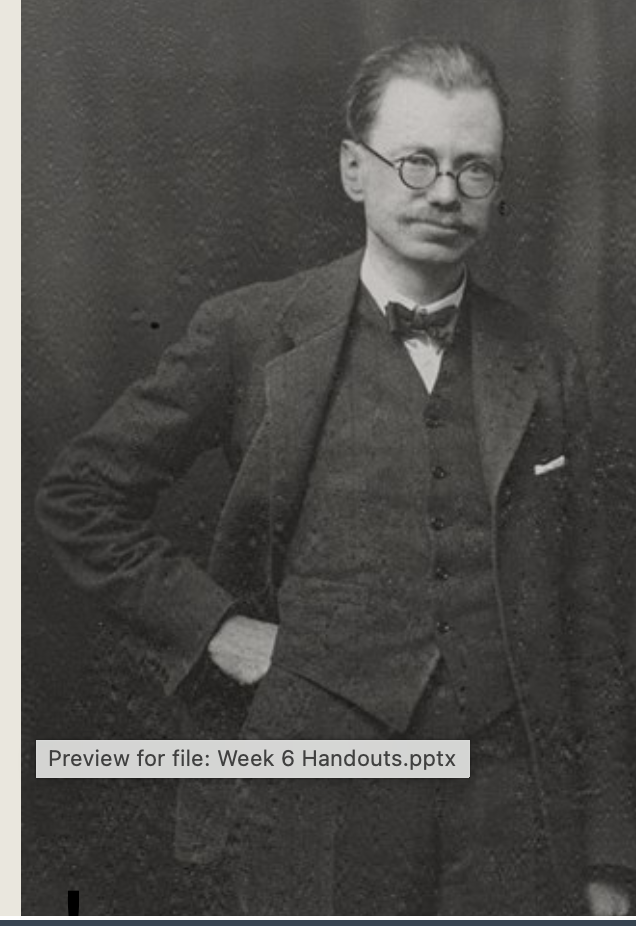
WHAT: Gordon Childe
TIME PERIOD: wrote his 10 criteria for a city in 1950, and it was applied to EIA/Archaic Period
LOCATION:anywhere, but applied to Rome/central Italy
SIGNIFICANCE:some general trends, but one size does not fit all
distance important - not everyone living in proximity in food development, exceeding carrying capacity of immediate surroundings
socio-economic inequality !!
urbanization not inevitable but history has tended to trend that way, hunter gather —> big city

II
WHAT: Dawn of Everything, about Mega Site
TIME PERIOD: 4000 BCE
LOCATION: Nebelivka, Ukraine (or what is now Ukraine)
SIGNIFICANCE: seems to be a city without massive social inequality (no monumental buildings, elaborate tombs, etc)
can have urban development without socioeconomic inequality (Marxist archaeology), pushes back against Childe’s criteria
EXTRA DETAILS:
preceded pyramids in 2600 BCE
intentionally burned, maybe ritually

WHAT: Mega Site
TIME PERIOD: 4000 BCE
LOCATION: Nebelivka, modern Ukraine
SIGNIFICANCE: seems to be a city without massive social inequality (no monumental buildings, elaborate tombs, etc)
can have urban development without socioeconomic inequality (Marxist archaeology), pushes back against Childe’s criteria
EXTRA DETAILS:
preceded pyramids in 2600 BCE
intentionally burned, maybe ritually
concentric circles, roads making neighborhoods/districts

WHAT: criteria for cities
TIME PERIOD: can be applied anytime, here to EIA/Archaic
LOCATION: anywhere, here to Rome/central Italy
SIGNIFICANCE: attributes that can be tested with archaeological evidence at Rome
establishing public space important
these things developed slowly in Rome, not built in a day
regal residences one of these here, but can have kings within an oligarchic socity
Lapis Niger - stone with inscription of REX taken as archaeological evidence for king of Rome, but what was he really

WHAT: leopard spots
TIME PERIOD: Early Iron Age
LOCATION: Central Italy
SIGNIFICANCE: clusters of settlements that preceded cities, protourbanism!

WHAT: Burial Sites
TIME PERIOD: Blue = LBA thru EIA IIA, Yellow = Iron Age, until the 8th century
LOCATION: Forum Romanum, Rome
SIGNIFICANCE: activity stopping in 8th century and burial shifts to Esquiline
evidence that this space was starting to become used as public space / part of the cirt
example of collective action - they all stop at oncce
area is not just for one family - needs to be accessible for all
Place of opportunity that everyone could benefit from
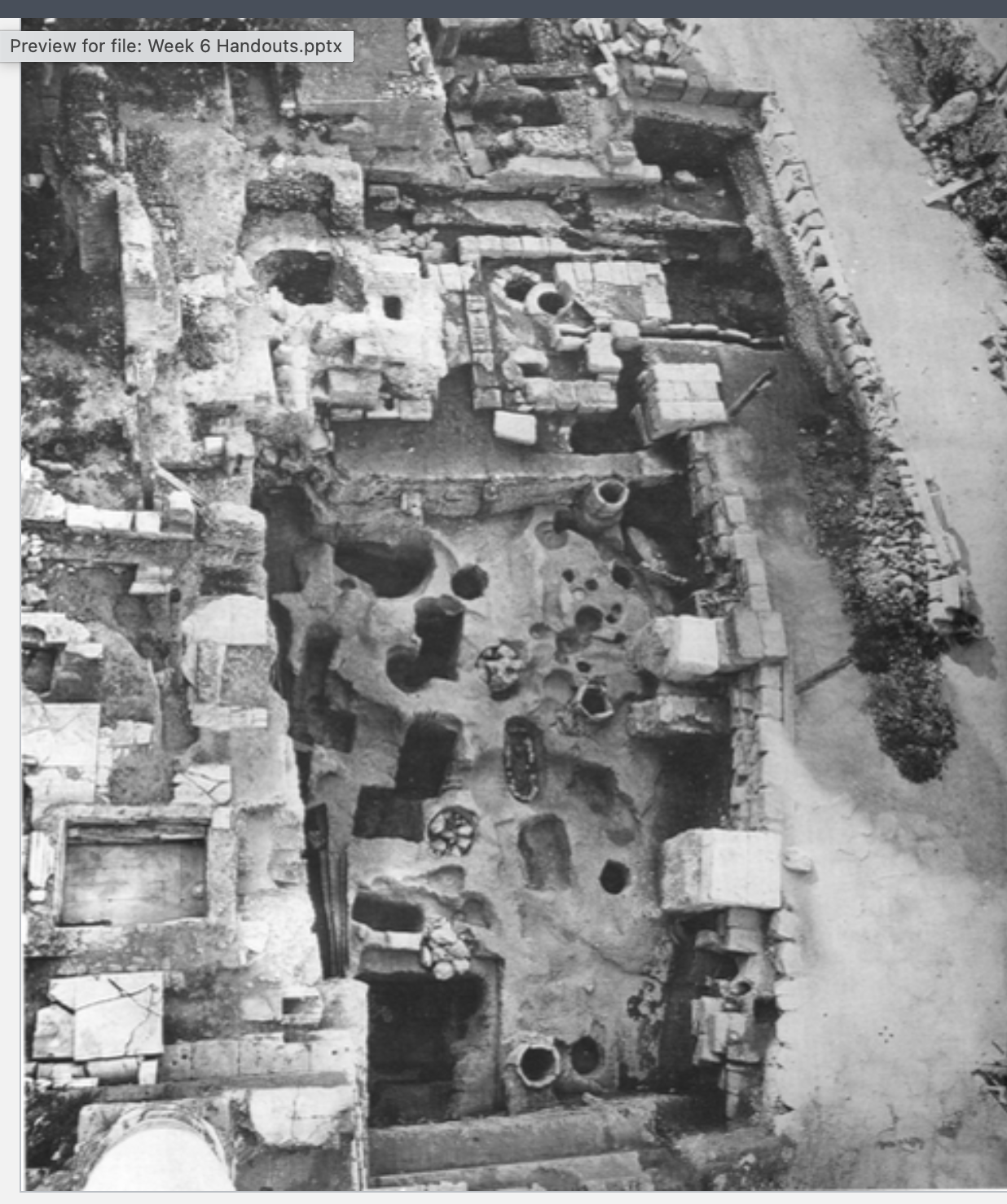
WHAT: Necropolis
TIME PERIOD: Late Bronze Age and Early Iron Age, until the 8th century
LOCATION: Forum Romanum
SIGNIFICANCE: activity stopped in 8th century, indicating collective action, increasing importance of this as public space and a place of opportunity

WHAT: Grave
TIME PERIOD: Late Bronze Age and Early Iron Age, until 8th century
LOCATION: Forum Romanum
SIGNIFICANCE: I think (from last time) this one has an infant burial, which was unusual for a necropolis
activity stopped in 8th century, indicating collective action, increasing importance of this as public space and a place of opportunity

WHAT: Hut urns and other terracotta grave goods
TIME PERIOD: Late Bronze Age and Early Iron Age, until 8th century
LOCATION: Forum Romanum
SIGNIFICANCE: representation of domestic architecture, evidence of social stratification/roles/daily life
activity stopped in 8th century, indicating collective action, increasing importance of this as public space and a place of opportunity

WHAT: map of wall feature found by Andrea Carandini
TIME PERIOD: late 8th century
LOCATION: Palatine Hill, Rome
SIGNIFICANCE: A Carandini claimed this was Romulus’s wall, which seems teleological/unlikely
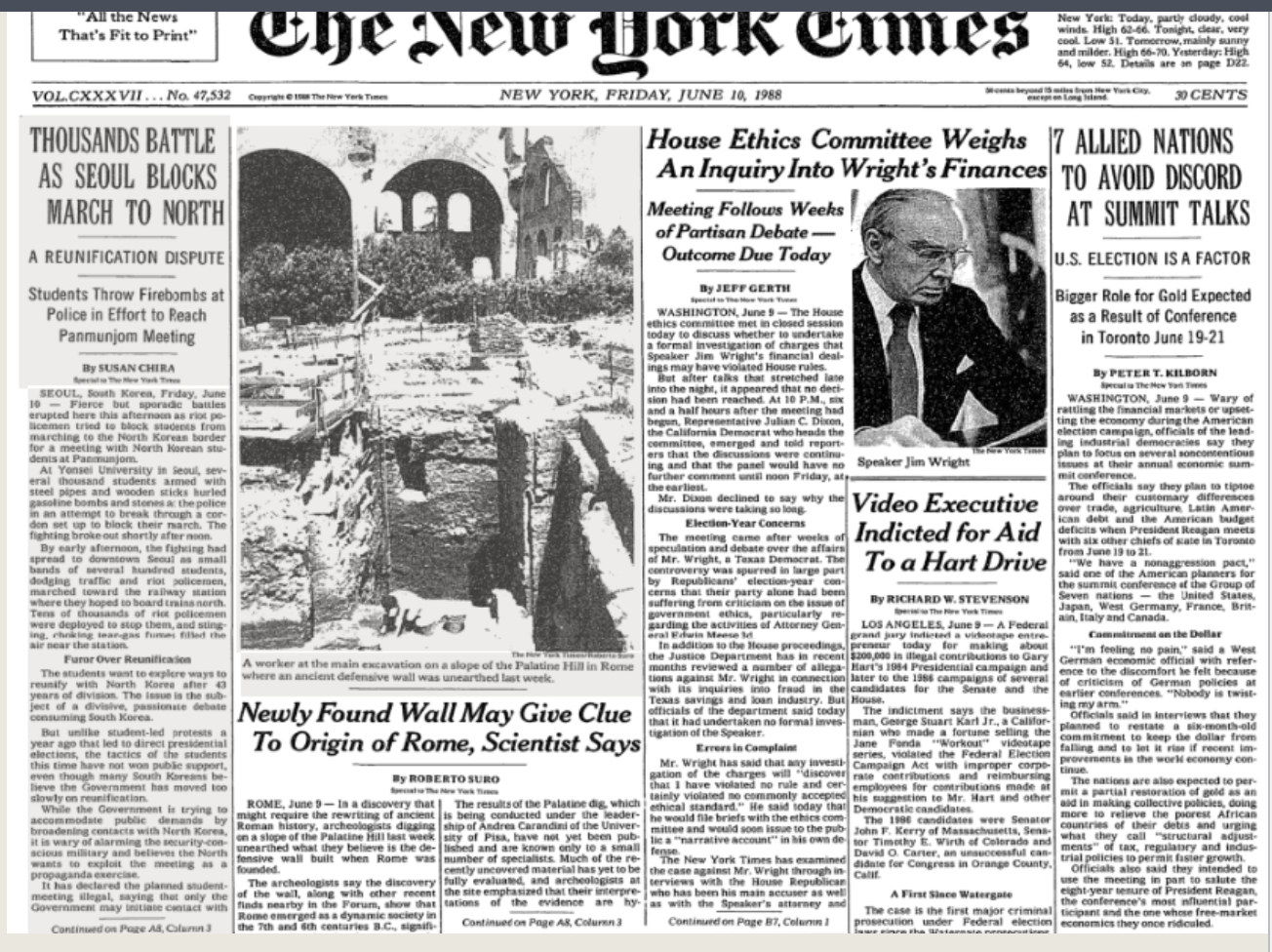
WHAT: newspaper of Caradini’s Romulus wall
TIME PERIOD: wall from 8th century BCE (supposedly 753) , article from 1988
LOCATION: Palatine Hill
SIGNIFICANCE: claimed this was Romulus’ wall from 753 BCE - telelogical/not likely
not very tall, probably not for defense
to create height, they would create ditches/moats, and there is no evidence of this
Romulus was a myth from historical period, no real evidence that it is true

WHAT: picture of site of “Romulus’ wall”
TIME PERIOD: wall from 8th century BCE
LOCATION: Palatine Hill, Rome
SIGNIFICANCE: claimed this was Romulus’ wall from 753 BCE - telelogical/not likely
not very tall, probably not for defense
Romulus was a myth from historical period, no real evidence that it is true
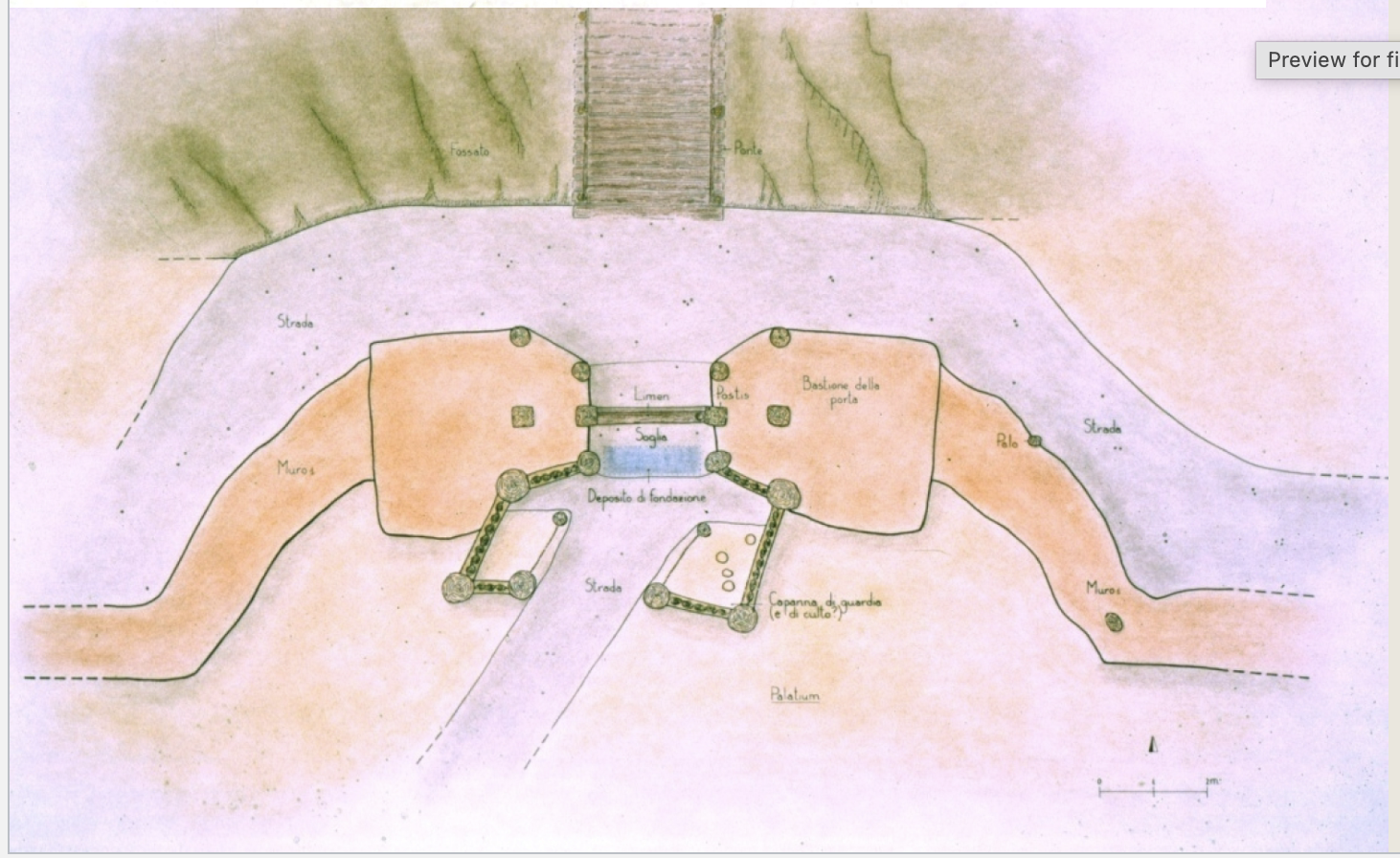
WHAT: another picture of “Romulus’s wall”
TIME PERIOD: wall from 8th century BCE
LOCATION: Palatine Hill, Rome
SIGNIFICANCE: claimed this was Romulus’ wall from 753 BCE - telelogical/not likely
not very tall, probably not for defense
Romulus was a myth from historical period, no real evidence that it is true

WHAT: supposed “Romulus’s wall”
TIME PERIOD: from 8th century BCE
LOCATION: Palatine Hill, Rome
SIGNIFICANCE: claimed this was Romulus’ wall from 753 BCE - telelogical/not likely
not very tall, probably not for defense
to create height, they would create ditches/moats, and there is no evidence of this
very rubbly
also no evidence for decoration
stone construction is novel but still very small scale
maybe an enclosure for burial space, demarcation of space (sheep pen)

WHAT:
TIME PERIOD:
LOCATION:
SIGNIFICANCE:

3
WHAT: The Dawn of Everything
TIME PERIOD: any and all (Roman urbanization = EIA and Archaic)
LOCATION: any and all (focus on Rome)
SIGNIFICANCE: Rome urbanized between 6th and 8th centuries, exactly when unclear
focus has been on timeline, but HOW and WHY Rome became a state/urbanized is way more interesting
Questions:
how can we see this process in archaeological record?
relationship between urbanization and state formation?

WHAT: Lapis Niger
TIME PERIOD: 1st half of 6th century
LOCATION: Forum Romanum
SIGNIFICANCE: recei, archaic form of the dative case of rex (to/for king) is potential evidence for presence of kings
myth of 7 kings well entrenched in historical and modern period
in low level in Forum, disappear until excavated
what were the kings? could have a different meaning, maybe just an office and still hetarachical
Rex Sacrorum in historical/later periods - religious position
stone seems to be part of a larger reconstruction - this picture is a hypothetical reconstruction)
tyrant? clans rose up and controlled and had temporary rule
potential fluctuations between oligarchy, hetararchy, monarchy, democracy

WHAT: Lapis Niger
TIME PERIOD: 1st half of 6th century
LOCATION: Forum Romanum
SIGNIFICANCE: recei, archaic form of the dative case of rex (to/for king) is potential evidence for presence of king
stone seems to be part of a larger reconstruction - this picture is a hypothetical reconstruction)
tyrant? clans rose up and controlled and had temporary rule
potential fluctuations between oligarchy, hetararchy, monarchy, democracy
made of local quarried tufo
one of earliest Latin inscriptions
oligarchical OR ruling over all of this (like Pharaoh)

WHAT: Lapis Niger
TIME PERIOD: 1st half of 6th century
LOCATION: Forum Romanum
SIGNIFICANCE: recei, archaic form of the dative case of rex (to/for king) is potential evidence for presence of king
myth of 7 kings well entrenched in historical and modern period
in low level in Forum, disappear until excavated
what were the kings? could have a different meaning, maybe just an office and still hetarachical
Rex Sacrorum in historical/later periods - religious position
made of local quarried tufo
one of earliest Latin inscriptions
oligarchical OR ruling over all of this (like Pharaoh)

WHAT: small temple like complex
TIME PERIOD: early 7th century BCE
LOCATION: Tarquinia
SIGNIFICANCE: votive offerings found here indicate position of authority, general development of religious architecture (more monumental temples)
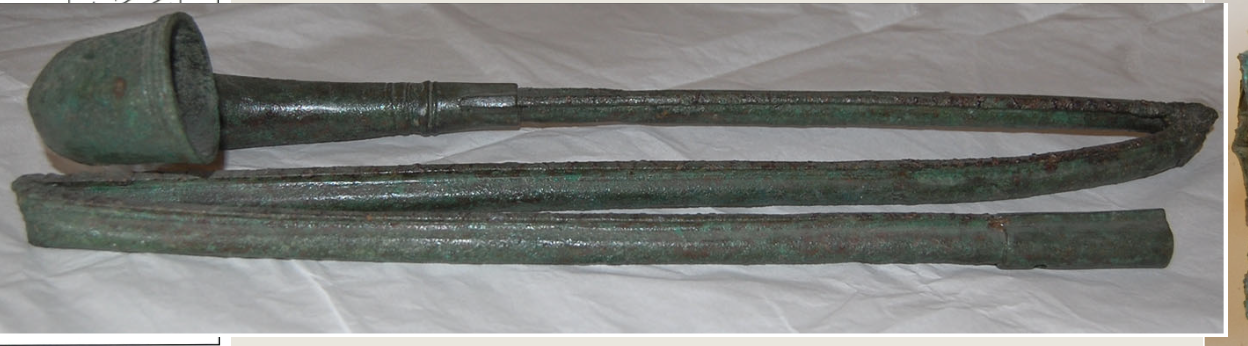
WHAT: bronze lituus (staff), trumpet, and shield
TIME PERIOD: early 7th century BCE
LOCATION: Tarquinia
SIGNIFICANCE:found in a votive deposit outside wall of temple-like compound, indicate positions of authority, symbols of military part of society, different than symbols of wealth but developing at similar times

WHAT: bronze shield
TIME PERIOD: early 7th century BCE
LOCATION: Tarquinia
SIGNIFICANCE: found in a votive deposit outside wall of temple-like compound, indicate positions of authority, symbols of military part of society, different than symbols of wealth but developing at similar times

WHAT: modern demonstration of trumpet
TIME PERIOD: modern, but based on trumpet from early 7th century BCE
LOCATION: Tarquinia
SIGNIFICANCE: ceremony for a trumpet found in a votive deposit outside wall of temple-like compound, indicate positions of authority, symbols of military part of society, different than symbols of wealth but developing at similar times

WHAT: possible Etruscan colony
TIME PERIOD: early 5th century
LOCATION: Marzabotto, Po Plain
SIGNIFICANCE: ectilinear buildings = better evidence for rectilinear homes than Roman evidence, very well excavated
northern Italy in Po Valley
possibly an Etruscan colony
contemporary with 12 Tables

WHAT: possible Etruscan colony
TIME PERIOD: early 5th century
LOCATION: Marzabotto, Po Plain
SIGNIFICANCE: rectilinear buildings = better evidence for rectilinear homes than Roman evidence, very well excavated
northern Italy in Po Valley
possibly an Etruscan colony
contemporary with 12 Tables

WHAT: possible Etruscan colony
TIME PERIOD: early 5th century
LOCATION: Marzabotto, Po Plain
SIGNIFICANCE: rectilinear buildings = better evidence for rectilinear homes than Roman evidence, very well excavated
northern Italy in Po Valley
possibly an Etruscan colony
contemporary with 12 Tables

WHAT: possible Etruscan colony
TIME PERIOD: early 5th century
LOCATION: Marzabotto, Po Plain
SIGNIFICANCE: rectilinear buildings = better evidence for rectilinear homes than Roman evidence, very well excavated
northern Italy in Po Valley
possibly an Etruscan colony
contemporary with 12 Tables

WHAT: possible Etruscan colony
TIME PERIOD: early 5th century
LOCATION: Marzabotto, Po Plain
SIGNIFICANCE: rectilinear buildings = better evidence for rectilinear homes than Roman evidence, very well excavated
northern Italy in Po Valley
possibly an Etruscan colony
contemporary with 12 Tables

WHAT: diagram of Etruscan nucleation from Stoddart
TIME PERIOD: 1000 BCE - 600 BCe
LOCATION: Etruria
SIGNIFICANCE: not specific dates where city is “founded”, longer processes of formation
Foundation: hut villages, with funerary urns (1000-950)
Transformation I: heterachical nucleated centers, still oval huts, urns and HUT urns (950-850 BCE)
Transformation II: irregular rectinlinear house, trench/tumuus/tombs with “Eastern knowledge” (850-700)
Resilience: monumentalization, regular rectilinear house, chamber tombs (700-600)
1
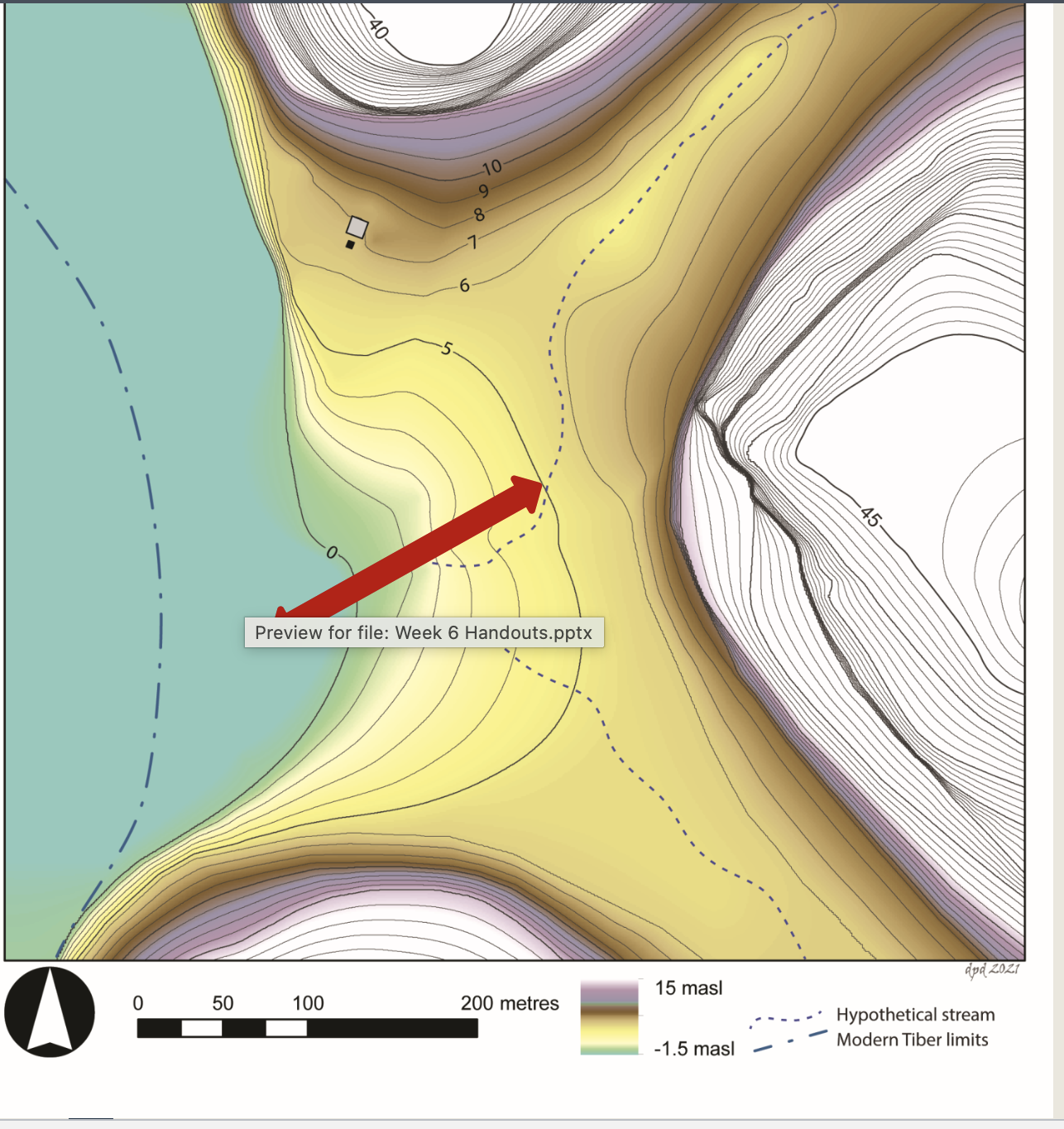
WHAT: Tiber Valley
TIME PERIOD: early 6th century BCE
LOCATION: Tiber at Rome
SIGNIFICANCE:
gently sloping shore, natural harbor (cross river without a boat, pull boat to shore) - conducive to trading
much lighter than now
permanent settlement on hills since 2nd millenium
CONTROL over this river valley
in 8th century, this was NOT a floodplain because they wouldn’t have buried here
contradicts current scholarship that it was a wet place that needed be filled
Sant Omobono - 560 BCE - first major investment
another level of labor, technical expertise, time investment

WHAT: harbor/ford
TIME PERIOD: early 6th century
LOCATION: Rome
SIGNIFICANCE: Tiber was a natural harbor/ford, easily crossable without a boat and easy to pull boats ashore. This was attractive to traders and made Rome an important location without central Italy

WHAT: professor’s cores
TIME PERIOD: various
LOCATION: Forum Boarium
SIGNIFICANCE:
6th century - 5 m of silt gets deposited in this valley (B)
alluvial deposit: sediment left by water
this level dated to early Archaic period
much finer silt (found in floodplain) - rivers have less energy as they flood and drop a “suspended load”
riverbed - sands, rounded gravel

WHAT: Tiber Valley at Rome
TIME PERIOD: mid-Republican/3rd century BCE
LOCATION: Valley of the Tiber River in Rome
SIGNIFICANCE:
the valley was filled for them! by the floods
5 m of alluvial deposits in 6th century
contrasts with reclamation hypothesis
much less gently sloping

WHAT: list of major constructions in Rome
TIME PERIOD: late 7th - early 5th centuries
LOCATION: Rome
SIGNIFICANCE: Permanent, monumental structures evidence of urbanization
cores align with a lot of construction
a lot around/outside of Rome, from field survey and walking
lots of city building, new materials, new technologies
Sant Omobono - first major investment
another level of labor, technical expertise, time investment

2
WHAT: museum exhibition and catalogue
TIME PERIOD: published 1990, about late Archaic before Republic
LOCATION: Rome
SIGNIFICANCE: Lots of archaeological change in late 6th century Rome (Capitoline/JOM Temple, twin temples at S. Omobono, other monumental architecture) - was it the kings or not?

WHAT: book
TIME PERIOD: written in 2016, about 550-500
LOCATION: Rome
SIGNIFICANCE: shift to monumental architecture, focus on Capitoline/Jupiter Optimus Maximus Temple
substantial change in building practice - larger and more complex design, and more international sculpture on roofs
LOTS of archaeological change in late 6th century

WHAT: Capitoline Temple
TIME PERIOD: late 6th century BCE
LOCATION: Rome
SIGNIFICANCE: Monumental architecture! Stone foundations, columns, terracotta roof
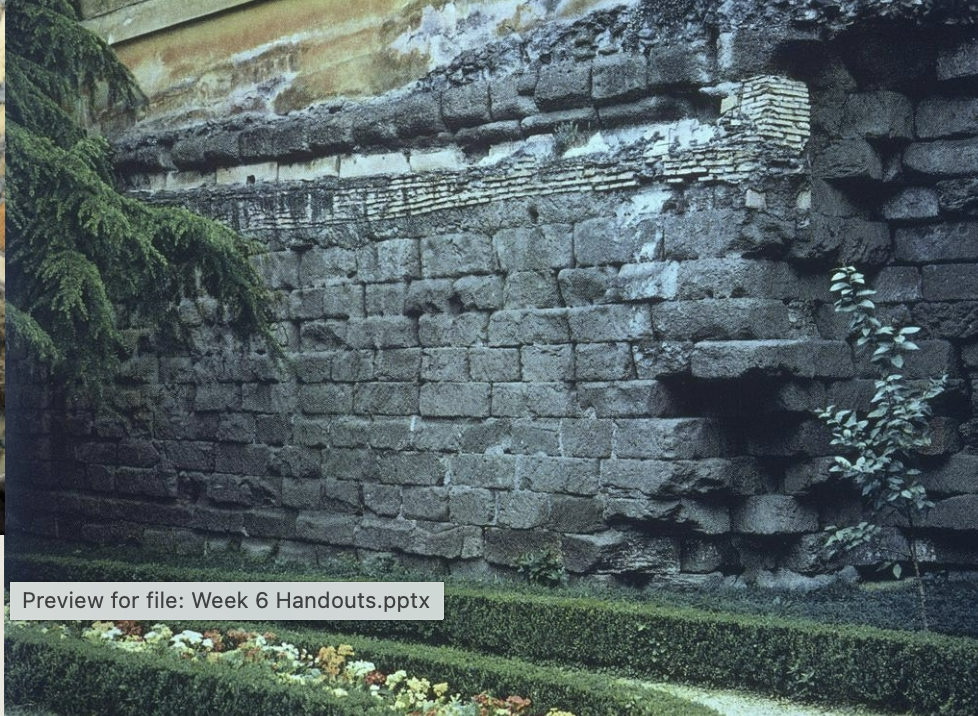
WHAT: foundation of Capitoline Temple
TIME PERIOD: late 6th century BCE
LOCATION: Rome
SIGNIFICANCE: Monumental architecture! Large stone foundations made these temples sturdy, large, imposing

WHAT: Samples from Diffendale’s work
TIME PERIOD: modern phase, about Archaic period
LOCATION: Rome, Italy
SIGNIFICANCE: quarried rock from Capitoline
chemical analysis of building material - stone from various monumental buildings come from basically the same source
collected samples from the side of Capitoline - stone quarried for these buildings came from here

WHAT: Diffendale article
TIME PERIOD: modern phase, about Archaic period
LOCATION: Rome, Italy
SIGNIFICANCE: quarried rock from Capitoline
chemical analysis of building material - stone from various monumental buildings come from basically the same source
collected samples from the side of Capitoline - stone quarried for these buildings came from here

2
WHAT: Tiber Valley
TIME PERIOD: early 6th century
LOCATION: Tiber Valley, Rome
SIGNIFICANCE: Sant Omobono not originally in a floodplain!!
solves this issue of scholars thinking it was and just thinking it was a mistake that the Romans built it here
eventually it does become one and they build taller structures, but not originally!

WHAT: superimposition of ancient Forum Romanum and potential quarry area of Capitoline on aerial view of modern view
TIME PERIOD: under picture is modern, yellow is Archaic period
LOCATION: Forum Romanum and side of Capitoline Hill
SIGNIFICANCE:
lots of stone quarried from side of Capitoline Hill!
intensely exploited very quickly to build all of those structures
this area that was quarried, then became part of the Forum
Forum was a massive industrial site in 6th century
scale of change is HUGE! - also in river valley
stone, but also timber, clay, etc

WHAT: terracotta tile kiln
TIME PERIOD: (beginning in) 7th century BCE
LOCATION: Italy
SIGNIFICANCE: lots of timber required for these kilns, leads to deforestation
development of architecture with the advent of tile roofs

WHAT: terracotta roof tiles
TIME PERIOD: 7th century BCE
LOCATION: Italy
SIGNIFICANCE: development of domestic/religious architecture with the advent of tile roofs with intricate designs and terracotta structures

2
WHAT: Brock’s cores
TIME PERIOD: various
LOCATION: Forum Boarium
SIGNIFICANCE: 5 feet of alluvial deposits in 6th century - filled in Valley and made it a floodplain
Tiber is the source of sediment
sediment may have been partially caused by deforestation - eroded and found way to river valley because of less trees

WHAT: Tiber Valley Project
TIME PERIOD: 580-480 BCE (Archaic)
LOCATION: Tiber Valley in central Italy around Tiber
SIGNIFICANCE: lots of urbanization/nucleation around the Tiber
levels - town, nucleated settlement, high status settlement, other settlement, farm, necropolis
access to trade, shipping, other communities
deforestation around may lead to alluvial deposits/more volcanic sediments in river
development of farms, necropolii, and smaller settlements around centers (becoming city-states)

WHAT: papulae
TIME PERIOD: 6th century BCE
LOCATION: alluvial sediments in Tiber, Brock’s cores
SIGNIFICANCE: soil associated with volcanic activity, so deforestation + precipitation might have led to erosion which led to alluvial deposits in Tiber

WHAT: core w/ papulae
TIME PERIOD: 6th century BCE
LOCATION: alluvial sediments in Tiber in Brock’s cores
SIGNIFICANCE:
coarse, silt sized fragments of former Bt soil horizons that were frequent on volcanic plateaus of Rome) that have been eroded away
based on tight chronology w/ ceramic sherds
soil associated with volcanic activity, so deforestation + precipitation might have led to erosion which led to alluvial deposits in Tiber

WHAT: Tiber Valley + Via Salaria
TIME PERIOD: Archaic
LOCATION: central Italy
SIGNIFICANCE:
Via Salaria - salt road - coming from coast through Rome to highlands
attested historically, but thought to have existed as early as Bronze Age
natural resources in central Italy that were available to Rome
sediment coming from upriver, may have been more widespread than Rome

WHAT: Tiber Island
TIME PERIOD: built up in the 6th century
LOCATION: in the Tiber River near Rome
SIGNIFICANCE:
thought by modern scholars to always have existed and to have created natural ford/harbor
legend that Romans put crops in the river after the kings ousted and the river brought stuff to make an island
reasonable that historians discounted this, but geoarchaeological evidence allows for a reconsideration
awareness it didn’t always exist - maybe they knew this from Annales Maximi
built in 509 BCE (monarchy)
streets converge, bridge - indicate thet there was a ford
buildup of Tiber Island is now well dated to 6th century based on cores (emerged during 6th)
There was a ford but not because of the island (just shallow)
Tiber Island may have presented practical challenges (or benefits) and/or had religious implications

3
WHAT: Tiber Valley
TIME PERIOD: 6th century
LOCATION: Tiber Valley, Rome
SIGNIFICANCE: Tiber Island did not exist in 6th century, contrary to modern historian’s belief - instead, river was just shallow and gently sloping and the island emerged during the 6th century

WHAT: Flood impacts in the Augustan period
TIME PERIOD: Augustan period (43 BC - 18 AD)
LOCATION: Tiber Valley near Rome
SIGNIFICANCE: Rome/Forum Valley did become susceptible to floods
however, it was not in the 6th and the reclamation theory is not accurate
doesn’t make sense that they would build a city before they’d seen one
“they must have had the same problem” is an important, pervasive view but cannot assume flooding in prehistory
Floods reach as high as 20 m
know they reached some buildings, very well documented
major case study of urban flooding
2
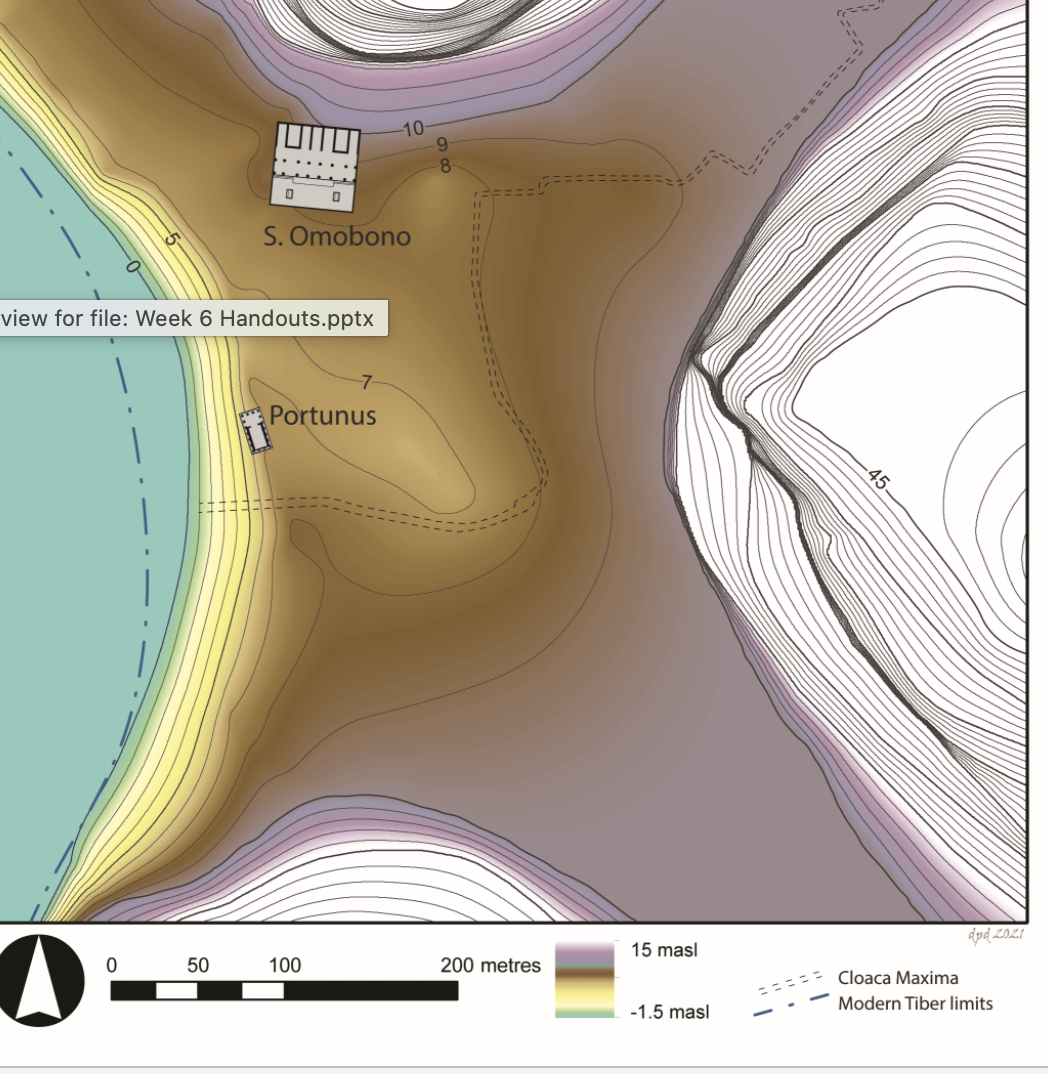
WHAT: Tiber Valley
TIME PERIOD: mid-Republican Period (3rd century BCE)
LOCATION: Tiber Valley in Rome
SIGNIFICANCE:
more constricted river that needed a bridge
might have had floods and drainage problems
may have needed drainage in floodplain
small scale reclamation NOW, but not earlier
created Forum = created city - lots of debate onchronology of fill, but new evidence disproves this whole thing

4
WHAT: Tiber Valley
TIME PERIOD: 6th century
LOCATION: Tiber Valley, Rome
SIGNIFICANCE:
setting for “Res Publica 1.0” - not suitable for private individuals, so it was shared land, especially because lots of people need access to move through
Sant Omobono temple built in 560 BCE and abandoned at end of 6th century BCE
ideal landscape to control and toll people in early 6th century

WHAT: plan of new Sant Omobono Temple with old one in Red
TIME PERIOD: first one built in early 6th century, new one built in early 5th century
LOCATION: Forum Boarium, Rome
SIGNIFICANCE:
original temple built in a place that was much less floodprone
still not explanation from Ammerman et all - just assumed it was a mistake because it was floodprone
temple shows importance of space and the desire for divine presence

WHAT: capellacio platform of the Sant Omobono temple (or similar)
TIME PERIOD: early 5th century
LOCATION: Forum Boarium, Rome
SIGNIFICANCE:
Romans DOUBLE DOWN and built a new temple! 12 m above sea level
shows they didn’t want to give up this bustling area
now twin temples!
Platform = flood mitigation technique
Floods in late 6th century require more organization and collective action - “Res Publica 2.0”
stone quarried from the SE side of the Capitoline hill

WHAT: plan of the later Sant Omobono Sanctuary
TIME PERIOD: early 5th century
LOCATION: Forum Boarium, Rome
SIGNIFICANCE:
Romans DOUBLE DOWN and built a new temple! 12 m above sea level
shows they didn’t want to give up this bustling area
now twin temples!
Platform = flood mitigation technique
Floods in late 6th century require more organization and collective action - “Res Publica 2.0”
stone quarried from the SE side of the Capitoline hill

WHAT: Hypothetical reconstruction of twin temples at the Sant Omobono Sanctuary
TIME PERIOD: early 5th century BCE
LOCATION: Rome
SIGNIFICANCE:
late 6th century activities - investing and collective action
Platform is a flood mitigation effort - choose to stay beau the area is still important to them
religiously, socially, economically important
more organization and collective action - “Res Publica 2.0”
also build port infrastructure and embankment walls
HOPKINS 2017
Tarqunius Superbus credited with period of monumental construction in Rome, but was it really him?
Major construction goes past his reign - many buildings built, vowed, begun, finished in 50 years after his reign/monarchy ended
absence of testimony on royal monarchy on construction
Tarquin shift in early Rome might be misleading
Lindenhout 2017
Looking at buildings thought to be royal residences, conclude that none of them are
including Andrea Carandini’s reconstruction, Regia
some of the houses are not unique, don’t show differences with building practices of the period
excavators set up chronologies that line up with reigns - coincidental?
Lulof 2000
Acroteria of Herculus and Athena similar to other statues around the Mediterranean may not have been unique, just the way that wealth was displayed
people try to seek political propaganda, but prob just a display of power and wealth
Bernard 2018
New building materials - stone, terracotta, metal, wood
Imperial conquest gives Rome access to quarries, forests, mines to supply these things
Republican state acquires and works territories providing these resources
mix between state and private involvement
Hopkins 2016
On A New Scale
new scale of monumental architecture, focus on Capitoline Temple/Temple of JOM
huge, never been done on this scale before
some influence from other places in Mediterranean, but first in Rome/central Italy to be THIS LARge
Also: S. Omobono Statues, Regia, Atrium Vestae, domestic architecture on Palatine, defensive walls
new materials, building techniques, organization/collective action
Lindenhout 2016
Huts to houses
big changes in domestic building changes
from huts made of poles, branches, mud, and straw to…
houses with stone foundations, tiles, wood
consequence of contact with other cultures, social stratification
change level of social stratification may not have been that dramatic - superimposition of houses onto huts, so huts might have been predecessors elite dwellings (specifically courtyard houses)