W7: pelvis anatomy and true/false pelvic
 Call Kai
 Learn
 Practice Test
 Spaced Repetition
 Match
 Flashcards
 Knowt Play
1/28

There's no tags or description
Looks like no tags are added yet.
29 Terms
pelvic girdle is composed of
ilium, ischium, pubis
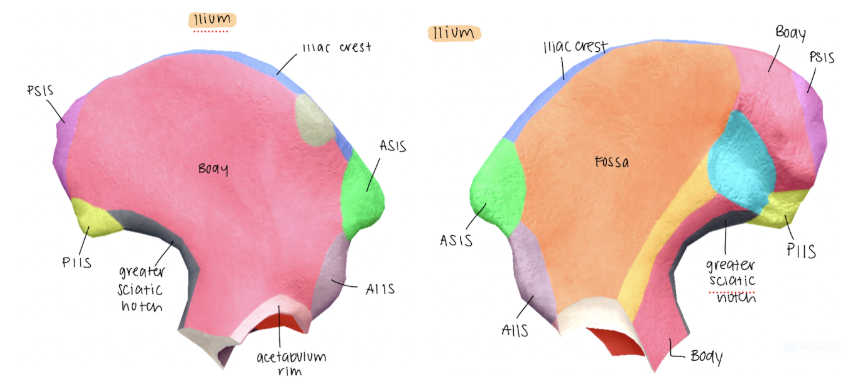
purpose of iliac spineS
msucle attachment
ASIS/AIIS/PSIS/PIIS
which iliac spine is palpable
ASIS
Is the anterior iliac spine or posterior iliac spine medial or lateral?
Anterior = lateral, posterior = medial (slight difference)
where does greater sciatic notch extend from-to
extends from PIIS and ischial spine, sits SUP of ischial spine
what vertebrae is iliac creast in line with
L5
iliac fossa
concave internal surface of ilium
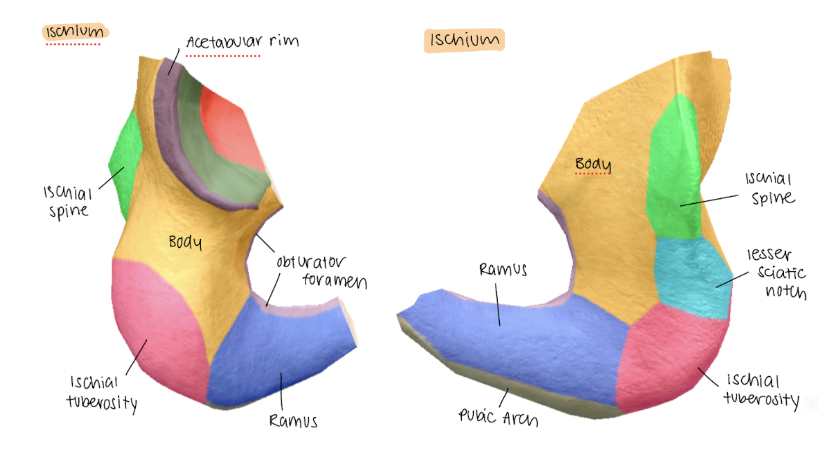
what allows for ischium to articulate with the femur
acetebulum
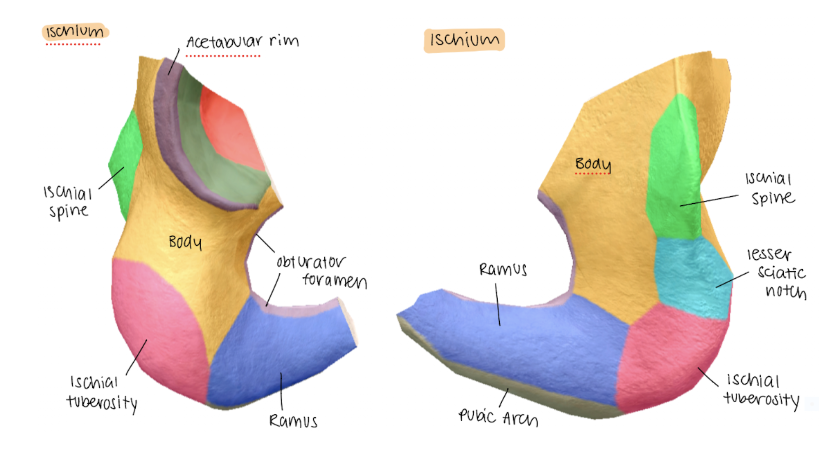
Given an image of ischium, how to know if im on medial or lateral aspect?
Lateral aspect if you see the acetabulum – where it articulates with the femur
What divides the greater and lesser sciatic notch?
Iliachial spine (SUP = greater sciatic notch, INF = lesser sciatic notch)
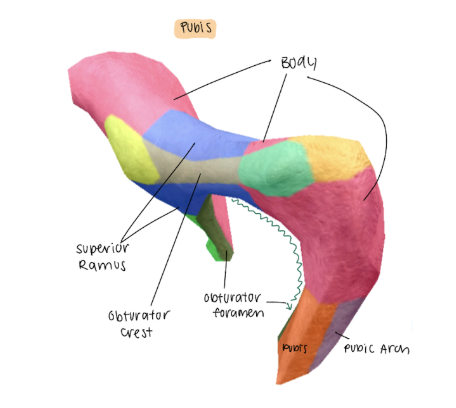
What separates the body of the pubis?
The superior and inferior rami
differences between female and male pelvic
Pelvic brim ⇒ female larger, wider than male (male = more narrow)
Composed of – ilium laterally, pubis anteriorly, sacral promontory posteriorly
Angle of pubic arch ⇒ female angle is >90 deg., male is more acute
Ala of ilium ⇒ female ala is more flared than male
Iliac crest ⇒ lower in females than males

purpose of wider brim and wider pelvic arch
allow for female childbirths
What divides the false and true pelvis?
pelvic brim (in line with an imaginary oblique line from sacral promontory to superior of pubic symphysis)
⤷ SUP to line/brim = false pelvis // INF of the line/brim = true pelvis
false pelvis
False (greater) pelvis: SUP to pelvic inlet: where pelvic brim is
Contains – abdominal cavity ANTeriorly/SUPeriorly, most of small bowel, parts of colon, common iliac vessels
true pelvis
True (lesser) pelvis: INF to the pelvis inlet
Contains – pelvic cavity, organs (eg. small bowel, rectum, urinary bladder, reproductive organs,
Bounded by – pubic anteriorly, ischium, the lower ilium, lower sacrum
levator ani
main part of the pelvic diaphragm – making up the floor of the pelvis that supports organs from falling out
V-shaped muscle structures
Has cutouts for the anus and genitals + divot on posterior end to allow for more SA to connect to coccyx
what divides levator ani
pre-rectal fibers that lead into urogenital hiatus and anal hiatus
urogenital hiatus: pathway for urethra (and vagina in female)
purpose of levator ani
stabilizes abdominal and pelvic organs
what muscles are the levator ani composed of
R/L Pubococcygeus muscle (center) location – connects to pubic bones and coccyx
R/L Puborectalis muscle (medial) location – originates on pubic bones, forms sling-like tension around anus
R/L iliococcygenous muscle location – extends from each ischium to coccyx in center
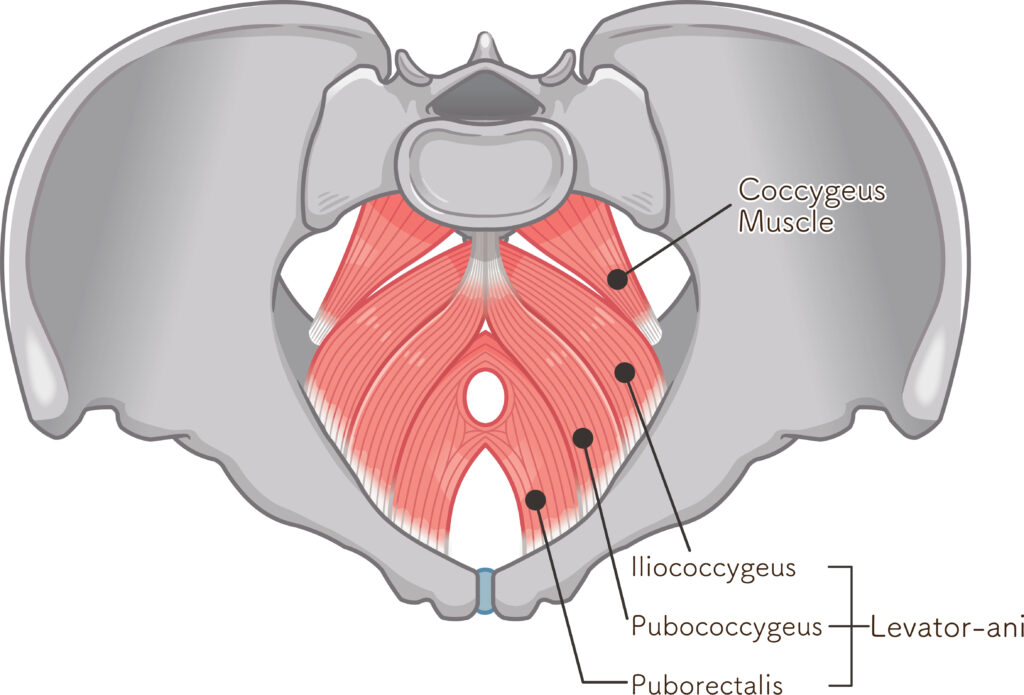
location of pubococcygeus muscle
connects to pubic bones and coccyx

location of Puborectalis muscle
R/L Puborectalis muscle (medial) location – originates on pubic bones, forms sling-like tension around anus
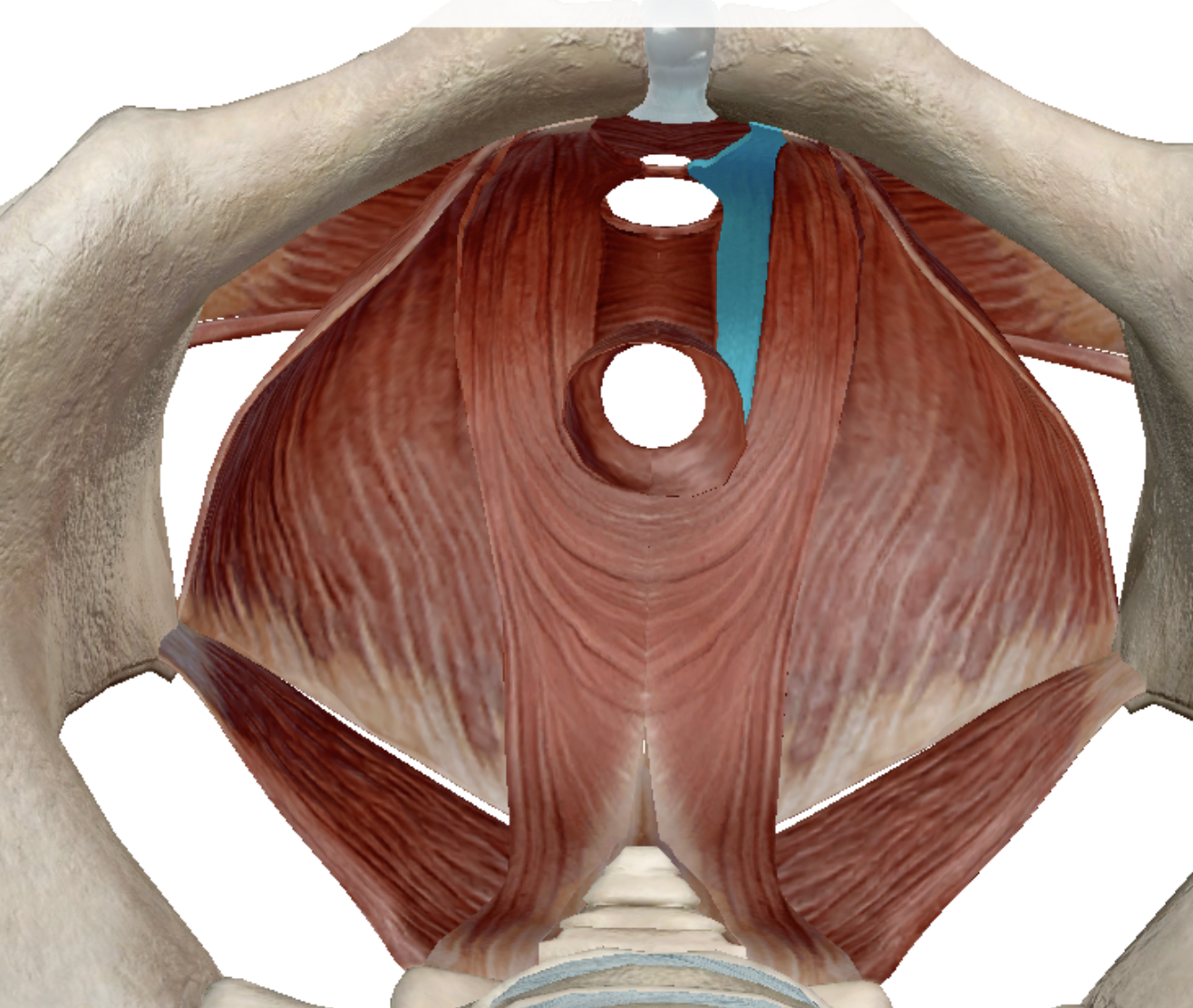
location iliococcygenous muscle
R/L iliococcygenous muscle location – extends from each ischium to coccyx in center



cecum
first part of the large intestine, located in the lower right abdomen. It connects the end of the small intestine (the ileum) to the ascending colon and serves as the attachment point for the appendix
in VB/e-anatomy, it looks like its in the true pelvis, but its actually in the false
appendix
lower right side of your abdomen (the right lower quadrant), attached to the cecum at the start of your large intestine
posterior relative to the cecum
close to ovary (more lateral)

sigmoid colon
final section of the large intestine (colon) located in the lower left pelvis, connecting the descending colon to the rectum