PCS III Written Exam 1
 Call Kai
 Learn
Learn Practice Test
 Spaced Repetition
 Match
Match Flashcards
 Knowt Play
1/108

There's no tags or description
Looks like no tags are added yet.
Name | Mastery | Learn | Test | Matching | Spaced | Call with Kai | Chat |
|---|
No analytics yet
Send a link to your students to track their progress
109 Terms
If you found this helpful and would like to contribute to the quizlet-fueling coffee fund, my venmo is @abbi-chafe :)

Know the 5 basic principles of cattle behavior
cattle want to see you as you enter their space, want to avoid you while keeping an eye on you, want to go toward and be with other cattle, avoid pressure and seek escape, focus thought by though, seeking escape (need time to think)
What two instincts drive the principles of cattle behavior?
prey and herd instincts
Define the Flight Zone ("the Bubble")
the distance from an animal that a handler must maintain for the animal to feel comfortable; when a person enters the flight zone, the animal will move
What and where is the point of balance in cattle?
the point within the flight zone at which the animal will move forward if you are behind it, and backwards if you are in front of it; in cattle, the shoulder
Be able to discuss and determine which imaging modality to use in the diagnostic work-up of a horse with colic and a lame dog.
FLASH vs FAST ultrasounds
FLASH: fast, localized, abdominal sonography for horses; FAST: focused assessment with sonography in trauma
In a colicking horse with lots of reflux, high lactate on belly tap, and dehydration/hypovolemia, what imaging modality would make the most sense first?
abdominal ultrasonography
Besides ultrasonography, what other imaging modality can help you evaluate a full sized adult horse with colic?
radiography
What processes would could abdominal radiographs help you diagnose in a horse?
sand, gas, enteroliths
What would sand look like in an abdominal ultrasound of a horse?
hyperechoic, with shadow on ventral colon wall
What are things to consider when selecting an imaging modality?
performance of test, amount of info, cost, turnaround time of results, accuracy of results, reliability of operator, availability of equipment, opportunity for remote consultation
What are you looking for when performing a FLASH ultrasound?
peritoneal fluid, GI tract abnormalities (distended, content, motility, wall), kidneys, pleural space (effusion, consolidation)
What is the best indication for radiographs over ultrasound?
bones, getting an overall/big picture
What is the best indication for ultrasound over radiographs?
soft tissues, slice by slice or small parts
Radiograph or ultrasound: looking for bone remodeling
radiographs
Radiograph or ultrasound: osteophytes
radiographs
Radiograph or ultrasound: joint space measurement
radiographs
Radiograph or ultrasound: see through or around bandage/casting material
radiographs
Radiograph or ultrasound: generalized or focal swelling
radiographs
Radiograph or ultrasound: bone/joint alignment
radiographs
Radiograph or ultrasound: superficial cortical bone lesion
ultrasound
Radiograph or ultrasound: joint effusion
ultrasound
Radiograph or ultrasound: articular cartilage
ultrasound
Radiograph or ultrasound: ligaments
ultrasound
Radiograph or ultrasound: menisci
ultrasound
Radiograph or ultrasound: joint capsule
ultrasound
Radiograph or ultrasound: gas pockets
ultrasound
What are main differences between performing imaging on horses vs dogs?
obvi horses are much larger, images are typically obtained standing in horses and recumbent in dogs, pathology differences
List (in order) the layers of the ocular fundus that can be visualized during routine ophthalmoscopy and identify normal variations of these layers
from most internal to external: neurosensory retina containing retinal blood vessels converging at optic nerve, retinal pigmented epithelium (may be non-pigmented), choroid, sclera
subalbinotic sclera and choroid: normal or abnormal?
normal
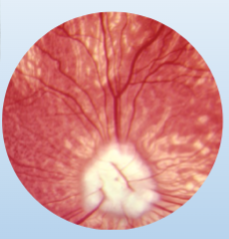
collie eye anomaly: normal or abnormal?
normal

tigroid choroid: normal or abnormal?
normal

feline subalbinotic with tapetum: normal or abnormal?
normal

atapetal choroid: normal or abnormal?
normal

blue tapetum: normal or abnormal?
normal

mottled tapetum: normal or abnormal?
normal

non-pigmented RPE canine: normal or abnormal?
normal

non-pigmented RPE feline: normal or abnormal?
normal

completely pigmented RPE: normal or abnormal?
normal

partially pigmented RPE: normal or abnormal?
normal
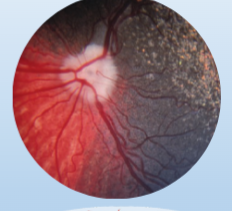
stars of winslow in horses: normal or abnormal?
normal

smaller tapetum in horses: normal or abnormal?
normal

What nerve do we block motor function for equine periocular nerve blocks?
block auriculopalpebral nerve (CNVII) to block motor function to orbicularis oculi muscle
Where do we block the auriculopalpebral nerve for equine periocular nerve blocks?
local anesthetic injected SQ on caudal to posterior ramus of the mandible, dorsal to highest point of zygomatic arch, or caudal to bony process of frontal bone where it lies on zygomatic arch
What nerve do we block sensory function for equine periocular nerve blocks?
block supraorbital nerve (CNV) to block sensation from upper eyelid
Where do we block the supraorbital nerve for equine periocular nerve blocks?
local anesthetic injected SQ into supraorbital fossa, which is a depression just below where the boney orbital rim widens medially
Normal intraocular pressures for dogs and cats
10-20mmHg
Normal intraocular pressures for horses
10-30mmHg
A difference of ____mmHg intraocular pressures between eyes is considered abnormal
8
low intraocular pressures are consistent with _____________.
uveitis
high intraocular pressures (>25mmHg in dogs/cats and >30mmHg in horses) with vision loss is consistent with _______________.
glaucoma
With repeat tonometry tests, which is your most accurate reading?
lowest
What is applanation tonometry?
Measures pressure needed to flatten part of the cornea.
Can be held at any angle, but needs to be flat against the surface; Tonopen
What is rebound tonometry?
Hand-held contact tonometer based on the induction-impact method of intraocular pressure measurement, must be held vertically at all times; tonovet
Why a CBC would be indicated and how you would make that recommendation to a client?
anemia, pale MM, melena, suspicion for thrombocytopenia, fever, dehydration, evidence of infectious disease
Why you would run a CBC in-house instead of an outside lab?
to get immediate answers in a more critical patient; follow up with a blood smear
Develop a systematic approach for reading and interpretating a CBC for a companion animal
Interpret a CBC for a patient when provided with the signalment and clinical scenario
classify anemias, leukogram, etc
For medications used in the management of gastrointestinal disease, discuss the mechanism of action and decide whether each is indicated for a patient with a gastric ulcer
What is the first choice therapy for equine gastric ulcers? MOA?
proton pump inhibitors; omeprazole, esomeprazole, pantoprazole
Maropitant MOA
NK1 receptor antagonist
metoclopramide MOA
dopamine receptor antagonist at CRTZ
Ondansetron MOA
5-HT3 antagonist
famotidine MOA
H2 receptor antagonist
How/why do NSAIDs like carprofen and flunixin cause gastric ulcers?
inhibit COX, causing a subsequent decrease in mucosal prostaglandins that normally regulate the secretion of bicarbonate, mucus, and HCl
Ranitidine MOA
H2-antagonist
Sucralfate MOA
adheres to ulcerative mucosa to form a protective barrier
misoprostol MOA
PGE1 analog; increases gastric mucosal blood flow and decreases HCl secretion + anti-inflammatory properties
Misoprostol contraindications
pregnancy
Given a patient with a medical condition, determine criteria to define success or failure of a treatment
repeat testing, monitoring for improved clinical signs
Recognize clinical signs that help to distinguish disorders of primary hemostasis from disorders of secondary hemostasis (and vice versa)
primary: petechiae, ecchymoses, bleeding at mucous membranes, bleeding after venipuncture; secondary: hematomas, bleeding into muscles, joints, body cavities, delayed bleeding after venipunture
Select appropriate diagnostic tests to evaluate a patient for a disorder of primary hemostasis and/or secondary hemostasis
primary: platelet count, BMBT, vWF concentration; secondary: PT, PTT, individual factor concentrations
Given a scenario and a patient's platelet count, PT, and PTT result, develop a list of differential diagnoses and use this to determine which test should be performed next to achieve a diagnosis
List disorders of primary hemostasis
vasculitis, disorders of platelets (decreased production, destruction, sequestration, etc), decreased platelet function, vWd
List disorders of secondary hemostasis
liver disease (decreased vitamin K absorption), anticoagulant rodenticide toxicity, hemophilia A & B
thrombocytopenia is a (primary/secondary) hemostatic disorder, what would the PT and PTT look like?
primary; normal PT and normal PTT but decreased platelet count
Von Willebrand Disease is a (primary/secondary) hemostatic disorder, what would the PT and PTT look like?
primary; normal PT, usually normal PTT, but prolonged BMBT
Hemophilia A is a (primary/secondary) hemostatic disorder, what would the PT and PTT look like?
secondary; normal PT, prolonged PTT
hemophilia B is a (primary/secondary) hemostatic disorder, what would the PT and PTT look like?
secondary; normal PT, prolonged PTT
factor XII deficiency is a (primary/secondary) hemostatic disorder, what would the PT and PTT look like?
secondary, normal PT, prolonged PTT
vitamin K deficiency is a (primary/secondary) hemostatic disorder, what would the PT and PTT look like?
secondary; prolonged PT and PTT
liver disease causes a (primary/secondary) hemostatic disorder, what would the PT and PTT look like?
secondary; prolonged PT and PTT
DIC is a (primary/secondary) hemostatic disorder, what would the PT and PTT look like?
mixed; prolonged PT and PTT
Localize a neurological lesion based on abnormalities on the neurological exam
General proprioceptive ataxia clinical signs
"wobbly" ataxia; abnormal limb stance and gait (circumduction, abduction or adduction, crossing), NO head involvement
Vestibular ataxia is dysfunction of the ______________ or ______________, impacting balance.
inner ear or brainstem
What CN does vestibular disease involve damage to?
CN VIII
Vestibular ataxia clinical signs
head tilt, asymmetric ataxia, leaning, falling, rolling, circling towards the side of the lesion (side with less vestibular tone), abnormal nystagmus (spontaneous, positional, lack of normal), vestibular strabismus "eye-drop"; central vestibular disease will also have mentation changes
A neurologic patient that is markedly obtunded (i.e., mentation change) probably has a ________________ lesion.
brainstem
A neurologic patient that is alert, but the owner notes "hasn't been themselves" at home (i.e., behavior change) probably has a ________________ lesion.
forebrain
In animals with cervical lesions, which limbs are affected?
All 4 limbs, hind more than front
Make a prioritized list of differentials based on the neuro patient signalment and history
Understand how to use the time-sign graph to determine major categories for differential diagnoses for a patient with neurological signs
In a neurologic patient that has had clinical signs its entire life, the most likely (general) cause is _______________. (think time-sign graphs)
anomalous/congenital
In a neurologic patient that developed clinical signs acutely, and they improve over weeks to months, the most likely (general) cause is _______________. (think time-sign graphs)
trauma/vascular
In a neurologic patient that developed clinical signs somewhat slowly and they got worse over time, the most likely (general) cause is _______________. (think time-sign graphs)
infectious/inflammatory
In a neurologic patient that developed clinical signs slowly and got worse over time, especially getting worse in the last few weeks to months, the most likely (general) cause is _______________. (think time-sign graphs)
neoplasia
In a neurologic patient that developed clinical signs very slowly and got worse over time, the most likely (general) cause is _______________. (think time-sign graphs)
degenerative
Prioritize diagnostics in the face of financial limitations
think about what gives you the most information, what can prove or rule out the most likely differentials; what will make the patient feel better? What can we accomplish with the money we have? What is the prognosis?