CLAS241 - Transition Period (480-450 BCE)
 Call Kai
 Learn
Learn Practice Test
 Spaced Repetition
 Match
Match Flashcards
 Knowt Play
1/12

There's no tags or description
Looks like no tags are added yet.
Name | Mastery | Learn | Test | Matching | Spaced | Call with Kai | Chat |
|---|
No analytics yet
Send a link to your students to track their progress
13 Terms
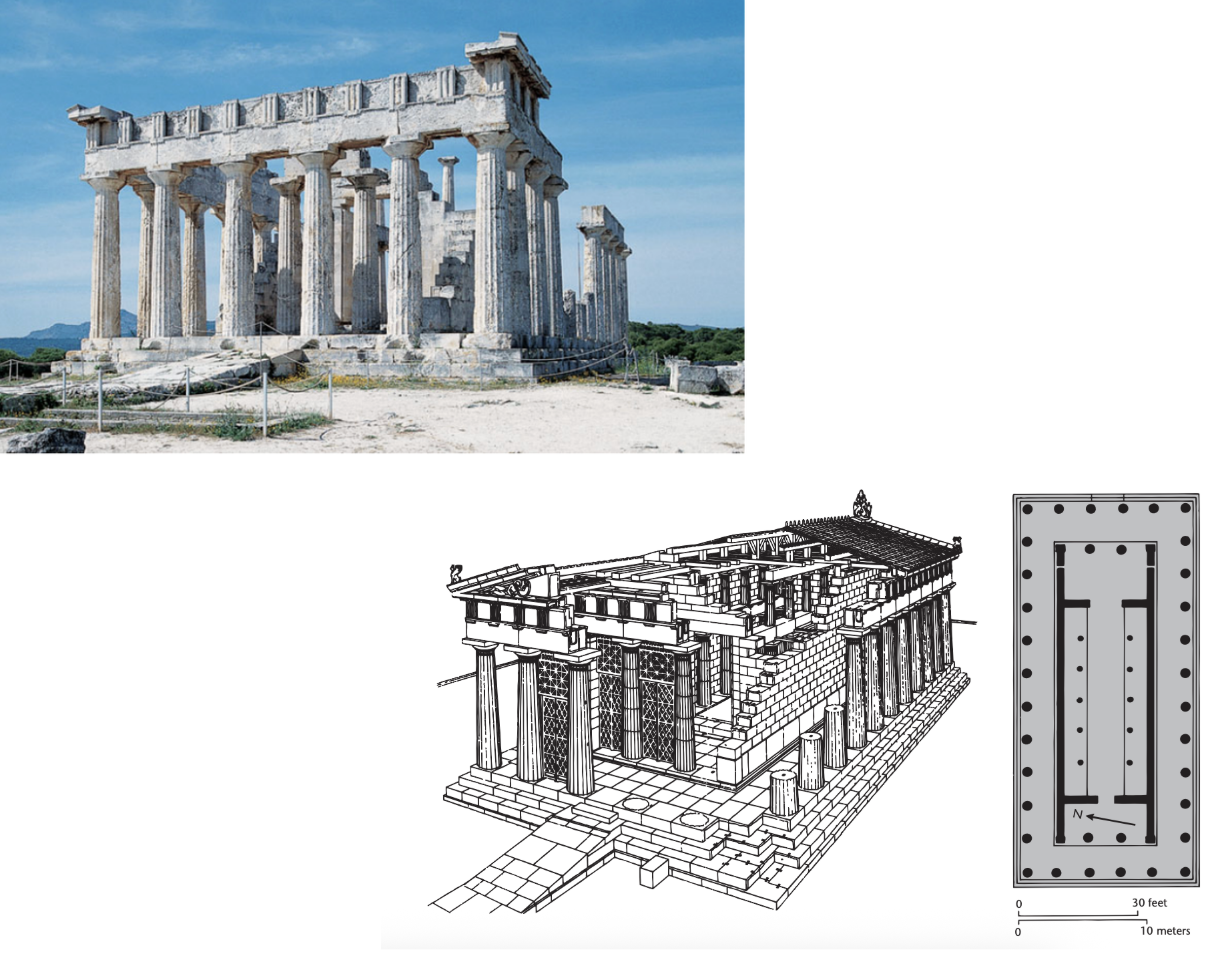
Temple of Aphaia, Plan — Aigina
Column height is 5.33d and longer and more slender (total height = 17 m)
Two rows of interior columns
Not as long and Doric “refinements”
- There should be an extra column (12 vs 13)
- Architects play around w/ the rules of the Doric order → Angle contraction/Looks like architecture is correct but it’s now
- Triglyphs must be centred above the column + intercolumniation, and the ends must be centered too (should meet at corners)
- Metopes should be the same sizeShields attached on metopes dedicated by the Spartans
- Advertises they won the battle/honoured by Zeus
- Decorated metopes over the porches
- Depicted the labours of Herakles
- Note the Ash Alter to Zeus in Atis
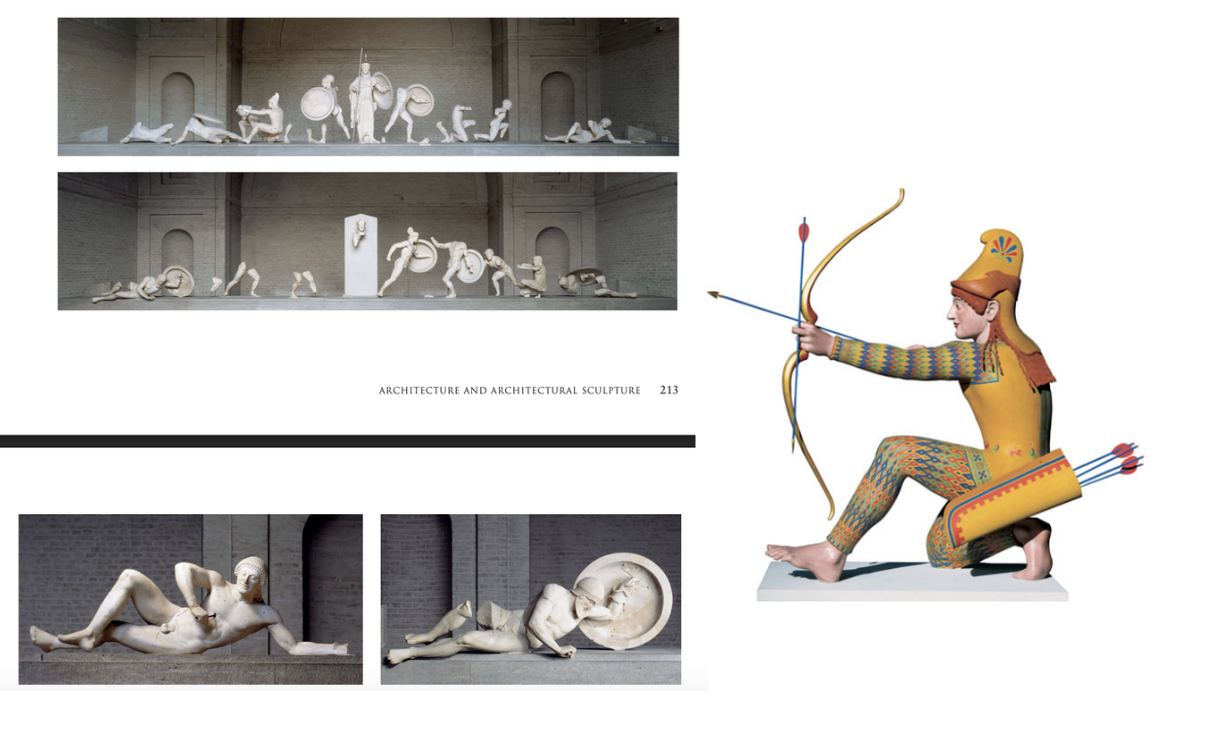
Temple of Aphaia, Sculpture
W/E pediments: Aiginetans at War
- W: Like Kouros — archaic smile and eyes, idealistic | Less realistic (ex. leg isn’t accurate)
- E: More natural and realistic body fx/rxn (ex. flexed arm, open mouth) | Depicts his struggling better (emotion, sense of being)One is more mythological, one is realistic
Both have deity in the middle
All figures are the same size, but different poses (good use of space)
West pediment looks more archaic
East pediment looks more transitional
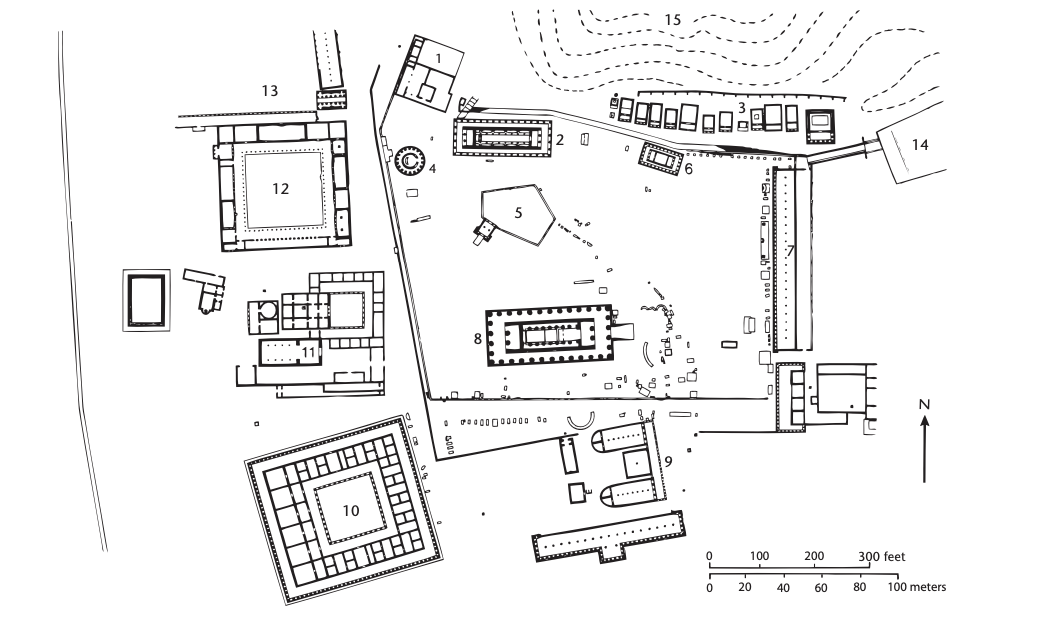
Plan of the Sanctuary at Olympia
Main attraction in Olympia: Olympic games (every 4 years)
→ City states had representative athletes that competed
→ Compared to Delphi: city states were competing for status/prestige, oracle was the main attractionHolocaust: total burning of animals for sacrifice (100 oxen)
→ Olympia had a famous altar of accumulated ash from these sacrifices
→ Sacred site for ZeusBuildings (ex. Hotels, restaurants) for crowds that watched the games
Plan of Temple of Zeus:
- Hexastyle temple
- Noas is elaborate
→ Inside: statue of Zeus seated on throne, holding staff, winged victory (made of ivory + gold, reserved for Gods); Giant pool in front of statue (reflecting statue and light sources, maintain humidity since ivory gets dry)
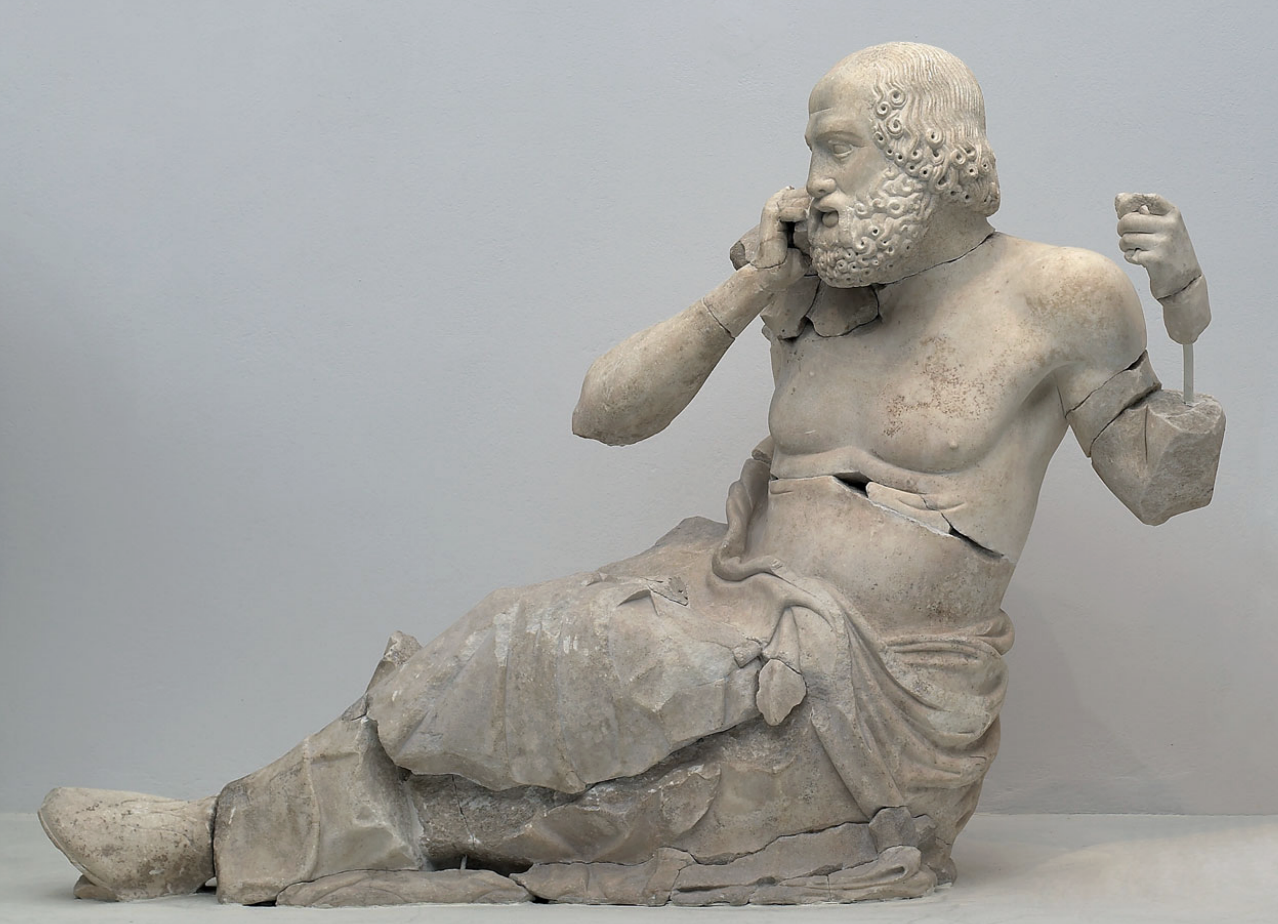
Temple of Zeus, Pedimental Sculpture (Seer) — Olympia
Shows signs of aging
- Wrinkles on face, balding, saggy flesh
- Realistic, not ideal like KourosShows signs of anxiety
- Hand to his face, mouth agape, no archaic smileCould be a seer, know Oinomaos will die while Pelops will win
- Like the dead warrior leaning on shield and Siphnian thing
- New evolution of psychology (emotion, realism)Shows the development/evolution of emotion on statue faces from archaic period
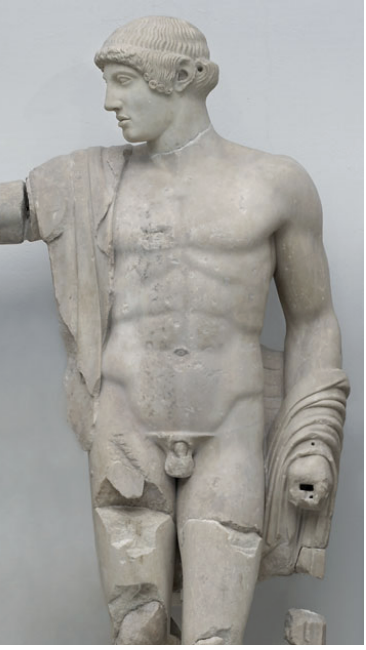
Temple of Zeus, Pedimental Sculpture (Apollo) — Olympia
Fight b/w centaurs and Greeks
Apollo is gesturing to the right (victors)
The Sever Style
- Stern expression
- Plain and heavy drapery
- Smaller eyes, no archaic smile
- Thick toga, unlike older kouros
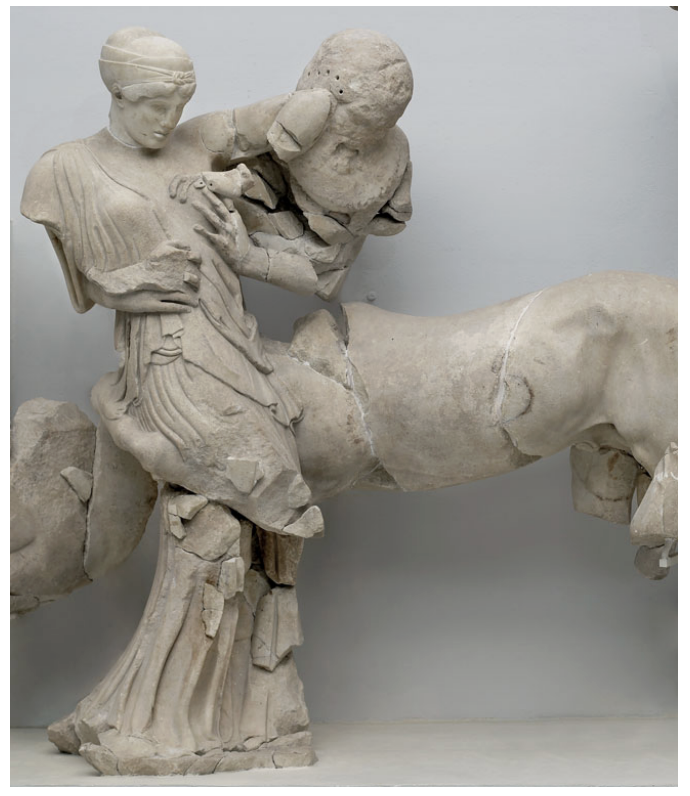
Temple of Zeus, Pedimental Sculpture (Centaur) — Olympia
Wild hair and expression on centaurs (depicts how Greeks saw them — barbarians, wild)
Impassive expressions on the women
- Stern, small eyes, no smile, no definitionLots of movement and interaction
Creates various contrasts b/w Lapiths vs. Centaurs
- Hair, skin, weapons
- Textural differences
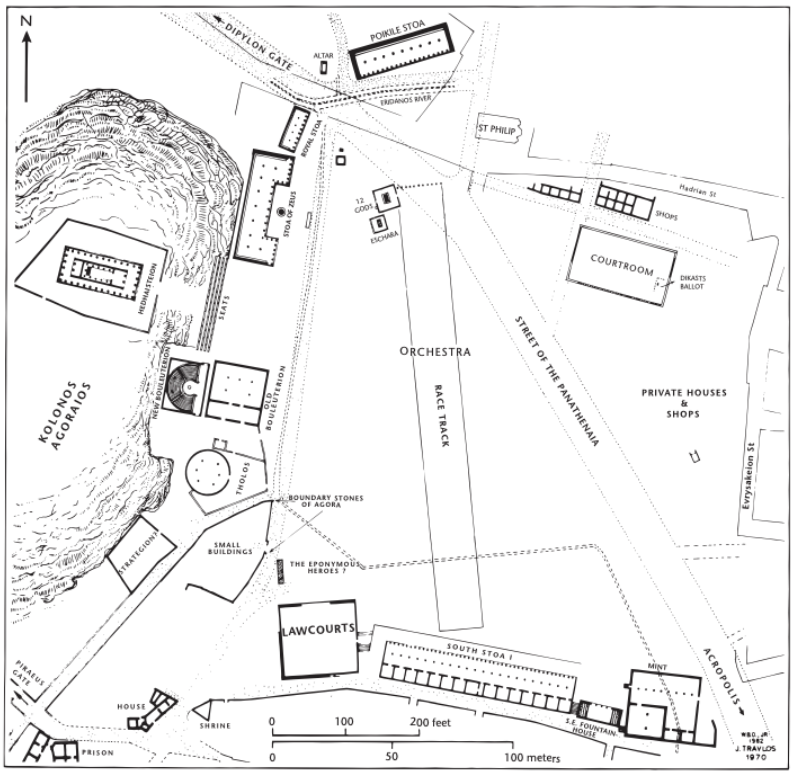
Plan of the Agora — Athens
Painted stoa (painting inside)
Stoa of Zeus (big)
Tholos (rounded building, not really and architectural form that was found during this era)
- Why? → People in tholos were selected group of people elected; Somebody in Athens elected to make decision; Everybody is equal (no R or L)Hephaisteion (Doris Order Temple)
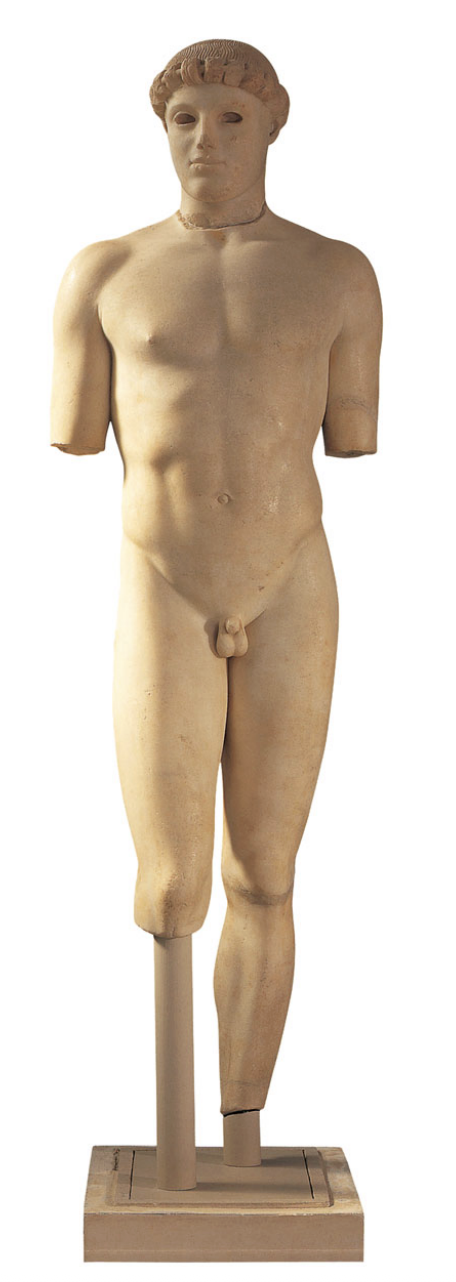
Kritios Boy
Last of the Kouroi (idealistic/first of the new figures)
- Young boy, muscularBiggest advance in the history of sculpture: contrapposto
- The way your body works in relation to yourself
- Weight on R leg > Free L leg > L hip dips > Shoulder shiftNatural musculature
Severe style features
- Similar to Apollo
- Short hair (Archaic → Transition)
- Small eyes, flat cheeks, no smile → almost blank expression
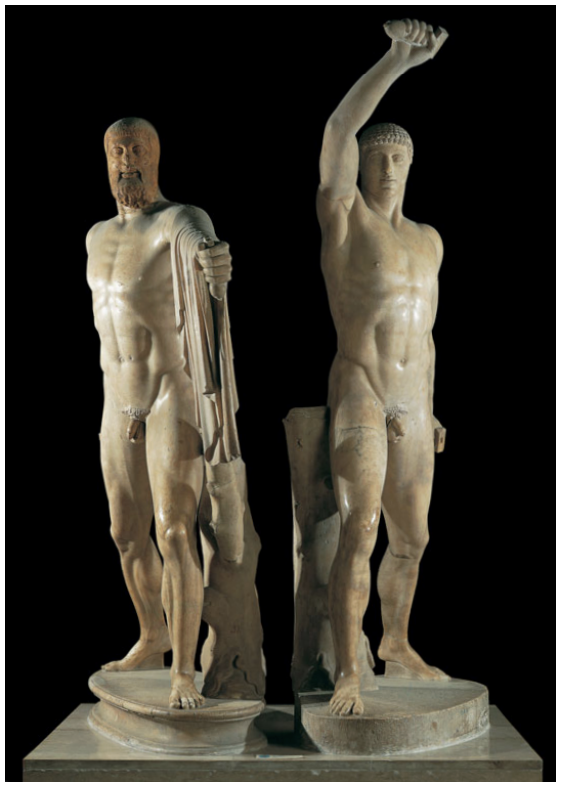
Tyrannicides
Hammodius and Aristogeiton
Importance: marked the start of their democracy
Note the interplay of the two
- Meant to act as a groupRight:
→ younger one
→ severe style figure
→ hand chopping down — like Theseus in the pediment (becomes referenced in the future)Left:
→ drapery blocking the R figure — framing deviceMultiple angles of interest
Gestures become shorthand
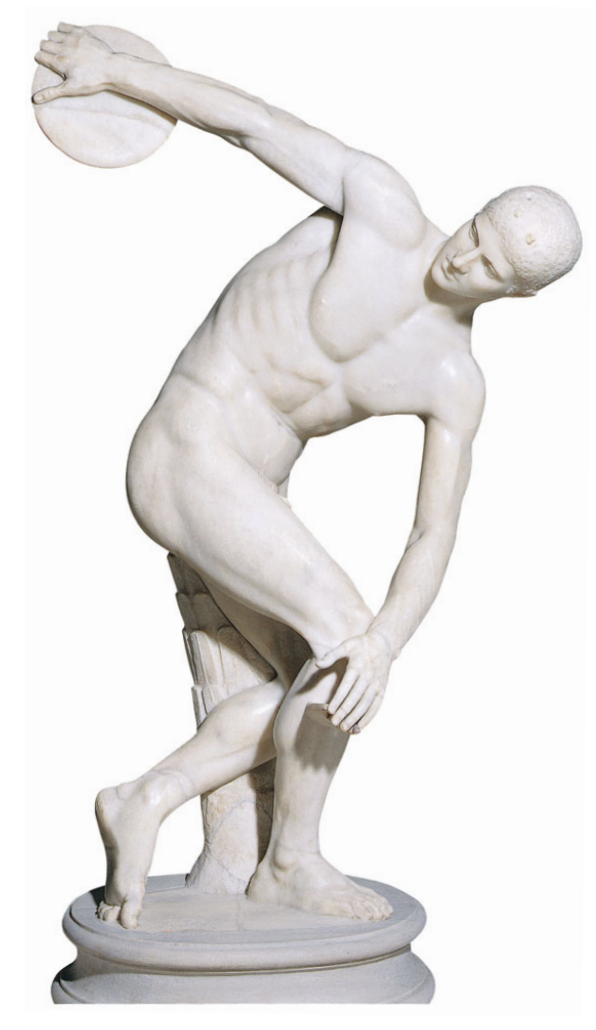
Diskobolos (Discus Thrower) — Myron
Transition to High Classical Period
Twisted pose is new — still primarily frontal view
- Contrapposto starts breaking the mold — influenced by Kiritios Boy
- You’d see more muscles thoughSeries of intersecting planes
- Illusion of twistingSevere face, more definition in cheeks and jawline (not as flat, had veins)
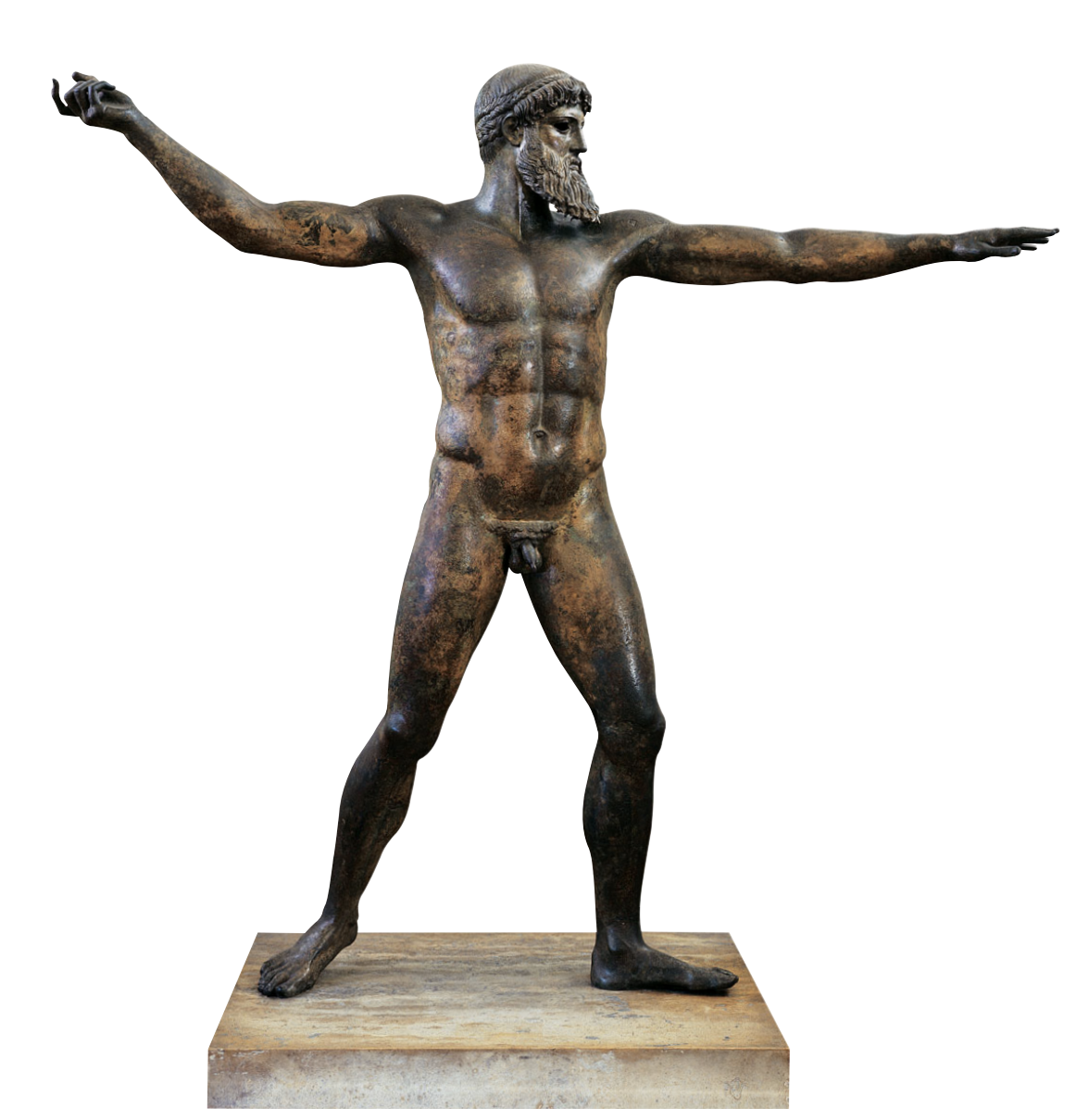
Artemision God
Zeus or Poseidon?
- Might be holding lighting bolt (Zeus) or Trident (Poseidon)Probably w/ frontal view
- Makes you want to walk around to see headRare surviving bronze
- Malleable
- More used than marble¾ view
- See most of body
- Legs and arms are long, but foreshortening helps them look more proportionateExcellent musculature
Like Kritios and Diskobolos
- Illusion like diskobolos
- Weight leg (contrapasso stance)Hair is more fluid and complex (braids, full beard)
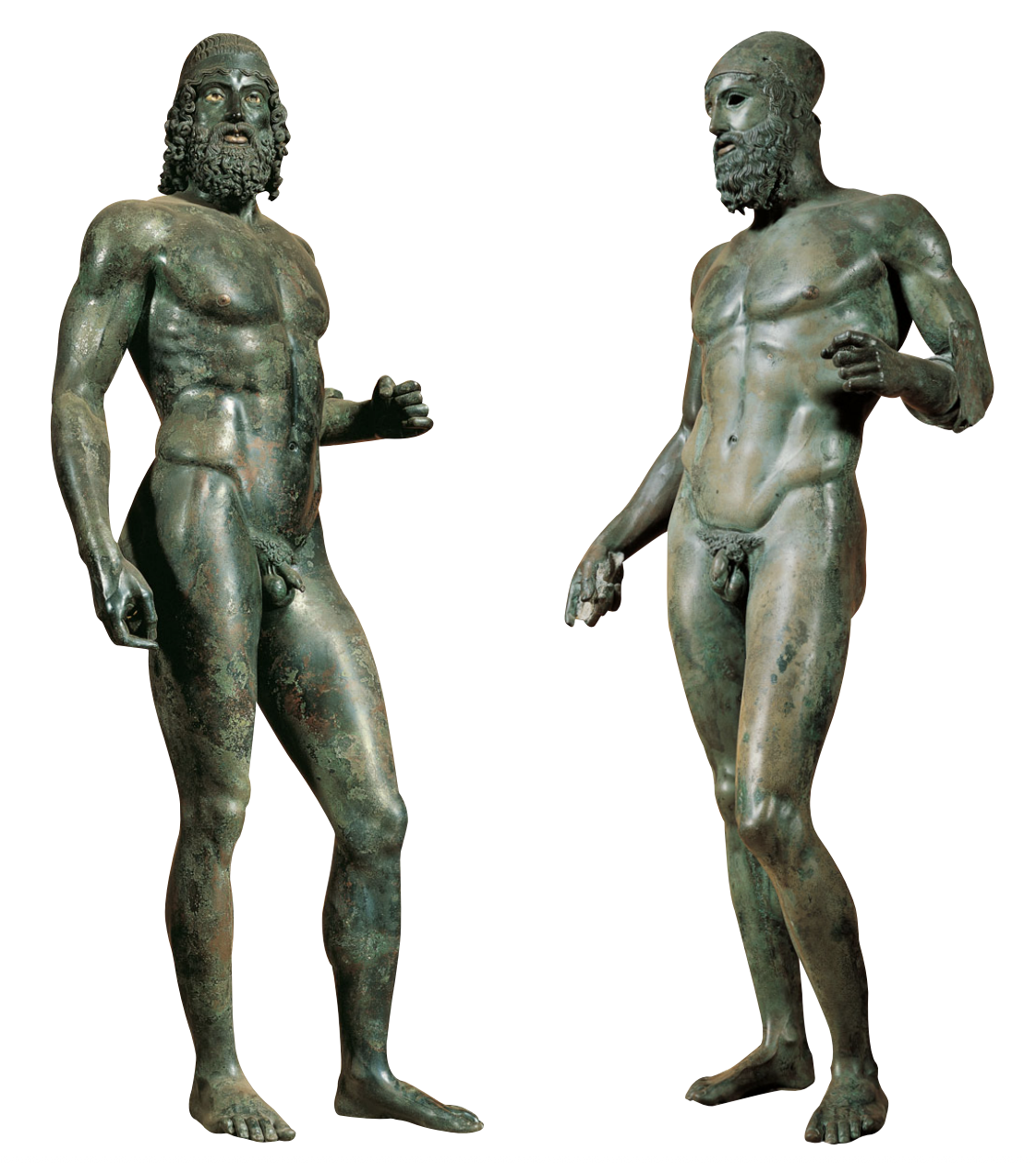
The Riace Warriors
Warrior A (younger) and Warrior B (older)
- Looks similar (hair, poses), moulds reused from segmented casting
- Contrapasso stance — one butt cheek higher
- Flat braided hair, copper mouth/eyes
- Detailed back musclesSevere style pose: lateral
Advanced musculature
Interconnection of muscles
- Rather than distinct muscle groupings
- Sculpture and medicine share interest in biomechanics
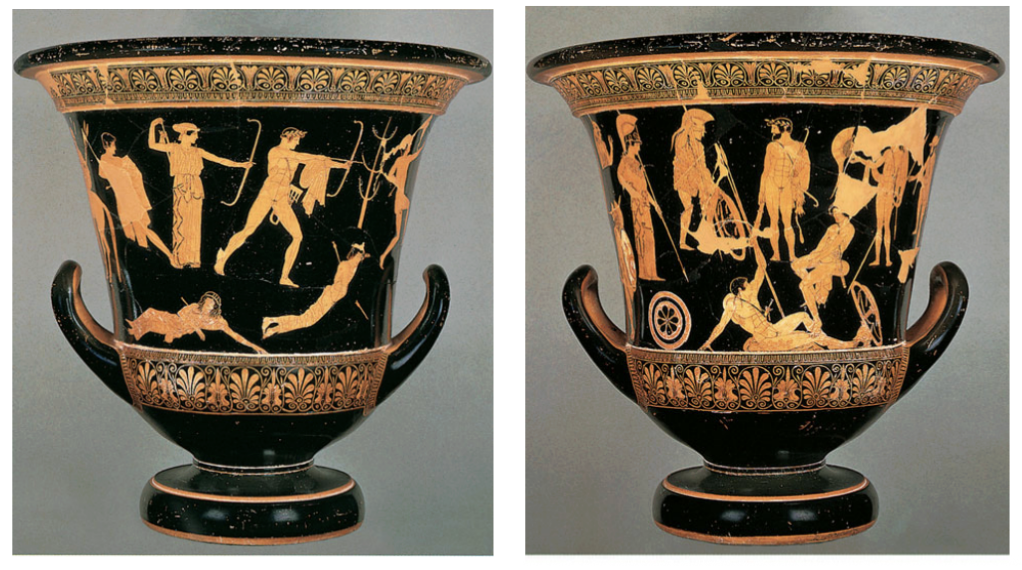
Apollo and Artemis Krater — Niobid Painter
Apollo and Artemis kill all of Niobid’s children, Niobid turns into a rock
Depicts famous Greek heroes standing and preparing for battle
- Hercules, the twins, Jason and the Argonauts, First battle of TroyRed Figure Technique
Severe style body — Painting bodies based on popular sculptural techniques
- Like Kritios, Riace Warriors, Zeus
- Muscles blend better
- Improved biomechaics
- Draped cloth — like the TyrannicidesTransparent clothing, frontal face
New feature from the Niobid: different and more naturalistic groundlines, putting bodies on different levels to make it more interesting (less static/linear)
- Figures are places evenly and straight
- Outdoor (tree)