pharm 2 pre final
 Call Kai
 Learn
 Practice Test
 Spaced Repetition
 Match
 Flashcards
 Knowt Play
1/121

There's no tags or description
Looks like no tags are added yet.
122 Terms
angina pectoris (chest pain)
when supply of oxygen and nutrients in blood is insufficent to meet demands of heart, causes heart muscle to ache
anxious, inability to breathe, chest pain
Ischemia
poor supply of blood to an organ
ischemic heart disease
poor blood supply to heart muscle
causes: atherosclerosis, coronary artery disease, myocardial infarction
MI: necrosis or death of cardiac tissue, disabling or fatal
fixed by opening artery and restoring blood flow
types of angina ELENA
chronic stable angina aka classic or effort angina
pre existing condition, stress, consuming large amts of caffeine and tobacco
unstable angina aka preinfarction angina
comes out of no where, life threatening
can lead to and MI
vasospastic angina aka prinzmetal or variant angina
cause unknown
coronary muscle starts spamming, can even happen at rest
if not treated, pain will usually come around the same time each day
blood supply and demand chart

drugs for angina ELENA
nitrates or nitrites (massive vasodilation, impact preload and decrease effort of heart muscle)
beta blockers (work on beta receptors and prevent their activation, decrease contractility)
calcium channel blockers (mitigate movement of calcium and brings down excitability of cardiac muscle)
objectives for angina
minimise frequency of attacks and decrease duration and intensity of anginal pain
more attacks causes heart to get weaker and cells that cannot be regenerated will die
improve pts functional capacity with few adverse effects as possible
prevent or delay myocardial infarction (worst complication)
nitrates and nitrites
forms: sublingual or translingual sprays (most common, take home), transdermal patches, chewables, orals, IV (if critical), ointments
bypass liver and first pass effects
nitrates and nitrites MOA
vasodilation bc of relaxation of smooth muscles
potent dilating effect on coronary artery
result: oxygen to ischemic myocardial tissue
used for prevention and treatment of angina
types of nitrates and nitrites ELENA
rapid acting
acute anginal attacks
sublingual tablets or spray, IV infusion
nurse and patient can only give 3 sprays of nitro, ems can give 5 sprays
be sure to check how many sprays were given to prevent hypotension
make sure to wear gloves when administering bc can go through skin, check expiry (after 3 months potency decreases)
ask pt to lift tongue and spray underneath
long acting
used to prevent anginal episodes
nitrates and nitrites ex
nitroglycerin (rapid and long acting)
isosorbide dinitrite (rapid and long acting)
isosorbide mononitrate (long acting)
isosorbides better for those of african descent
give dose and reassess for 5 mins before giving 2nd dose
nitroglycerin
massive vasodilation
for angina, hypertension, congestive heart failure
large first pass effect with oral forms
AE: headaches (diminish in intesity and frequency with continued use), reflex tachycardia, postural hypotension, tolerance may develop
to prevent tolerance, pt may be diagnosed breaks from nitro, maybe given in morning but taken off at nighttol

tolerance with nitrates
Occurs in patients taking nitrates around the clock or with long-acting
forms
Prevented by allowing a regular nitrate-free period to allow enzyme
pathways to replenish
◦ Transdermal forms: may be instructed to remove patch at bedtime for 8 hours, then
apply a new patch in the morning
nitrates contraindications
allergy
anemia (already have issues with perfusion)
closed angle glaucoma
hypotension
severe head injury
use of erectile dysfunction drugs (sildenafil citrate, tadalafil and vardenafil hydrochlorid)
B blockers
treating cvd
angina, MI, hypertension, dysrhythmias (usually a fib), some for migraine headaches, essential tremors, stage fright
ex: atenolol (not for pregnancy), metoprolol (usually PO, in emergency IV) (parameters for when given- minimum HR or systolic), propanolol hydrochloride, nadolol
B blockers MOA
Block β1-receptors on the heart
Decrease heart rate, resulting in decreased myocardial oxygen demand and increased oxygen delivery to the heart
Decrease myocardial contractility, helping to conserve energy or decrease demand
After a myocardial infarction, a high level of circulating
catecholamines irritates the heart, causing an imbalance
in supply and demand ratio and even leading to life-
threatening dysrhythmias.
β-blockers block the harmful effects of catecholamines,
thus improving survival after a myocardial infarction.
B blockers contraindications
acute heart failure (further brings down contractility)
serious conduction disturbances like av block
caution with: bronchail asthma, bc any level of B2 receptors blocking can cause bronchoconstriction
can mask hypoglycemia symptoms (tachycardia)
peripheral vascular disease, may further compromise cerebral or peripheral blood flow
B blockers AE
cardiovascular: bradycardia, hypotension, av block
cns: dizzy, fatigue, depression, lethargy
other: erectile dysfunction, wheezing, dyspnea
metoprolol tartrate (lopresor betaloc)
Cardioselective β1-adrenergic receptor blocker
indication: prophylactic treatment of angina
Many of the same characteristics as atenolol
Reduces mortality rate in patients after myocardial infarction and in treating angina
Forms: oral (immediate release and long acting) and parenteral (injectable) forms
intravenous metoprolol is commonly administered to hospitalized patients after a myocardial infarction and is used for treatment of hypertension in patients unable to take oral medicine.
calcium channel blockers for chronic stable angina
amlodopine, diltiazem, nifedipine, verapamil hydrochloride
indications: angina, htn, supraventricular tachy, coronart artery spasms (prinzmetal angina), short term management of a fib or flutter, migraine headaches, raynaud’s disease,
dihidropyridine nimodipine: cerebral artery spasms associated with aneurysm rupture
calcium channel blockers MOA
Cause coronary artery vasodilation, Cause peripheral arterial vasodilation, thus decreasing systemic vascular resistance, Reduce the workload of the heart which causes decreased myocardial oxygen demand
Dysrhythmias: depression of the automaticity of and conduction through the sinoatrial and atrioventricular nodes
calcium channel blockers contraindications
allergy
current MI
conduction issues like second or third degree av block (unless pt has pacemaker)
hypotension
calcium channel blockers ae
limited
related to overexpression of therapeutic effects
hypotension, palpitations, tachy or bradycardia, constipation, nausea, dyspnea,
diltiazem hydrochloride (cardiazem, tiazac)
Very effective for the treatment of angina pectoris resulting from coronary
insufficiency and hypertension
Used in the treatment of atrial fibrillation and flutter along with paroxysmal
supraventricular tachycardia
amlodipine besylate (norvasc)
most popular calcium channel blocker of the dihydropyridine subclass
indicated for angina and HTN
oral only
nursing implications for anti anginals
history, contraindications, drug interactions
baseline vitals and resp assessment
limit caffeine intake
pt should report: blurred vision, persistent headache, dry mouth, edema, fainting episodes, weight gain or 1 kg in 24 hrs or 2.3 kg in a week, bradycardia, dyspnea
fainting risk: alcohol consumption, hot baths, hot subs, saunas, - vasodilation, hypotension
pt should change positions slowly
encourage pts to keep record of anginal attacks including precipitating factors, number of pills taken and therapeutic effects
nursing implications for nitroglycerin
instruct pts in proper technique for sublingual and application of ointments and transdermal forms (remove old med and rotate sites)
burning sensation felt with sublingual forms indicates drug is still potent
keep fresh supply of meds, only potent for 3-6 months
to preserve potency- store in airtight dark glass bottle with metal cap and no cotton filter
to reduce tolerance, may have to allow nitrate free period
take as needed nitrates at first hint of anginal pain
monitor vitals frequently during angina exacerbations and during iv admin
if experiencing chest pain, take med and then lie down to prevent dizziness or fainting
if anginal pain continues
pt should lie down and take sublingual nitro, call 911 and then take 2nd one in 5 mins if pain isnt relieved, take 3rd in another 5 mins, do not try to drive to hospital
iv forms given with special non polyvinyl chloride tubing and bags
discard paranteral solutions that are not clear and are discoloured
follow specific manufacturer’s instructions for iv admin
nursing implications for b blockers
monitor pulse rates daily and report bradycardia
report dizziness or fainting
meds are never abruptly discontinues
meds are for long term prevention, not acute relief
nursing implications calcium channel blockers
constipation is common problem
take fluids and high fibre
monitor anti anginal ae and te
ae: allergic reactions, headache, lightheadedness, hypotension, dizziness
te: relief of angina, decreased bp or both
heart failure
not specific disease, complex clinical syndrome resulting from any functional or structural impairment to heart- specifically ejection of blood or ventricular filling
heart is unable to pump blood in sufficient amts from the ventricles to meet the body’s metabolic needs
most common hospitalisations in canada
5000 annual deaths, 5 yrs survival rate in those with heart faulure is 50 yrs, prevention is key
symptoms
left: pulmonary edema, coughing, sob, dyspnea
right: systemic venous congestion, pedal edema, jugular venous distension, ascites and hepatic congestion
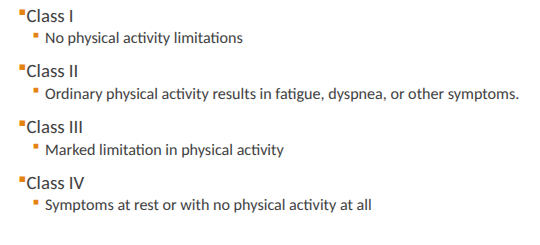
new york classification of heart failure
drugs for HF
positive inotropic drugs: increase force of myocardial contraction
phosphodiesterase inhibitors (prevent enzyme phosphodiesterase), cardiac glycosides, b type natiuretic peptides
positive chronotropic drugs: increase HR
positive dromotropic drugs: accelerate cardiac conduction
other classes: ace inhibitors, ARBs, diuretics, b blockers
treatment of heart failure by stage
ACE inhibitor (no sodium absorption, no keeping water in, less fluid for heart)
dont work as well on those of african descent, causes dry cough, complication is angioedema
arbs (work like aces)
certain b blockers
loop diuretics (furosemide), reduces symtpms of hf secondary to fluid overload
aldosterone inhibitors (spirinolactone, eplerenone) added as hf progresses, used in addition to aces and arbs perchance
only after all these drugs is digoxin added (bc narrow therapeutic index)
sometimes dobutamine given (positive inotropic)
hydralazine/isosorbide dinitrate recommended specifically for black patients

ACE inhibitors for HF

ARBs
valsartan: shares many ae like lisinopril, arbs not as likely to cause cough associated with ace inhibitors also less likely to cause hyperkalemia

B blockers

aldosterone antagonists
spironolactone (aldactone): potassium sparing diuretic and aldosterone antagonist shown to reduce symptoms of heart failure
could lead to to hyperkalemia and heart issues

hydralazine/isosorbide dinitrite
drug approved specifically for individuals who are black
dobutamine hydrochloride
b1 selective vasoactive adrenergic drug
structurally similar to dopamine
phosphodiesterase inhibitors
only drug available in canada: milrinone
short term management of heart failure for pts in critical care unit

milrinone
can only be given through IV pump never by gravity

cardiac glycosides
no longer used as first line, not been shown to reduce mortality
comes from plant digitalis (foxglove)
used in HF and control rapid afib
MOA: increase myocardial contractility, change electrical conduction properties of the heart, decrease rate of electrical conduction
cardiac gycosides effects
positive inotropic effects: increased force and velocity of myocardial contraction
(without an increase in oxygen consumption)
negative chronotropic effect: reduced HR
negative dromotropic effects: Decreased automaticity at sinoatrial node, decreased atrioventricular nodal conduction, and other effects
gen: increased stroke volume, increase in coronary circulation, decrease in excretional and paroxysmal noctural dyspnea, cough and cyanosis, promotion of tissue perfusion and diuresis, improved symptom control, quality of life and excersise tolerance with no apparent reduction in mortality
cardiac glycosides AE (digoxin- lanoxin)
safe and toxic levels are close, narrow therapeutic window
drug levels should be monitored (0,8-2 ng/mL)
low potassium levels increase toxicity (electrolyte levels must be monitored)
CV: dysrhythmias, bradycardia or tachycardia
CNS: headaches, fatigue, malaise, confusion, convulsions
eyes: coloured vision (green, yellow, purple), halo vision
GI: anorexia, nausea, vomiting, diarrhea
digtoxic signs: headaches, confusion, coloured vision, halo vision, anorexia, nausea, vomiting
digoxin toxicity
hold admin of drug, take vital signs, assess for toxicity and contact healthcare provider
ecg monitoring for cardiac dysrhythmias, admin any appropriate antidysrthymic drugs as ordered
determine serum digoxin and electrolyte levels
admin potassium supplements for hypokalemia if indicated as ordered
institute supportive therapy for gi symptoms
admin digoxin antidote (digoxin immune fab)
digoxin immune fab therapy
hyperkaleimia (serium potassium greater than 5 mmol/L) in a digitalis toxic pt
life threatening cardiac dysrthymias
life threatening digoxin overdose
conditons that predispose pt to digoxin toxicity
hypokalemia
hypercalcemia
hypothyroid, respiratory or renal disease,
advanced age
HF drugs nursing implications
assess history, allergies, contraindications
clinical parameters (BP, radial and apical pulse, heart sounds, breath sounds, weight, i and o, ecg, serum labs like sodium, potassium and magnesium renal and liver fxn studies)
ensure to count apical pulse for 1 minute, check to see if over 60
hold dose and notify prescriber if clinical parameters are not met (esp bradycardia)
hold dose and notify if pt has signs of toxicity
check dosage forms and follow admin instructions
avoid giving digoxin with high fibre foods bc med binds with digoxin
pt report weight gain of over 1 kg in 24 hrs or over 2 kg in a week
use infusion pump for milrinon and ensure monitoring of i and o, hr and rhythm, bp, daily weights, respirations
hf drugs monitor for te
increased urinary output
decreased edema, sob, dyspnea, crackles, fatigue, resolution of paroxysmal nocturnal dyspnea,
improved peripheral pulses, skin colour temperature
dysrhythmics
any deviation from normal rhythm of the heart
antidysrhythmias are given to treat and prevent disturbances in cardiac rhythm
arrhythmia- no heart rhythm, dont get mixed up

action potential
change in distribution of ions causes cardiac cells to become excited
movement of ions across membrane results in electrical impulse spreading across cardiac cells
electrical impulse leads to contraction of myocardial muscle
4 phases, sa node and purkinje cells each have seperate action potentials
duration: absolute or effective refractory period, relative refractory period, threshold potential
automaticity or pacemaker activity

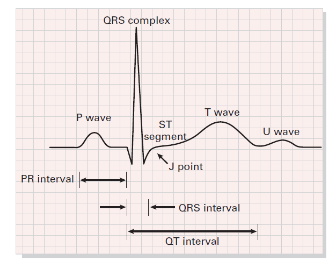
Electrocardiography
t and u wave: indicative of electrolyte imbalances
common dysrythmias
supraventricular dysrthymias
ventricular dysrthymias (life threatening)
ectopic foci
conduction blocks
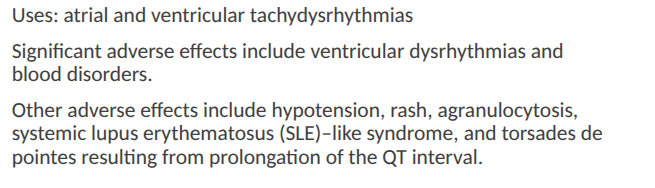
procainamide hydrochloride for dysrythmias
class 1
lidocaine for dysrythmias
class 1

atenolol for dysrythmias
not for pregnancy bc can cause fetal malformation

amiodarone hydrochloride for dysrhythmias
interacts with digoxin and warfarin sodium
digtoxicity
most prescribed
highly hepatotoxic, can also cause toxicity in lung tissue with high doses

diltiazem
temp control of a rapid ventricular response in pts with atrial fib or flutter and PSVT (paroxysmal supraventricular tachycardia)
antidysrhythmics AE
dysrhythmias (:?)
hypersensitivity rxns
nausea, vomiting, diarrhea
dizzy
headache and blurred vision
prolonged QT interval
eventually heart impulse times decrease, can stop beating
antidysrhythmics interactions
warfarin sodium
monitor INR (international normalised ratio) more frequently
grapefruit juice (amiodarone)
grapefruit inhibits absorption of many meds
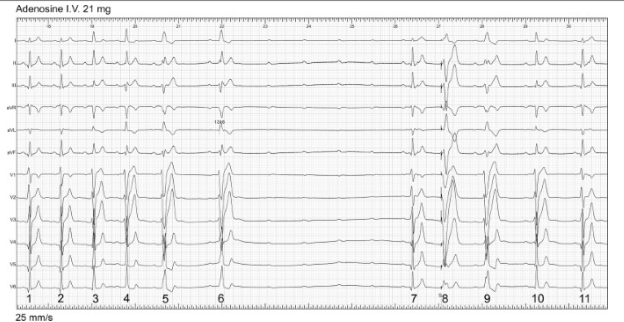
adenosine
unclassified antidysrhythmic drug
slows conduction through the av node
converts PSVT to sinus rhythm
very short half life (less than 10 s)
can only be given when pt is hooked up to tele machine
IV push
causes aystole for a few secs
other ae are minimal
nursing implications for antidysrthymics
thorough drug and medical history (contraindications and interactions)
measure bp, pulse, input and output, and cardiac rhythm before
measure serum potassium levels before initiating therapy
pts report dosing schedules and ae to physician
SOB, edema, dizziness, syncope, chest pain, GI distress, blurred vision
during therapy monitor cardiac rhythm, hr, bp, general well being, skin colour, temp, heart and lung sounds, assess plasma levels as indicated, monitor for toxic effects including prolonged QT interval, seeing halos
pts should take meds as ordered, do not skip or double up for missed doses
contact physician if dose is missed
do not crush or chew er preparations
lidocaine w epi should only be used as local anasthetics and NOT as IV
for IV meds, use infusion pump
for pts taking B blockers, digoxin and other dugs- teach pt to take radial pulse for 1 full min and notify physician if hr under 60bpm
nursing therapeutic response for antidysrhythmics
decreased bp in hypertensive pts
decreased edema
decreased fatigue
reg pulse rate
pulse rate w out major irregularities
improved regularity of rhythm
improved cardiac output
hemostasis
processes that stop bleeding
coagulation is hemostasis that occurs bc of physiological blood clotting
substances that promote clot formation and either inhibit coagulation or dissolve formed clot
thrombus vs embolus
thrombus: term for blood clot
embolus: thrombus that moves through blood vessel
not all thrombi are emboli but all emboli are thrombi
coagulation extrinsic pathway
factors 7, 10, thrombin: all affected with heparin
activated factor 10 and 13, and thrombin: all affected with warfarin or coumadin
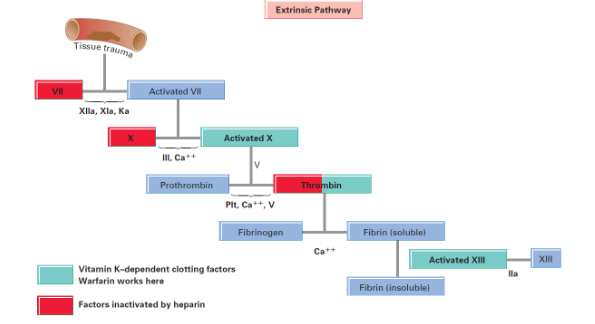
coagulation intrinsic pathway

fibrinolytic system
initiates the breakdown of clots and serves to balance clotting process
fibrinolysis: mechanism by which formed thrombi are lysed to prevent excessive clot formation and blood vessel blockage
fibrin in clot binds to circulating protein known as plasminogen, binding converts plasminogen to plasmin
plasmin: enzymatic protein that eventually breaks down fibrin thrombus into fibrin degradation products
keeps thrombus localised to prevent it from becoming embolus
fibrin split products, lab can test and if it is there, clot busting med is working

coagulation modifier drugs
anticoagulants: inhibit action or formation of clotting factors, prevent clotformation
antiplatelet: inhibit platelet aggregation, prevent platelet plugs
hemorheological: alter platelet fxn without preventing platelets from working
thrombolytic durgs: break down (lyse) existing clots
antifibronolytic or hemostatic: promote blood coagulation
anticoagulants
aka antithrombotic drugs
have no effect on clots already formed
prevent intravascular thrombosis by decreasing blood coagulability
used prophylactically to prevent
clot formation (thrombus)
an embolus (dislodged clot)
embolus

anticoagulant indications
when clot formation likely
myocardial infarction, unstable angina, a fib, indwelling devices like mechanical heart valves, conditions that slow blood flow like major orthropedic surgery or prolonged periods on immobility
anticoagulants contraindications
active bleeding
bleeding disorders
blood dyscrias
ulcers
liver and kidney disease
hemorrhagic brain injuries
heparin induced thrombocytopenia
anticoagulants ae
hemorrhage, hematuria, epistaxis, ecchymosis, bleeding gums, thrombocytopenia, hypotension
heparin induced thrombocytopenia
acute fall in number of platelets (more than 50% reduction from baseline)
discontinue heparin therapy
heparin sodium
prevents thrombin from converting fibrinogen to fibrin
heparin prevents thromboembolism
prevents new thrombus formation
always use infusion pump if IV

aPTT levels
normal: 30-40 seconds to form clot
therapeutic levels will be 1.5-2.5 times the normal values
aPTT should be measured every 4-6 hrs or per policy
if aPTT too long- lower dosage
if aPTT too short- increase dosage
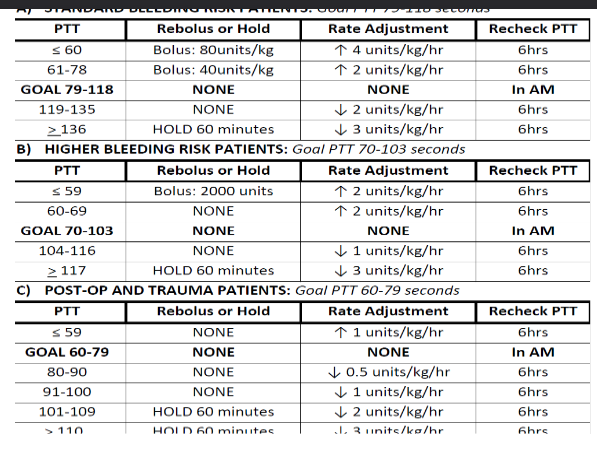
toxic effects of heparin
antidote: protamine sulphate
Interventions: monitor aPTT, monitor platelet count, observe for bleeding (stool, hematuria, petechiia), measures to prevent bleeding (hold pressure), heparin subcut, heparin infusion on an IV pump

heparin nursing implications
do not give subcut doses within 5 cm of the umbilicus, abd incisions, open wounds, scars, drainage tubes, stomas or areas of bruising or oozing
do not aspirate subcut injections or massage injection site
can cause hematoma
IV doses can be given by bolus or IV infusions
anticoagulant effects are seen immediately
lab values are done daily to monitor coagulation effects (aPTT)
protamine sulphate as antidote if excessive anticoagulation
IV doses are usually doble checked with another nurse
ensure subcut doses are given subcut not IM
subcut doses given in areas of deep subq fat
rotate sites
coagulation cascade
each activated factor serves as a catalyst that amplifies the next reaction
result is fibrin- clot forming substance
intrinsic and extrinsic pathway
low molecular weight heparin
same moa and use as heparin, not interchangable though
longer half life than heparin
ex: enoxaparin, dalteparin, tinzaparin sodium
Pros
synthetic smaller molecular structure
more predictable anticoagulant response
frequent lab monitoring of bleeding times like aPTT NOT needed
LMWH nursing implications
give subcut in abdomen
rotate injection sites
do not expel air bubble from prefilled syringe
do not aspirate
protamine sulphate as antidote, usually not rlly need for LMWH
warfarin sodium (coumadin) moa
inhibits vit k synthesis by bacteria in gi tract
warfarin suppresses coagulation by acting as an antagonist of vit k by inhibiting certain clotting factors X, IX, VII, and II
warfarin prolongs clotting time and is monitored by the prothrombin time PT and INR
indications: long term anticoagulation
thrombophlebitis
pulmonary embolism
atrial fibrillation
mechanical heart valves
warfarin (coumadin)
most commonly prescribed oral anticoagulant
carful monitoring of prothrombin time (PT) / international normalised ration (INR)
a normal INR is 0.8-1.2 but therapeutic INR (with warfarin) is from 2-3.5, depending on indication for use of drug (a fib, thromboprevention, prosthetic heart valve)
antidote: Vitamin K
warfarin sodium AE
bleeding
lethargy
muscle pain
skin necrosis
purple toes syndrome (caused by blockage of tiny arteries and arterioles)
blood levels of warfarin

bridge therapy
switching from one anticoagulant to another
takes a couple of days to switch, dosages adjust
ex: for surgery, for pt to go home
toxic effects of warfarin
discontinue warfarin
may take 36-42 hours before liver can resynthesise enough clotting factors to reverse the warfarin effects
vit k (phytonadione) can hasten return to normal coagulation
high doses (10 mg) of vit K given IV will reverse anticoagulation within 6 hours
cautuion: when vit k is given, warfarin resistance will occur for up to 7 days
severe bleeding: transfusions of humam plasma or clotting factors concentrates
IV vit k: risk of anaphylaxis, make sure to dilute and give over 30 mins
common to give injectable form orally
drug interactions for warfarin
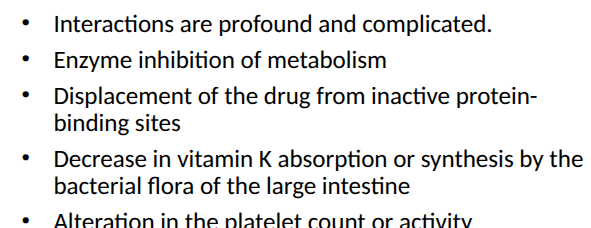
warfarin nursing implications
monitor PT and INR
observe for bleeding
instruct client regarding diet
may be started while pt is still on heparin until PT/INR levels indicate adequate anticoagulation
full therapeutic effect takes several days
antidote is vit k
dietary and natural health products (capsicum pepper, garlic, ginger, ginkgo, st johns wort)
age considerations
maintenance dose determined by INR
antiplatelet drugs
antiplatelet drugs
prevent platelet adhesion
inhibits aggregation of platelets
used in prophylaxis of long term complications of MI, coronary revascularisation, stents and stroke

antiplatelet ae
can be serious bc risk for induced bleeding
vary according to drug
bruising
hematuria
gi bleeding
tarry stools
nursing: determine sensitivity, monitor vital signs, take w food to reduce gi upset, instruct client to monitor for side and ae and to take meausres to prevent bleeding
thrombolytic drugs
drugs that break down or lyse preformed clots in coronary arteries
current drugs: alteplase (activase), tenecteplase (TNKase)
thrombolytic drugs MOA

thrombolytic drugs indications
acute MI
arterial thrombolysis
DVT
occlusion of shunts on catheters
pulmonary embolism
acute ischemic stroke
thrombolytics contraindications

thrombolytic AE
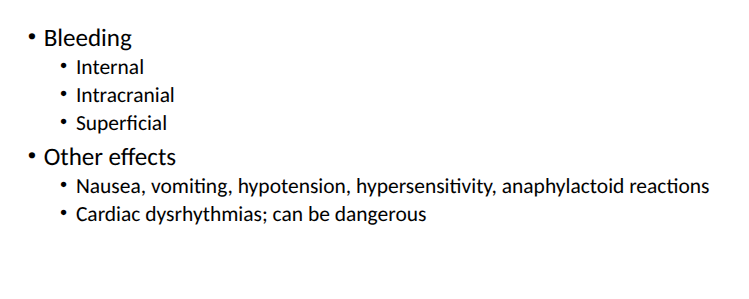
thrombolytic drugs interventions
