HHSC 3600: Upper extremity

0.0(0)
Studied by 4 people
call kaiCall Kai
learnLearn
examPractice Test
spaced repetitionSpaced Repetition
heart puzzleMatch
flashcardsFlashcards
GameKnowt Play
Card Sorting

1/86

encourage image

There's no tags or description

Looks like no tags are added yet.

87 Terms

1
New cards

Why do we say tendinitis vs tendinosis instead of just overuse injury

Tendinitis means acute with inflammation

Tendinosis means chronic degenerative change

2
New cards

What is the difference between microtrauma and macrotrauma

Microtrauma means repetitive/cumulative small stress

Macrotrauma means a single significant force event

3
New cards

Name the 5 force patterns that cause injury

Tensile, compression, shear, torsion, direct blow

4
New cards

Tensile force is longitudinal tearing/overstreching. Which tissue are prone and what is a classic example

Muscle, tendon, lingament, fascia


Valgus force stretching the MCL or eccentric hamstring overload while running

<p>Muscle, tendon, lingament, fascia</p><p></p><p>Valgus force stretching the MCL or eccentric hamstring overload while running</p>
5
New cards

Compression concentrates opposing force at the end of a structure. Which tissues are prone, and what are 2 examples?

Bone, spine, and disc.

An example of this can be FOOSH = distal radius fracture (acute); chronic vertebral compression=disc herniation

<p>Bone, spine, and disc.</p><p>An example of this can be FOOSH = distal radius fracture (acute); chronic vertebral compression=disc herniation</p>
6
New cards

How does shear differ from compression at a joint?

The difference is that shear is a perpendicular stress sliding across the long axis of a structure (example is transverse bone fracture, joint dislocation), compression pushes straight along the axis

<p>The difference is that shear is a perpendicular stress sliding across the long axis of a structure (example is transverse bone fracture, joint dislocation), compression pushes straight along the axis </p>
7
New cards

Torsion combines rotation and load which is a twisting stress. Give the classic example and a contributing risk factor.

An example is a planted foot and rotation which often causes ACL tears/fractures/sprains; shoes that fix the foot firmly to the ground can increase risk

<p>An example is a planted foot and rotation which often causes ACL tears/fractures/sprains; shoes that fix the foot firmly to the ground can increase risk</p>
8
New cards

A direct blow to a body part is easy for the patient to describe, but what should you keep on your differential?

Contusion (bruise), fracture, dislocation, or a combination of these

<p>Contusion (bruise), fracture, dislocation, or a combination of these</p>
9
New cards

Sort these into the right bucket: Musculotendinous, Skin, Joint capsule, ligament, neurological vs fracture, osteochondral, exostosis. What is the decision rule?

First group = soft tissue categories

Second is hard/bony pathology categories.

Overall rulee is name the TISSUE before the PATHOLOGY

10
New cards

Define a strain. What’s the etiology and common sites

Tensile injury of muscle or tendon; etiology=tensile/dynamic overload (non-contact), sites= musculotendinous junction or muscle belly

<p>Tensile injury of muscle or tendon; etiology=tensile/dynamic overload (non-contact), sites= musculotendinous junction or muscle belly</p>
11
New cards

What is tendinopathy and when would you isntead justify calling it itis (tendinitis)?

Tendinopathy is an umbralla term used when the inflammation status is unclear


You reserve itis only when inflammation is confirmed

12
New cards

Bursitits needs more than nnearby pain to diagnose. What are the etiology, key inspection finding, and 2 classic sites?

Etiology is friction/direct trauma or disease state

Inspection is localized swelling

Sites patellar bursitis, olecranon bursitis

<p>Etiology is friction/direct trauma or disease state</p><p>Inspection is localized swelling</p><p>Sites patellar bursitis, olecranon bursitis</p>
13
New cards

A contusion needs a differential too. What should you rule out, and what’s the classic inspection sign?

Fracture (bone bruise) or superficial nerve damage; inspection shows rainbow coloring as it heals

<p>Fracture (bone bruise) or superficial nerve damage; inspection shows rainbow coloring as it heals</p>
14
New cards

Heterotropic ossificaiton (historically called myositis ossificans), and why is aggressive early treatment inappropriate?

It is abnoraml bone formation in soft tissue after direct trauma/contusion (also genetic or neurological causes); aggressive early treatment (like massage and heat) can worsen ossification
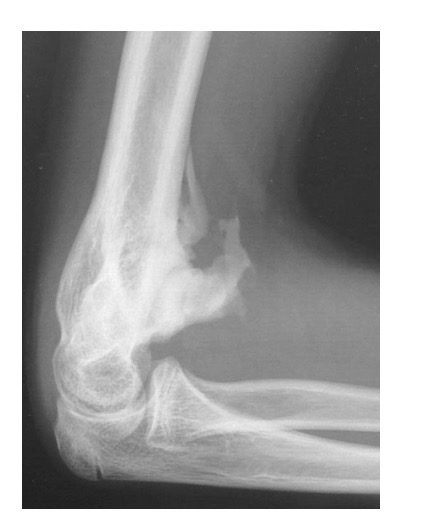
<p>It is abnoraml bone formation in soft tissue after direct trauma/contusion (also genetic or neurological causes); aggressive early treatment (like massage and heat) can worsen ossification</p>
15
New cards

How should you grade a ligament sprain - what should you document besides the grade number?

Laxity (like looseness), endpoint, feel, bilateral comparison, and fuction and not just grade alone

Severity: Grade 3>2>1

Intracapsular > extracapsular

<p>Laxity (like looseness), endpoint, feel, bilateral comparison, and fuction and not just grade alone</p><p>Severity: Grade 3&gt;2&gt;1</p><p>Intracapsular &gt; extracapsular</p>
16
New cards

Why is a joint dislocation a neurovascular emergency?

Shear force displaces the joint surface which means there is a risk of nerve and vessel damage which makes this a medical emergency. Reasses circulation and nerve function before and after care

17
New cards

What distinguishes subluxation from a complete dislocation?

Subluxation = partial loss of joint congruence (shear force at the articular surface); patient often shows apprehension on exam vs full displacement on dislocation


Acute= frank subluxation, history of dislocation = chronic subluxation pattern

18
New cards

Cartilage injury depends on load and time. what forces cause it, and why is it clinically significant?

Compressive and shearing forces; can be acute or degenerative (age-related); damage is irreversible. Cartilage has really bad healing capacity due to limited blood supply


Like the stuff i saw with cartilage during shadowing


19
New cards

What is an osteochondral injury, and which mechanisms cause it?

Injury crossing both cartilage AND subchondral bone, caused by trauma (torsion/comrepssion) or gradual softening with weight-bearing activity. Sites can be talus, patella, femur, capitellum, humeral head


Severity really is classified as partial thickness or full thickness

<p>Injury crossing both cartilage AND subchondral bone, caused by trauma (torsion/comrepssion) or gradual softening with weight-bearing activity. Sites can be talus, patella, femur, capitellum, humeral head</p><p></p><p>Severity really is classified as partial thickness or full thickness</p>
20
New cards

What is OCD (osteochondritis dissecans) and who does it typically affect?

Subchondral bone degeneration causes loose bodies; most common cause of knee pain in children/adolescents at the age of 10-15


Same sites as osteochondral injury; talus, patella, femur, capitellum, humeral head—age changes referral threshold.
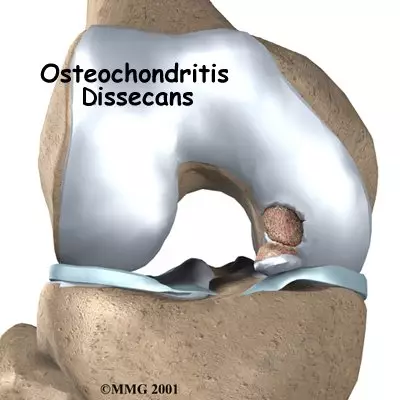
<p>Subchondral bone degeneration causes loose bodies; most common cause of knee pain in children/adolescents at the age of 10-15</p><p></p><p>Same sites as osteochondral injury; talus, patella, femur, capitellum, humeral head—age changes referral threshold. </p>
21
New cards

Compare Osteoarthritis vs Rheumatoid Arthiritis

OA = secondary to trauma/weight-earing/irregular biomechanics (insidious degeneration, bony outgrowths)

RA= systemic autoimmune disorder ( can occur in younger pts as well)


Arthritis labels require disease context - traumatic degeneration vs systemic inflammatory disease

22
New cards

What structure/events cause neurovasular injyr, and why does a worsening neurovacular finding override any other label (stop rule)?

It is caused by joint dislocations, bony displacement, concussive forces, compartment syndrome, compression/tension forces; untreated → loss of body part or function, so it takes priority immediately

23
New cards

Why does skeletal maturity change fracture risk in adolescents?

Adolescents have an open growth plate (physis), so include Salter-Harris classification in the differential; improper management of acute fractures can cause disability or growth disturbance


Salter-harris mnemoic: 1-separated, 2, above, 3 lower, 4 through, 5 ERasure of growth plate

<p>Adolescents have an open growth plate (physis), so include Salter-Harris classification in the differential; improper management of acute fractures can cause disability or growth disturbance </p><p></p><p>Salter-harris mnemoic: 1-separated, 2, above, 3 lower, 4 through, 5 ERasure of growth plate</p>
24
New cards

Why can an avulsion fracture be mistaken for a muscle strain or ligament sprain?

Avulsion = excessive tensile force/ contraction pulling a bone fragment off a tendon/ligament attachment this mimics the signs/symptoms of strains or sprains.


<p>Avulsion = excessive tensile force/ contraction pulling a bone fragment off a tendon/ligament attachment this mimics the signs/symptoms of strains or sprains.</p><p></p><p></p>
25
New cards

What causes a bone stress injury, and how does it present?

Repeated submaximal stresses (microtrauma); mimics soft tissue injury signs/symptoms; more common in the lower extremity


26
New cards

What is exostosis, and what’s its etiology?

A bony outgrowth from repeated stress (Wolff’s law); history often includes insidious onset, previsou trauma, or arthritis; palpable bony outgrowths, limited/painful ROM with a bony endfeel


Exit ticket framework; MOI → tissue → pathology → one alternative diagnosis

27
New cards

Course framework: what’s the 4-step clinical reasoning process for describing any injury?

1) Distinguish if its either macro or microtrauma

2) match force pattern to vulnerable tissue

3) describe injury as moi > tissue > pathology

4 propose a calibrated initial differential diagnosis

28
New cards

On the what force pattern is shown? Tretrival slide match arrow direction/description to force

  1. Longitudinal tearing stress

  2. Twisting stress

  3. Perpendicular stress across the long axis


  1. Tensile/overstretching

  2. Torsion

  3. Shear


29
New cards
30
New cards
What does HOPS stand for?
History, Observation (inspection), Palpation, Special tests (ROM/strength, stress, joint play, neuro, vascular, functional).
31
New cards
Why is HOPS a reasoning loop, not a checklist?
A new finding can send you back to revise your hypothesis. Each step updates probability.
32
New cards
Which problems do you screen for first?
Emergent first, then non-emergent.
33
New cards
What makes an examination reproducible for another clinician?
Comprehensive, reproducible documentation that follows professional standards.
34
New cards
What should an evaluation enable?
A clinical decision (plan, referral, or further testing).
35
New cards
What is the most important part of injury evaluation, and what rule goes with it?
History. Listen, don't touch. The exam is used to help confirm the history.
36
New cards
Why use non-leading, open-ended questions?
They avoid steering the answer. "Does this hurt?" (leading) vs "What causes your pain?" (open).
37
New cards
What do you listen for in the history to build the differential (DDx)?
Key signs and symptoms such as a "popping" sound or sensation, plus mechanism and onset.
38
New cards
Past history: what do you ask about?
Previous injuries or predisposing conditions, bilateral body parts: when, diagnosis, treatment, provider, current or recent status.
39
New cards
General history questions
Age, gender, occupation, general health/lifestyle/systemic disorders, activity level, medications (allergies, current and previous use), hand and foot dominance.
40
New cards
What does CC stand for and what question gets it?
Chief Complaint. "Why are you here to see me?"
41
New cards
What does MOI stand for and what question gets it?
Mechanism of Injury. "What happened? How did the injury occur?"
42
New cards
Onset and duration: what does it tell you?
Acute vs chronic. "When did it start?"
43
New cards
What does PQRST stand for?
Provocation (what causes/relieves it), Quality (what it feels like), Region (where, one finger), Severity (0-10), Timing (when, how long).
44
New cards
Match pain quality to structure
Cramping/dull/aching: muscle. Dull/aching: ligament, joint capsule. Sharp/shooting: nerve root. Sharp/bright/lightning/burning: nerve. Deep/nagging/dull: bone. Sharp/severe/intolerable: fracture. Throbbing/diffuse: vasculature.
45
New cards
How do you track symptom behavior and function?
Changes in S/Sx with activities, positions, training, equipment, time of day, treatments, over time. Limitations: ADLs, sport-specific activity, work.
46
New cards
What do you inspect before formal testing?
Swelling, discoloration, deformity, atrophy, position, scars, infection. Then tests on noted impairments: girth, 1-RM, gait, throwing motion.
47
New cards
Three palpation sequencing strategies
Structure (bones, ligaments, muscles/tendons, pulses). Direction (start distal, move proximally toward injury). Intensity (start lightly, become deeper).
48
New cards
What do you look for while palpating?
Tissue texture/tension/thickness, temperature, swelling, dryness or moisture, deformity, crepitus, spasm/tremor, tenderness, symmetry, skin color, special situations.
49
New cards
Where should palpation begin?
Away from the injury site, then move toward it.
50
New cards
Why compare bilaterally?
The uninjured side is the baseline for what is normal for this patient.
51
New cards
Order of the special-test components
AROM, PROM, RROM/MMT, stress testing, joint play, special tests, sensory, motor, vascular, functional. The differential selects which you use.
52
New cards
How does ROM testing start?
In anatomical position. Test bilateral ROM. AROM is followed by PROM.
53
New cards
Define AROM and what it shows
Arc of motion attained by the patient. Shows ability to move, strength, ROM, motor control. Gross evaluation or use a goniometer.
54
New cards
Define PROM and the key thing to note
Arc of motion attained by the examiner without patient assistance. Always note the end feel.
55
New cards
Normal end feels
Hard (bone to bone): elbow extension. Firm (tissue stretch): wrist or hip flexion. Soft (soft tissue approximation): knee flexion.
56
New cards
Abnormal end feels
Soft (unexpected): edema, synovitis. Firm (unexpected): capsule/muscle/fascia shortening. Hard (unexpected): osteophytes. Empty: fracture, bursitis, acute inflammation, abscess. Springy block: meniscus tear.
57
New cards
Interpret AROM vs PROM
PROM much greater than AROM: muscular weakness or tissue lesion. PROM = AROM: capsular adhesions or joint tightness. A difference generates hypotheses; it does not prove a lesion.
58
New cards
RROM vs MMT
RROM: passive resistance by examiner through full active ROM, tests a muscle group. MMT: active resistance by examiner at one point of motion, tests an isolated muscle.
59
New cards
MMT grades
5 normal (full ROM, max resistance). 4 good (some resistance). 3+ min resistance. 3 full ROM against gravity, no resistance. 3- partial ROM against gravity. 2 full ROM gravity eliminated. 1 trace contraction. 0 none. Record grade, position, pain, compensation, side-to-side.
60
New cards
What do stress tests assess?
Ligamentous laxity or instability. Perform bilaterally (hypermobile vs hypomobile) and determine end feel quality.
61
New cards
Ligament sprain grades by end feel
Grade I: firm. Grade II: soft. Grade III: empty.
62
New cards
What is joint play?
Arthrokinematic (accessory) motion. Compare hypomobile vs hypermobile bilaterally.
63
New cards
Joint play grades
0 ankylosed. 1 considerably decreased. 2 slightly decreased. 3 normal. 4 slightly increased. 5 considerably increased. 6 dramatically increased (pathological).
64
New cards
What is a special test?
A specific procedure applied to selective tissues. Results compare side to side and are reported as positive (+) or negative (-). Example: anterior drawer for ACL tear.
65
New cards
What does a neurologic quarter screen cover?
Upper (UQS) and Lower (LQS) quarter: dermatomes, myotomes, reflexes. Test bilaterally.
66
New cards
What may a positive neuro screen indicate?
Nerve root impingement (NRI), peripheral nerve damage, or cranial/CNS damage.
67
New cards
Patellar tendon reflex level?
L2, L3, L4.
68
New cards
Capillary refill vs pulse
Capillary refill is checked at the nail beds. Pulses are palpated at named arteries.
69
New cards
Pulse sites
LE: femoral, posterior tibial, dorsalis pedis. UE: brachial, radial, ulnar. Systemic: carotid.
70
New cards
Functional testing types shown
Agility testing and isokinetic testing. Do not use a functional test that is unsafe for the current hypothesis.
71
New cards
How does EBP connect to evaluation?
Start with pretest probability, then update it with the test result.
72
New cards
The four questions for diagnostic evidence
Valid? Reliable? Accurate versus what (gold standard)? Large enough probability change?
73
New cards
What is validity?
Does the test measure what it should? Lachman's (+) = ACL tear. Posterior drawer (+) = PCL tear.
74
New cards
What is reliability?
Is the result reproducible? Intrarater: same examiner repeats it. Interrater: different examiners agree.
75
New cards
Reliability statistics and cutoffs
ICC (intraclass correlation coefficient) or Kappa. Under 0.5 poor, 0.5-0.75 moderate, over 0.75 good.
76
New cards
Accuracy needs what?
A reference (gold) standard, e.g. arthroscopy: direct visualization of inner tissues, used to judge Lachman's.
77
New cards
2 x 2 table cells
True positive (TP), false positive (FP), false negative (FN), true negative (TN). TP/FN share disease; TN/FP share no disease.
78
New cards
Sensitivity formula and meaning
TP / (TP + FN). High rate of true positives. Ideal is 1 (100%).
79
New cards
Specificity formula and meaning
TN / (TN + FP). High rate of true negatives. Ideal is 1 (100%).
80
New cards
SnNout
Highly sensitive test, negative result: good to rule out.
81
New cards
SpPin
Highly specific test, positive result: good to rule in.
82
New cards
What does a negative result on a highly sensitive test mean?
It lowers the probability of that condition but rarely proves absence by itself. Use likelihood ratios with pretest probability.
83
New cards
How does evidence guide the exam?
History and observation can reduce the number of tests. Focused history and exam reduce low-value testing. Evidence helps select and interpret special tests. Patient goals, expertise, and research evidence shape the plan.
84
New cards
What does SOAP do?
Communicates clinical reasoning so each section makes the next decision traceable. Subjective, Objective, Assessment, Plan.
85
New cards
What do you audit in a SOAP plan?
Unsupported certainty, delayed referral, medication dosing without support, and actions outside scope.
86
New cards
Case: runner with 2 months of focal distal tibial pain. Key assessment and plan?
Bone stress injury is a priority differential (alternatives remain). Restrict painful loading, arrange timely medical referral/workup, document education, precautions, and follow-up.
87
New cards
The exit-ticket chain
History forms the hypothesis. The differential selects tests. Test results update probability. SOAP communicates the decision, safety plan, and follow-up.



