Illness behaviours, representations & treatment beliefs
 Call Kai
 Learn
 Practice Test
 Spaced Repetition
 Match
 Flashcards
 Knowt Play
1/13

There's no tags or description
Looks like no tags are added yet.
14 Terms
What is the psychological (cognitive) approach?
Each person’s brain is working to make sense of the world by:
search → information from 5 senses
attend → aspect of the environment to focus on & process
infer → interpret information based on experience/capacity
We create mental representations (schema) or prototypes of illness from our perceptions, knowledge & experience
What do societies have regarding illness & ways to confirm people as being ill?
‘Mores’ (established customs, values & moral rules of a society that govern how people are expected to behave). Expectations of people sick role behaviours include:
exempt from normal social roles - must be legitimised by an authority (e.g. parent/GP)
exempt from responsibility for illness (e.g. COVID/HIV)
must see illness is undesirable (e.g. want to get well)
must seek appropriate help (e.g. see a doctor, stay in)
must be time limited (e.g. acute/length illness)
What is the definition of symptoms?
Bodily signs or physical sensations that are ‘disruptive’ (e.g. pain, tired, nausea, rash, etc). Symptoms are matched with our prototypes of illness when:
sensations are new &/or non-attributable (attention)
have symptoms for some time, persistent (timeline)
not feeling normal, different from the status quo
not being able to do what normally do (behaviour)
What are the definitions of the following terms:
illness
illness beliefs
illness behaviours
Illness:
a disease or period of sickness that affects an individual’s body or mind and prevents the individual from achieving his or her optimal outputs
Illness beliefs:
views each person has about an illness (prototype), based on experiences, knowledge & memory of illness
beliefs about illness are linked to beliefs about health, but more than not being well
Illness behaviours:
actions people do when they have symptoms but have not sought medical help or a diagnosis (e.g. resting or stopping usual activities, self-medication, seeking sympathy & seeking information or advice)
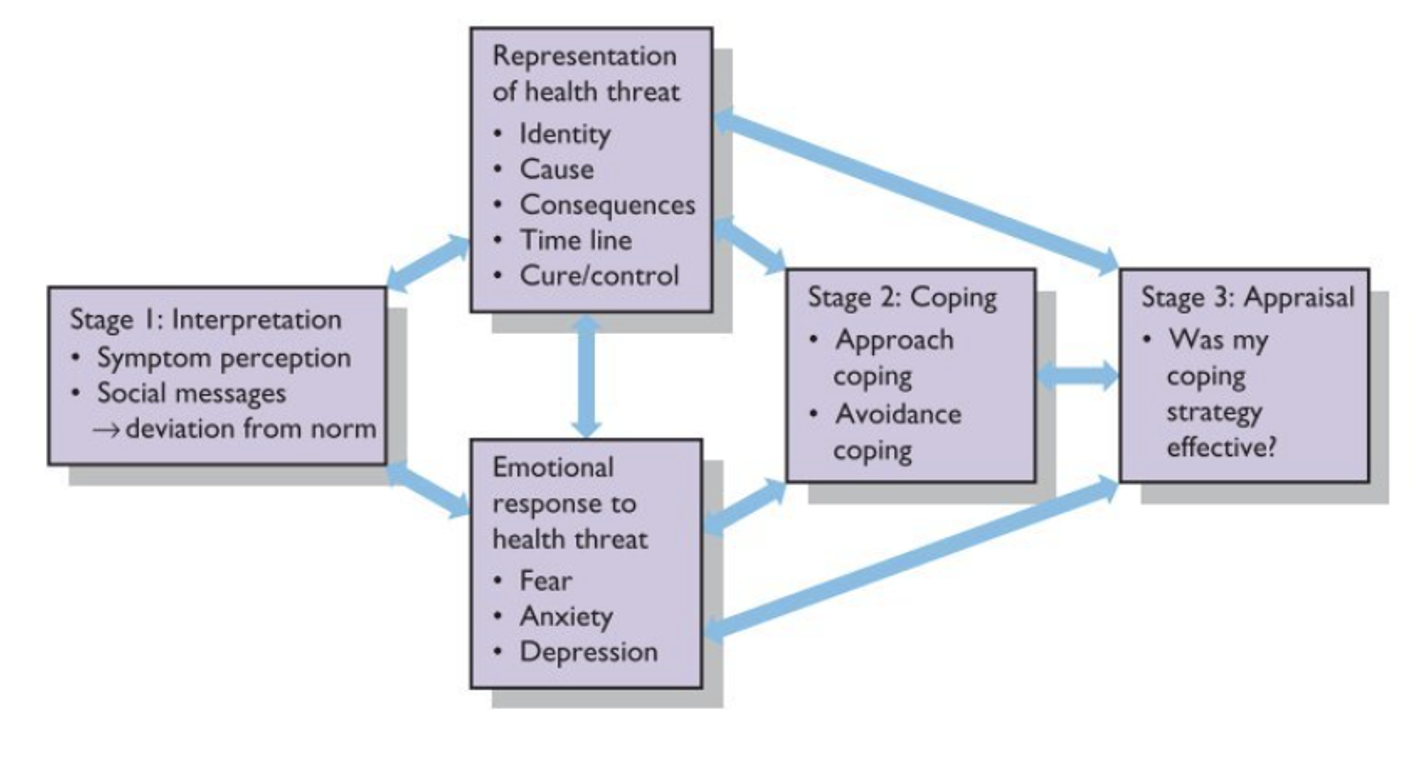
Outline and explain the Common Sense Model of Illness Representation
Explains how people interpret an illness, respond emotionally & choose coping strategies to manage a perceived health threat
1. Stage 1: Interpretation
symptom perception: noticing physical symptoms
social messages: information from others or society suggesting a deviation from normal health.
these help the individual recognise a potential health threat
2. Illness representation
the individual develops a mental understanding of the illness based on five components:
identity: what the illness is & its symptoms
cause: what they believe caused it
consequences: the expected effects on their life
timeline: how long it will last (acute or chronic)
cure/control: whether it can be treated or controlled
3. Emotional response
the perceived health threat can trigger emotions such as:
fear, anxiety & depression
4. Stage 2: Coping
the individual chooses strategies to manage the illness:
approach coping: actively addressing the illness (e.g. seeking treatment)
avoidance coping: avoiding or denying the illness or its effects
5. Stage 3: Appraisal
the individual evaluates whether their coping strategy was effective
if ineffective, they may change their understanding of the illness or try different coping strategies
How do coping strategies help individuals?
They help people to be in control of the illness, increase positive emotions, resilience & better health:
emotion-focused strategies focus on behaviours to reduce distress or feel better (e.g. ignore, denial, anger & comfort)
problem-focused strategies focus on behaviours to find solutions or fix the symptoms (e.g. visit the GP, take remedies & plan goals/actions)
What are examples of positive & negative responses to diagnosis that can impact engagement to healthcare?
Shock: bewildered, detachment from situation
Disorganised thinking: loss, grief, despair
Retreat: denial of a problem, withdrawal into self
Relief: uncertainty and anticipation of waiting emotionally demanding
What are examples of reasons why people differ in their healthcare behaviours?
Attendance (e.g. appointment, use of healthcare)
Adherence (e.g. treatments, exercise, diet)
Impact of illness (e.g. coping)
Understanding differences is useful in making healthcare communication more effective:
accurate knowledge
appropriate reassurance
health service solutions
What are some examples of reasons for non-adherence to medications?
Information/instructions are unclear
Poor memory
The patient’s beliefs & cognitions (i.e. active non-adherence)
What are some examples of beliefs about medicine?
Necessity: beliefs medication improves health status (e.g. efficacy)
Concerns: beliefs medication harmful (e.g. dependence, side-effects)
Harms: beliefs about harms of all medications (e.g. all some form of poison)
Overuse: beliefs professionals over-reliant on medication (e.g. over-prescription)
What are some examples of health behaviours without health professionals (i.e. outside healthcare system) ?
Regular exercise
Balanced nutrition
Sun protection
Regular Sleep
Avoiding substances (e.g. smoke, alcohol, drugs)
What are some examples of health behaviours with health professionals (i.e. inside the healthcare system) ?
Attend vaccinations
Attend routine check-ups (e.g. screenings)
Monitor health or illness indicators (e.g. blood pressure)
What are some examples of illness behaviours before diagnosis outside the healthcare system?
Seek information
Seek care
Make appointment
Self-treat
Modify lifestyle
What are some examples of illness behaviours after diagnosis outside the healthcare system?
Adhere to treatment
Self-monitor
Self-manage symptoms
Keep attending medical appointments
Communicate with health professionals