Physics 1 Test #3 (Rotational Motion) WPI
 Call Kai
 Learn
Learn Practice Test
 Spaced Repetition
 Match
Match Flashcards
 Knowt Play
1/70

Earn XP
Description and Tags
Contains lectures 13-17
Name | Mastery | Learn | Test | Matching | Spaced | Call with Kai | Chat |
|---|
No analytics yet
Send a link to your students to track their progress
71 Terms
What is a rigid body?
object which does not deform under the application of a force
Angular Coordinate Definition
angle which describes an object’s rotational position

Angular Displacement Definition & Units
Angle a rigid body rotates in a time interval
Unit: radians —> (rad)
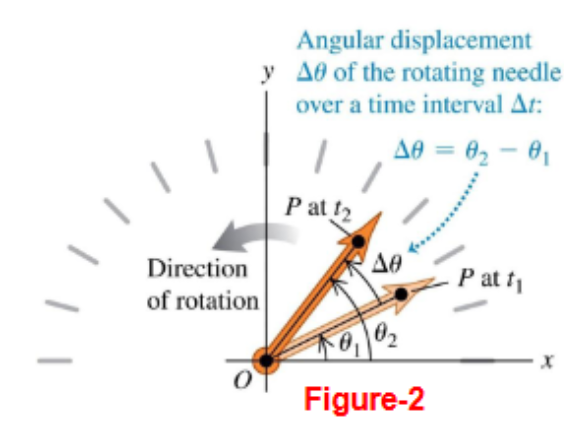
is clockwise rotation considered a + or - angular displacement
CW: neg
CCW: pos
What is 1 radian
Note: Since 𝜽 = 𝒔/𝒓, 𝜃 = 1 𝑟𝑎𝑑 when 𝑠 = 𝑟.

When using 𝑠=𝑟𝜃, why must the angle be written in radians
𝑠=𝑟𝜃
s= arc length r= radius 𝜃= central angle

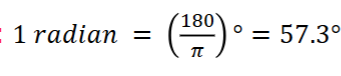
What is 1 radian in degrees?
which is the same thing as 360/2pi
Avg. Angular Velocity Equation/Definition/Unit
angular displacement made by a point on a rotating rigid body over time
radian/second


Why may z be used in average angular velocity?
When an object rotates in the 𝑥𝑦-plane, the axis of rotation points perpendicular to that plane along the 𝑧-axis.
How much is a revolution per minute in radians per second?
Note: converting rad/s to rpm is backwards; (60/2pi)

What is a helpful method to find the direction of angular velocity?
curl your right fingers in the direction of the rotation, and your thumb points along the axis of rotation

Angular acceleration formula, units, definition
(rad/s²)
how fast rotation speed changes

How to find the direction of angular acceleration?


What is the difference between tangential, translational, and radial/centripetal acceleration in circular motion?
Translational: total overall change in linear velocity
Tangential: how fast a point's linear speed changes along on the curve
Radial/Centripital: how fast an object's direction changes while turning
formulas on image

Moment of Inertia
Specific for point mass or Hoop/Ring
For a particle of mass 𝑚 at 𝑃, at 𝑟-distance from the axis

What is the Linear Form of Rotational Inertia
mass —> F = ma
Unit for Inertia

Can Rotational Inertia be zero?
yes, when r is zero

When calculating torque, how is r found?
r is measured from whatever point you choose as your axis of rotation
in this case from P

Difference between moment of inertia and rotational inertia
rotational: concept describing an object's resistance to changes in its rotational motion
moment: mathematical calculation using formula

What happens if you apply force at the objects COM
it does not rotate
(T = Fxr but r = 0, so no torque, aka no change in rotational speed)
COM Formula
x cord*mass/total mass + ycord*mass/total mass + zcord*mass/total mass

What is the center of gravity

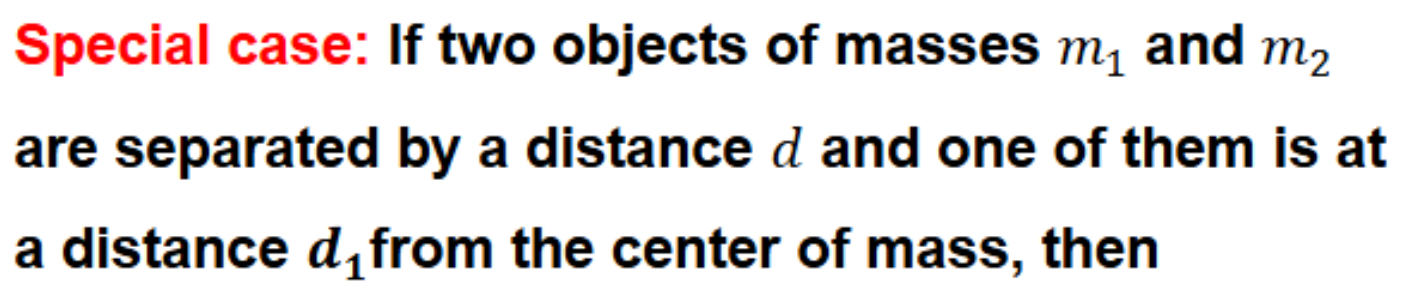
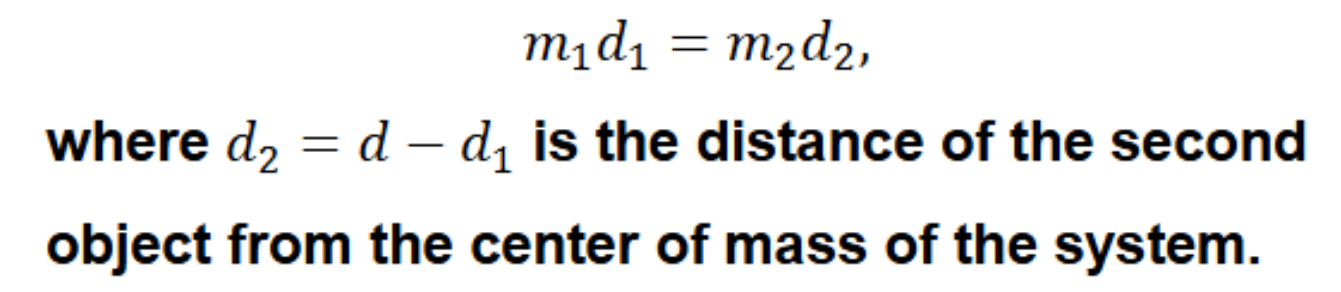
Paralell Axis Theorem
Ip: new inertia for rotating around p
I: inertia com
M: total mass of bat
d: distance btwn com & P


Is it easier to rotate from the middle or ends
from the middle; lower moment of inertia; smallest r squared always

When an object rotates which kinds of energy does it have?
rotational kinetic energy, translational kinetic energy
also potential energy when height changes
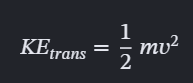
If this is the formula for translational kinetic energy,
what is the formula for rotational kinetic energy?
Where rotational Inertia = mr²

If a system has rotating and translating motion, how should we consider kinetic energy?
(Example of this is ball rolling without slipping)
𝐾𝑡𝑜𝑡𝑎𝑙 = 𝐾𝑟𝑜𝑡𝑎𝑡𝑖𝑜𝑛𝑎𝑙 + 𝐾𝑡𝑟𝑎𝑛𝑠𝑙𝑎𝑡𝑖𝑜𝑛𝑎𝑙

What does the cross product of two vectors create?
The cross product of two vectors produces a third vector that is perpendicular (90 degrees) to both of the original vectors
Difference between a scalar product and a vector product notation wise

Difference between a scalar product and a vector product equation wise

How to find direction of the product vector using your hand?

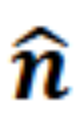
What does n̂ represent
The direction of the product vector

When moving in a clockwise/cyclic order (i —> j —> k —> i), the cross product of two unit vectors equals the third positive unit vector


When moving in the reverse/counter-cyclic order, the cross product changes sign (inverse)


The cross product of any vector with itself is always zero, because the angle between them is 0 (sin(0)=0)

Using vector product knowledge, what is the equation for torque?

For Torque, what is the angle θ between? and what direction does the unit vector n̂ point in?
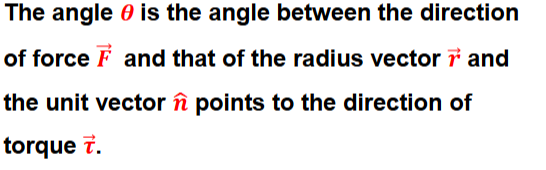
What is the unit for Torque and what uses the same unit coincidentally
Newton Meters.
Joules

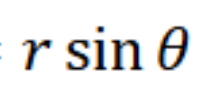
What is another way to write this?
𝝉 = (𝑟𝐹 sin 𝜃)n̂
(Or F perpendicular)


Why is k̂ used for the direction of the torque equation?
k̂ represents z direction

Other than Torque, what is found using a thumb trick?
Angular Velocity;
ω —> curl right fingers in direction of motion-- thumb points along axis of rotation
Τ —> curl right fingers in direction of force-- thumb points direction torque vector
What is the difference between Torque and Angular Velocity?
ω —> direction object currently is spinning in
Τ —> what a force is trying to do to that spin
When is an object in static equilibrium?
no translational or rotational motion
How are translational equilibrium and rotational equilibrium represented?

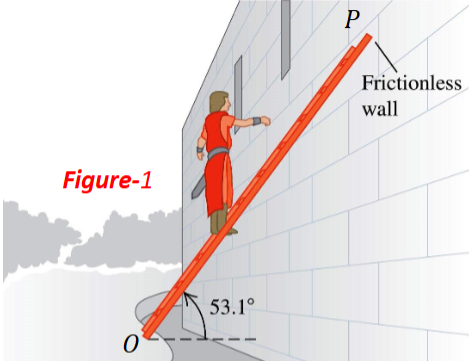
How many are forces acting on the ladder?


Which of the forces produce torques around point O?


Which of the forces produce torques around point P?


Which of the forces produce torques around the COM?

Newtons second law in rotation equation

What is the lever arm?
the perpendicular distance from the axis of rotation


What is work in rotational motion?

What is the equation for power is rotational motion?
Note: Power is normally Force x velocity
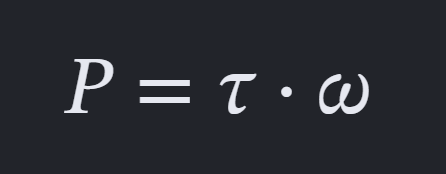
For constant torque, what is the formula for work?

Rotational Work Energy Theorem Equation

Rotational Power Equation

What is a point object?
an object treated like it is comprised of one point, and thus all its mass and other properties are assumed to be at that one point.
Angular Momentum of a Point Object

Angular momentum of point object unit

How can you find the direction of angular momentum
Right hand rule

What is the direction of the angular momentum parallel to?
angular velocity

think: sin(90) = 1, sin(0) or sin(180) = 0

Other way to write these
+k̂ =?
-k̂ =?
+k̂ = counter cw
-k̂ = cw
What is the rate of change of momentum?
Force; Newtons Second Law
Angular Momentum of a Rigid Body

The rate of change of angular momentum of a rotating object about a rotation axis is equal to
the net torque acting on it about that point
The principle of conservation of angular momentum
When the net external torque acting on a system is zero, the total angular momentum of the system is constant (conserved).
definition of angular momentum (L) in physics
