Microbiology Chapter 1: An Invisible World
 Call Kai
 Learn
Learn Practice Test
 Spaced Repetition
 Match
Match Flashcards
 Knowt Play
1/50

There's no tags or description
Looks like no tags are added yet.
Name | Mastery | Learn | Test | Matching | Spaced | Call with Kai | Chat |
|---|
No analytics yet
Send a link to your students to track their progress
51 Terms
Microorganism or Microbe
Organisms too small to be seen with the unaided eye
Examples of Microbes
Bacteria, Fungi, Protozoa, Microscopic Algae, Viruses
Abilities of Microbes
- Decompose/Produce (Ecosystems)
- Create Chemicals (Vitamins, Acetone)
- Help make Biofuels, Medicines (Insulin)
- Create Fermented Foods (Cheese, Vinegar)
- Cause Diseases (Pathogenic)
Microbial Fermentation
Process when bacteria, mold or yeast convert sugar (carbs) --> Alcohol, Gases, Organic Acids
What is the early evidence that Ancient Civilizations understood that disease was transmitted to things they couldn't see?
Quarantine - Bible refers to quarantine to stop leprosy
Clean water/sanitation - Moheno-daro → wells, baths, and sanitation systems
Aqueducts and giant sewers → built in Rome to eliminate waste
Hygiene Practices - ancient Greek civilization attributed malaria to bad air

Hippocrates (Greek Physician)
Believed diseases had natural, not supernatural causes

Thucydides (Historian)
Observed that the survivors of the plague were immune to the infection

Marcus Terentius Varro
Proposed that disease could be caused by "certain minute creatures... which cannot be seen by the eye."

Abū Bakr al-Rāzī
Islamic scholar - developed experimental methods to test aspects of medicine

Antoine van Leeuwenhoek (Scientist | 1673-1723)
"Father of Biology" created simple microscope (one lens) to view microbes called "animalcules"

Golden Age of Microbiology (1857-1914)
Spawned new discoveries from 1857-1914

Louis Pasteur (French Chemist | 1822-1895)
- Invented pasteurization, a process that killed microorganisms responsible for spoilage
- Created vaccines that treated diseases (rabies)

Robert Koch (German Physician | 1843-1910)
Connected isolated microbe (bacteria) to human disease

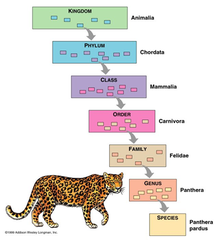
Taxonomy
Classification, Description, Identification, and Naming of living organisms
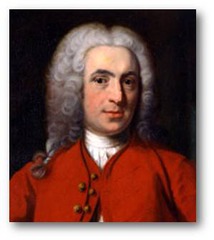
Carolus Linnaeus ( Physician | 1701-1778)
The most famous early taxonomist
Systema Naturae (1735)
Booklet that Linnaeus published proposing Linnaean taxonomy, a standard format of categorizing/naming organisms

Kingdoms of the Natural World (Linnaeus)
Animal, Plant, Mineral (abandoned later)
Phylogenies
System used to classify organisms using genetic and evolutionary relationships

Phylogenetic Tree | Tree of Life
Diagram of organisms arranged by close relation
- Visible similarities at first | Now genetic, biochemical, and embryological analyses

Carl Woese and George Fox
Discovered a "living record" of evolution and created a genetics-based tree of life using gene sequences coding for subunit ribosomal RNA (rRNA)
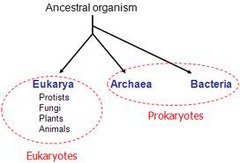
3 Domains of Life
Bacteria (Prokaryotic), Archaea (Prokaryotic), Eukarya (Eukaryotic)

4 Kingdoms of Eukarya
Protists, Fungi, Plants, and Animals
What is the format of Binomial Nomenclature?
Genus (Capitalized) + Epithet (lowercase), Italicized or Underlined
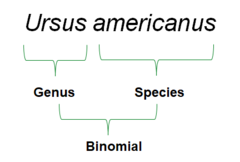
How is the Genus represented after first use in Binomial Nomenclature?
Genus is abbreviated, e.g., Escherichia coli --> E. Coli
Bergey's Manuals (1923)
Bergey's Manual of Determinative Bacteriology and Bergey's Manual of Systematic Bacteriology are the standard references used to identify/classify different prokaryotes

Biochemical Tests
Used to identify chemicals unique to specific species

Serological Tests
Used to detect antibodies that react against proteins in a certain species

DNA and rRNA Sequencing
Used to identify specific bacteria species using unique genetic codes to match microorganisms
Typical measurement of Viruses
About 100 nm = 0.1 μm
Typical measurement of Bacterium
~ 1 μm
Typical measurement of plant or animal cell
~10-100 μm (Visible)
Bacterial Cellular Structure
Unicellular Prokaryotic - Single cell, lack nucleus

Bacterial Cell Wall
Composed of peptidoglycan
Photosynthetic
Obtain energy from sunlight and fixing carbon dioxide

Nonphotosynthetic
Obtain energy from organic or inorganic compounds
Coccus (Cocci)
Spherical shape of bacteria

Bacillus (Bacilli)
Rod shape of bacteria

Sprillium
Spiral shape of bacteria

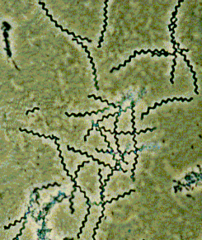
Spirochete
Tight spiral shape of bacteria
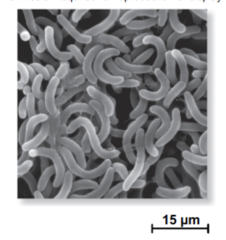
Vibrio (vibrios)
Curved shape of bacteria
Coccobacillus (Coccobacilli)
Short round rod shape of bacteria

Archaea
Unicellular prokaryotic organisms found in extreme environments
- Pseudopeptidoglycan walls

Protist
Eukaryotes that are not plants, animals, or fungi

Algae
Protists that are either unicellular or multicellular, and have cell walls made of cellulose

Protozoa
Diverse protists that provide nutrients as food

Fungi
- Eukaryotes (distinct nucleus) with chitin cell walls and absorb organic chemicals for energy
Yeast
Diverse unicellular fungi
Ex. rising bread, fermentation, food spoilage, yeast infections

Mushrooms
Multicellular fungi consisting of masses of mycelia, (filaments - hyphae)

Molds
Multicellular fungi: decomposition, pharmaceuticals (penicillin), disease-causing metabolites (mycotoxins)

Helminths
(Visible) Multicellular animals - parasitic worms (flatworms and roundworms)
- Microscopic eggs and larvae cause diseases

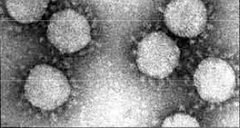
Viruses
Acellular microbes (no cells) made up of proteins and genetic material (DNA or RNA)
- Can infect all types of cells, don't move outside of host organisms and multiply in host cells