Chapter 6: Foundations for Systems Design
 Call Kai
 Learn
 Practice Test
 Spaced Repetition
 Match
 Flashcards
 Knowt Play
1/52

There's no tags or description
Looks like no tags are added yet.
53 Terms
what does systems analysis provide
the starting point for design
what is systems design
provides the starting point for implementation
define, organize, and structure the components of the final solution to serve as a blue print for construction
how we build to meet the needs of a business
Design is a model building activity!
What does the system do to meet the needs of a business
diagram of how analysis and design connect

what are design models
how is its formality decided, and why do we need it
Design is a model building activity
The formality of the project will dictate the type, complexity, and depth of models
Agile/iteration projects typically build fewer models, but models are still created
Jumping to programming without design often causes less than optimum solutions and may require rework
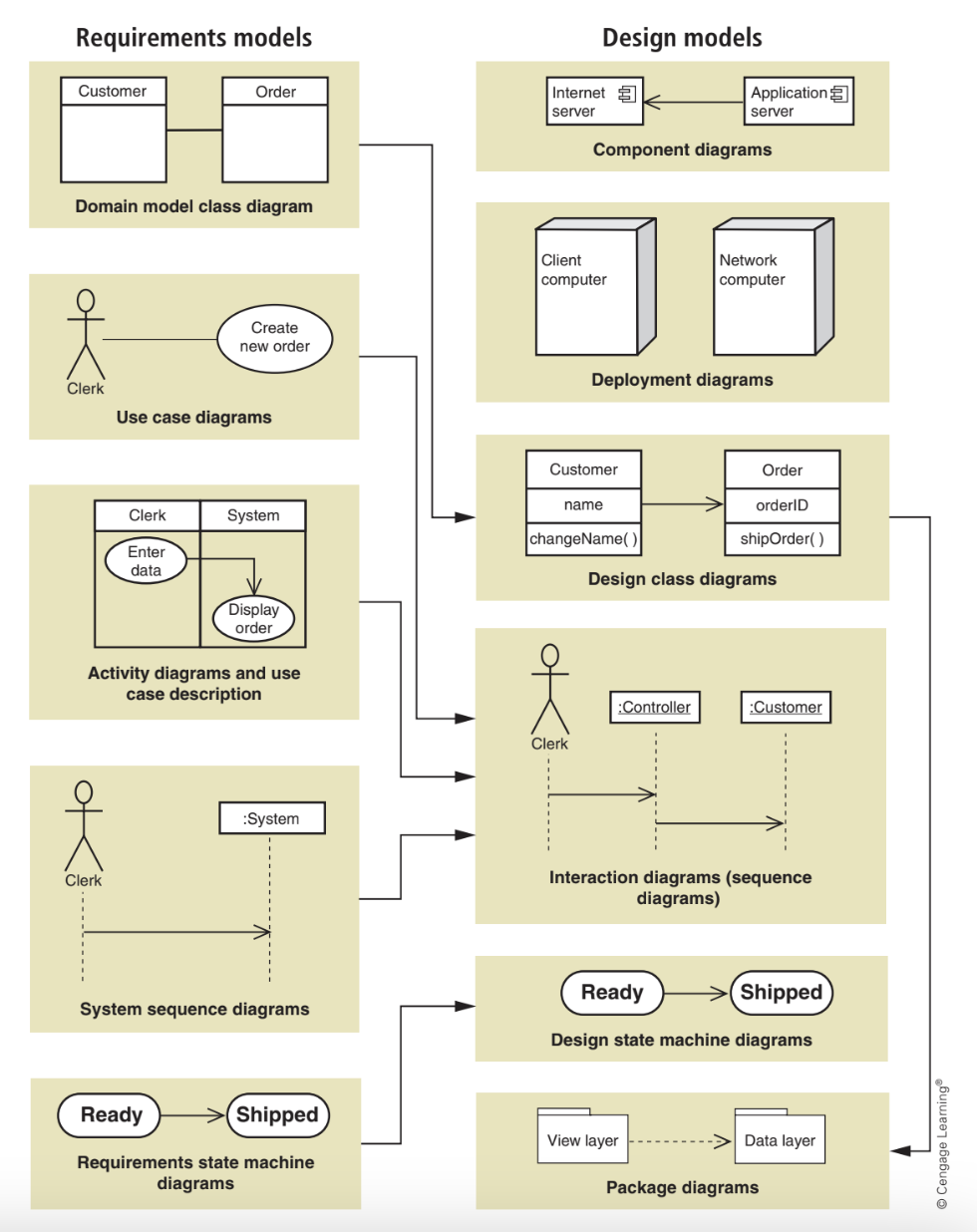
how requirement models become design models
Shifting from process and requirements to how it will acc look in design (implementation)
Like servers, client computers, networking
what are design activites
Design activities correspond to components of the new system
The environment
Application components
User interface
Database
Software classes and methods
ex. What are we using for the house? Sheet rock, wood metal, etc
what is core process 4?
Design system components
steps in core process 4: design system components
Describe the environment
Design the components,interface, database, and classes and methods

Key design questions
What questions align with each activity?
Ex. describing the environment → how will the system interact with other systems? What integration or environment specifics do we need to know?

two key elements in an environment
communications with external systems
conforming to an existing technology architecture
communications with external systems
Message formats
Web and networks
Communication protocols
Security methods
Error detection and recovery
conforming to an existing technology architecture
Discover and describe existing architecture
Chapter 7 provides more details
what is an application component
a well defined unit of software that performs some function(s)
Issues involve how to package components including:
Scope and size – what are the functions, boundaries, interfaces?
Programming language – what are the accepted languages?
Build or buy – is an acceptable version available to purchase?
Models produced during the activity: Design the application components
3 types
Component diagram
package diagram
deployment diagram

what does it mean to design the user interface
To the user, the User Interface is the system.
The user interface has large impact of user productivity
Includes both Analysis and Design tasks
Requires heavy user involvement
Current needs require multiple user interfaces
Many different devices and environments
Models produced during the activity: Design the user interface
Storyboard
system sequence diagram
small screen menu prototype

Current technology frequently uses what kind of database management systems?
what does using this require?
Relational Database Management Systems (RDBMS)
Requires converting the data model to a relational database
Requires addressing of many other technical issues
Throughput and response time
Security
Sample database table definition in MYSQL

what does it mean to design software classes and methods —> what 3 models do you make
AKA Detailed Design
A model building activity
Design Class Diagram
Sequence Diagrams
State-Machine Diagrams
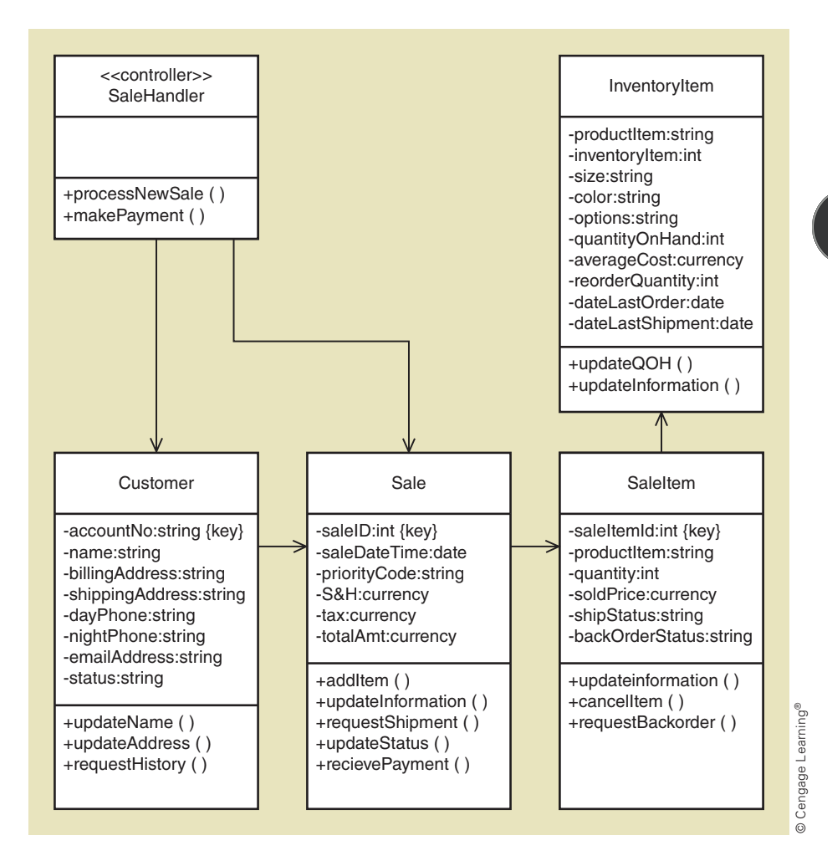
Typical design class diagram with attributes and met-____
example
Partial design class diagram for RMO’s CSMS
view layer
domain layer
data access layer
(CHECK)
View layer - what user sees
Domain layers - context with which u are building for
Data access layer - beginning to end, how the application transacts
Integrity Controls
Controls that maintain integrity of inputs, outputs and data and program
Security Controls
Controls that protect the assets from threats, internal and external
Integrity and security controls diagram

what are integrity controls integrated into
Integrated into application programs and DBMS
Objectives of Integrity Controls
Ensure that only appropriate and correct business transactions are accepted
Ensure that transactions are recorded and processed correctly
To protect and safeguard assets such as the database
what are input controls
four types of input controls
Value Limit Controls
Completeness Controls
Data Validation Controls
Field Combination Controls
Prevent invalid or erroneous data from entering the system
Value Limit Controls
Check the range of inputs for reasonableness
Completeness Controls
Ensure all the data has been entered
Data Validation Controls
Ensure that specific data values are correct
Field Combination Controls
Ensure data is correct based on relationships between fields
what are output controls
examples
To ensure that output arrives at proper destination (for authorized eyes) and is accurate, current, and complete
examples:
Physical access to printers and display devices
Discarded data – protect from “dumpster diving”
Labels on printed and electronic output to correctly identify source of data
what is the point of redundancy, backup and recovery
Protect data and systems from catastrophes
Databases
Hardware
Software applications
Networks
On-site versus off-site copies
what is fraud prevention
one of the biggest threats to cybersecurity is internal malicious actors
Ex. a frustrated employee, ex. Someone who did not get promoted, knows enough about the company to embezzle the money
Critical to prevent internal fraud, embezzlement, or loss
Fraud triangle
Opportunity
Motive
Rationalization

fraud risk factors and techniques


what is the point of security controls
Protect all assets against external threats
Other objectives
Protect and maintain a stable, functioning operating environment 24/7 (equipment, operating systems, DBMSs)
Protect information and transactions during transmission across networks and Internet
four main parts of designing security controls + subparts
Access Controls – Limit a person’s ability to access servers, files, data, applications
Authentication – to identify users
Multifactor Authentication
Access control list – list of valid users
Authorization – authenticated user’s list of permission level for each resource
Registered Users – those with authorization
Unauthorized Users – anyone not registered
Privileged Users – those that maintain lists and systems
types of users

what is data encryption
Method to secure data – stored or in transmission
encryption
alter data so it is unrecognizable
decryption
converted encrypted data back to readable format
encryption algortihm
mathematical transformation of the data
encryption key
a long data string that allows the same algorithm to produce unique encryptions
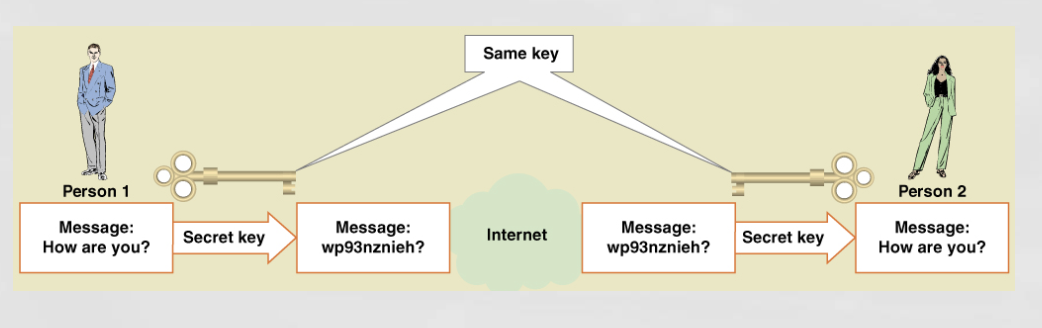
symmetric key encryption
Encryption method that uses the same key to encrypt and decrypt
asymmetric key encryption
Encryption method that uses different keys to encrypt and decrypt
AKA Public Key Encryption

digital signature
technique where a document is encrypted using a private key
Note – implements previous slide, but in reverse
Document is encrypted with private key, but then can only be decrypted with correct public key
digitial certificate
assure us that we are doing business with a valid entity
An organizations name and public that is encrypted and certified by an authorized third party

certifying authority
the authorized third party
Widely known and accepted – built into Web browsers
Secure Sockets Layer (SSL)
standard set of protocols for authentication and authorization
SSL is outdated, we use TLS now!
Ppl still say SSL by accident sometimes, but they acc mean to use TLS
Transport Layer Security (TLS)
an Internet standard equivalent to SSL
IP Security (IPSec
Internet security protocol at a low-level transmission
ex. HTTPS ensures all traffic on internet is going through a TLS process (http does not)
why is separation of duties important
allows for risk eduction
Records and audit trails
Monitoring
Asset tracking (???)
Check what else is on the textbook
registered users
someone who registers into the system- managers, employees, system admin users
when can we not use symmetric keys? What is the solution to that
Cant use symmetric keys if we don't know who the recipient is, or if there are evesdroppers
So we use asymmetric keys
Hypertext Transfer Protocol Secure (HTTPS)
Internet standard to transmit Web pages
an encrypted version of the protocol used to transmit data between a web browser and a website, ensuring that the communication remains private and protected from tampering.
analysis vs design and the bridge
Analysis is fact finding and modeling
Design is modeling to specify how system will be implemented
Design is bridge between analysis an implementation