chem ch 2
 Call Kai
 Learn
Learn Practice Test
 Spaced Repetition
 Match
Match Flashcards
 Knowt Play
1/79

There's no tags or description
Looks like no tags are added yet.
Name | Mastery | Learn | Test | Matching | Spaced | Call with Kai | Chat |
|---|
No analytics yet
Send a link to your students to track their progress
80 Terms
substances
Element (Single atom)
• Molecule (≧ 2 atoms, same or
different)
• Compound (≧ 2 different
atoms)
element
single atom, a pure substance that cannot be broken down
molecules
2 or more atoms, same or different
compound
2 or more atoms that are different
can be broken down by chemical reaction
homogeneous mixture
no visible boundaries because the components are mixed as individual atoms
also known as solution
heterogenous mixture
has one or more visible boundary between components
mixture vs compound
mixture: a physical mixture of elements that can be separated without chemical change
compound: reacted chemically to form a new compound, elements cannot be separated by physical means
methods of separating mixtures
filtration
crystallization
distillation
chromatography
filtration
separates a solid from a liquid
based on differences in particle size
ex: separating sand from water
crystallization (solubility)
based on differences in solubility
a solute dissolves in hot solvent, impurities will remain in the solution as it cools
ex: taking sugar water and making sugar crystals
distillation
based on differences in volatility (boiling point)
the more volatile component vaporizes first, condenses, and is collected
simple distillation: large boiling point differences
fractional distillation: small boiling point differences
ex: solution of chlorine and water is boiled, the water vaporizes and is collected separately, the chlorine remains behind
chromatography
based on differences in solubility/affinity
separates a mixture because different substances travel at different speeds through a material, some are more stationary, some are more mobile
4 parts of daltons atomic theory
postulate 1. all matter consists of atoms that cannot be created or destroyed
postulate 2. Atoms of one element CANNOT be converted into atoms of another element.
postulate 3. atoms of an element are identical in mass and properties, different from other elements
postulate 4. Compounds result from the chemical
combination of a SPECIFIC RATIO of atoms of different
elements. In simple whole-number ratio. ex: C O2
law of mass conservation
The total mass of substances present does not change
during a chemical reaction.
Atoms cannot be created or destroyed.
Atoms can not be converted into other types of atoms.
During a chemical reaction the same atoms are present but in
different combinations; therefore there is no mass change
overall.
law of definite composition
No matter the source, a compound's elements occur in the same proportion by mass.
Atoms are combined in compounds in specific ratios.
Each atom has a specific mass.
Each element constitutes a fixed fraction of the total mass in a compound.
This law compares elements in one compound.
Law of Multiple Proportions
This law compares different compounds made of the same elements
If elements A and B react to form two compounds, the
different masses of B combining with a fixed mass of A
result in a small whole-number ratio
Atoms of an element have the same mass.
Atoms are indivisible.
When elements combine to form a compound, their atoms
always combine in fixed, small whole-number ratios
how was the electron discovered
J.J. Thomson discovered the electron
using cathode ray tube experiments.
it was discovered first
how was the proton discovered
Ernest Rutherford discovered the nucleus
in 1911 and established protons as fundamental
constituents in 1919.
it was discovered second
how was the neutron discovered
James Chadwick completed the modern
model by discovering the uncharged neutron.
discovered last
what did thomson discover
the existance of electrons and they are present in all matter
came up with the plum pudding model : pudding is possitive, plums are the negative electrons
millikan’s oil drop method
fine mist of oil is sprayed into a chamber of air
oil droplets fall through hole in positively charged plate
electrically charged plates influence the droplets motion
X-rays knock electrons from air molecules,
which stick to falling droplets.
Combining Charge and Mass-to-Charge Ratio
Millikan measured the charge of single electron.
By pairing Thomson's measured mass-to-charge ratio with Millikan's
charge discovery, physicists calculated the fundamental mass of a
single electron
Rutherford's Alpha Scattering Experiment
The Atomic Nucleus Discovery
The Hypothesis: Under J.J. Thomson's Plum-Pudding model,
positive charge is highly diffuse. Fired α-particles (Helium nuclei
He2+) should pass directly through gold foil with almost no
deflection.
The Result: While most particles indeed passed straight through,
a tiny fraction underwent major, sharp deflections.
The Model: Rutherford concluded that the atom has its positive
charge concentrated in a tiny, massive central nucleus
Rutherford’s Conclusions
An atom is mostly empty space occupied by electrons.
o The center of an atom contains a nucleus.
o There’re tiny (+) particles reside in the nucleus, called Protons.
The Modern Atomic Scale
The atom is an electrically neutral, spherical entity composed of a positive central nucleus (made of protons and neutrons) surrounded by negative electrons.
how much of an atom’s mass is from the nucleus
99.97%
atomic number
number of protons
atomic mass
number of protons and neutrons
how do you find the number of electrons in an element using the periodic table?
it should be the same as the atomic number because in a neutral atom the number of protons is= to the number of electrons
where are the metals at on the periodic table
red, orange, light green
good electrical conductors. Tend to lose
electrons in chemical reactions and became cation
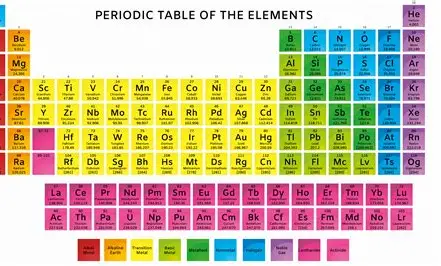
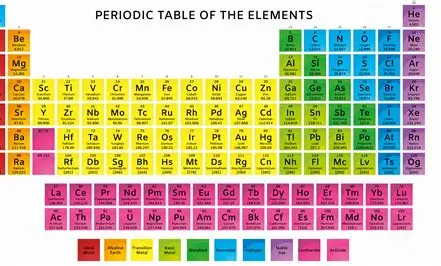
where are the nonmetals at on the periodic table
Upper right corner; poor thermal conductors. Tend to gain
electrons in chemical reactions and became anions
blue, purple
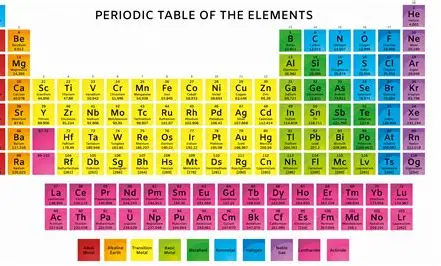
where are the metalloids (semimetals) at on the periodic table
Form staircase separating metals and nonmetals.
dark green
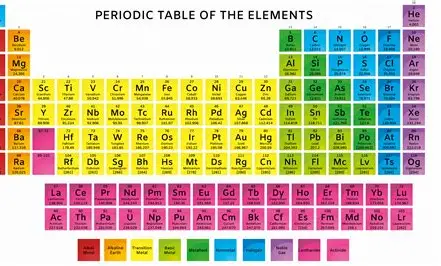
where are the Nobel Gases (inert gases ) at on the periodic table
right most column (purple)
from top to bottom the atomic radius (number of electron shells) increases/decreases
increases, each new row adds a new layer of electrons
from top to bottom atomic size (the size of the particles) increase/decrease
increase, the size of the particles get larger as you go down the columns
from left to right atomic size (the size of the particles) increase/decrease
decrease
the largest atom in the periodic table would be in which direction
lower left corner
standard notation for elements
atomic mass (protons + neutrons)
______________E
number of protons (atomic number)
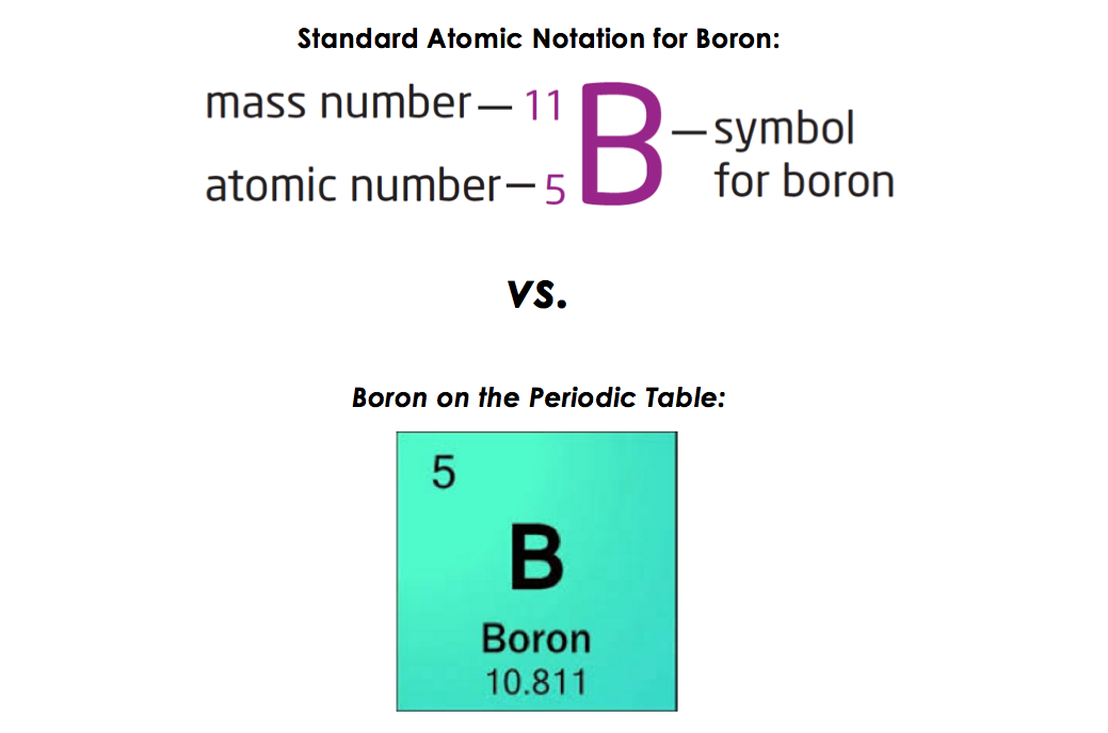
why do we use standard notation for elements
esigned to represent specific individual isotopes. (differences in neutrons)
ion
an atom (or group of atoms) with one or more positive/negative charges
when an atom gains or loses an electron
when the number of protons isn’t equal to the number of electrons
are all isotopes man made?
Some isotopes are naturally occurring, and some are synthetic (man-made)
how many isotopes do elements have?
Elements can have a multitude of isotopes; each with a different mass number.
are isotopes stable?
Some isotopes are stable, and others are unstable and undergo nuclear decay.
can you determine the identity of an isotope by looking at the periodic table?
no
chemical properties of an element are mostly determined by
the number of electrons
do isotopes have the same/different chemical behavior as their element
near identical
atomic mass of isotope equation
atomic mass= AMUa(%abu a/100%)+ AMUb(%abu b/100%) + . . .
in a compound are the elements in a fixed mass ratio?
yes
ionic bound
usually between a metal and nonmetal when metal transfers electrons to nonmetal
the process of transferring electrons results in the formation of two different ions that are attracted to each other, making them stick together, bonding them
covelent bond
results from sharing of electrons
crystal
ions pack together to maximize attraction
metals tend to lose electrons until
they have the same number of elctrons as the nearest noble gas
non metals tend to gain electrons until
they have the same number of elctrons as the nearest noble gas
the noble gas rule
ions typically form by losing or gaining electrons to match the count of the nearest noble gas (last column of the periodic table on the right)
what is the z value in standar form
the number of protons
monatomic ion
The charged particle formed from a single atom by
gaining or losing electrons. Such as Cations from metal
atoms, Anions from nonmetal atoms
Polyatomic Ion
A group of covalently bonded atoms that possesses a
net overall positive or negative charge. Operates as a
single unit in reactions (e.g., Carbonate, ).
molecular elements
Certain elements occur naturally not as single atoms, but
as multi-atom molecules: such as the followings
diatomic molecules
elements that are never alone in nature and always come in twos
H2
N2
O2
F2
Cl2
Br2
I2
tetratomic molecule
elements that are never alone in nature and always come in fours
P4
octatomic molecules
molecules that always come in 8s
S8
Se8
discrete units v.s continuous network
discrete: particles exist as seperate, individual groups
ex: H2O is an individual water molecule
continuous network: atoms are connected in a huge repeating structure rather than forming separate molecules
ex: a diamond
ion
a single atom or covalently bonded group of atoms that
has an overall electrical charge
gained or lost an electron
CHEMICAL FORMULA
A chemical formula consists of element symbols with numerical subscripts.
• A chemical formula indicates the type and number of each atom present in the
smallest unit of a substance.
for all ionic compounds, the name and formula lists the first, and the ___ second
cation, anion
in a binary ionic compound both the cation and the anion are monatomic/polyatomic
monatomic
many metal names end in
-ium
the anion is named by adding the suffix __ to the root of the nonmetal name
-ide
ex: calcium and bromine form calcium bromide
the column with a +1 charge on PT
left most colum
the column with a +2 charge on PT
2nd leftmost column
the column with a +3 charge on PT
6th column from the right
the column with a -3 charge on PT
4th column from the right
the column with a -2 charge on PT
3rd column from the right
the column with a -1 charge on PT
2nd column from the right
the column with a 0 charge on PT
rightmost column
Formula writing for ionic compounds
1. Cation first and anion second
2. Compound has zero net charge, so charges need to be balanced
3. Subscript refers to the element symbol preceding it
4. Subscripts need to be reduced to the smallest whole number
ex: Ca²+ and Br^1-
CaBr2
because calcium has a positive charge of 2 and Bromine has a charge of -1 you need 2 bromine to balance the equation
know lewis dot diagrams
yea
know ur roman numerals
yea
When Polyatomic is cation how do you name stuff
Polyatomic name + base name of non-metal + “ide”
Example: NH4F, Ammonium fluoride
When Polyatomic is anion how do you name stuf
Name of metal/cation + polyatomic name (not ide)
Example, Mg(NO3)2, Magnesium Nitrate
a lot of them will have ate but not all, ate is not the key component here, the polyatomic name itself decides the suffix
Oxyanions
Most polyatomic ions are oxyanions, means the nonmetal element is bonded to one or more oxygen atom.
always has a negative charge
oxygen is the 2nd most electronegative element making it very reactive
Ate= extra oxygen, usually >or= 3
ite= less oxygen, usually < or =3