pharm 2 notes pre midterm 2
 Call Kai
 Learn
 Practice Test
 Spaced Repetition
 Match
 Flashcards
 Knowt Play
1/258

There's no tags or description
Looks like no tags are added yet.
259 Terms
diabetes
syndrome rather than disease
type 1: failing to produce insulin bc dont have cells that produce it (treatment is insulin pump)
type 2: either body becomes resistant towards insulin or not producing enough insulin
s+s
elevated fasting blood glucose (higher than or equal to 7 mmol/L) (for short term, couple of days) or a hemoglobin A1c (HbA 1c) level greater than or equal to 6.5% (90-120 days)
polyuria (lots of urine)
polydipsia (excessive thirst)
polyphagia (extreme hunger)
glycosuria (sugar in urine)
weight loss
fatigue
blurred vision
type 1 diabetes
lack of insulin production or defective insulin
affected pt need exogenous insulin
feweer than 10% of all cases are type 1
complication: diabetec keto acidosis (main) OR hyperosmolar hyperglycemic state
pancreas

type 2 diabetes
most common- 90% of all cases
caused by insulin deficiency and insulin resistance
many tissues are resistant to insulin- reduced number of insulin receptors, insulin receptors are less responsive
comorbid conditions: obesity, coronary heart disease, dyslipidemia, hypertension, microalbuminemia (protein in urine), increased risk for thrombotic (blood clotting) events
these comorbidities are called metabolic syndrome or cardiometabolic syndrome
gestational diabetes
hyperglycemia that develops during pregnancy
insulin given to prevent birth defects
usually subsides after delivery
30% of pt may develop type 2 diabetes within 10-15 yrs
long term complications of diabetes
macrovascular (atheroscletortic plague): coronary arteries, cerebral arteries, peripheral vessels
microvascular (capillary damage): retinopathy, neuropathy, nephropathy
diabetes screening
prediabetes (risk of diabetes): categories of increased risk
HBA1c of 6.0 to 6.4%
fasting plasma glucose levels higher than or equal to 6.1 mmol/L but less than 6.9 mmol/L
impaired glucose tolerance test (orla glucose challenge)
screening recommended every 3 years for all patients 40 yrs of age and older
non pharmacological treatment interventions
Not for type 1
weight loss
improved dietary habits
smoking cessation
reduced alcohol consumption
regular physical excersise
glycemic goal of treatment
HbA1c of less than 7%
fasting blood glucose goal for diabetic pts (4-7 mmol/L)
2 hr postprandial target of 5-10 mmol/L
treatment for diabetes
type 1- insulin therapy
type 2- lifestyle changes, oral drug therapy, insulin when the above no longer provide glycemic control
types of antidiabetic drugs
insulins
oral hypoglycemic drugs
combination of orgal antihypoglycemic and insulin controls glucose levels
some new injectable hypoglycemic drugs may be used in addition to insulin and antidiabetic drugs
insulins
function as a substitute for the endogenous hormone
effects are the same as those of normal endogenous insulin
restores diabetic pt ability to
metabolise carbs, fats and proteins
store glucose in the liver
convert glycogen to fat stores
antidiabetic meds
insulins
oral hypoglycemic drugs
combo of oral antihypoglycemic and insulin controls glucose levels
some new injectable hypoglycemic drugs may be used in addition to insulin or antidiabetic drugs
anasthetics
drugs that eliminate or reduce pain by depressing nerve function in the cns and pns
anasthesia
state of reduced neurological function
types of anasthesia
general: complete loss of conciousness and loss of body reflexesincluding paralysis of resp muscles
local: no paralysis of resp function, elimination of pain sensation in the tissues innervated by anasthetized nerves
general anasthesia
drugs that induce state in which cns is altered
pain relief, depression of conciousness, skeletal muscle relaxation, reflex reduction
types of general anasthesia
inhalational anasthetics: volatile liquids or gases that are vaporised in oxygen and inhaled
parenteral anathetics: administered IV
adjunct anasthetics: drugs that enhance clinical therapy when used simultaneously with other drugs, balanced anasthesia
MOA of general anasthetics
varies by drug
overall effects: orderly and systematic reduction of sensory and motor cns function, progressive depression of cerebral and spinal cord functions
overton-meyer theory:
for all anasthetics, potency varies directly with lipid solubility
fat soluble drugs are stronger anasthetics than water soluble drugs
nerve cell membreanes have high lipid content, as does blood brain barrier
lipid soluble anasthetic drugs can therefor cross the blood brain barrier to concentrate in the membranes
indications of general anasthesia
surgical procedures
unconciousness
skeletal muscular relaxation
visceral smooth muscle relaxation
rapid onset, quickly metabolised
also used in electroconvulsive therapy treatments for severe depression
AE of gen anasthesia
vary according to dosage and drug
sites affected: heart, peripheral circulation, liver, kidneys, resp tract
myocardial depression commonly seen
malignant hyperthermia
during or after volatile inhaled general anasthesia or use of neuromuscular blocking drug (NMBD) succinycholine
sudden elevation of body temp (over 40 deg C), tachypnea, tachycardia, muscle rigidity, life threatening emergency, treated with cardiorespiratory supportive care and dantrolene sodium (skeletal muscle relaxant)
toxicity and overdose: life threatening in large doses, cardiac and resp arrest care causes of death, admin only in controlled environment
interactions: antihypertensives: cause increased hypotensive effect, B blockers: increased myocardial depression
nitrous oxide
laughing gas
inhaled currently as gen anasthetic
weakest of gen anasthetic drugs
primarily for dental prodedures of as supplement to more potent anasthesia
propofol
parenteral gen anasthetic
used for induction and maintenance of gen anasthesia
sedation for mechanical ventilation in ccu settings
low doses: sedative- hypnotic for moderate sedation
use with caution in pts that are hemodynamically unstable
procedural sedation
aka consious or moderate sedation
doesn’t cause complete loss of conciousness and doesn’t normally cause resp arrest
combo of an IV benzodiasepine (ex midazolam) or propofol and an opiate analgesic (fentanyl or morphine)
propofol common
anxiety and sensitivity to pain are reduced and the patient cannot recall the proceudre
preserves pts ability to maintain own airway and respond to verbal commands
used for diagnositc procedures and minor surgical procedures that do not require deep anasthesia
rapid recovery time and greater safety profile than gen anasthesia
local anasthetics
aka regional anasthetics
render a specific part of body insensitive to pain
interfere with nerve impulse transmission to specific areas of body
dont cause loss of conciousness
types of local anasthetics
topical: applied directly to skin or mucous membranes, creams solutions, ointments, gels, opthalmic drops, powders, suppositories
parenteral: injected IV or into cns by various spinal injection techniques
spinal or intraspinal: intrathecal (spinal canal or subarachnoid space) or epidural (epidural spaces)
infiltration, nerve block topical
benzocaine lidocaine
drug effects of local anasthetics: paralysis
autonomic activity is lost
pain and other sensory function is lost
motor activity is lost
as local drug wears off, recovery orders in reverse order
indications of local anasthetics
surgical, dental and diagnositc procedures
treatment of certain types of persistent pain
spinal anasthesia during surgical procedures and childbirth for pain
local anasthetics are given by infitration anasthesia
infiltration anasthesia
minor surgical and dental procedures
injection of inasthetic solution intraderma, subcutaneously, submucosally or intramuscularly across the path of nerves supplying target area
may be given in circular pattern around operative area
infiltration anasthesia and epinephrine indications
used for infiltration or nerve block are combined with vasoconstrictors to
prevent systemic absorption of anasthetic
help confine local anasthetics to injected area
reduce local blood loss during the procedure
nerve block anasthesia indications
diagnostic procedures such as laryngoscopy, bronchoscopy, esophagoscopy
injected directly into or around the nerve trunks or nerve ganglia that supply area to be number
adverse effects of spinal anasthetics
spinal headache
70% of pts experience inadvertent dural punctire during epidural anasthesia or undergo intrathecal anasthesia
usually self limiting
treatment: bed rest, analgesics, caffiene, blood patch
neuromuscular blocking drugs
prevent nerve transmission in skeletal and smooth muscle, results in muscle paralysis
also paralyse skeletal muscles required for breathing: intercostal muscles and diaphragm
used with anasthetics during surgery
artificial mechanical ventilation is required
bc these drugs paralyse resp and skeletal muscles, pt cant breathe on their own, do not cause sedation or pain relief, pt may be paralysed yet conciousness
depolarising druugs
succinycholine and pancuronium bromide
rapid onset, short duration
toxicity: cardiac arrythmias, prolonged apnea, malignant hyperthermia (treatment with muscle relaxant: dantrolene)
non depolarising drygs
short acting
intermediate acting
long acting
neuromuscuar blocking drugs
nmbd induced paralysis during surgical procedure
muscle weakness, total flaccid limbs (first fingers then eyes, then limbs and trunk, finally intercostal muscles and diaphragm)- recovery is opposite order
nmbds do not cause sedation of pain relief
indications of neuromuscular blocking drugs
facilitating controlled ventillation during short procedures
endotracheal intubation (short acting)
reduce muscle contraction in an area that needs surgery
diagnostic drug for myasthenia gravis
safety for neuromuscular blocking drugs
resp muscle paralysis occurs with these drugs
emergency ventilation equipment must be avalable immediately
nursing implications of nmbd
always assess past hisotry of surgeries and response to anasthesia
assess med history, allergies and meds
assess use of alcohol, illicit drugs and opioids
assessment during pre op, intraop and post op,
vital signs, baseline lab work, electrocardiogram, oxygen saturation, abcs, all body systems
each perioperative phase has its own complex and specific nursing actions
pre op teaching abt surgical procedure of anasthesia
malignant hyperthermia s+s (be aware of it)
monirot for cardiovascular depression, resp depression and complications of anasthesia both intra and post op
safety measures during recovery esp if motor or sensory loss occurs bc of anasthesia
reorient pt to surrounding
teach pt abt post op turning, coughing and deep breathing
treatment for diabetes
type 1: insulin
type 2: lifestyle changes, oral drug therapy, insulin when above doesn’t provide glycemic control
types of antidiabetic drugs
insulines
oral hypoglycemic drugs
combo
some new injectable hypoglycemic drugs can be used as adjuvant
insulins
substitute for endogenous hormone
same effects as endogenous hormone
metabolised carbs, fats and proteins
store glucose in liver
convert glycogen to fat stores
human insulin
derived using recombinant deoxyribonucleic acid (DNA) technologies
recombinant insulin produced by bacteria and yeast
goal: tight glucose control- reduces incidence of long term complications
fast acting
onset in 4 mins, taken as soon as food is taken, peak is btwn .5 to 1.5 hours, duration is 3-5 hrs
ex: insulin lispro aabc - within seconds
rapid acting treatment for type 1 and type 2
ex: insulin lispro (Humalog) (similar action to human insulin), insulin aspart (Novorapid), Insulin glulisine (apidra)
can be given subq or via continous infusion pumps
can insulin be given iv
ONLY human insulin (Humalin) or regular insulin, only used in crisis states such as DKA
short acting insulin
reg insulin (Humalin R, Novolin ge Toronto)
IV, IV bolus or infusion, IM, Subcut)
subcut: onset is 30 mins, peak around 2-3 hrs and duration is 6.5 hours
intermediate acting insulins
trying to stay away from these, if pt is on this drug, give snack before bed so they can sleep longer
ex insuline isophane suspension (NPH)
cloudy
combined w reg insulin often
onset 1-3 hrs, peak of 5-8 hrs and duration can be up to 18 hrs
long acting insulin
usually once every 12 to 24 hrs, dont usually cause spikes and dips
ex insulin glargine (lantus)
clear, colourless
constant level
basal insulin
onset is 90 mins, peak is none and duration is around 24 hrs
ex insulin detemir
duration of action is dose dependant
lower dose requires twice daily dosing
higher doses may be given once daily
check out insulin guide
fixed combination insulin
contain cloudy insulin and clear (Clear before cloudy, short acting then intermediate)
mixed acting contains one intermediate along with either rapid or short acting
humalin (30/70)
Novolin (30/70, 40/60, 50/50)
Novomix (30)
Humalog (Mix50 or Mix25)
correction scale insulin dosing
subcut rapid acting (lispro or aspart)- short acting regular insulins, adjusted according to blood glucose test results
typically used in hospitalised diabetic pt or those on total parenteral or enteral nutrition/tube feedings
subcut insulin ordered in amt that increases as blood glucose increases
disadvantage: delays insulin admin until hyperglycemia occurs results in large swings in glucose control
recent research doesnt support sliding scale but it is commonly used
look at MOST current order of correction scale
basal bolus insulin dose
preferred treatment for hospitalised pts with diabetes
mimics a healthy pancreas by delivering basal insulin constantly and then as needed bolus
basal insulin is long acting (insulin glargine) and bolus insulin (lispro or aspart)


types of insulin summary


correcting scale example

injectable antidiabetic drugs MOA
amylin agonist
mimics natural hormone amylin
slows gastric emptying
suppresses glucagon secretion, reducing hepatic glucose output
used when other drugs haven’t acheived adequate glucose control
subcut injection
incretin mimetics ***only work if pt has beta cells that can actuallly make insulin
mimic incretin hormone released by GI tract in response to food
stimulates insuline secretion
decreases postprandial glucagon production
slow gastric emptying leads to increased satiety (fullness)
injectable antidiabetic drugs AE
amylin agonist: nausea, vomiting, anorexia, headache
incretin mimetics: nausea, vomiting, diarrhea, rare cases of hemorrhagic or necrotising pancreatitis, weight loss
oral antidiabetic drugs
used for type 2
effective treatment involves: lifestyle changes, careful monitoring of blood glucose levels, therapty with one or more drugs, treatment of associated comorbid conditions such as high cholesterol and high bp
most common most prescribed: metformin
it is oral biguanide drug
if modifications dont acheive recomended A1c goals after 3-6 months
additional treatment: dipeptidyl peptidase 4 (DPP-4) inhibitors and glucagon like peptide 1 (GLP 1) receptor agonists (liraglutide, exenatide, abligludide) or insulin
gestational diabetes treatment
only insulin
biguanide: metformin (oral antidiabetic)
AE: abdominal bloating, nausea, cramping, fullness, diarrhea, metalic taste, hypoglycemia, reduction in B12 levels long term, complication is lactic acidosis (rare)
Interactions: metformin with iodine containing ragiological constrast medium (contrast dye test) can cause acute kidney failure and lactic acidosis
contrast dye test
48 hrs before or just 24 hrs if in hospital, test do not take metformin, can cause renal issues
lactic acidosis
build up of lactic acidoses
sulphonylureas (oral antidiabetic)
second gen: glimepiride (amaryl), gliclazide (diamicron), hlyburide (diabeta)
for type 2 diabetes
contraindications: severe liver or kidney disease
ae: hypoglycemia, weight gain, skin rash, nausea, epigastic fullness, heartburn
increased hypoglycemic effect with alcohol
glinides
type 2 diabetes
ex: repaglinide
similar to sulphonylureas
3 Gs
sulphonylureas: glimepiride (amaryl), gliclazide (diamicron), glyburide (diabeta)
glinides: repaglinide
thiazolidinediones (glitazones): pioglitazone (actos), rosiglitazone (avandia)
***must have diabetes type 2 with working beta cells
mind hepatic and kidney function
thiazolidinedoines (glitazones)
insulin sensitising drugs
for type 2
ex: pioglitazone (actos), rosiglitazone (avandia)
a-glucosidase inhibitor
acarbose (glucobay)
indication: type 2
moa: prevents digestion of carbohydrates and prevents full absorption
contraindications
ae: flatulence, diarrhea, abdominal pain
dipeptidyl peptidase 4 (DPP-4 inhibitors)
delay breakdown of incretin hormone, increases insulin synthesis and decrease glucagon secretion
ex: sitagliptin (januvia)
dpp 4 is an enxyme that breaks down incretin hormones
combo therapy made with metformin improves blood glucose levels
glucagon like peptide (GLP 1) receptor agonist
subcut injection
increase insulin levels
lowers glucagon levels
slow digestion
AE: nause, vomiting, diarrhea
ex: exenatide and dulaglutide
contraindicated: family history of medullary thyroid cancer bc impacts hormones and metabolism
sodium glucose cotransporter 2 (SGLT2) inhibitors
eliminates glucose in urine
low risk of hypoglycemia
ae: UTIs, hypotension, caution with renal dysfunction, breathing difficulty, nausea, vomiting, abdominal pain, confusion and fatigue,
*even in absense of high blood glucose, should be evaluated if ketoacidosis
ex: canagliflozin (invokana), dapagliflozin (forxiga)
decrease in blood glucose caused by increase in renal excretion
moa: work independantly of insulin to prevent glucose reabsorption from the glomerular filtrate, results in a reduced renal threshold for glucose and glycosuria
sick day management
if pt is ill and unable to maintain fluid intake (ex diarrhea or vomiting) or if decline in renal function
SADMANS (hold bc of reduced kidney function)
add image
s: sulfaylureas
a: ace inhibitors
d: diuretics
m: metformin
a: angiotensin receptor blockers
n: nsaids
s: sglt2 inhibitors
hypoglycemia
abnormally low blood glucose (under 4 mmol/L)
mild cases can be treated with diet (more protein, less carbs- to prevent rebound post prandial hypoglycemia)
for quick increase- give fruit juices, not reg table sugar bc disaccharides
carb is for blood glucose and protein for longer term
symptoms: anxiety, tremors, hunder, palpitations, sweating, difficulty concentrating, confusion, weakness, drowsy, headache, vision changes, difficulty speaking, dizzy,
later signs: hypothermia, seizures, coma, death
glucose elevating drugs
complex carbs (15 g)
oral forms of concentrated glucose (gel, liquid or tablet)
50% dextrose in water (D50W)
glucagon
nursing implications for diabetics
before giving drugs that alter blood glucose
thorough history
vital signs
blood glucose levels (HbA1c level)
potential complications and drug interactions
assess for ability to consume foods
nausea or vomiting
hypoglycemia issue if med given and pt doesnt eat)
if pt is npo for procedure- call provider to clarify orders
overall concerns for diabetic increase when
pt under stress
pregnant or lactating
infection
illness or trauma
nursing education for diabetics
disease process
diet and excersise recommendations
self admin of insulin or oral drugs
timing of doses, monitoring of blood glucose levels and injection site rotations
potenital complications
nursing implications for insulin
ensure correct drug, route, type of insulin, dosage, check insulin order and prepared dose are second checked by another RN (per agency policy)
check blood glucose first, to mix suspensions - roll dont shake, ensure correct storage of insulin
only use insulin syringes (calibrated in units)
ensure correct timing of insulin dose with meals
when drawing up 2 types of insulin in one syringe- withdraw regular or rapid acting (clear) first
nursing implications for oral antidiabetic drugs
always check blood glucose first
usually given 30 mins before meals

hypoglcemia nursing implications

monitoring therapeutic response for diabtics
decrease in blood glucose levels (level prescribed)
measure HbA1c to monitor long term
watch for hypo and hyper glycemia
biosimular insulin
treats diabetes, similar to product but more affordable
ex: basaglar (similar to lantus or glargine), admelog (simular to humalog or lispro), trurapi (similar to novorapid or aspart)
CNS depressants- sedatives
drugs that have an inhibitory effect on CNS
reduce nervousnness, excitability, irritability
CNS depressants- hypnotics
cause sleep
more potent effect on cns than sedatives
sedative can become hypnotic in large dose
cns depressants
sedative - hypnotics are dose dependant
low doses: calm cns without sleep
high doses: calms and causes sleep
3 main groups: barbituates, benzodiazepines, miscallaneous drugs
sleep
normal sleep is cyclic and repetitive
sleeping persons response to stimuli is reduced
sleep architecture: REM (deep sleep around 4-5 cycles good) and non REM sleep
rem interference:
rem rebound:
CNS depressant: benzodiadepines examples

CNS depressant: benzodiadepines
formerly the most prescribed sedative-hypnotic drug
nonbenzos currently more frequently prescribed (bc of cns ae)
favourable ae profiles, efficacy, safety
either sedative-hypnotic or anxiolytic (med that relieves anxiety, given in low doses)
good short term sleep aid (good for grief)
long acting: for sleep
intermediate acting: procedures like invasive (gastroscopy)
short acting: for MRIs
CNS depressant: benzodiadepines MOA and effects and indications
MOA: depress cns activity, affect hypothalamic, thaliamic and limbic systems, work on benzodiasepine receptors (gamma aminobutyric acid (GABA)), dont suppress rem, do not increase metabolism of other drugs
calms cns, controls agitation and anxiety, reduce sensory stimulation, skeletal muscle relaxation
indications: sedation, sleep induction, skeletal muscle relaxation, agitation or anxiety relief, anxiety related depression, for acute seizure disorders, alcohol withdrawal, short term therapy for insomnia
benzodiasepines ae
mild and infrequent
headache, drowsy, paradoxical excitement or nervousness, dizzy, cognitive impairment, vertifo, lethargy, fall risk for older adults, hangover effect or daytime sleepiness
which drug effects sleep
benzo dont interfere with sleep
benzodiasepines toxicity and overdose
somnolence, confusion, coma, diminished relfexes, rarely results in hypotension and resp depression unless taken with other cns depressents, treatment is symptomatic and supportive
*flumazenil as an antidote for benzo toxicity
benzodiadepines interactions
azole antifungals, verapamil, diltiazem, protease inhibitors, macrolide, antibiotics, grapefruit juice
cns depressants: alcohol, opioids, muscle relaxants
kava and valerian (drugs for anxiety)
food drug interactions with grapefruit and grapefruit juice (impacts enzyme actions of P450- impacts metabolism of meds)
diazepam
first clinicaly available
varied uses: anxiety, adjunct in proceudral sedation, acute seizures, skeletal muscle relaxant (injury or surgery)
long acting
IV or PO
midazolam (versed)
common preop and for procedural sedation
amnesia and anxiolysis as well as sedation
IV in adults, liquid oral for children
temazepam (restoril)
intermediate acting benzo
metabolites in diazepam
normally induces sleep within 20-40 mins
long onset of action, should be taken an hour before sleep
effective hypnotic but replaced by newer drugs
non benzo: ramelteon
similar to melatonin, agonist at melatonin

non benzo: zopiclone (imovane, rhovane)
short acting benzo LIKE drug
very short half life
its blue
short term treatment (7-10 days)
non benzo : zolpidem

herbal products kava

herbal products: valerian
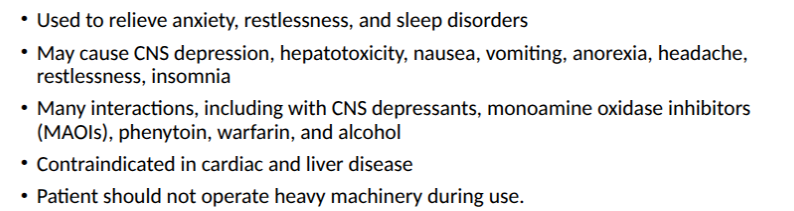
barbituates
1903 introduced, standard for insomnia and sedation
habit forming and low therapeutic index
not used as much tofat bc of safety of efficacy of benzo
barbituates MOA
works in brainstem (reticular formation)
potentiating action of GABA, nerve impulses traveling in cerebral cortex are inhibited