exam 4 -- paranasal sinuses
 Call Kai
 Learn
 Practice Test
 Spaced Repetition
 Match
 Flashcards
 Knowt Play
1/23

There's no tags or description
Looks like no tags are added yet.
24 Terms
paranasal sinuses
four groups
generally, frontal (2), ethmoid (many), sphenoid (1 or 2), and maxillary (2)
communicate with nasal cavity
generally fully developed by teenage years
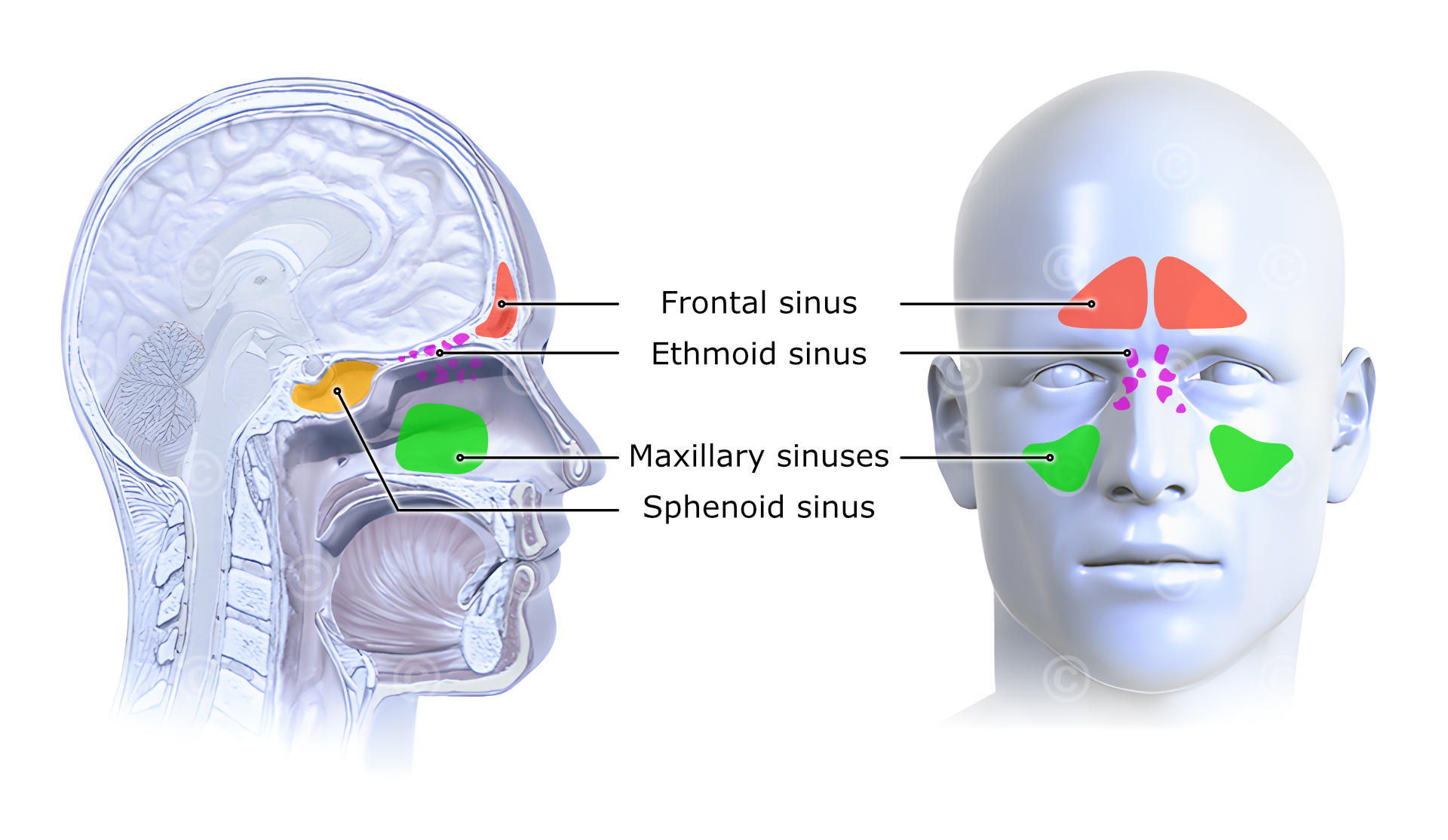
maxillary sinuses
other name: antrum of highmore
within maxilla
above upper teeth
air-fluid levels visible
develop in fetus and a cavity is present at birth
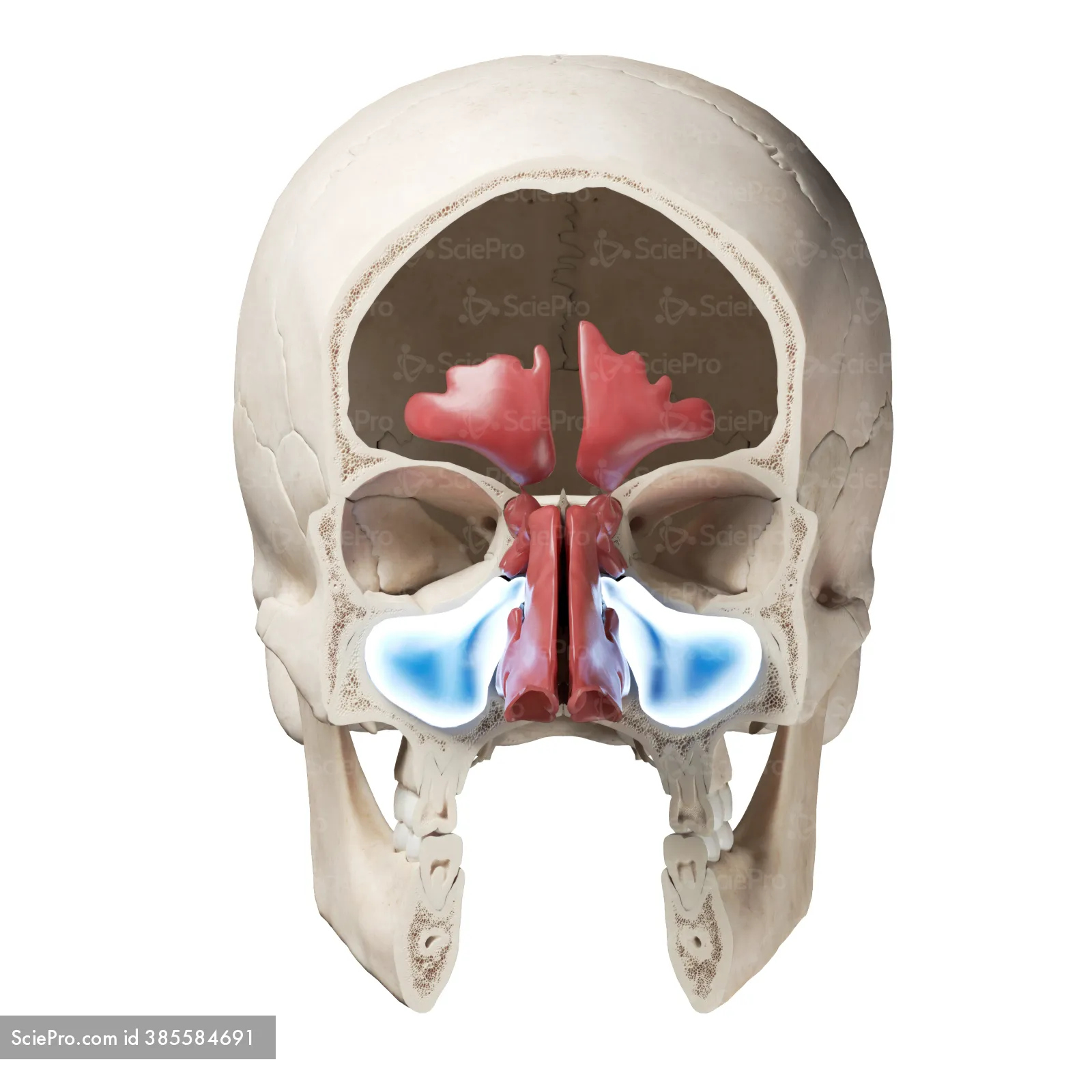
communication between sinuses and nasal cavity
site of communication: opening into the middle nasal meatus within the nasal cavity (fossae)
frontal sinuses
posterior to glabella
rarely symmetrical
number varies
rarely becomes aerated before age 6
generally larger in men
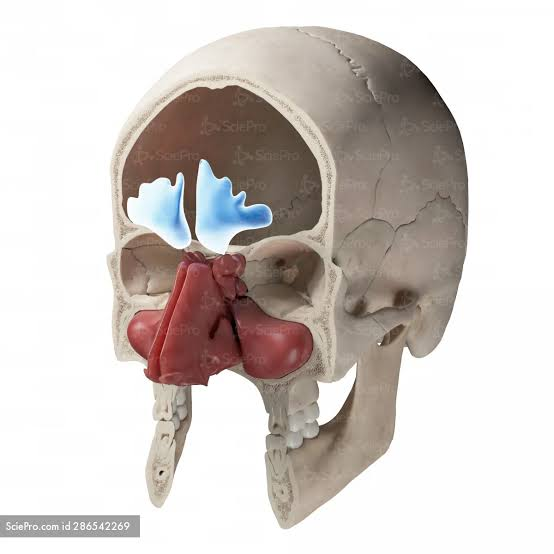
ethmoid sinuses
within lateral masses of ethmoid bone
communicate with sphenoid sinus and nasal cavity
last to develop

sphenoid sinuses
below sella turcica
may indicate basal skull fracture (sphenoid effusion)
becomes visible at age 6

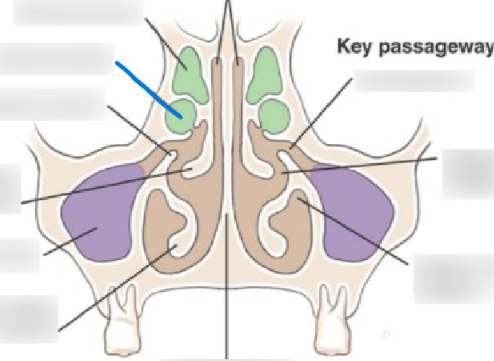
osteomeatal complex
pathway of communication between frontal, maxillary, & ethmoid sinuses provide drainage
consists of: ethmoid sinuses, ethmoid bulla, uncinate process, middle nasal concha, maxillary sinus, inferior nasal concha, nasal cavities, nasal septum
key passageways: infundibulum, middle nasal meatus, inferior nasal meatus

nasal cavities

ethmoid sinuses in osteomeatal complex

ethmoid bulla
uncinate process
middle nasal concha
maxillary sinus in osteomeatal complex
inferior nasal concha
nasal septum
infundibulum
middle nasal meatus
inferior nasal meatus
paranasal sinus routine
basic
lateral
PA caldwell
parietoacanthial (waters)
submentovertex (SMV)
special
parietoacanthial transoral (open mouth waters)
technical considerations for sinuses
70 to 80 kV
erect
horizontal beam
AEC not recommended
positioning for lateral sinuses
CR midway between outer canthus and EAM
evaluation criteria for lateral sinuses
all four sinuses demonstrated
cranium not rotated or tilted
optimal exposure factors
positioning for PA Caldwell sinuses
OML perpendicular to IR, w/ 15 degree tilt of pt’s head
OML 15 degrees from horizontal
horizontal CR
CR exits at nasion
evaluation criteria for PA Caldwell sinuses
frontal and ethmoid sinuses demonstrated
petrous ridges in lower 1/3 of orbits
no rotation or tilt
optimal exposure factors