Electricity Revision
 Call Kai
 Learn
 Practice Test
 Spaced Repetition
 Match
 Flashcards
 Knowt Play
1/25

Earn XP
Description and Tags
bzzzzd
26 Terms
Static Electricity
A build-up of electrical charge on a surface. Happens when electrons are transferred (usually by friction)
Static electricity forms by?
One object gains electrons (-), the other loses electrons (+), and these opposite charges attract.
Current electricity
Flows through a closed circuit.
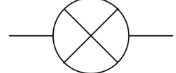
Bulb
Symbol:
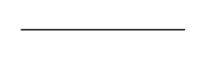
Wire
Symbol:
Cell, single battery
Symbol:

Fuse
Symbol:

Open Switch
Symbol:

Resistor
Symbol:

Closed switch
Symbol:

Conductor
A material that allows movement of free electrons (Metals, acids, salt water, graphite)
Insulator
Material that does not allow the movement of free electrons (Rubber, wax, air, wood)
Series circuit
All components are connected one after the other. One path for the current. (Voltage differs but current stays the same)
Parallel Circuit
Components are in parallel to each other. Current has different pathways around the circuit. (Voltage stays the same but current differs)
Current and Amps
Electrons flow around a circuit and is measured by an ammeter (measuring the amount of electrons passing per second). Ammeters are placed in series when used.
Current in a series circuit
The current in a series circuit is the same at any point
Current in a parallel circuit
The current has a choice of routes and electrons will be dispersed evenly across routes but current will differ
Voltage, volts
Energy the electrons are carrying, measured with a voltmeter which is set up parallel to the component.
Voltage in a series circuit
Because all components are on the same circuit, electrons have to supply all bulbs with energy, dispersing voltage evenly across components.
Voltage in a parallel circuit
Since components are on different lines, the electrons will supply the component on either lines with full energy.
Current and Voltage in a series circuit
Current is the same at any point. Voltage splits up over each component.
Current and Voltage in a parallel circuit
Current splits up down each route. Voltage is the same across each route.
Resistance, ohms
Anything that will resist a current. Calculated using the rule: Ohms = Voltage/Amps

As we double the current
… we double the voltage
As we double the Resistance
… we half the current
Electromagnets
When you run a electric current, a magnetic field is created. You can turn this field on and off.
