Exam 2: Rococo - Lecture #12: Identification
 Call Kai
 Learn
 Practice Test
 Spaced Repetition
 Match
 Flashcards
 Knowt Play
1/21

Earn XP
Description and Tags
22 Terms

Identify the Image
(1) Name (Architect/Designer/Artist)
(2) Title
(3) Location (Architect)
(4) Technique/Material (Furniture/Art/Artifacts)
(5) Date
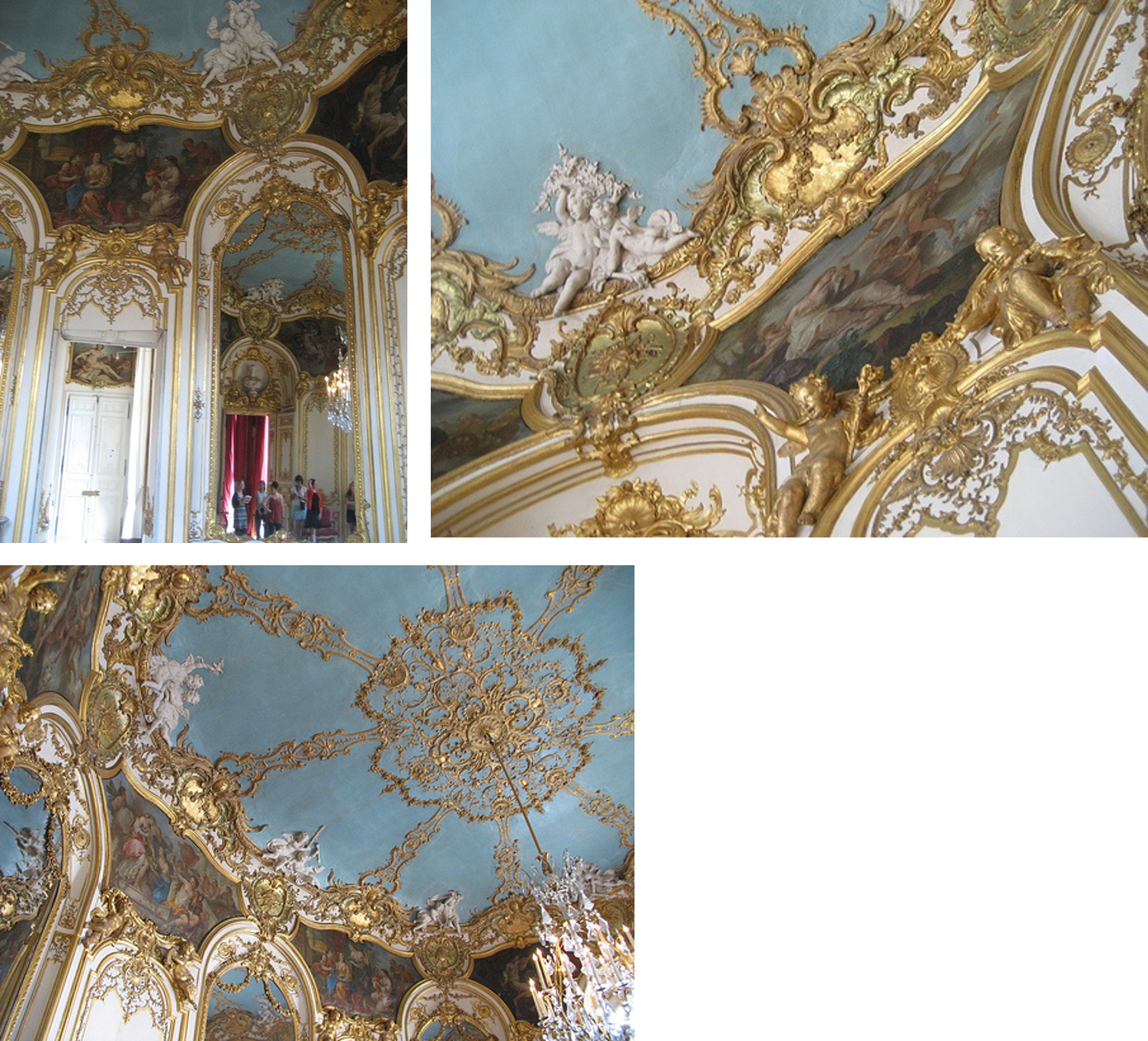
(1) Germain Boffrand
(2) Hôtel de Soubise
(3) Paris
(5) 1737-1740
Includes:
Germain Boffrand, Salon de la Princesse, 1737-1740
Paintings by Charles-Joseph Natoire
Sculpture by J. B. Lemoine

Identify the Image
(1) Name (Architect/Designer/Artist)
(2) Title
(3) Location (Architect)
(4) Technique/Material (Furniture/Art/Artifacts)
(5) Date
(1) Germain Boffrand
(2) Salon de la Princesse
(3) Hôtel de Soubise, Paris
(5) 1737-1740
Included:
Painting By: Charles-Joseph Natoire
Sculpture By: J. B. Lemoine


Identify the Image
(1) Name (Architect/Designer/Artist)
(2) Title
(3) Location (Architect)
(4) Technique/Material (Furniture/Art/Artifacts)
(5) Date
(1) François de Cuvilliés
(2) Hall of Mirrors
(3) The Amalienburg, Nymphenburg Palace Park, Munich
(5) 1734-39


Identify the Image
(1) Name (Architect/Designer/Artist)
(2) Title
(3) Location (Architect)
(4) Technique/Material (Furniture/Art/Artifacts)
(5) Date
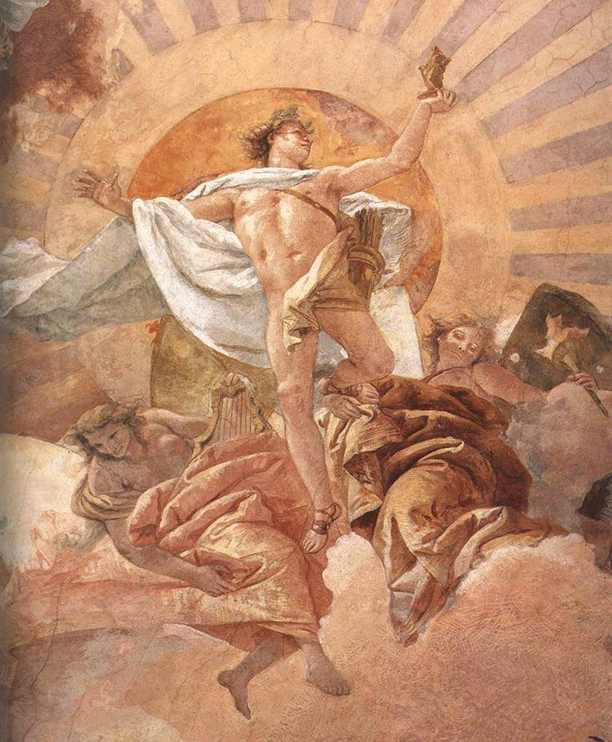
(1) Balthasar Neumann (architect), Gian Battista Tiepolo & sons (ceiling decoration)
(2) Grand Staircase with the Ceiling of Apollo and the Continents
(3) Residenz, Würzburg
(4) Fresco
(5) 1750-1752
Includes:
View into the Kaisersaal or dining hall
Background Of
(1) Balthasar Neumann (architect), Gian Battista Tiepolo & sons (ceiling decoration)
(2) Grand Staircase with the Ceiling of Apollo and the Continents
(3) Residenz, Würzburg
(4) Fresco
(5) 1750-1752
The Tiepolo’s Würzburg frescoes have been said to represent feudalism in its most archaic form
In the center of the large staircase ceiling, we find the figure of the sun god Apollo
• The “sun king” iconography ultimately derived from Louis XIV and Versailles
Complete view of the ceiling
• The whole iconographic has to be interpreted as a giant glorification of the rule of the Prince- Bishop
• Marginal figures at the illusionistic balustrade describe
• Continents are represented in the form of allegorical female figures: Europe, Asia, Africa, America
• Exoticism of Africa is stressed
• Objects chosen to characterize Africa: camels, vases, incense
• European mental image of America still rather imprecise at this moment
• Native American riding on an alligator
• Cornucopia represents the idea that America is the land of plenty
Detail Asia
• More intriguing “exotic” details
• Elephants, parrot in foreground, etc.
• Tiepolo could not resist the temptation to include a self-portrait together with his son Gian Domenico amidst the crowds

Identify the Image
(1) Name (Architect/Designer/Artist)
(2) Title
(3) Location (Architect)
(4) Technique/Material (Furniture/Art/Artifacts)
(5) Date
(1) Balthasar Neumann (architect)
Gian Battista Tiepolo and sons (ceiling decoration)
(2) View into the Kaisersaal (dining hall)
(3) Prinz-regentenpalast, Würzburg
(5) 1750-1752

Identify the Image
(1) Name (Architect/Designer/Artist)
(2) Title
(3) Location (Architect)
(4) Technique/Material (Furniture/Art/Artifacts)
(5) Date
(1) Johann Bernhard Fischer von Erlach
(2) Schönbrunn Palace
(3) Vienna (Austria)
(5) 1696-1701
Includes
Nicolas Pacassi, Blue Staircase, Schönbrunn Palace, 1745
Vieux Lacque (Old Lacquer) Room, Schönbrunn Palace, 1765, Vienna
Chinese Cabinet, Schönbrunn Palace, 18th century, Vienna)

(1) Name (Architect/Designer/Artist)
(2) Title
(3) Location (Architect)
(4) Technique/Material (Furniture/Art/Artifacts)
(5) Date
(1) Nicolas Pacassi
(2) Blue Staircase
(3) Schönbrunn Palace
(5) 1745

(1) Name (Architect/Designer/Artist)
(2) Title
(3) Location (Architect)
(4) Technique/Material (Furniture/Art/Artifacts)
(5) Date
(2) Vieux Lacque (Old Lacquer) Room
(3) Schönbrunn Palace, Vienna
(5) 1765

(1) Name (Architect/Designer/Artist)
(2) Title
(3) Location (Architect)
(4) Technique/Material (Furniture/Art/Artifacts)
(5) Date
(2) Chinese Cabinet
(3) Schönbrunn Palace, Vienna
(5) 18th century

Identify the Image
(1) Name (Architect/Designer/Artist)
(2) Title
(3) Location (Architect)
(4) Technique/Material (Furniture/Art/Artifacts)
(5) Date
(1) Johann Bernhard Fischer von Erlach
(2) Karlskirche
(3) Vienna
(5) 1723
Identify the Image
(1) Name (Architect/Designer/Artist)
(2) Title
(3) Location (Architect)
(4) Technique/Material (Furniture/Art/Artifacts)
(5) Date
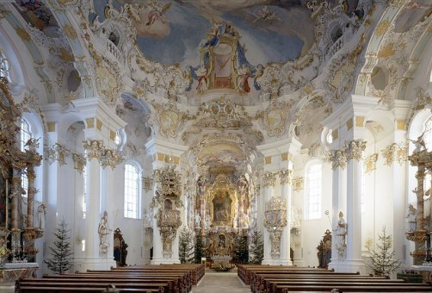
(1) Dominikus Zimmermann
(2) Die Wies
(3) Steingaden, Germany
(5) completed 1745-54


Identify the Image
(1) Name (Architect/Designer/Artist)
(2) Title
(3) Location (Architect)
(4) Technique/Material (Furniture/Art/Artifacts)
(5) Date
(1) Jean-Baptiste Gourdin
(2) Fauteuil, Louis XV style
(4) Beech wood, upholstery
(5) Mid-18th century

Identify the Image
(1) Name (Architect/Designer/Artist)
(2) Title
(3) Location (Architect)
(4) Technique/Material (Furniture/Art/Artifacts)
(5) Date
(2) Têtê-à-têtê (or vis-à-vis) Sofa, Louis XV style
(4) Beech wood and upholstery
(5) Mid-18th century,

Identify the Image
(1) Name (Architect/Designer/Artist)
(2) Title
(3) Location (Architect)
(4) Technique/Material (Furniture/Art/Artifacts)
(5) Date
(1) Mathieu Bauve (or Debauve)
(2) Pair of Bergères, Louis XV style
(4) Gilded beech wood, satin upholstery
(5) 1754

Identify the Image
(1) Name (Architect/Designer/Artist)
(2) Title
(3) Location (Architect)
(4) Technique/Material (Furniture/Art/Artifacts)
(5) Date
(1) Richard Mique
(2) Hameau de la Reine
(3) Park of the Château de Versailles
(5) 1785-1792


Identify the Image
(1) Name (Architect/Designer/Artist)
(2) Title
(3) Location (Architect)
(4) Technique/Material (Furniture/Art/Artifacts)
(5) Date
(1) Gilles Joubert
(2) Writing table (bureau plat)
(4) Red and gold japanning on oak, gilt-bronze mounts, leather top
(5) 1759

Identify the Image
(1) Name (Architect/Designer/Artist)
(2) Title
(3) Location (Architect)
(4) Technique/Material (Furniture/Art/Artifacts)
(5) Date
(1) Jean-François Oeben and Jean-Henri Riesener
(2) Louis XV's roll-top secretary (Bureau à cylindre), Louis XV style
(4) Wood, marquetry, bronze
(5) 1760-1769

Identify the Image
(1) Name (Architect/Designer/Artist)
(2) Title
(3) Location (Architect)
(4) Technique/Material (Furniture/Art/Artifacts)
(5) Date
(1) Jean-Henri Riesener
(2) Drop front desk made for Marie-Antoinette
(4) Wood, lacquer, gilded bronze, marble
(5) ca. 1770

Identify the Image
(1) Name (Architect/Designer/Artist)
(2) Title
(3) Location (Architect)
(4) Technique/Material (Furniture/Art/Artifacts)
(5) Date
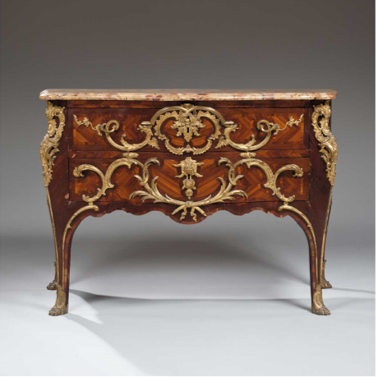
(1) Charles Cressent
(2) Commode, Louis XV style
(4) Wood and marquetry with gilded bronze
(5) ca. 1740-1750
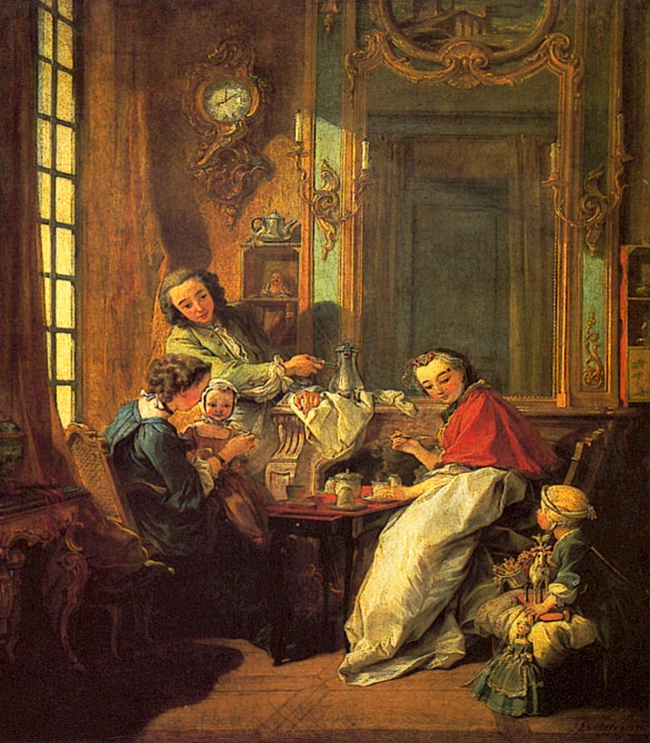
Identify the Image
(1) Name (Architect/Designer/Artist)
(2) Title
(3) Location (Architect)
(4) Technique/Material (Furniture/Art/Artifacts)
(5) Date
(1) François Boucher
(2) The Breakfast,
(4) oil
(5) c., 1739

Background Of
(1) François Boucher
(2) The Breakfast,
(4) oil
(5) c., 1739
• Boucher capable of breaking the mould of his rose-colored nudes, as is evident in his “Breakfast” scene
• Interior that is more typical for the upper bourgeoisie, not so much nobility or aristocracy
• Most likely a scene from Boucher’s own family life is depicted: his wife and his two daughters
• Boucher financially successful as an artist; could afford the lifestyle of the well-off bourgeoisie
• Today, scene looks very conventional as s portrait of a family; by the standards of the mid-18th century, it is brimming with novelties:
• Setting: a boudoir, i.e. a room between a living and a bed room>architectural innovation of these years; permits a greater sense of intimacy, a smaller space
• Emphasis on living comfort, not representation: warmth>small chimney; lower ceiling height
• Glass windows become cheaper, larger windows become possible
• Fauteuils with caned backs
• Chimneypiece is main focal area is on center axis of room
• Decorative details in background: shell-decorations, mirrors are fashionable; paintings part of wooden paneling; Buddha-type sculpture of a fat man on shelf> chinoiserie (chinese trinkets or decorations, esp. Chinaware)