Knowledge Test 3
 Call Kai
 Learn
Learn Practice Test
 Spaced Repetition
 Match
Match Flashcards
 Knowt Play
1/48

There's no tags or description
Looks like no tags are added yet.
Name | Mastery | Learn | Test | Matching | Spaced | Call with Kai | Chat |
|---|
No analytics yet
Send a link to your students to track their progress
49 Terms
Situation Display
VMI
alt. readout
appropriate geo. map
CJSs
Coast list in full format
Current weather data and history
Other features
Unlinked targets
CSIT things to ensure:
PPS brightness is at least one level higher than other elements on the display
Data tags include minima as indicated:
Alpha - VMI, SFI, Wake turb. cat., ACID, Alf. readout, Ground speed
Bravo - CJSs, Alt: readout, VMI
VFR/unlinked - Alt: readout, VMI
Times to know
If expected report does not arrive, obt. report <5min after est
5min or more before clearance limit issue further clear. (hold)
Time est. 3 min or more diff. → coordinate
3min before takeoft, tower calls for clearance. If not takeoff, will call again
Speed Adjusting
If it’s required to achieve or maintain required spacing or to minimize vectoring, please instruct a pilot to adjust the a/c speed
Vectors (7 points, SSSTREP)
sequencing
separation
spacing
traffic
restricted airspace
efficiency
pilot request
MATS - vector an a/c if:
necessary for separation
required for noise abatement
you or the a/c gain an operational advantage
pilot requests it
(SNOR)
Strip information (order of saying the info into headset)
[#] (weight category) / (a/c type) / (equipment type)
Weight Categories
L - light <7000 kg
M - medium >7000 kg, <136,000 kg
H - heavy >136,000 kg
J - super A380 - 800 (A388) + Antonov An-225 (A225)
Weight combos
Eg, Super super, heavy medium, etc
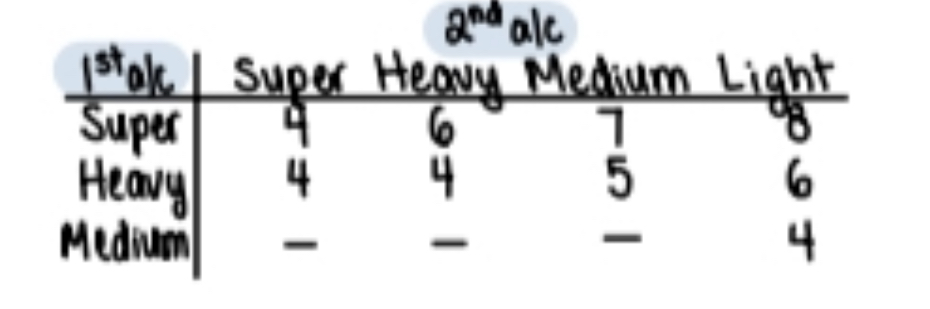
Weight categories exceptions
1. B757 is heavy when leading
ultralight = light
Motorized a/c = heavy when ahead of hanglider or occ. balloon
Equipment types:
N - no equipment / unserviceable
S - Standard equipment
D - DME
G - GNSS
R - PBN approved
W - RVSM approved
X - MNPS approved
Min obs clearance alt (MOCA)
the alt. ASL btw specified fixes on airways or air routes that meets the IFR obs. clear. req. for the route segment in question.
Min. enroute alt: (MEA)
the alt. ASL between spec. fixes on airways or air routes that assures acceptable nav. signal cov. and that meets the IFR obs. clearance requirements
Area min. alt. (AMA)
the lowest alt. that may be used under IMC that will prov. a min. vertical clear. of 1000ft (or 2000ft in mountainous), rounded up to the next 100ft increment, under cond. of std. temperature and press. above all obs. located in the area specified
Min sector alt. (MSA)
the lowest alt that will prov. a min. clearance of 1000ft under cond. of std. temp. and press. above all obj. loc. in an area contained w/in circle w/ a 25 NM radius centered on a radio aid to nav. or a spec. pt.
Safe alt. 100NM
within 100NM of aerodrome centre and meets obstacle clearance requirements
Min. vectoring alt. (MVA)
the lowest alt for vectoring a/c by ATC that meets obs. clearance and radio coverage required in the airspace specified
Missed approach alt
alt. a/c must climb if does not land after an IFR approach
Transition alt
For changing from enroute to approach
If request alt. below MeA, but at or above the MOCA for:
• flight safety
flight check of NAVAID
MEDEVAC flight
GNSS navigation
When an a/c is traversing an airway, you may:
clear that a/c to an alt. that is below MEA but is at or above another appl. min IFR alt
Alt. readouts
Maintaining: w/in 200ft
Reached: w/in 200ft, 4 consec. read.
Vacated: 300ft or more
Passed: 300ft or more
To consider when assigning alt.
Is it above the min. IFR alt?
Is it in your airspace?
Is it approp. for dir. of flight?
Is coordination required?
Is there traffic?
Is the alt. operationally suitable?
Does the alt. change req. an airway change?
Icing
Rime (small supercoded droplets, rough crystalline opaque)
Clear (large supercoded droplets — longest to freeze, transparent sheet)
Mixed (rime + clear features, most common)
Do not use alt. readouts when:
the site altimeter setting for the geo. region concerned is below 26.00 or above 33.00
Issue altimeter settings as follows:
ident. the setting by the name of the station, unless — for the aero. where the alc is dep. or land.; no poss. of misunderstanding
if 28.99 or lower, or 31.00 or higher, state the setting twice
if higher than 31.00, issue the actual setting + confirm pilot sets to 31.00
if extracted trom METAR, SPEC, or other weather report, state time of report
for direct reading instrument, qualify it as current
if changes by +/- 0.02 or more, issue a revised altimeter setting
if pilot asks which type of setting is prov., identity the setting as GNH
Fly-by waypoint symbols (imagine them before flipping the card)
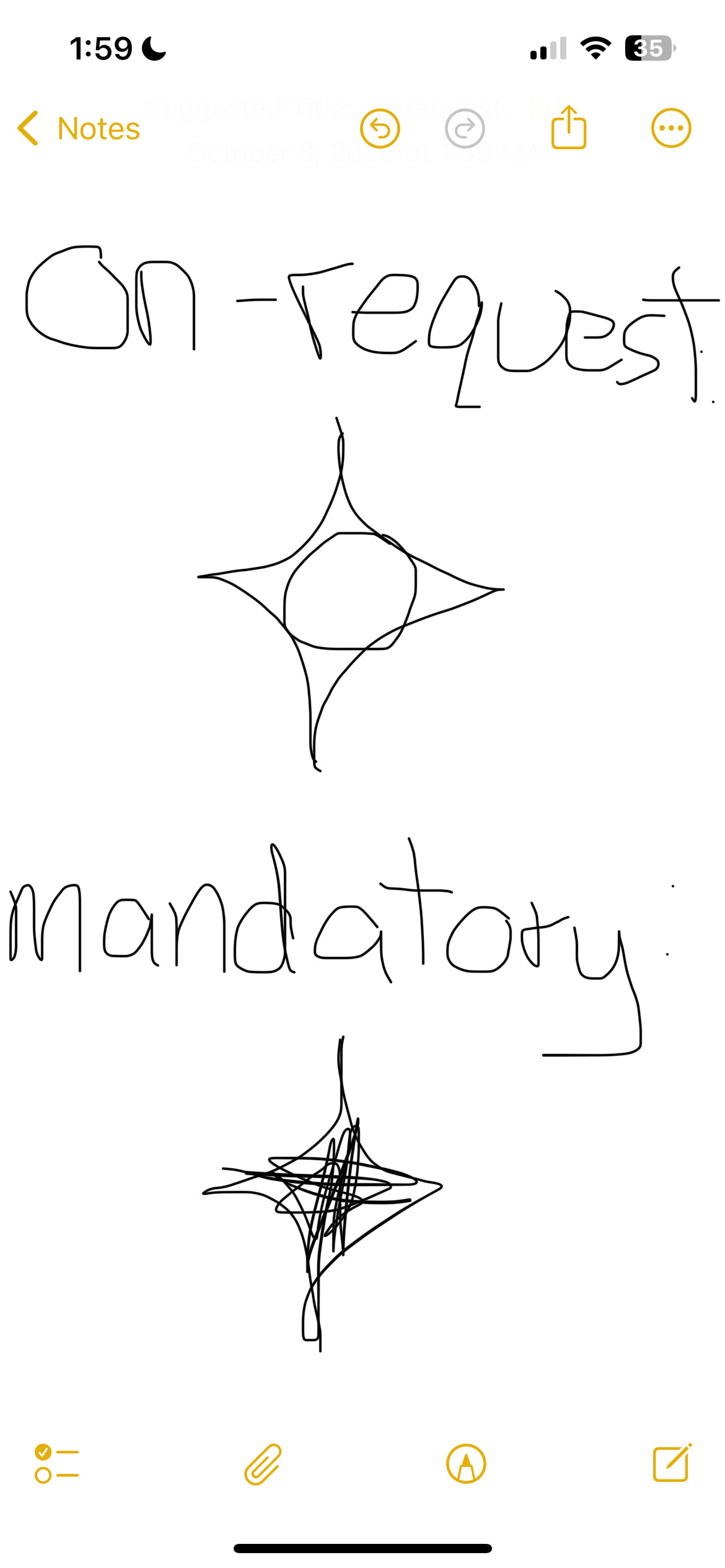
Fly-over waypoint symbols (imagine them before flipping the card)

Fly-by waypoint
Requires the use of turn anticipation to avoid an overshoot of the next flight segment
Fly-over waypoint
Precludes any turn until the waypoint is overflown and followed by an intercept manoeuvre of the next flight segment
Wake turbulence
turbulent air behind an a/c caused by any:
• wing tip vortices
• rotor tip vortices
• jet engine thrust stream
• rotor downwash
• prop wash
Apply the approp. wake turb. sep. minimum between:
2 ident. IFR a/c, unless the required ATS surv. sep. min. is greater than the wake turb. sep. min
a/c receiving ATS surv. ctrl. service + any other ident. a/c w/ a verified type and altitude
NOTAM
(notice to airmen)
a notice distributed by means of telecommunication containing info. concerning the establishment, condition, or change in any aeronautical facility, service, procedure, or hazard, the timely knowledge of which is essential to personnel concerned w/ flight operations
Controlled airport
an airport in which an airport ctrl. service is provided
Control zone (CZ)
A controlled airspace of defined dimensions extending upwards from the ground up to + including 3000ft AAE (rounded to heated 100) unless otherwise spec
Mandatory freq. (MF)
Transport Canada has designated an MF for use at selected unctrld aero, or aero unctrld btw certain hours. A/c op w/in the area in which the MF is appl, a/c must be equip. w/ 2-way radio
Aero traffic freq (ATF)
Desig. for active unctrld aero. that do not meet criteria for an MF. ATF is est to ensure all radio equip a/c are listening on a common freq + follow common rep. proc
Runway surface condition (RSC) report
(Define)
sector of the a/c mov. surf. cond. report (AMSCR) which prov. runway info, using a verbal description of the runway condition
RSC report full length
(loc.) rwy surf. cond (rwy id) (cond) [on(date)] at (time)
RSC report thirds
(loc.) rwy surf. cond (rwy id) cond. code (cond. code 0-6) [(touchdown cond) (midpt cond) (rollout cond)]
OR
“all thirds rep as (cond)”] [on (date)] at (time)
When to NOT issue a RSC
If rwy is cleared to the full width or 100% dry
Canadian runway friction index (CRFI)
the avg. of runway friction as measured by a mechanical or electronic decelerometer + rep. through AMSCR
When to NOT issue a CRFI
If NR for full/all
CRFI full length
(loc.) friction index (rwy id) temp. (deg.) was (rwy avg) [add. info] [on (date)] at (time)
CRFI thirds
(loc.) friction index (rwy id) temp. (deg.) ["was (touchdown coeff.)/not rep., (midpt. coeff)/not rep, (rollout coeff.)/not rep."
OR
“all thirds rep. as (frickon coeff.)] [on (date)] at (time)
Don’t take CRFI when:
rwy wet w/ no other contam.
layer of slush w/ no other contam.
loose snow > 2.5 cm (1 in) deep
CRFI contaminants:
compacted snow, dry snow, frost, ice, slush, standing water, wet ice, wet snow
VFR Conds
op. w/ visual ref. to the surface
flight visibility not less than 3 miles
dist of a/c from cloud ≥500ft vert. + 1 mile horiz
w/in a ctrl zone: grnd vis. not less than 3 miles AND min. 500ft from ground (except dep-land.)
Special VFR flight (SFVR)
(Define + list conditions)
A visual flight authorized by an ATC unit to operate w/in a control zone under the meteorological conditions that are below visual meteorological conditions
Conditions:
* fixed wing - 1 mile
* helicopter - 1/2 mile
* clear of clouds