Chem-15- Organic- Carboxylic acids + esters
 Call Kai
 Learn
Learn Practice Test
 Spaced Repetition
 Match
Match Flashcards
 Knowt Play
1/23

There's no tags or description
Looks like no tags are added yet.
Name | Mastery | Learn | Test | Matching | Spaced | Call with Kai | Chat |
|---|
No analytics yet
Send a link to your students to track their progress
24 Terms
what are carboxylic acids
compounds that contain a carboxyl group (COOH)
explain the position of equlibrium for the dissociation of carboxylic acids
RCOOH → ← RCOO- +H+
Equlibrium lies to the left as it is a weak acid
what is the name of the ion RCOO-
carboxylate ion
Explain the high boiling points of carboxylic acids
can form Hydrogen bonds and specifically dimers
draw a dimer structure between two carboxylic acids
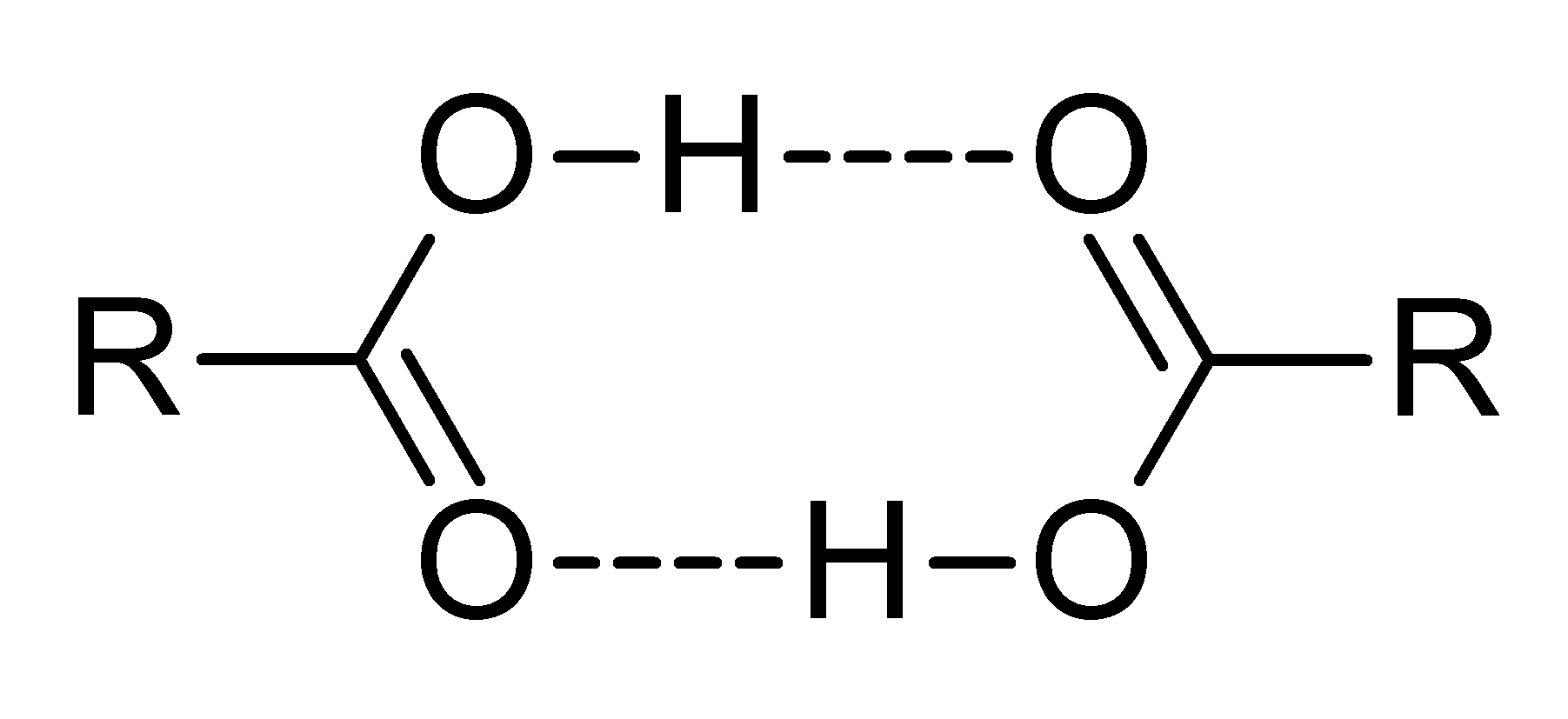
describe the solubility of carboxylic acids in water
highly soluble but get less soluble as chain length increases
what are the 2 methods of making a carboxylic acid
oxidising a primary alcohol into an aldehyde and then into a carboxylic acid (heat under reflux)
Hydrolysis (reacting with water) of a nitrile (dilute acid + heat under reflux)
carboxylic acid + base → ?
carboxylate salt + water
neutralisation
carboxylic acid + carbonates
CO2 + carboxylate salt + water
carboxylic acid + PCl5
POCl3 + HCl + CH3COCl
carboxylic acid + alcohol and what catalyst is required
Sulfuric acid catalyst
ester ethanoate (-coo-) + water
this process is called esterfication
carboxylic acid + reducing agent (lithium aluminum hydride- strong)
primary alcohol + water
what are acyl chlorides
compounds with the group COCl
describe reaction: acyl chloride + water
→ carboxylic acid + water
reaction is vigorous, and you may see steamy/white fumes of HCl
describe reaction: acyl chloride + alcohol in heat under reflux
ester + HCl
violently at room temp
describe reaction: acyl chloride + conc ammonia
→ primary amide + HCl
violently at room temp
describe reaction: acyl chloride + primary amine
→ secondary amide + HCl
violently at room temp
what is the functional group of an ester
RCOOR’
what is the reaction and conditions needed to form an ester
Esterification (carboxylic acid + alcohol) is a reversible reaction done in the presence of an acid catalyst
Done with heat under reflux
describe the hydrolysis of an ester under acidic conditons
forms a carboxylic acid and alcohol
describe the reaction of an ester + dilute alkali (OH-)
carboxylate salt (RCOO-) + alcohol
in aqeuous conditions so considered a base hydrolysis
why is the acid hydrolysis reversible whereas the base hydrolysis isnt
because the base hydrolysis forms a carboxylate salt which is very stable and unlikely to react with the alcohol again.
what are diols and dicarboxylic acids
Diols: two -OH groups
Dicarboxylic acids: two -COOH groups
How is a polyester formed from a dicarboxylic acid and a diol?
A dicarboxylic acid has two -COOH groups and a diol has two -OH groups. A -COOH group reacts with an -OH group to form an ester link, COO, and H2O is eliminated. Because both monomers have two reactive ends, they can keep joining to form a long chain. This is condensation polymerisation.