Coral and Associated Species Identification
 Call Kai
 Learn
 Practice Test
 Spaced Repetition
 Match
 Flashcards
 Knowt Play
1/111

There's no tags or description
Looks like no tags are added yet.
112 Terms

Acropora palmate- Elkhorn
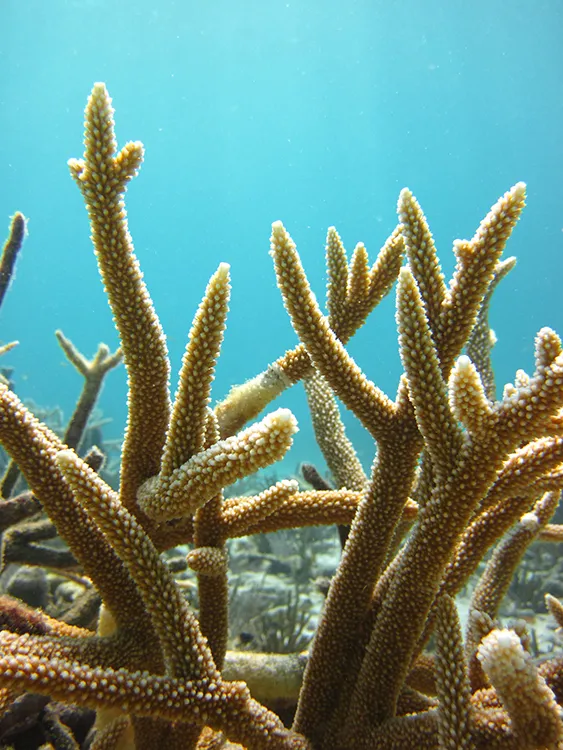
Acropora cervicornis- Staghorn

Acropora cervicornis- Staghorn

Acropora palmate- Elkhorn

Acropora prolifera- Fused staghorn

Acropora prolifera- Fused staghorn

Pseudodiploria- Brain corals

Pseudodiploria- Brain corals

Colpophyllia natans- Giant Brain

Colpophyllia natans- Giant Brain

Orbicella annularis comples- Star corals
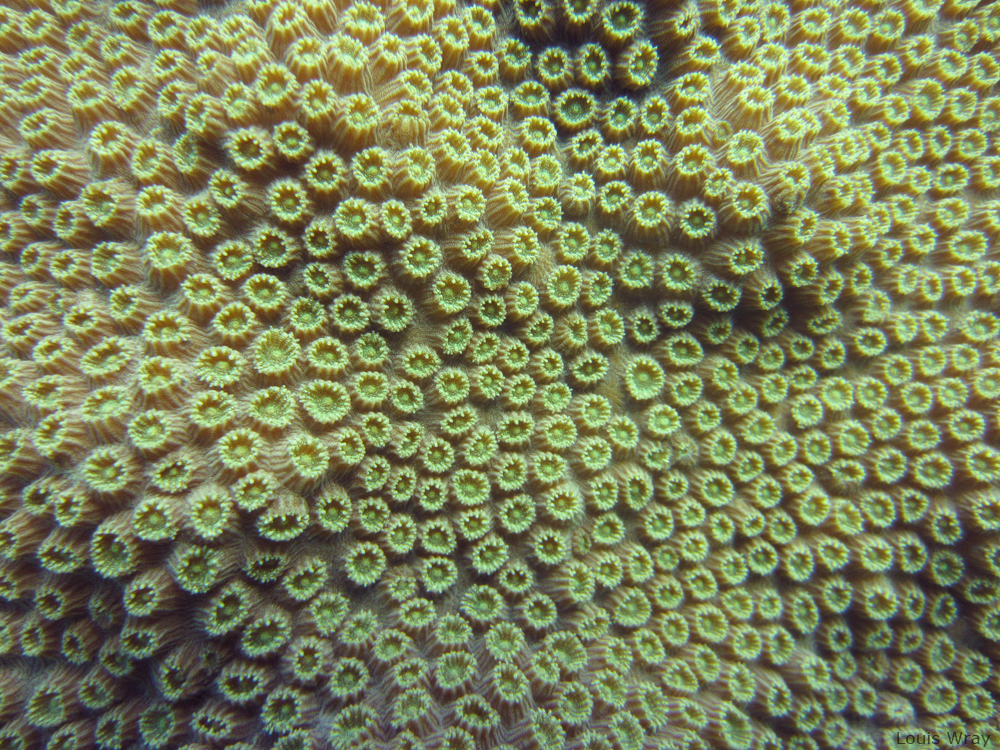
Orbicella annularis comples- Star corals

Agaricia agaricites- Lettuce

Agaricia agaricites- Lettuce

Agracicia lamarcki- Sheet
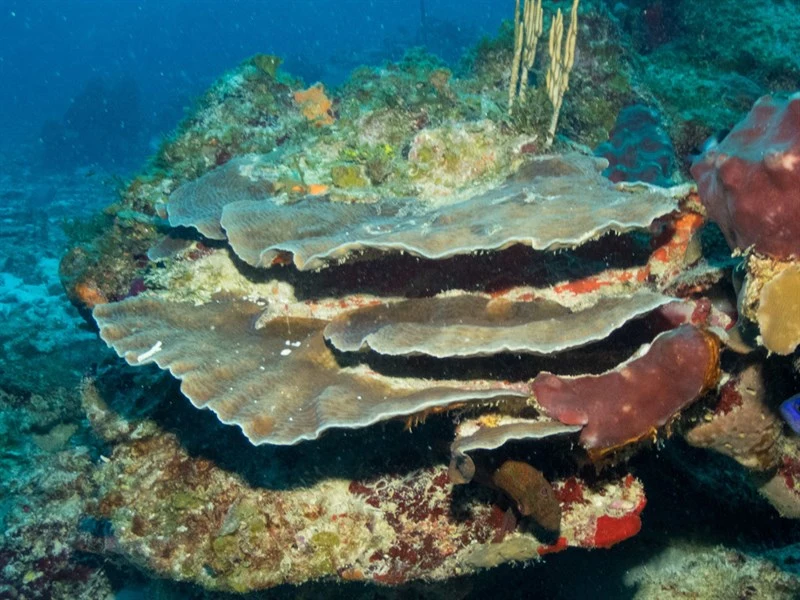
Agracicia lamarcki- Sheet

Siderastrea sidereal- Massive starlet

Siderastrea sidereal- Massive starlet

Siderastrea radians- Lesser starlet

Siderastrea radians- Lesser starlet

Porites porites- Clubbed finger
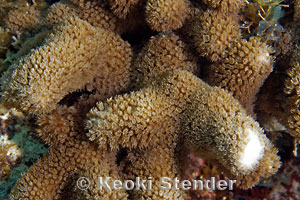
Porites porites- Clubbed finger

Porites asteroids- Mustard Hill
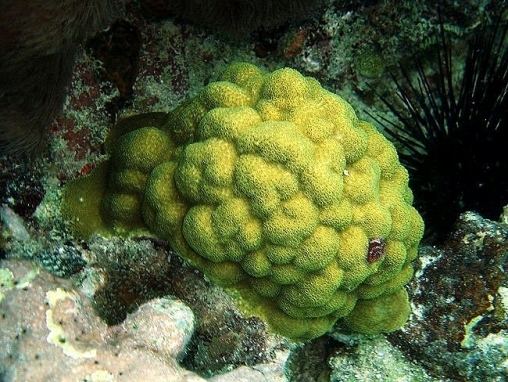
Porites asteroides- Mustard Hill

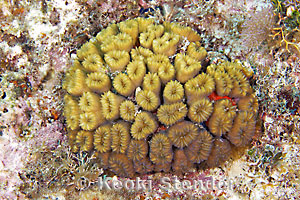
Dichocoenia stokesii- Elliptical star

Dichocoenia stokesii- Elliptical star
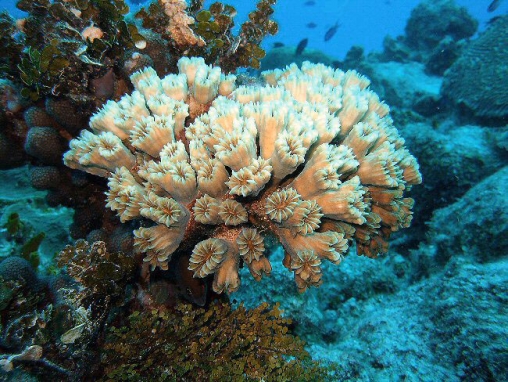
Eusmilia fastigiate- Flower
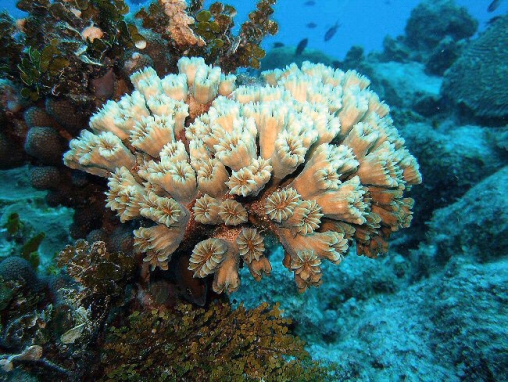
Eusmilia fastigiate- Flower

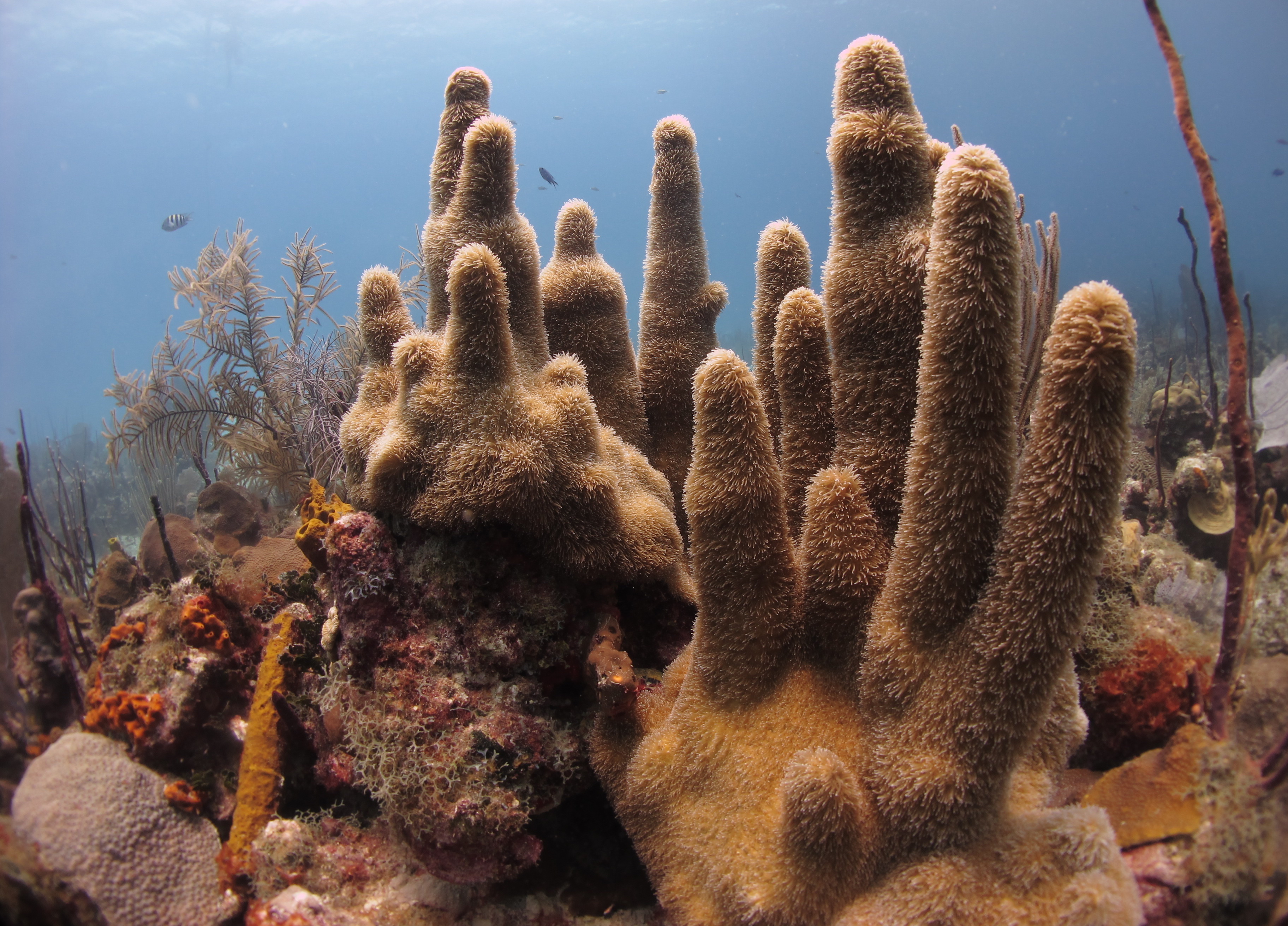
Dendrogyra cylindrus- Pillar

Dendrogyra cylindrus- Pillar

Corallite Structure
Plocoid

Corallite Structure
Plocoid

Corallite Structure
Cerioid

Corallite Structure
Cerioid

Corallite Structure
Meandroid
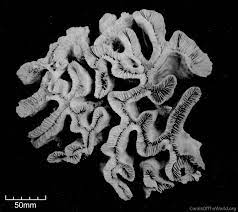
Corallite Structure
Meandroid

Corallite Structure
Phaceloid/Dendroid

Corallite Structure
Dendroid
Plocoid
Individual corallites with distinct, separate walls
Ceriorid
Corallites share a common, fused wall; honeycomb appearance
Meandroid
Long winding valleys with shared walls; classic brain look
Phaceloid/dendroid
Tubular or oval corallites rise (raised) from a shared base, often in branching clumps, distinct walls
Thamnasteroid
No clear walls; septa flow together across the surface
Family Acroporidae- Acropora
Elkhorn Coral, Staghorn Coral, Fused Staghorn
Family Merulinidae
Brain coral, giant brain coral, star coral
Family Agariciidae
Lettuce coral, sheet coral
Family Siderastreidae
Massive starlet coral, lesser starlet coral
Family Poritidae
Clubbed finger coral, mustard hill coral
Family Meandrinidae
Elliptical star coral, flower coral, pillar coral
PACIFIC: Family Pocilloporidae
Cauliflower coral, elegans/meandrina
PACIFIC: Family Portidae
Lobate Coral
PACIFIC: Family Agariciidae
Columnar Coral, gigantea, varians
Hydrocorals: Millepora spp.
Carribean branching fire coral, bladed fire coral

Acropora palmate- Elkhorn
Wide flattened fronds, branching, axial corallite at branch tips

Acropora cervicornis- Staghorn
Cylindrical, slender branches forming thickets

Acropora prolifera- Fused staghorn
Dense, bushy branch clusters; hybrid form


Psedudodiploria- Brain corals
Long winding valleys with shared walls (meandroid)
Colpophyllia natans- Giant Brain coral
Wide distinct valleys, contrasting-colored centers

Orbicella annularis comples- Star corals
Separate, distinct-walled corallites (plocoid) Smooth lobes or massive columns

Agaricia agaricites- Lettuce
Irregular vertical plates, small net-like corallites on both sides

Agaracicia lamarcki- Sheet coral
Flat horizontal plates, white star-like polyps

Siderastrea siderea- Massive starlet
Large reddish-brown dome; small organized hexagonal cups

Siderastrea radians- lesser starlet
Small encrusting boulders; common in shallow, stressful tide pools

Porites porites- clubbed finger
Thick, smooth branches with blunt ends; tiny corallites

Porites asteroids- Mustard Hill
Encrusting to massive mound; yellow-green to mustard

Dichocoenia stokesii- Elliptical star
Distinct oval/elongated corallites protruding from the skeleton

Eusmilia fastigate- Flower coral
Phaceloid clumps; long tubular cups with flower like openings
Dendrogyra cylindrus- Pillar coral
Vertical columns, polyps remain extended during daylight
PFC: Pocillopora damicornis- Cauliflower coral
Densely branches, bushy colony; small surface bumps (verrucae) Pacific

PFC: Porites lobata- Lobate
Massive heavy domes; grey, brown, or bright purple

PFC: Povona clavus- Columnar coral
Large vertical spires or columns, Pacific

Povona gigantea
PFC: Massive boulders covered in star-shaped corallites

PFC: Povona varians
Encrusting sheets with low ridges winding over rock, Pacific

Family Scaridae: Parrotfishes
Fused, beak-like teeth. Grazers. Producers of white fine coral sand (they poop and that’s the sand). Essential for preventing macroalgae from overgrowing stony corals.
Family Acanthuridae: Surgeonfish and Tangs
Oval, laterally compressed body with a shard, retractable modified scale at the base of the tail. Diurnal grazers that keep turf algae cropped short. Small mouths and have a single row of teeth.
Family Pomacentridae: Damselfish
Small, highly territorial, oval-bodied. Aggressive defenders of their territory. Farmers, cultivate algal garden and will aggressively bite corals or invaders.
Planktivorous Chromis Pomacentridae
These damselfish feed on top of the coral reef and swim in the different directions to eat the plankton.
Family Chaetodontidae: Butterflyfish
Disk-shaped bodies with pointed snouts designed to pick small invertebrates from narrow coral crevices. Often display a dark vertical eye-stripe and a false eye-spot near the tail. Small groups or mostly in couples.
Feed directly on coral polyps.
Family Pomacanthidae: Angelfish
Vibrant coloration; has a prominent preopercular spine on the lower cheek. Keeps their colors when they’re mature. Spongivores (controls the sponge population)
Family Labridae: Wrasses
Elongated bodies, protruding canine teeth, and characteristic backwards swim ability. Females transition to males when need to mate. Known as cleaners because they will clean the teeth of predators.
Family Serranidae: Groupers and Sea Bass
Large mouths, heavy bodies, lower jaw protruding past upper jaw. An apex predator that controls the smaller fish and crustacean populations.
Family Holocentridae: Squirrelfish and Soldierfish
Large eyes, reddish coloration, spiny scales. Nocturnal (big eyes to capture light) and hides in caves and overhangs during the day. Eats crustaceans at night. Pretty small. Very stupid.
Family Balistidae: Triggerfish
Can be really big. Has a crazy powerful bite and almost human-like teeth. Really painful bite. Brightly colored, oval shaped with large head. Has a spine that can be unlocked and locked which allow the fish to anchor themselves within crevices and then let go when attacking.
Family Diodontidae: Porcupine fish
Very slow-moving, has the ability to inflate their bodies by swallowing water or air, increasing their size. The also have sharp spines. They have a almost parrot beak to eat molluscs and sea urchins.
Family Tetraodontidae: Pufferfish
Most are toxic. They have 4 beak-like teeth. Eat mostly algae and small invertebrates. Able to inflate it’s stomach with water and can become a prickly balloon in the face of predators.
Family Ostraciidae: Boxfish
Square, bony fish. Has honeycomb-like patterns on their skin. Can secrete poison from their skin and have heavy scales.
Family Muraenidae: Moray Eels
Apex nocturnal predators that live inside coral crevices. Mostly patterned. Large teeth.
Family Sphyraenidae: Barracudas
Pelagic transient predator. Patrols reef drop-offs. Fang-like teeth with one tooth at the bottom of the mouth. Mostly gray or silver, can be quite large.
Family Carangidae: Jacks
Pelagic transient predator. Patrols reef drop-offs. Ray-finned fish.
Phylum Echinodermata
Only marine, pentaradial symmetry as adults; internal calcium carbonate skeleton, has a water vascular system with tube feet. Essential grazers, detritivores, and structural habitat modifiers.
Class Echinoidea: Sea Urchins and Sand Dollars
Big species: Diadema antillarum (long-spined __) The most critical herbivore in the Carribean. Scrapes macroalgae off dead coral substrate, creating space for new coral larvae to settle. Usual ones are incredibly sharp. All have a five star situation on the top of them. Really cool skeleton.
Class Holothuroidea: Sea Cucumbers
Elongated, soft-bodied echinoderms with reduced internal spicules and a ring of feeding tentacles around the mouth. Vacuum cleaners of the reef. Can ingest large quantities of sediment, digest organic detritus and bacteria, and excrete clean sand while recycling nutrients.
Class Asteroidea: Sea Stars
Central disc with 5 or more arms seamlessly radiating outwards; tube feet on the oral surface. Predatory scavengers that open bivalves or feed on sessile invertebrates.
Class Ophiuroidea: Brittle Stars and Basket Stars
Distinct central disc sharply separated from long, flexible, snake-like arms. Highly cryptic, photonegative, hides inside coral crevices, sponge cavities, and under rocks during the day. They are nocturnal detritivores and filter feeders that keep interstitial coral spaces clean.

Class Ophiuroidea: Brittle Star

Class Asteroidea: Sea Star

Class Holothuroidea: Sea Cucumber

Class Echinoidea: Sea Urchin

Family Balistidae: Triggerfish

Family Ostraciidae: Boxfish