ch 12 and 13 anatomy exam
 Call Kai
 Learn
 Practice Test
 Spaced Repetition
 Match
 Flashcards
 Knowt Play
1/95

There's no tags or description
Looks like no tags are added yet.
96 Terms
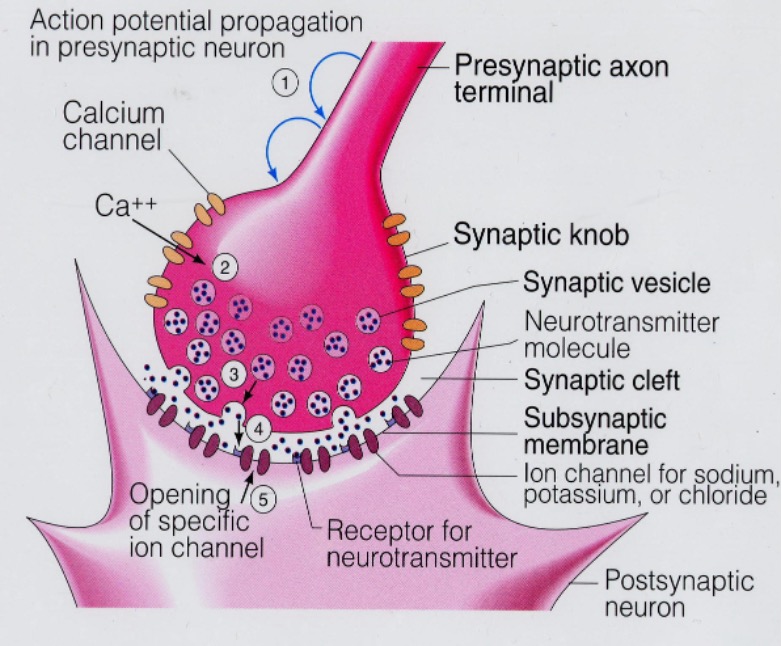
a nerve signal can go no further when it reaches the end of the axon, triggers the release of a ____________
neurotransmitter
1st neuron in the signal path is the
presynaptic neuron/ releases neurotransmitter
2nd neuron is
postsynaptic neuron/ responds to neurotransmitter
presynaptic neuron may synapse with a dendrite, soma or axon of _____________ to form axodendric,axosomatic, or axoaxonic synapses
post synaptic neuron

2
look over this
1
look over that
synaptic vesicles containing neurotransmitter
synaptic knob of presynaptic neuron contains
postsynaptic neuron membrane contains proteins that function as
receptors and ligand-regulated ion gates
function of neurotransmitters at synapse
synthesized by the presynaptic neuron, released in response to stimulation, bind to specific receptors on the post synaptic cell, they alter the physiology of that cell
structure of a synapse
presynaptic neurons have synaptic vesicles with neurotransmitter and posy synaptic have receptors and ligand-regulated ion channels

neuron with synapses
neuron can have an enormous number of synapses

3
excitatory post synaptic potential (eps)

4
inhibitory post synaptic potential (ipsp)

synaptic transmission
•EPSPs and IPSPs summate 1.Temporal summation (time) 2.Spatial summation (summation over an area)
•If MP in postsynaptic cell reaches threshold, a new AP is generated
–axon hillock has many VG channels and is site where APs are normally initiated

5
temporal and spatial summation of PSPs
acetylcholine
in a class by itself/ formed from acetic acid and choline
monoamines
synthesized from amino acids by removal of the -COOH group
retaining the -NH2 (amino)group
major monoamines are: -epinephrine, norepinephrine, dopamine (catecholamines), histamine, serotonin
amino acid neurotransmitters
include glycine, glutamate, aspartate, and y-aminobutyric acid (GABA)
neuropeptides
endorphins
effects of neurotransmitters
a given neurotransmitter does not have the same effect everywhere in the body/ multiple receptor types exist for a particular neurotransmitter/ receptor governs the effect the neurotransmitter has on the target cell
neurotransmitters
Acetylcholine/ Norepinephrine/ Dopamine/ Seratonin/ GABA/ Glutamate/ Endorphins
acetylcholine (ACh)
Most widely used NT/ Most abundant NT in PNS (b/c ANS)/ Also produced in CNS/ At neuromuscular junctions/ Neurons that secrete Ach are called cholinergic neurons/ Has nicotinic and muscarinic receptor subtypes/ These can be excitatory or inhibitory

acetylcholine nicotinic receptor and channel

1
acetylcholine muscarinic receptor with associated G proteins

parasympathetic nervous system
acetylcholine is released by the parasympathetic nervous system, including at the effector organ.
monoamine NTs: norepinephrine (NE)
Derived from tyrosine/ Neurons are adrenergic neurons/ Used in PNS and CNS/ In CNS affects general level of arousal (RAS)/ Locus ceruleus in the Pons of brainstem contains nuclei for these neurons, axons project to many areas of brain/ In PNS is a sympathetic NT (ANS)/ Stress, caffeine, amphetamines, cocaine enhance norepi activity

1
Biosynthesis of Dopamine, Norepinephrine, and Epinephrine

norepinephrine receptor
their receptors can activate G-protein cascade to affect ion channels

sympathetic nervous system
norepinephrine is released at the effector organ

1
know this brain anatomy

1
reticular activation system
monoamine NTs:dopamine
Produced by dopaminergic neurons of the substantia nigra, with axons that project to basal nuclei in cerebrum/ is involved in motor control, inhibition of muscles/ Bradykinesis – slowed movements, inability to carry out planned movements/ Degeneration of this system causes Parkinson's disease/ Treated by L-dopa drugs/ involved in behavior and emotional reward/ Many addictions (nicotine, alcohol, cocaine) activate this/ Excessive dopamine contributes to schizophrenia/ Which is treated by anti-dopamine drugs
monoamine NTs:serotonin
Derived from the aa tryptophan
•Released from neurons of the Raphe nuclei in brain
•Involved in regulation of mood, behavior, appetite and cerebral circulation
amino acids NTs; GABA
most abundant NT in brain/ inhibitory, opens cl channels/involved in control of motor movements by inhibiting unwanted activity/ also involved with emotions/Anti-anxiety drugs, Valium and Librium act to enhance GABA activity; clams the nervous system/ Sleep enhancing drug, Ambien enhances GABA activity by binding to a GABA receptor
amino acids NTs:glutamate
most abundant excitatory NT in CNS, produced by neurons in CNS, have several receptor types, involved in memory “long-term potentiation“, Ketamine – frequently used anesthetic, a glutamate recptor antagonist (blocks the receptor; blocks glutamate activity), MSG – monosodium glutamate Food additive that stimulates glutamate receptors Used as a “taste enhancer” in many processed foods

example of long-term potentiation
glutamate and nmda receptor
neuropeptides:polypeptide NTs
Peptides produced by neurons, released into the synapse/ Some act in classical sense; others DO Not open ion channels
polypeptide NTs (neuropeptides): endorphins
Endogenously produced morphine-like compound/ Occur in CNS/ Act as natural analgesics (block pain)/ Produced: stress, pain, exercise/ Endorphins are endogenous opioid NTs/ Bind to opioid receptors (opium discovered b/f endorphins)/ Promote analgesia and feelings of well-being and reward/ Effects are blocked by naloxone, an opiate antagonist

endorphin analgesic activity

acetylcholinesterase (AChE)
•Inactivates ACh, terminating its action; located in the postsynaptic membrane
•Ach can be recycled and used again – the choline is re-absorbed
neural tube
forms from groove in ectoderm/ becomes the CNS
neural crest
cells develop where tube fuses ? becomes the PNS

during the 5th week
Forebrain elaborates into telencephalon and
diencephalon
– Midbrain does not subdivide
– Hindbrain forms metencephalon and myelencephalon

4th week
forebrain, midbrain and hind brain
5th week
telencephalon,diencephalon,mesencephalon,metencephalon,myelencephalon
spina bifida
congenital defect which the neural tube fails to close, and one or more vertebrae fail to form a complete vertebral arch for enclosure of the spinal cord
CNS
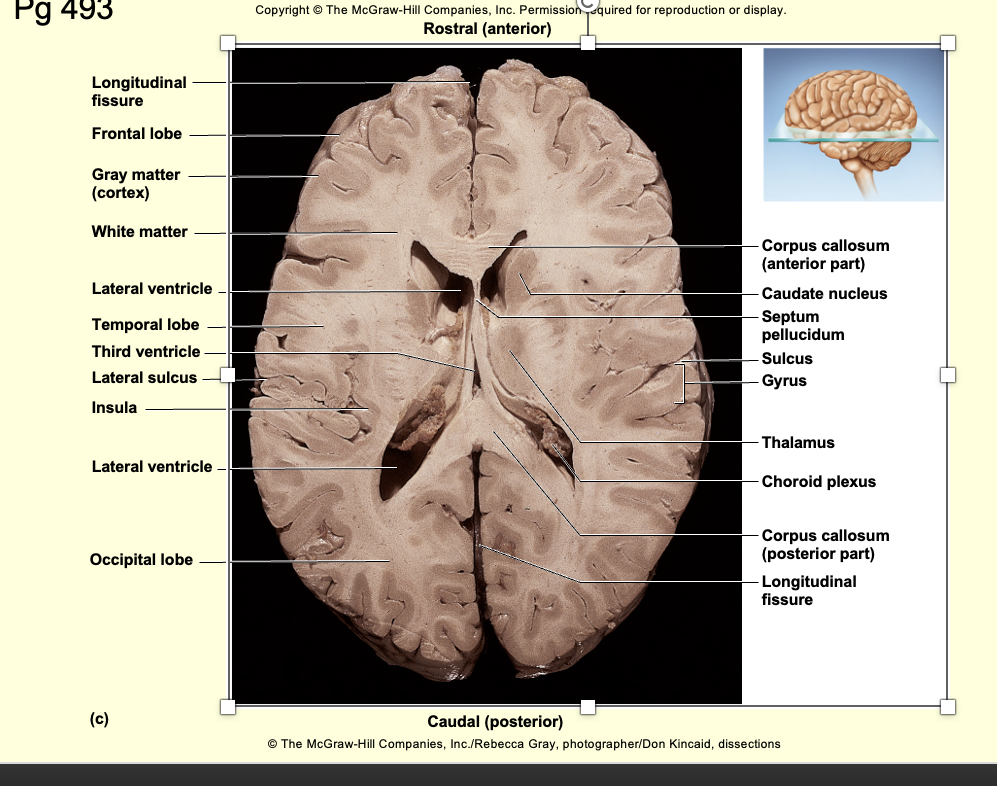
•composed of gray and white matter
–Gray matter consists of neuron bodies and dendrites
–White matter (myelin) consists of axon tracts
cerebrum
83% of brain volume; cerebral hemispheres, gyri and sulci, longitudinal fissure, corpus callosum

cerebellum
contains 50% of the neurons; second largest brain region, located in posterior cranial fossa
brainstem
the portion of the brain that remains if the cerebrum and cerebellum are removed; diencephalon, midbrain, pons, and medulla oblongata
longitudinal fissure
deep groove that separates cerebral hemispheres
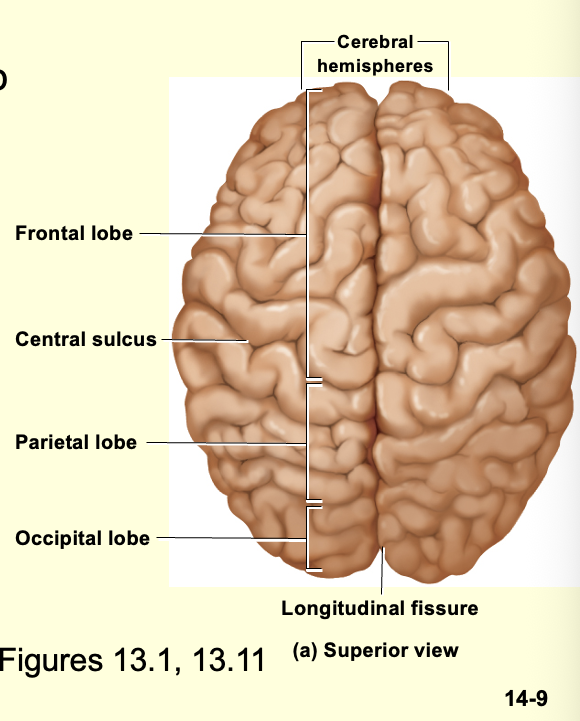
gyri
thick, raised folds
sulci
shallow grooves
corpus callosum
thick nerve bundle at the bottom of longitudinal fissure that connects hemispheres

median section of the brain
need to be able to label the non marked out words
•cerebrospinal fluid (CSF)
clear, colorless liquid that fills the ventricles and canals of CNS
production begins with the filtration of blood plasma through the capillaries of the brain
CSF continually flows through and around
the CNS /driven by its own pressure, beating of ependymal cilia, and pulsations of the brain produced by each heartbeat
ventricles of the brain
buoyancy
allows brain to attain considerable size without being impaired by its own weight
if it rested heavily on floor of cranium, the pressure would kill the nervous tissue
protection
protects the brain from striking the cranium when the head is jolted
shaken child syndrome and concussions do occur from severe jolting
chemical stability
–flow of CSF rinses away metabolic wastes from nervous tissue and homeostatically regulates its chemical environment
brain barrier system
•strictly regulates what substances can get from the bloodstream into the tissue fluid of the brain
blood contains
beneficial substances and bacterial toxins, bacteria, viruses, and other harmful substances
highly permeable
blood barrier system is______to water, glucose, and lipid-soluble substances such as oxygen, carbon dioxide, alcohol, caffeine, nicotine, and anesthetics
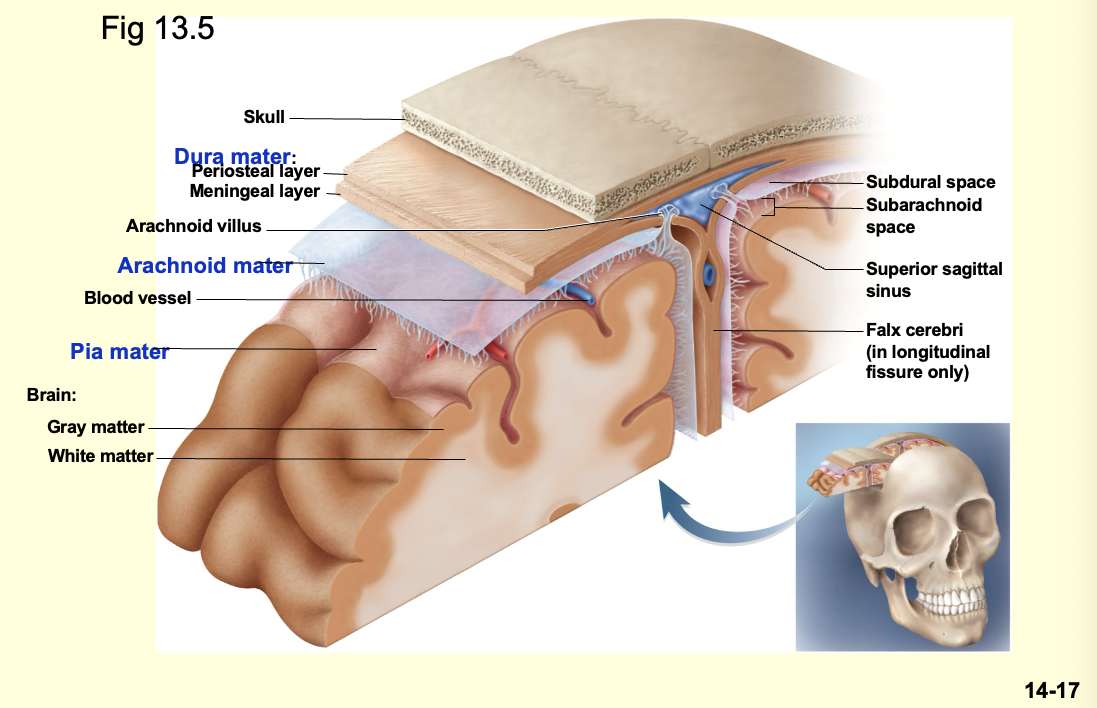
meninges
3 connective tissue membranes that envelop the CNS -the dura mater,arachnoid mater and Pia mater - protect the brain and provide structural frame work for its arteries and veins.
lies between the nervous tissue and bone
meninges
meninges of the brain
meningitis
inflammation of the meninges
what causes meningitis?
caused by bacterial, virus, and fungal invasion of the CNS usually by way of the nose and throat
bacterial meningitis
can cause swelling the brain, enlarging the ventricles, and hemorrhage
what are signs of bacterial meningitis?
high fever, stiff neck, drowsiness,and intense headache and may progress to come -death within hours of onset
lumbar puncture (spinal tap)
draws fluid from subarachnoid space between two lumbar vertebrae
circadian rhythms
bodys daily rhythms -regulated by SCN(suprachiasmatic nucleus )
scn working with the pineal gland act as the body’s ______
master clock /adjusted daily by light from eyes
light controls _____ secretion of melatonin which regulates circadian rhythms
pineal gland
hypothalamus
important structure for homeostasis / contains neural enters for hunger, thirst, body temperature, regulates sleep, base emotions, sexual arousal, anger, fear, pain and pleasure -controls hormone release from anterior pituitary gland -produces ADH and oxytocin
pituitary gland
divided into anterior and posterior lobes 1.posterior secretes ADH and oxytocin 2. hypothalamus produces hormones that control anterior pituitary
midbrain
substantia nigra— involved in motor coordination

mid brain

hindbrain
hindbrain: respiratory control centers
3 important respiratory control centers - apneustic and pneumotaxic centers in pons -rhythmicity center in medulla oblongata
medulla
Contains all axons that pass between brain and spinal cord -Crucial centers for breathing and cardiovascular systems

hindbrain: reticular activating system (RAS)
is an ascending arousal system that originates in groups of neurons in the pons, midbrain reticular formation, hypothalamus and basal forebrain -–These project to the cerebral cortex and control its level of arousal
cerebellum
-Receives input from proprioceptors (joint, tendon and muscle receptors)
-Involved in coordinating movements along with cerebral nuclei and motor areas of cortex
cerebrum
•higher brain functions include - sleep, memory, cognition, emotion, sensation, motor control, and language
•involve interactions between cerebral cortex and many other parts of the brain
frontal lobe
–voluntary motor functions –motivation, foresight, planning, memory, mood, emotion, social judgment, and aggression
parietal lobe
–receives and integrates general sensory information, taste and some visual processing
occipital lobe
primary visual interpretation center of brain
temporal lobe
areas for hearing, smell, learning, memory, and some aspects of vision and emotion
insula
understanding spoken language, taste and sensory information from visceral receptors
cognition
the range of mental processes by which we acquire and use knowledge
parietal lobe association area
perceiving stimuli -contralateral neglect syndrome – unaware of objects on opposite side of their body
temporal lobe association area
identifying stimuli •agnosia – inability to recognize, identify, and name familiar objects
•prosopagnosia – person cannot remember familiar faces
frontal lobe association area
–planning our responses and personality – inability to execute appropriate behavior
lobotomy of Phineas gage
severe injury with metal rod -injury to the ventromedial region of both frontal lobes -extreme personality change