Exam 5 bio 1
 Call Kai
 Learn
 Practice Test
 Spaced Repetition
 Match
 Flashcards
 Knowt Play
1/118

Earn XP
Description and Tags
They're really gonna kill me this time.
119 Terms
DNA (deoxyribonucleic acid)
Formula for…

Nitrogen base
This image is…
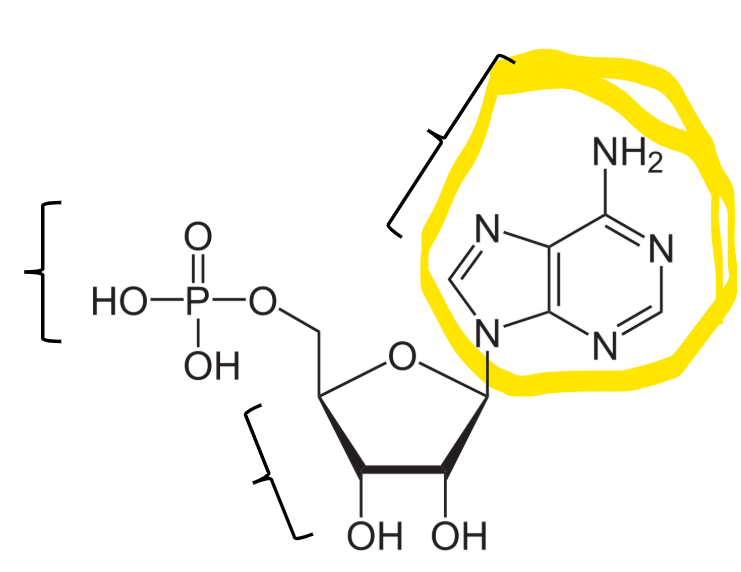
Pentose (5c) sugar
This image is…

Phosphate
This image is…

Building Blocks (monomers)=
Nucleotides
How many carbons in a DNA sugar
5
Purines …
Have a double ring structure.
Purine, Adenine
This is…

Purines
Adenine and Guanine are both…
Purine, Guanine
This is…

Pyrimidines …
Have a single ring structure.
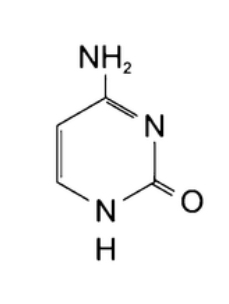
Pyrimidine, Cytosine
This is …
Pyrimidine, Thymine
This is ….

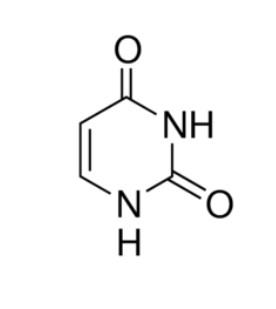
Pyrimidine, Uracil
This is….
Adenosine phosphate compounds
AMP, ADP, and ATP are…
Adenosine Monophosphate (AMP)
This is…

Adenosine Diphosphate
This is …

Adenosine Triphosphate
This is …

Carbon 5
This carbon is numbered

Carbon 1
This carbon is numbered

PO4 on 5’ carbon on next nucleotide
IN DNA SYNTHESIS, the polymer structure is 3’ carbon of one nucleotide connecting to….
DEHYDRATION SYNTHESIS.
3’ carbon of one nucleotide connects to PO4 on 5’ carbon on next nucleotide via
Adenine pairs with…
Thymine pairs with…
Guanine pairs with…
Cytosine pairs with…
Antiparallel Configuration
Second strand of DNA goes in opposite direction as first.
Nitrogen bases
Pyrimidines and Purines are both
DNA helicase
unwinds double helix, separates strands; forms replication fork
DNA polymerase
forms DNA strand by connecting nucleotides
…The leading strand
Depicted here, the pink strand is…
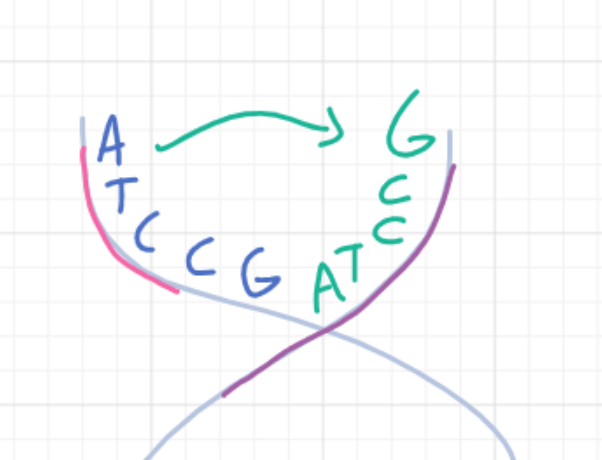
…The lagging strand
Depicted here, the purple strand is…

DNA gyrase
prevents supercoiling of DNA during replication
DNA primase
Forms short RNA strands that act as primers for DNA polymerase
DNA ligase
joins ends of pieces of lagging strand
…DNA gyrase
This is the…
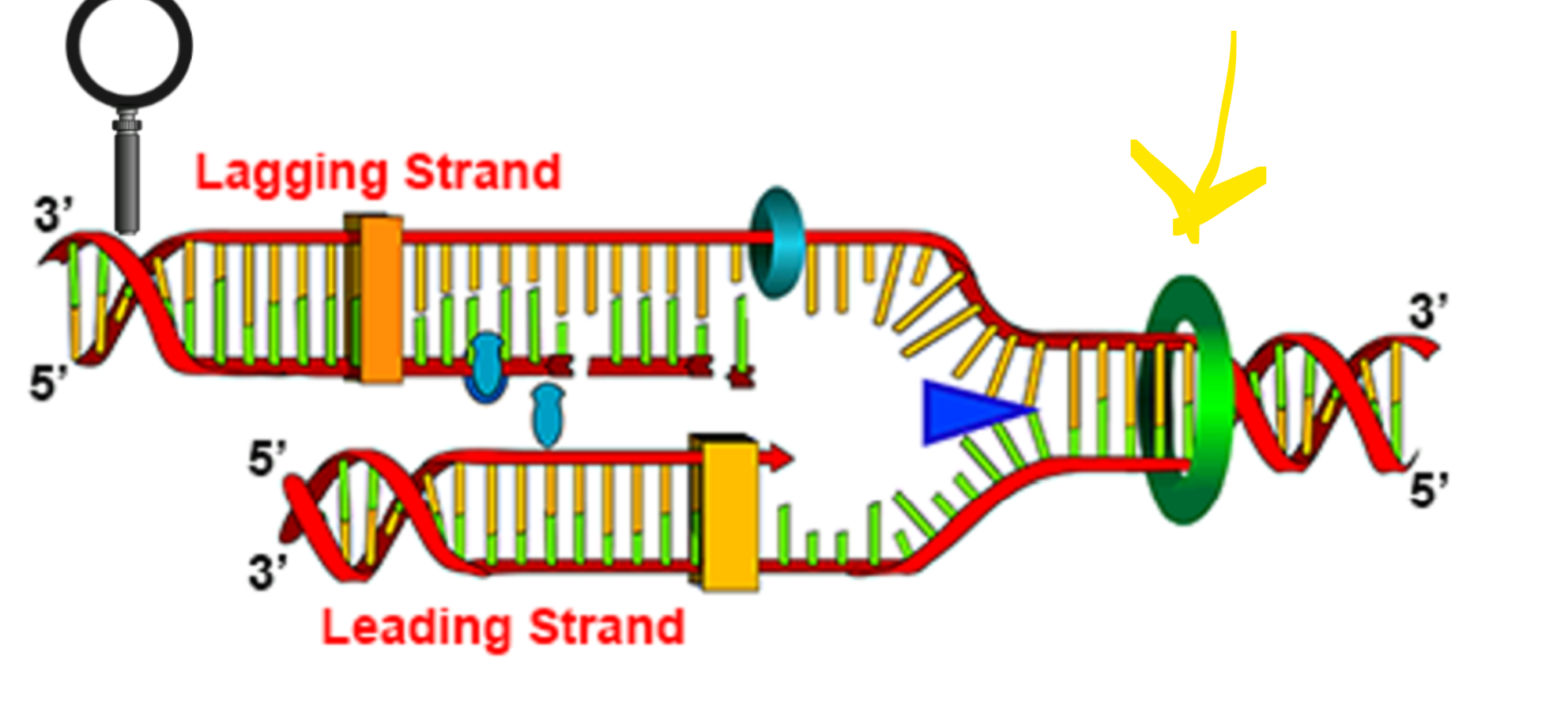
…DNA polymerase
This is the…

DNA ligase
This is the…

DNA primase
This is the…

Point (micro) mutation
change in single nucleotide
Frameshift mutation
caused by deletion (loss) or insertion (addition) of single nucleotide, causing entire “frame” of DNA to shift over by one
Substitution
one nucleotide replaced by one with different base
Transition Substitution
purine replaced by purine or pyrimidine by pyrimidine (Same with Same)
Transversion Substitution
purine replaced by pyrimidine or vice versa (different kinds of nitrogen bases replace eachother)
Mutations in DNA happen…
Naturally.
Mutation
random mistake in DNA replication
Mutagen
agent that increases rate of mutation
Central Dogma of Molecular Biology
RNA made from DNA. Protein (polypeptide) made from RNA.
DNA —> RNA —> PROTIEN.
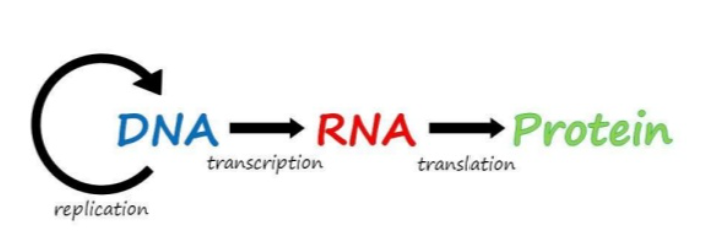
Transcription
RNA —> DNA
Translation
Protein (polypeptide) made from RNA
RNA
ribonucleic acid
messenger RNA (mRNA)
created against DNA template
transfer RNA (tRNA)
bonds with amino acid, carries it to ribosome
ribosomal RNA (rRNA)
forms ribosome
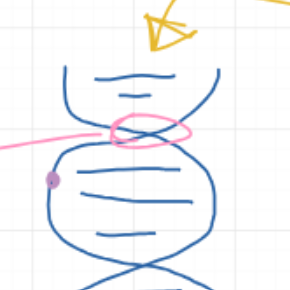
The Gyrase
The PINK is pointing to

The Fork
The YELLOW is pointing to
Gene
segment of DNA that codes for RNA, which then codes for polypeptide (protein)
RNA
codes for polypeptide (protein)
Exon
Portion of gene that carries code for polypeptide
Intron
portion of gene that is transcribed into RNA but not translated into polypeptide. noncoding portion of genes
Noncoding genes
DNA that is not translated into protein; introns are noncoding portion of genes
3-base sequences
Genetic code arranged in…
Codon
3-base sequence on mRNA .
matches Anticodon
RNA polymerase
transcribes pre-mRNA
Introns are Removed … Exons Spliced to form RNA
IN TRANSCRIPTION, Introns are ___, Exons are ___
Alternative splicing…
…can produce multiple proteins from one gene
Regulatory proteins
control transcription
Repressor Proteins
Interfere with transcription / decide what gets to be expressed by ending it.
Activator Proteins
stimulate transcription
Gene Expression
Is adjusted in response to environment
Epigenetic alteration
change in gene function not based on change in DNA code that is inherited through cell division
- DNA methylation: addition of methyl (CH3) can inactivate genes
Translation
This figure represents…
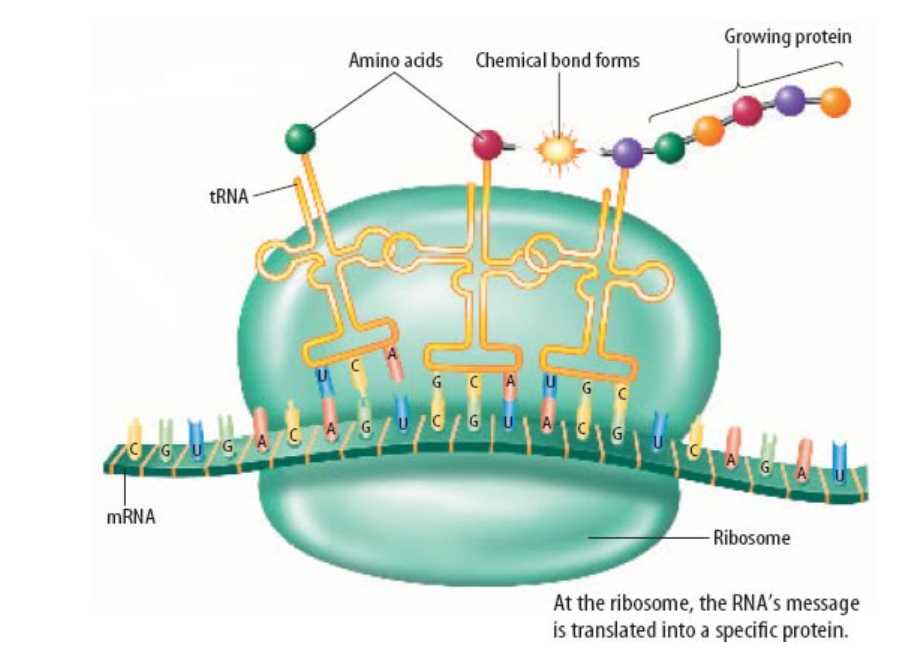
Anticodon
3-base sequence on tRNA. matches codon on mRNA
Transport Vesicle
Buds off the ER and carries polypeptide to Golgi
Secretory vesicle
buds off Golgi and carries protein to plasma membrane for exocytosis
Lysosome or peroxisome
buds off Golgi and remains within cell
Transcribed mRNA
…Enters cytoplasm via nuclear pore
Amino acids
form peptide bonds via dehydration synthesis
Stop codon (terminates process)
UGA, UAA, UAG
Polymerase chain reaction (PCR)
Enables amplification of DNA by repeatedly replicating segment. DNA polymerase from bacteria, Mimics DNA replication.
Primer
determine starting and stopping points (chemically synthesized sequence of nucleotides) during PCR
Denaturation
heat separates strands of double helix (STEP 1 OF PCR)

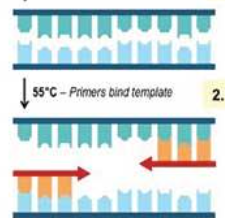
Annealing of primers
primers attach polymerase to DNA (STEP 2 OF PCR)
Synthesis or extension
DNA polymerase makes new DNA

What are the 3 steps involved in PCR?
Denaturation, Annealing, Synthesis
Sanger sequencing
PCR product used as template for new DNA by polymerase
Next-generation sequencing
Bioinformatics emerging discipline that combines biology, computer science, information engineering, and statistics to analyze large data sets
Transgenics
Recombinant gene inserted into normal gene Inserted into embryonic stem cells.
Recombines with chromosomal copy of normal gene through crossover
Potential treatment of disease through stem-cell therapy
CRISPR
Genome-editing technology derived from bacteria. Acts like "molecular scissors," enabling addition, deletion, or alteration of genetic material in DNA
Clustered regularly interspaced short palindromic repeats.
Genomics
study of an organism's entire set of DNA (its genome), including how all its genes are organized, mapped, sequenced, and interact with one another and the environment.
C-value
total amount of DNA in cell
Genome size versus gene number
correlated with number of genes in viruses & prokaryotes
Lowest
Viruses MB (genome Size)
between Eukaryotes and Viruses
Prokaryotes MB (genome size)
Eukaryotes
Highest MB (genome size), but poor correlation.
Non-coding regions…
… inflate genome size. Introns prevalent in eukaryotic genes
Microsatellites
short (normally 1-6 bp), highly repeated segments of DNA
Transposable elements (transposons)
can move from one point in genome to another.
In biotechnology, used to insert segment of foreign DNA into genome
Aneuploidy
gain in chromosome due to nondisjunction at single homologous pair during cell division
Polyploidy
gain in entire set or sets of chromosomes due to nondisjunction at all homologous pairs during cell division
Deletions
genes lost
Duplications
genes copied and incorporated into chromosome
most lose function as pseudogene
can later take on new function