Week 9: Screening Tests And Assessments & The High Risk Newborn
 Call Kai
 Learn
 Practice Test
 Spaced Repetition
 Match
 Flashcards
 Knowt Play
1/44

There's no tags or description
Looks like no tags are added yet.
45 Terms
Subsequential Prenatal Assessment
VS
Weight
UA
Glucose screening
Isoimmunization
Fundal Height
Fetal evaluation
Assessment of Fetal Well Being in 1st Trimester
Confirm pregnancy
Confirm viability
Determine gestational age
Detect fetal anomalies
U/S in early pregnancy
Transvaginal
U/S in later pregnancy (10-12wks +)
Transabdominal
When is fetal HR detectable
10-12 weeks
Nuchal translucency
Measurement of nuchal folds, screen between 10-14 weeks
Tests risk for Down Syndrome
Screening/Diagnostics Prenatally
Pap smear
CBC
HIV
Rubella titer
Blood type, Rh, antibody screening
Hep B screen
STI screening
UA
Renal function
Varicella immunity (chickenpox)
Purified protein derivative of tuberculin (PPD)
Vaccines (Flu, COVID)
When is RHOGAM given
When any mom is RH- in case baby is RH+
Given around 28 weeks and within 72 hours of birth if baby is RH+
indirect Coombs' Test
Beginning of pregnancy & at 28 weeks
Looks for Rh antibodies in mom's serum
Direct Coombs' Test
Taken from baby's umbilical cord
Tests for maternal antibodies that have crossed placenta
ABO incompatibility
Occurs when mother has type O blood and fetus has type A, B or AB
Manifestations:
- Mild anemia
- Jaundice within the first 24hrs after birth
- Rarely causes severe issues (unlike Rh incompatibility)
Attack on baby's RBCs d/t ABO incompatibility to RH incompatibility
Jaundice within the 24 hours after birth
Cell-free DNA screening
Newest screening test for noninvasive prenatal genetic dx
Screens for chromosomal abnormality
As early as 9-10 weeks
Highly accurate
Chorionic Villus Sampling (CVS)
Small specimen removed intravaginally from portion of placenta
Early dx and rapid response
Screenign & Daignoistics in 2nd trimester
U/S
Maternal Assays Alpha-fetoprotein
Amniocentesis
Doppler flow studies
Percutaneous Umbilicul Cord Sampling
Quad screen
Tests for 4 different hormones
Tested at 15-21 weeks
Alpha-fetoprotein (AFP)
Screens for neural tube defects in serum
Recommended for all pregnancy women
Amniocentesis in 15-20 weeks
Diagnostic test (chromosomal issue, neural tube defects, etc.)

Amniocentesis in late pregnancy
Tests for fetal lung maturity

McDonald's Method
Measures distance in cm from top of symphysis pubis to top of fundus
Centimeter correlate well with weeks of gestation (22-34 weeks)

Fetal Growth Restriction (FGR)
Below 10th percentile
Macrosomia
Weight > 4000g (8lbs-13oz)
Determined by US, Leopold's maneuver, measuring fundal height
Doppler Blood Flow Analysis
Measures blood flow throuhg umbilicul and cerebrial arteries

Percutaneous Umbilical Blood Sampling (PUBS)
Insertion of needle directly into a fetal umbilical vessel under U/S guidance
Mostly used for blood sampling & transfusion
Screening & diagnostic testing in 3rd trimester
U/S
Glucose challenge test
Group B Strep
Biophysical profile & non-stress test
Daily movement count
Normal kick count
10 movements in 2 hours
Group B strep
Normal flora in GU track
Can cause sepsis, pneumonia, and/or other issues in baby
Big cause of neonatal sepsis
Group B Strep
Signs of neonatal sepsis
Non-responsiveness
Failure to hold temp
TORCH
Acronym for diseases that cause congenital conditions if a fetus is exposed to them:
Toxoplasmosis
Other (Syphilis, Varicella)
Rubella
Cytomegalovirus
Herpes Simplex
What can cause toxoplasmosis
Cat litter
Dirt
Infants of DM mothers
Macrosomia (incr risk for injury)
Hypoglycemia
Incr risk for congenital anomalies
Gastroschisis
Intestines protrude through a small opening in the abdomen
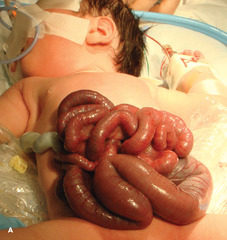
Omphalocele
Abdominal organs develop outside the body in a pouch

Spina Bifida Myelomeningocele
Incomplete closure of spine & spinal column - neural tissue exposed

What prevents neural tube defects
consumption of folic acid
Unique preterm infant characteristics
Immaturity of most organ systems
Lanugo
Translucent skin
Large head
Late preterm infant higher risks
Thermoregulation
Hypoglycemia
Hyperbilirubinemia
Sepsis
Respiratory function
Post-term infant higher risks
Placental dysfunction
Dry skin
Increase in fetal and neonatal mortality
Increase risk for birth injuries
Fetal Alcohol Spectrum Disorder
Why education is so important!!
Small head
Flat face
Epicanthal folds
Small eye openings
Underdeveloped jaw
Low nasal bridge
Tobacco in pregnancy
Infertility
Spontaneous abortion
Low-birth weight
IUGR
previa
PROM
SIDS
baby cannot even be held person with smoke on clothes
Marijuana in pregancy
Low birth weight
Developmental and mental concerns
People think incorrectly that because it is legal it is safe
Neonatal opiate withdrawal syndrome (NOWS)
group of symptoms/conditions
s/s typical 1-3 days after birth
occurs after mom takes opiates, benzos, barbs, and certain SSRIs
Eat, Sleep, Console
Eating: Baby eats on time
Sleep: At least one undisturbed hour
Consoling: Baby soothed within 10 mins of crying
Non-pharm interventions for neonatal abstinence syndrome
Environmental control
Feeding practices
Support mother-infant dyad
Other interventions