Organizational Behavior Chapter 12: Power, Influence, and Politics
 Call Kai
 Learn
 Practice Test
 Spaced Repetition
 Match
 Flashcards
 Knowt Play
1/26

There's no tags or description
Looks like no tags are added yet.
27 Terms
What is power in an organizational context?
The ability to marshal human, informational, and other resources to get something done, concerned with influencing others.
What are the three primary responses individuals have to power?
Resistance, Compliance, and Commitment.
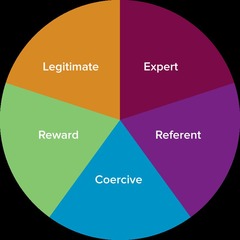
Which bases of power generally have a positive effect on job performance?
Expert and referent power.

What type of power is Gina using when she promises her employees a reward for reaching a goal?
Reward power.
What is empowerment in the workplace?
Efforts to enhance employee performance, well-being, and positive attitudes by giving employees greater influence.
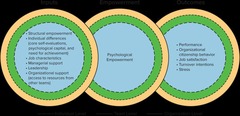
What are the two types of empowerment?
Structural empowerment (job redesign) and Psychological empowerment (enhancing self-efficacy).

What are the four components of psychological empowerment?
Meaning, Competence, Self-determination, and Impact.
What are common influence tactics used to affect changes in others?
Rational persuasion, Inspirational appeals, Consultation, Ingratiation, and Pressure.
What are the six principles of persuasion?
Liking, Reciprocity, Social proof, Consistency, Authority, and Scarcity.
What is organizational politics?
Intentional acts of influence to enhance or protect the self-interest of individuals or groups that are not endorsed by the organization.
What are some key causes of political behavior in organizations?
Organizational justice, Trust in co-workers, and Negative affect.
What are frequently used political tactics?
Self-promotion, Building a network, Creating a favorable image, and Praising others.
How should one respond to underperformance to preserve influence?
By managing blame for failures, either assigning it to others, oneself, or denying it.
What is impression management?
Any attempt to control or manipulate the images related to a person, organization, or idea.
What are some tactics for effective impression management?
Being aware of nonverbal cues, presenting information favorably, and maintaining a good mood.
What is the impact of a good impression in a professional setting?
You only have one chance to make a good impression, which can significantly affect perceptions.
What is the role of self-focused impression management?
To present oneself positively in various professional interactions.
What is a common mistake to avoid during an interview regarding impression management?
Wearing flashy jewelry to be noticed, which may come off as unprofessional.
What is the relationship between power sharing and empowerment?
Empowerment involves sharing power and decision-making authority with employees.
What is the effect of coercive power on job outcomes?
Coercive power has a slightly negative effect on job performance and satisfaction.
What does it mean to have expert power?
Having influence due to one's knowledge or expertise in a particular area.
What is the difference between soft and hard influence tactics?
Soft tactics are more collaborative and persuasive, while hard tactics involve pressure or coercion.
What is the importance of trust in organizational politics?
Trust in co-workers can reduce political behavior and enhance collaboration.
What is the significance of self-efficacy in psychological empowerment?
Higher self-efficacy enhances an employee's sense of empowerment and performance.
How can one effectively influence others?
By being believable, trustworthy, and using a combination of influence tactics.
What is the potential downside of being highly political in an organization?
It may lead to being perceived as self-serving or a poor team player.
What is the role of job design in empowerment?
Job design can be used to transfer power to employees and enhance their engagement.