AC105 - Week 8: ratios
 Call Kai
 Learn
 Practice Test
 Spaced Repetition
 Match
 Flashcards
 Knowt Play
1/74

There's no tags or description
Looks like no tags are added yet.
75 Terms
What is the objective of financial analysis for lenders
Lenders are interested in short term liquidity and long term solvency
What is the objective of financial analysis for shareholders
Shareholders are concerned with profitability and future share prices
What does financial analysis show both lenders and shareholders
The company's future
What are common size financial statements
A restatement of financial statement information in a standardised form
What do common size statements allow
A comparison across time or businesses
What are the 2 ways in which common size statements can be prepared
Vertically or Horizontally
What is vertical common size analysis
Expresses all figures in a particular statement in terms of one of the figures in the statement where the base value can for example be sales or total assets
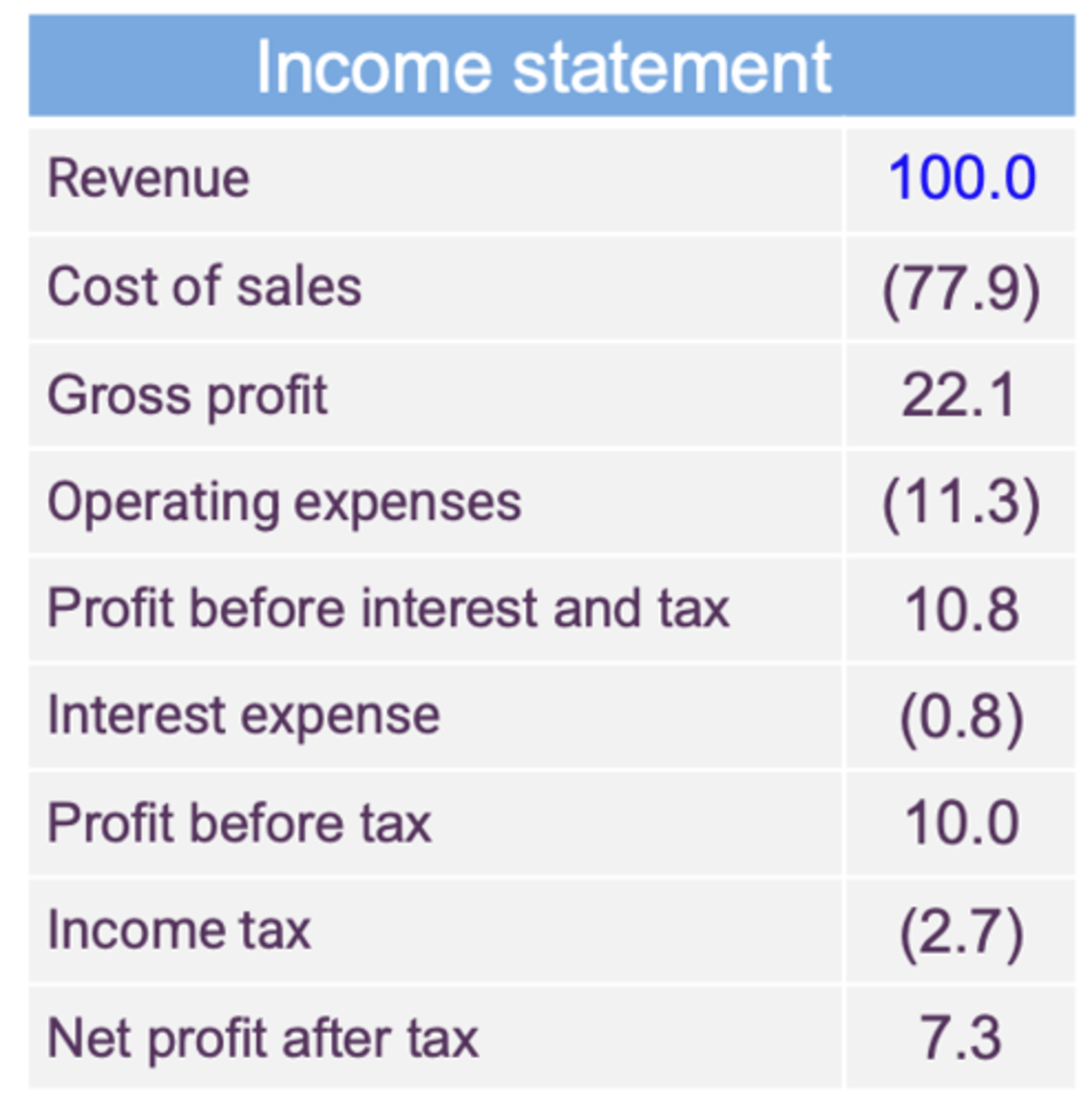
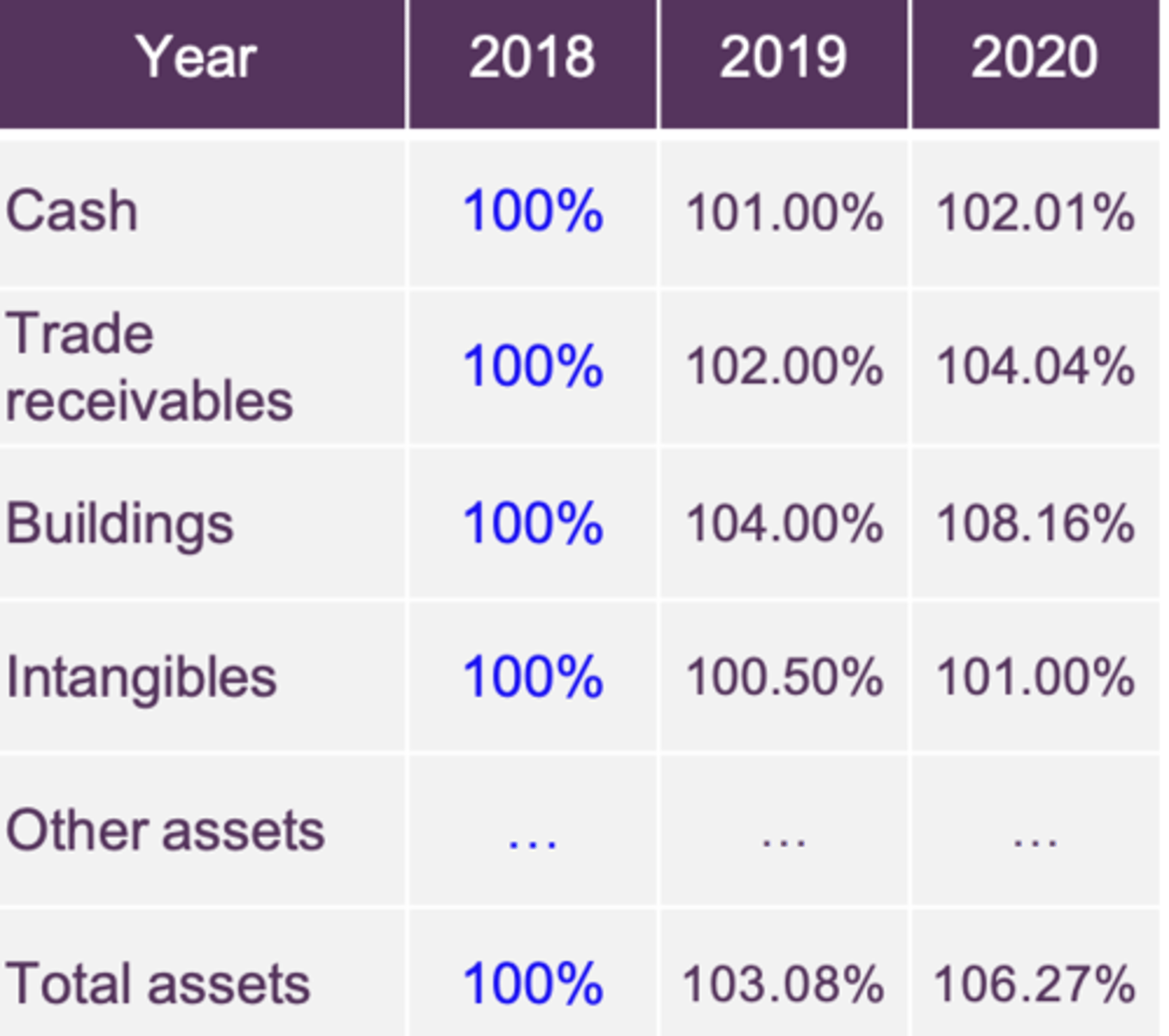
What is horizontal common size analysis
Uses the figures in a specified year as the base and subsequent years amounts are stated as a percentage of the base value
The base year statement is usually the earliest or latest statement of a set of statemets
What is trend analysis
Trend analysis shows the changes in key ratios over time and whether ratios indicate trends
Why do we use financial ratios
- To compare financial health of different businesses
- To identify trends
- To determine the degree of efficiency in the management of assets and liabilities
What is ratio analysis
Comparing two related figures as an aid to interpreting the financial statements
What are the 5 types of financial ratio classifications
Profitability ratios (performance ratios)
Efficiency ratios
Liquidity and Solvency ratios: Short term liquidity
Liquidity and solvency ratios: Long term solvency
Investment ratios
What are 4 examples of profitability ratios
Return on capital employed
Return on equity
Operating profit margin and net profit margin
Gross profit margin
What are 4 examples of efficiency ratios
Inventory days
Receivables days
Payables days
Net asset turnover
What are 2 examples of Liquidity and solvency ratios: short term liquidity
- Current ratio
-Quick (acid test) ratio
What are 2 examples of liquidity and solvency ratios: long term solvency
-Gearing ratio and Debt to equity ratio
-Interest cover
What are 4 examples of investment ratios
-Dividend payout ratio and dividend cover
-Dividend yield ratio
-Earnings per share
-Price/earnings ratio
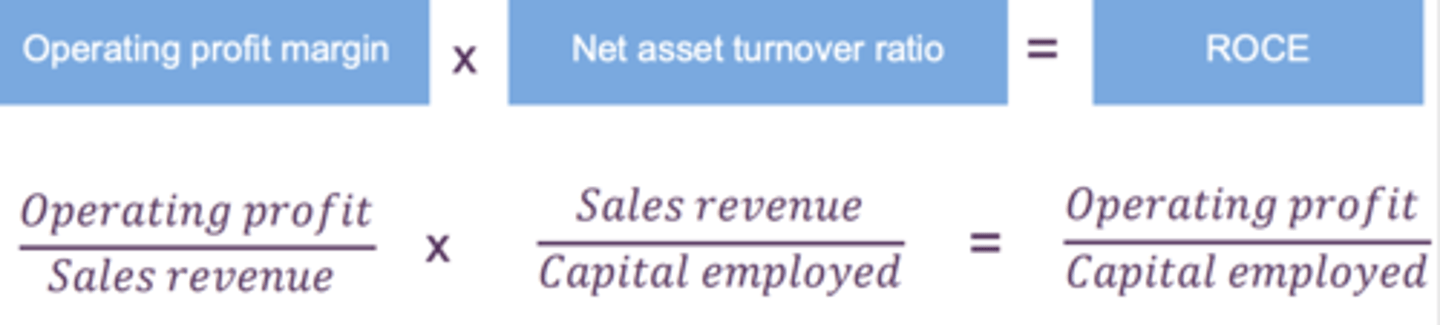
What does return on capital employed (ROCE) assess
The effectivity of capital emplyed where capital employed represents the debt and equity with which the company generates profits
What is an increase in ROCE seen as
An improvement in profitability
ROCE formula

What does return on equity focus on
The levels of profit achieved on the basis of the capital provided by the equity holders
Amounts provided by and dividends and interest paid to preference shares and loan notes are excluded
What is the formula for return on equity

What does gross profit margin measure
Trading performance
Formula for Gross profit margin

What are the 2 ways in which an entitys gross margin percentage can be improved
Increase the price charged for goods or services
Cost control and efficiency
What does operating profit margin measure
Operational performance
What is the formula for operating profit margin

What is the only context in which whether the operating profit margin being satisfactory can be measured
In comparison with industry norms
What does inventory days measure
How long it takes on average for inventory to be sold
What is the formula for inventory days

What are receivables days
Shows how long on average credit customers take to pay the amounts they owe to the business
What is the formula for receivables days

What are payables days
Shows how long the entity takes to pay creditors
What is the formula for payables days

What is net asset turnover ratio
Shows hows effectively the entity uses its resources (capital employed) to generate sales
Formula for net asset turnover ratio

What does it mean to be overtrading
If the ratio is very high, we say that the firm has an "overtrading" problem that is it has insufficient assets to sustain the level of sales revenue achieved (i.e. trying to do too much business with too little capital).
When does overtrading arise
Where a company expands its sales fairly rapidly without securing additional long term capital adequate for its needs
What are 4 symptoms of overtrading
-Inventory increasing possibly more than proportionately to sales
-Receivables increasing possibly more than proportionately to sales
-Cash and liquid assets declining at a fairly alarming rate
-Payables increasing rapidly
What are 3 remedies to overtrading
-Cut back on trading
-Raise further capital
-Improve working capital management
What is the link between efficiency and profitability
What might a company with a low asset turnover ratio seek to do to improve it
Look for unproductive or idle assets that could be sold, or for assets that could be managed more efficiently and effectively
What is working capital
The difference between total current assets and total current liabilities
What is the formula for working capital
Working capital = current assets - current liabilities
Why does a business need working capital
A business needs working capital to operate
e.g. a retail organisation needs to buy and hold inventory for resale and a manufacturing organisation holds inventories of raw materials and inventories of part finished goods and finished goods
What must working capital be
Working capital must be financed and it therefore has a cost
What should the aim of a company be in regards to working capital
Avoid excessive working capital which creates unnecessary cost
Avoid having insufficient amounts of working capital, because inadequate working capital can lead to difficulties with cash flow and liquidity
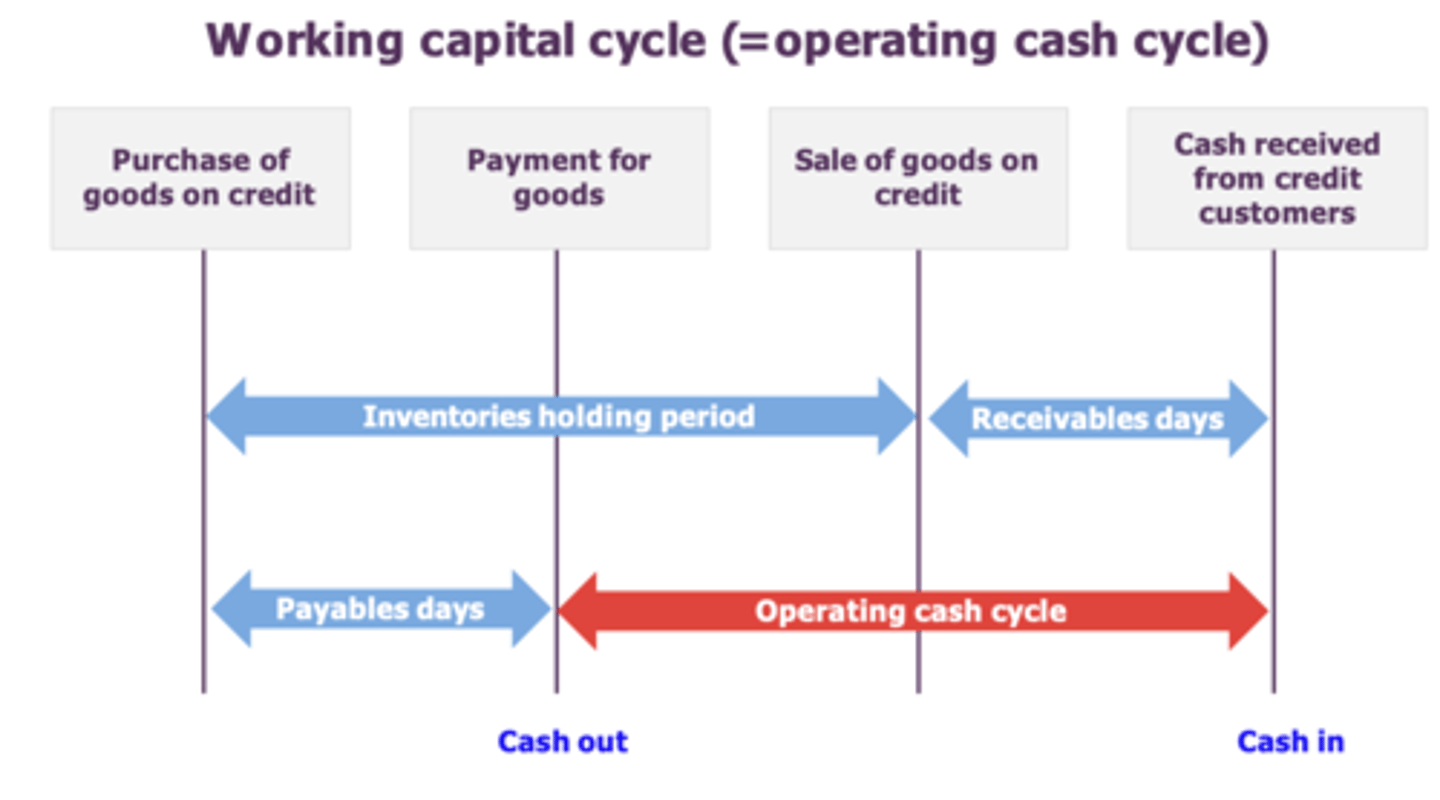
What does the working capital cycle look like
What is liquidity
A firms ability to generate cash for working capital needs and immediate debt repayments
What is solvency
The long term ability to generate cash internally or externally to satisfy capacity needs, fuel growth and repay debts
What does the current ratio measure
Compares liquid assets of the company with its current liabilities
What is the formula for current ratio
Current Ratio = Current Assets / Current Liabilities
What is a rule of thumb ratio for a satisfactory current ratio
2:1 Current Assets to Current Liabilities
What does the acid test ratio measure
It is a more rigorous measure of liquidity in that it excludes inventory
What is the formula for acid test ratio?

When does financial gearing occur
Financial gearing occurs when a business is financed at least in part by borrowing instead of only equity in order to finance growth and exploit tax advantages (interest is tax deductible)
4 dangers of high financial gearing
- Less control over financing decisions
- Risk of bankruptcy
- High volatility in profits available to shareholders
- Limited flexibility due to restrictions imposed on loan agreements
What does gearing ratio measureThe contribution of long term debt to the capital structure of the company

What is the debt to equity ratio
The debt-to-equity ratio is an alternative formula for measuring the level of gearing
What is the formula for debt to equity

What does it mean if the debt to equity ratio is greater than 1
If the debt-to-equity ratio is greater than 1, then the company is financing more assets with debt than with equity. If the ratio is less than 1, then the company is financing more assets with equity than with debt.
The higher the debt-to-equity ratio, the greater the company's financial risk.
What does interest cover ratio show
Interest cover ratio shows the amount of profit available to cover interest
What is the formula for interest cover ratio

What does the dividend payout ratio show
The proportion of profits paid out as dividends to shareholders
What is the formula for dividend payout ratio

What is dividend cover ratio
The dividend cover ratio measures a company's ability to maintain dividend payments
It shows how many times the dividends could be paid out of profits.
What is the formula for dividend cover ratio

What does dividend yield measure
Dividend yield shows the cash return to a share relative to its current market value.
The ratio measures dividend policy rather than performance
What is the formula for dividend yield

What is the dividend yield of a growing company most likely to be
Low
What do earnings per share measure
The earnings available to shareholders per shares issued
EPS is always expressed in pence and is calculated to one decimal lace
Formula for earnings per share

What does price/earnings ratio measure
Price/earnings ratio measures market confidence in the future earnings power of a business.
It measures how much investors are willing to pay for a company relative to its current earnings, which reflects investors' expectations of future earnings growth.
What is the formula for Price/Earnings ratio

What are 5 limitations of ratio analysis
1. Limitations of financial statement
2. Qualitative factors are ignored
3. Lack of standard formulae
4. Problems of price level changes
5. Ratios alone are not adequate