Orgo - Exam 2 Reactions
 Call Kai
 Learn
 Practice Test
 Spaced Repetition
 Match
 Flashcards
 Knowt Play
1/21

There's no tags or description
Looks like no tags are added yet.
22 Terms

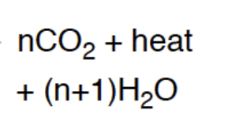
Combustion of Alkanes
No heat, no reaction
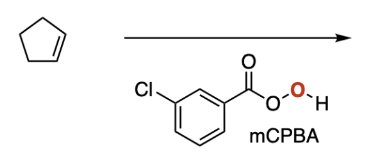
Epoxidation of Alkenes
mCPBA = m-chloroperoxybenzoic


Hydroxylation
Mild oxidation
Syn addition
Variations:
Step 2. NaHSO4, H2O
or
Step 2. N-methylmorpholine oxide (NMO)

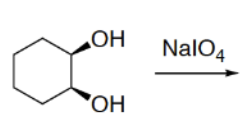
Oxydative Cleavage
Cis diols only!
Aldehyde product
Mild oxidative cleavage

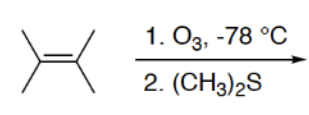
Ozonolysis
Mild Oxidation
Break double bond
End groups stay the same
May lead to mixtures with asymmetric alkenes


Permanganate Oxidation
Vigorous Oxidation
Complete oxidation, does not stop at the aldehyde


Hydrogenation
Reduction to alkane
Syn addition of H2 (or D2)
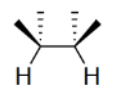

Addition of Carbenes
Highly reactive
Unfilled octet
Formal charge on carbene carbon = 0
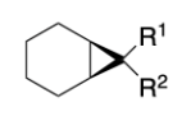

Generation of Carbenes (1)
Dichlorocarbene only

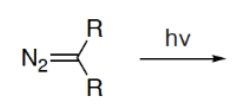
Generation of Carbenes (2)
R = H, alkyl

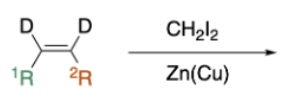
Simmons-Smith Cyclopropanation (1)


Simmons-Smith Cyclopropanation (2)


Radical Addition of HBr
Anti-Markovnikov orientation
Only HBr (or DBr), no HI or HCl
Radical mechanism


Allylic Bromination
Radical mechanism via resonance stabilized allyl (or benzyl) radical

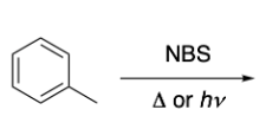
Benzylic Bromination
Radical mechanism via resonance stabilized allyl (or benzyl) radical


Syntehsis of Alkenes (1)
Elimination of HBr
More substituted C=C (Saytzeff orientation)


Synthesis of Alkenes (2)
Elimination of H2O
Needs heat

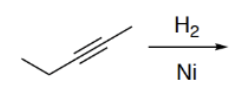
Full Reduction
Also with D2
Other catalysts: Ni, Pt, Pd, PtO
Full reduction to alkane
No reaction without catalyst


Partial Reduction
Lindlar’s catalyst
Syn - addition (Z isomer)
D2 also


Dissolving Metal Reduction
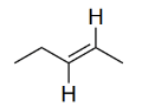
Anti – addition
Also ND3 instead of NH3

Oxidative Cleavage (1)
May lead to mixtures if asymmetric alkyne is used
Break alkyne to form carboxylic acids


Oxidative Cleavage (2)
One product + CO2 (g)
