Basic Koala Facts - Animal Studies
 Call Kai
 Learn
 Practice Test
 Spaced Repetition
 Match
 Flashcards
 Knowt Play
1/15

There's no tags or description
Looks like no tags are added yet.
16 Terms
What is the scientific name of the koala?
Phascolarctos cinereus

Where are koalas native to?
Eastern and south-eastern Australia.

What is the natural habitat of koalas?
Eucalypt forests and woodlands.

What is the average size and weight of an adult koala?
Approximately 60–85 cm long and 4–15 kg. Males are generally larger than females.

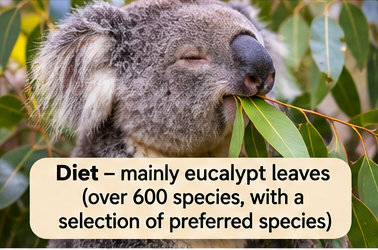
What do koalas primarily eat?
Eucalyptus leaves, selecting particular preferred species.
What dental adaptations help koalas eat eucalyptus leaves?
Sharp incisors cut leaves and strong cheek teeth grind tough vegetation.

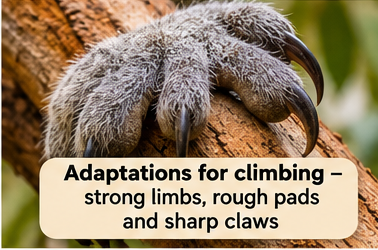
What physical adaptations help koalas climb trees?
Strong limbs, rough gripping pads, opposable digits and sharp claws.
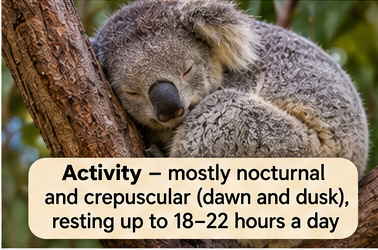
When are koalas most active and how much do they rest?
Mostly nocturnal and crepuscular. They can rest or sleep for 18–22 hours daily.
When is the typical koala breeding season?
Generally August to February, although timing varies by region.

How long is koala gestation and pouch development?
Gestation is approximately 35 days. Joeys spend about six months in the pouch, then ride on their mother's back.
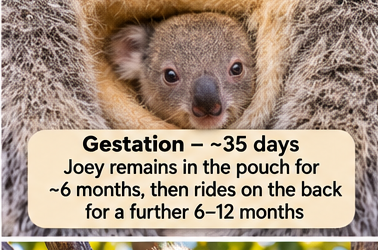
At what age do young koalas become independent?
Usually around 12–18 months of age.

How do koalas obtain most of their water?
From the moisture in eucalyptus leaves, although they also drink water when needed.

What are the key physical identification features of a koala?
Large leathery nose, rounded fluffy ears, thick grey-brown fur and a pale chest.

How do koalas regulate their body temperature?
By seeking shade, reducing activity, panting and resting against cooler tree trunks.

What is the average lifespan of a koala?
Approximately 10–15 years in the wild, potentially longer in captivity.

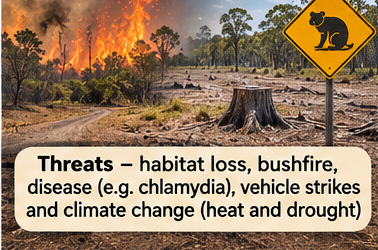
What are the main threats to koalas?
Habitat loss, bushfires, disease such as chlamydia, vehicle strikes, dog attacks and climate change.