[ 2.2.2.3 ] shapes of molecules & ions
 Call Kai
 Learn
Learn Practice Test
 Spaced Repetition
 Match
Match Flashcards
 Knowt Play
1/10

Earn XP
Description and Tags
[ https://chemrevise.org/wp-content/uploads/2022/01/2.2.2-bonding-and-structure.pdf ] + [ https://www.physicsandmathstutor.com/pdf-pages/?pdf=https%3A%2F%2Fpmt.physicsandmathstutor.com%2Fdownload%2FChemistry%2FA-level%2FNotes%2FOCR-A%2F2-Foundations-in-Chemistry%2FDetailed%2F2.2.%20Electrons%2C%20Bonding%20and%20Structure.pdf ]
Name | Mastery | Learn | Test | Matching | Spaced | Call with Kai | Chat |
|---|
No analytics yet
Send a link to your students to track their progress
11 Terms
Electron Group Repulsion Theory
States that groups of electrons around a central atom all have negative charge an repel each other, so they move as far apart as possible to minimise the repulsion between them.
Groups of Electrons
Regions where electrons are concentrated around a central atom. This includes bonding pairs of electrons (single, double, triple, & dative) and lone pairs of electrons.

2 Electron Groups in Outer Shell of Central Atom:
shape → linear
bond angles between 2 adjacent electron groups → 180°
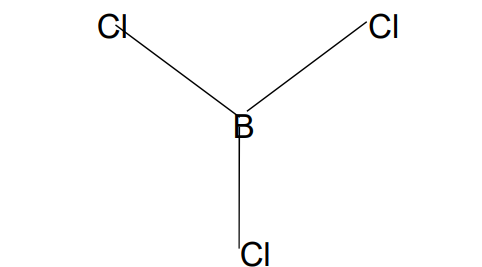
3 Electron Groups in Outer Shell of Central Atom:
shape → trigonal planar
bond angles between 2 adjacent electron groups → 120°
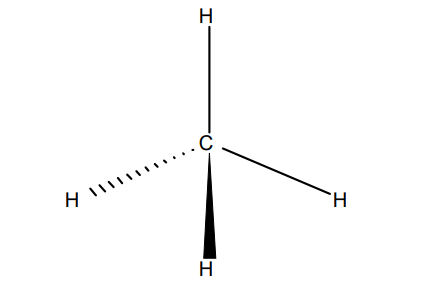
4 Electron Groups in Outer Shell of Central Atom:
shape → tetrahedral
bond angles between 2 adjacent electron groups → 109.5°
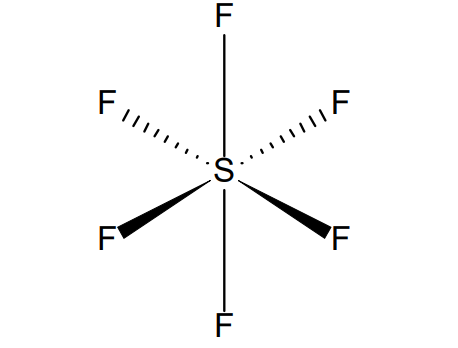
6 Electron Groups in Outer Shell of Central Atom:
shape → octahedral
bond angles between 2 adjacent electron groups → 90°
Lone Pairs’ Affect on Shape:
lone pair is not shared with another atom so it lies closer to the central atom and repels more strongly than bonded groups of electrons
the final shape taken up by the atoms is not affected just the shape taken up by the electron groups
each lone pair reduces the bond angle by around 2.5°
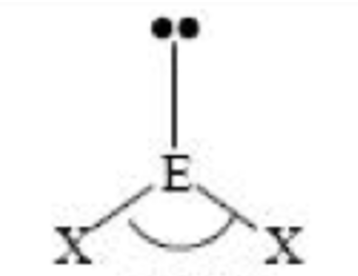
Features of Trigonal Planar (Non-linear):
2 groups of bonding electrons + 1 lone pair
bond angle → 117.5° (120°-2.5°)
eg. SO2 , GeCl2
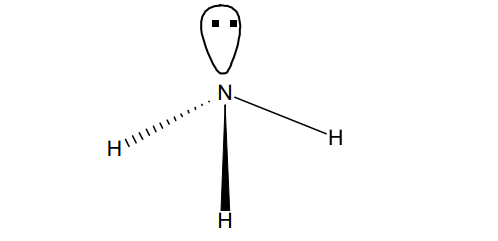
Features of Tetrahedral (Pyramidal):
3 groups of bonding electrons + 1 lone pair
bond angle → 107° (109.5°-2.5°)
eg. NH3 , PCl3
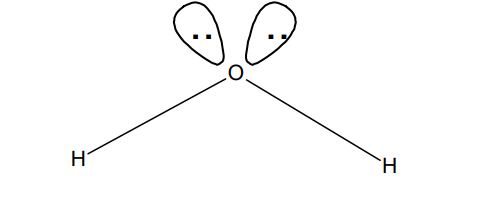
Features of Tetrahedral (Non-linear):
2 groups of bonding electrons + 2 lone pairs
bond angle → 104.5° (109.5°-5°)
eg. H2O , SCl2
How to Predict Shape of Molecules:
Draw a dot-and-cross diagram
Count up all the electron groups and identify any lone pairs