ARTH–331: History of Architecture – 1400-1900, DR. CHRISTOPHER WILSON
 Call Kai
 Learn
 Practice Test
 Spaced Repetition
 Match
 Flashcards
 Knowt Play
1/65

There's no tags or description
Looks like no tags are added yet.
66 Terms
Explain in one sentence why the author’s title matches the architecture discussed:
“The Drama of Shapes and Spaces”
The title fits Baroque and Rococo architecture because it uses dramatic shapes, curving forms, elaborate decoration, and dynamic spaces to create theatrical effects.
Explain in one sentence why the author’s title matches the architecture discussed: “The Prophets of Elegance”
The title fits Romantic Classicism because architects revived classical Greek and Roman forms, emphasizing elegance, symmetry, restraint, and refined proportions.
Explain in one sentence why the author’s title matches the architecture discussed:
“From Pioneers to Establishment”
The title fits architecture in the Americas and beyond because early settlers adapted European building traditions to new environments, and these developing styles eventually became established architectural traditions.

THREE aspects of the “Coronaro Chapel in Santa Maria della Vittoria” that makes Gian Lorenzo Bernini’s sculpture Ecstasy of St. Theresa MORE than just a simple sculpture found in a church.
Theatrical setting: The chapel includes theatre boxes carved into the architecture, making the space resemble a stage rather than a typical church interior.
Audience participation: Members of the Cornaro family are sculpted into the boxes watching the scene, making the chapel’s architecture part of the experience.
Unified design: The chapel combines architecture, sculpture, and theatrical presentation into one coordinated environment, so the artwork becomes an immersive event rather than an isolated sculpture.
Compare or Contrast Baroque and Rococo architecture in terms of: DECORATION, DESIGN GEOMETRIES and FLOOR PLANS.
Decoration: Baroque architecture uses dramatic ornament, rich materials, and powerful visual effects, while Rococo favors delicate, elegant decoration with shells, leaves, ribbons, and intricate arabesques.
Design geometries: Baroque design often uses dynamic curves, S-shapes, undulating façades, and oval forms; Rococo decoration uses lighter, playful curves and organic shapes.
Floor plans: Baroque plans may use complex, flowing spaces and oval layouts, while Rococo interiors often have simpler rectangular rooms, sometimes with rounded corners, allowing the delicate decoration to dominate.
Compare or Contrast Rococo and Neo-Classical architecture in terms of: DECORATION, ILLUSION and USAGE OF CLASSICAL ELEMENTS.
Decoration: Rococo uses elaborate, delicate ornament in pastel colors and gold, while Neo-Classical architecture favors restraint, simpler surfaces, and classical forms.
Illusion: Rococo continues the Baroque interest in theatrical effects, mirrors, and decorative illusion, while Neo-Classicism emphasizes clarity, order, and the appearance of rational classical design.
Usage of Classical Elements: Rococo often minimizes columns and pilasters so the decoration stands out, whereas Neo-Classicism prominently uses ancient Greek and Roman elements such as colonnades, pediments, and classical orders.
THREE reasons for the change in European architectural tastes from the Baroque/Rococo to the Neo-Classical style.
Reaction against excessive ornament: Some people grew dissatisfied with the elaborate decoration and theatricality of Baroque and Rococo, preferring simpler, more restrained designs.
Renewed interest in ancient architecture: Archaeological discoveries and the study of ancient Greek and Roman buildings encouraged architects to imitate classical forms more accurately.
A preference for reason and order: Enlightenment thinking encouraged rationality, clarity, symmetry, and disciplined design instead of elaborate visual effects.
Compare or Contrast the 18th century “English Garden” with the 17th century “French Garden” in terms of: USAGE OF NATURAL ELEMENTS (trees, bushes, water, etc), SYMMETRYY and FORMALITY.
Natural Elements: The English Garden uses trees, water, and planting to create a more idealized view of nature, while the French Garden arranges nature into carefully controlled patterns.
Symmetry: French gardens emphasize strong symmetry and geometric layouts, while English gardens favor irregular, flowing compositions that appear less planned.
Formality: French gardens are highly formal, with orderly paths, trimmed hedges, and controlled views; English gardens are more informal and aim to create the impression of natural scenery.
Identify Heinrich Hübisch’s architectural style decisions for: GOVERNMENT/BANK BUILDINGS, EDUCATIONAL BUILDINGS and CHURCHES/LIBRARIES
Explain the change from “Pioneers” to “Establishment” that architecturally occurred in the colonies of Spain, Portugal, England, etc.
Early colonial buildings were often simplified versions of the architecture of the colonizing country, adapted to local materials, climate, and available construction skills.
Adaptation: Over time, local conditions and Indigenous building traditions influenced the imported styles, creating distinct regional variations, such as adobe construction in parts of Spanish America.
Establishment: As settlements became wealthier and more permanent, they built more sophisticated structures that reflected established architectural styles and the identity of their developing societies.

Compare or Contrast Thomas Jefferson’s “University of Virginia Library” (1822-26) with “The Pantheon” in Rome (120-127) in terms of: FORM, MATERIALS, and USAGE.
Form: The University of Virginia Library was modeled on the Pantheon, adopting its circular, domed form to create a classical focal point for the campus.
Materials: The Pantheon is a Roman concrete structure with brick on the exterior and marble facing on the interior; the book does not give a detailed materials comparison for the University of Virginia Library.
Usage: The Pantheon was an ancient Roman temple, while Jefferson’s library served an educational purpose as part of his planned university campus.
Beginning where Michelangelo left off, a new generation of Roman architects abandoned the ______________ and threw themselves into an art that overspilled all established boundaries and conventions.
antique
Artistically, the Baroque was a very _______________ movement in painting, sculpture, interior decoration and music.
rich
The Baroque has no pendant desire to teach, no moralistic desire to judge if the finished object is up to standard. It seeks only to carry us away with ____________________ .
emotion
[The Baroque] deserted the static form of the square and of the circle for shapes that swirl and move: S-curves, undulating façades, and plans based on ____________________ .
ovals
The third breakaway feature of the Baroque was an extreme form of theatricality, which involved the creating of ____________________ .
illusion
Curving wings and blocks, swirling vaults: the truth is that the Baroque had gone as far as it was possible with ___________________ structure.
masonry
7. ____________________ are also transmuted in these [Baroque] illusions: wood is carved and painted to look like cloth, rays lit by yellow light from a concealed source are fashioned from gilt and . . . stone is carved to resemble spray and spouting water.
Materials
8. Baroque architects delighted in getting effects with flights of ____________________ .
stairs
A first glance at Sir Christopher Wren’s greatest work, St Paul’s Cathedral, London, … suggests that [this building] belongs to the ________________ rather than to the Baroque, but further study does not support this.
Renaissance
The last phase of the Baroque in France was called Rococo, an elegant, light-hearted style of ____________________ , invented to suit Parisian tastes.
decor
[In the age of Rococo], the architecture supporting the ____________________ became simpler.
decoration
[A]nd walls were patterned with mirrors of all shapes, regular and irregular whose frames were made of twigs or leafy shoots in gilt – slim, wispy, often trailing away in a vague open-ended S- or C-shape that knew nothing of ____________________ .
symmetry
1. Baroque and Rococo came to an abrupt _______________ in the middle of the eighteenth century.
end
With more sober and ponderous empires now assuming political power, Europe returned to a more sober and ponderous ____________________ architecture.
classical
It is to William Kent that we owe the start of the English landscape movement of the eighteenth century – the landscape of “controlled ____________________ .”
nature
[Capability Brown’s] particular art of bunching and scattering groups of _____________________ is now taken for granted as a characteristic feature of the English landscape.
trees
The interaction between house and garden went one step further in what came to be known as The Picturesque movement when the garden was embellished with delightful ______________________ features – bridges, temples and grottoes.
architectural
In his search for authority, [Abbé Laugier] reconsidered the basic design of the primitive __________________, when architecture consisted of upright posts, cross-beams and pitched roofs, the genesis of the Greek temple.
hut
The other crucial factor [that hastened the demise of the Baroque] was the new pursuit (at this stage scarcely a science) of ____________________ .
archaeology
In Somerset House in the Strand, London (1776-86), with its restrained though imposing neo-Palladian façades around four sides of the courtyard, [William Chambers] established the neo-classical style for ____________________ buildings in England.
government
The architectural style adopted in the colonies was at first a ____________________ version of that of the parent country at the time of colonization.
primitive
Bit by bit, pragmatic adaptations due to climatic conditions, to the availability of ____________________ materials and to the skills of ____________________ craftsmen, combined to produce a version [of the parent country’s architecture] that bore the hallmark of that particularly country in its own right.
local
It was in the churches of Mexico and Peru, some of the earliest colonial buildings still in existence, that there first appeared a combination of the traditions and talents of settlers with those of the _____________________ .
natives
Settlers who became established and prosperous built in the classical Georgian style that they had left behind in England – but in __________________, for in the New World they found little stone or lime.
wood
The early [New England] houses with weather-boarding, small leaded window panes and a central chimney serving both downstairs rooms from ____________________ in a dividing brick wall, had coped excellently with the winter weather.
fireplaces
In the second capital of Virginia, Williamsburg, are the earliest ____________________ buildings in North America.
Renaissance
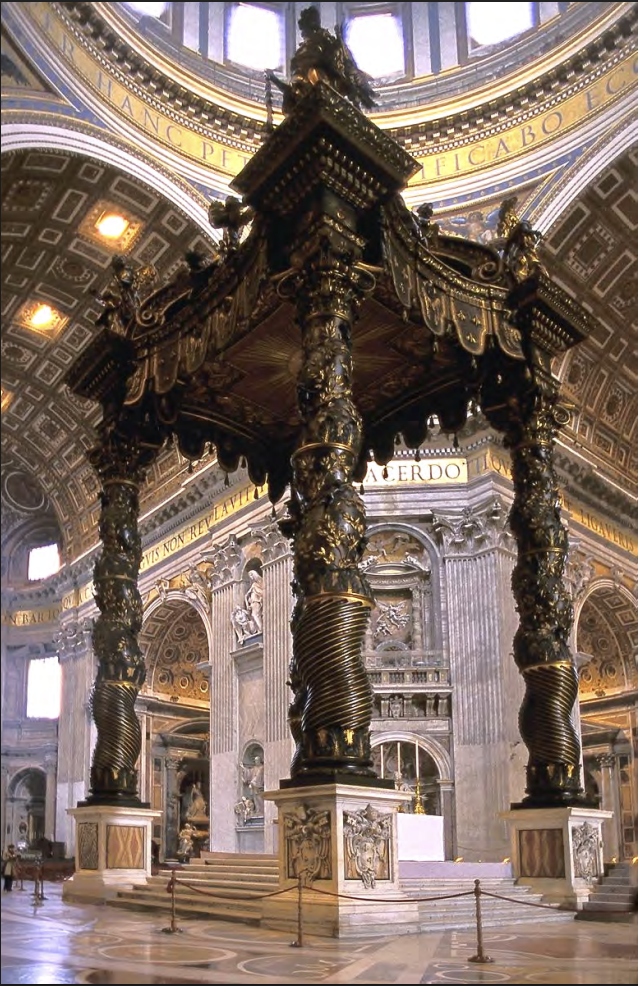
You will have to match given pictures with the following building types:
Baldachin

You will have to match given pictures with the following building types:
Chinoiserie

You will have to match given pictures with the following building types:
Palladian Window

You will have to match given pictures with the following building types:
Churrigueresque

You will have to match given pictures with the following building types:
Ha-Ha

You will have to match given pictures with the following building types:
Primitive Hut

You will have to match given pictures with the following building types:
The English Garden

You will have to match given pictures with the following building types:
The French Garden
You will have to match given pictures with the following building types:
“Broken” Pilaster


You will have to match given pictures with the following building types:
Folly (A folly is a decorative building in a garden designed to look like a ruin or temple)

BUILDING TYPES (matching): Match the following building types to their pictures:
BAROQUE church - façade
BAROQUE church - plan
BAROQUE urban planning
BAROQUE church - façade

BUILDING TYPES (matching): Match the following building types to their pictures:
BAROQUE church - façade
BAROQUE church - plan
BAROQUE urban planning
BAROQUE church - plan

BUILDING TYPES (matching): Match the following building types to their pictures:
BAROQUE church - façade
BAROQUE church - plan
BAROQUE urban planning
BAROQUE urban planning

BUILDING TYPES (matching): Match the following building types to their pictures:
ROCOCO church - façade
ROCOCO church - plan
ROCOCO urban planning
ROCOCO church - façade

BUILDING TYPES (matching): Match the following building types to their pictures:
ROCOCO church - façade
ROCOCO church - plan
ROCOCO urban planning
ROCOCO church - plan

BUILDING TYPES (matching): Match the following building types to their pictures:
ROCOCO church - façade
ROCOCO church - plan
ROCOCO urban planning
ROCOCO urban planning

BUILDING TYPES (matching): Match the following building types to their pictures:
NEO-CLASSICAL church
NEO-CLASSICAL house
NEO-CLASSICAL urban planning
NEO-CLASSICAL church

BUILDING TYPES (matching): Match the following building types to their pictures:
NEO-CLASSICAL church
NEO-CLASSICAL house
NEO-CLASSICAL urban planning
NEO-CLASSICAL house

BUILDING TYPES (matching): Match the following building types to their pictures:
NEO-CLASSICAL church
NEO-CLASSICAL house
NEO-CLASSICAL urban planning
NEO-CLASSICAL urban planning

BUILDING TYPES (matching): Match the following building types to their pictures:
PICTURESQUE folly
PICTURESQUE ruin
PICTUREQSUE chinoiserie
PICTURESQUE ruin

BUILDING TYPES (matching): Match the following building types to their pictures:
PICTURESQUE folly
PICTURESQUE ruin
PICTUREQSUE chinoiserie
PICTURESQUE folly

BUILDING TYPES (matching): Match the following building types to their pictures:
PICTURESQUE folly
PICTURESQUE ruin
PICTUREQSUE chinoiserie
PICTUREQSUE chinoiserie
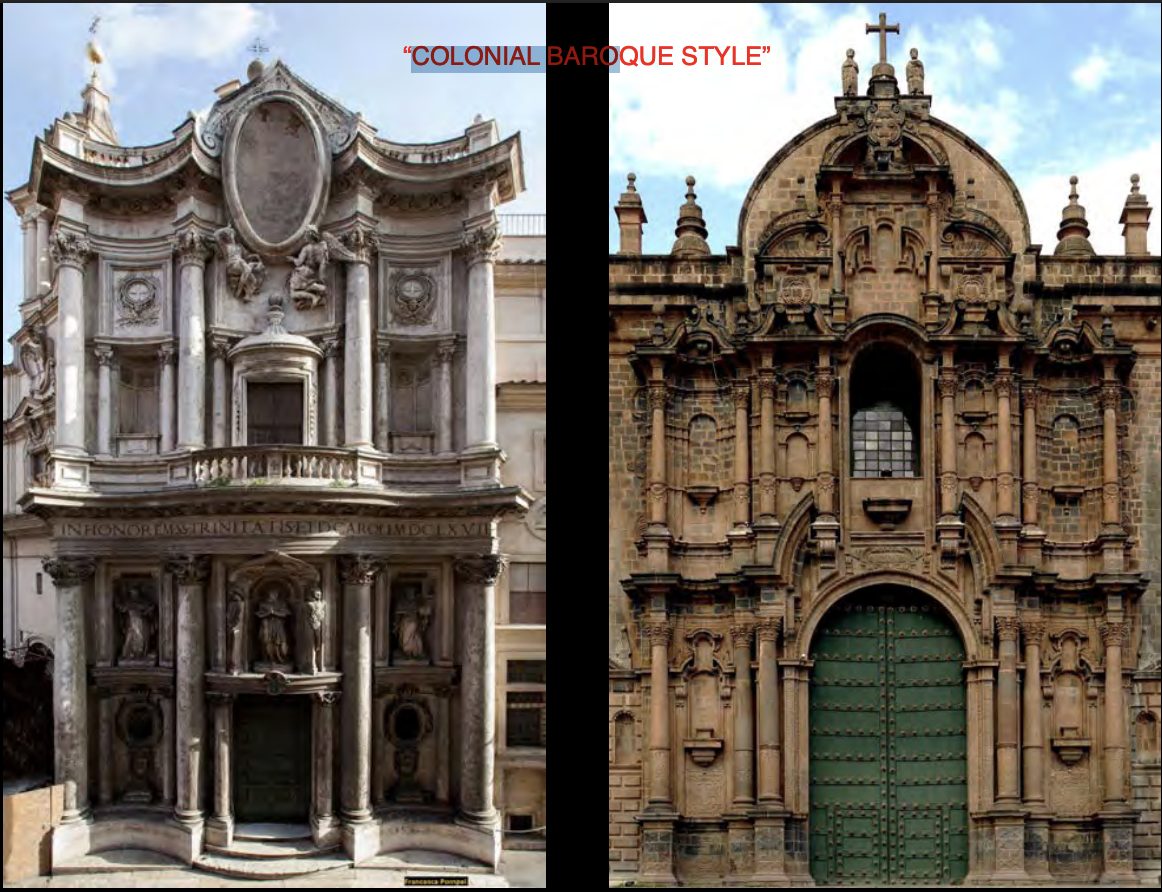
BUILDING TYPES (matching): Match the following building types to their pictures:
COLONIAL BAROQUE façade
COLONIAL ROCOCO façade
COLONIAL RENAISSANCE façade
COLONIAL NEO-CLASSICAL façade
COLONIAL BAROQUE façade

BUILDING TYPES (matching): Match the following building types to their pictures:
COLONIAL BAROQUE façade
COLONIAL ROCOCO façade
COLONIAL RENAISSANCE façade
COLONIAL NEO-CLASSICAL façade
COLONIAL ROCOCO façade

BUILDING TYPES (matching): Match the following building types to their pictures:
COLONIAL BAROQUE façade
COLONIAL ROCOCO façade
COLONIAL RENAISSANCE façade
COLONIAL NEO-CLASSICAL façade
COLONIAL RENAISSANCE façade

BUILDING TYPES (matching): Match the following building types to their pictures:
COLONIAL BAROQUE façade
COLONIAL ROCOCO façade
COLONIAL RENAISSANCE façade
COLONIAL NEO-CLASSICAL façade
COLONIAL NEO-CLASSICAL façade