9-2 Neuron Pt 2
 Call Kai
 Learn
Learn Practice Test
 Spaced Repetition
 Match
Match Flashcards
 Knowt Play
1/43

There's no tags or description
Looks like no tags are added yet.
Name | Mastery | Learn | Test | Matching | Spaced | Call with Kai | Chat |
|---|
No analytics yet
Send a link to your students to track their progress
44 Terms
axon hillock
connects the cell body to the axon
synapse
neurons talk to each other through electrical and chemical signals called _____.
difference in electrical charge inside and outside cell
synapse signals are made possible by what?
movement of charged particles (ions)
sending information from one neuron to another involves the ____________ in and out of the cell
electrochemical potential
the difference in charge inside and outside the cell is called what?
resting membrane potential
charge at rest
-70mV
resting membrane potential number (inside of membrane is ___ compared to outside)
action potentials
when ion channels open and close, neurons talk to each other through ____ which are quick changes in the membrane potential
more sodium (Na+) outside and more potassium (K+) and negatively charged proteins inside
at resting membrane potential, where Na+ and K+ ions?
presynaptic cell
sending neuron
postsynaptic cell
receiving neuron
synapse
connection between neurons (microscopic space where two neurons meet) (1 neuron can receive input from thousands of neurons and send output to thousands more)
axodendritic, axosomatic, axoaxonic
types of synapses

axodendritic
neurons connect by axon to dendrites

axosomatic
neurons connect by axon to soma
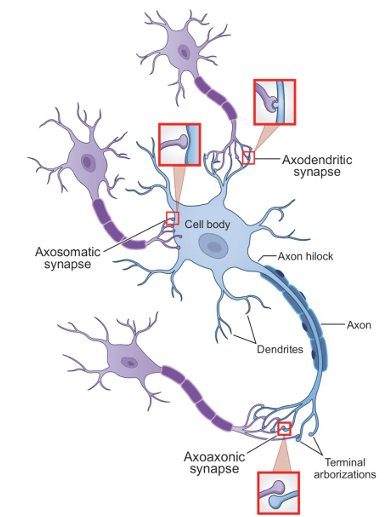
axoaxonic
neurons connect by axon to axon
cell membrane
what seperates the inside and outside of a cell? (phospholipid bilayer)
selectively permeable
the cell membrane is what? (only small things can get in, big things cannot)
passive, active
2 ways molecules can get through plasma membrane?
diffusion, ion channels
types of passive ways molecules can get through plasma membrane (does not require additional energy, moves from area of high concentration to low concentration)
create pores or holes in the membrane that can open and close
what do ion channels do?
pumps
type of active way molecules can get through plasma membrane
use energy to carry ions through the membrane
what do pumps do?
charged particles
what are ions? (Na2+, Ca2+, K+)
voltage gated, mechanically gated, ligand gated, leak channels
4 types of ion channels
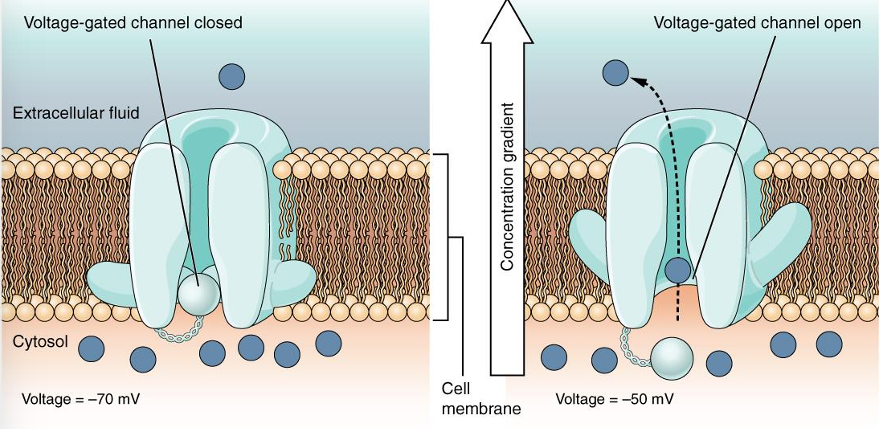
voltage gated Na+ channel
which ion channel opens in response to changes in distribution of ions/charge across the membrane (ex: voltage changes from -70 to -50)
-passive
-gated
-generates and propogates the action potential
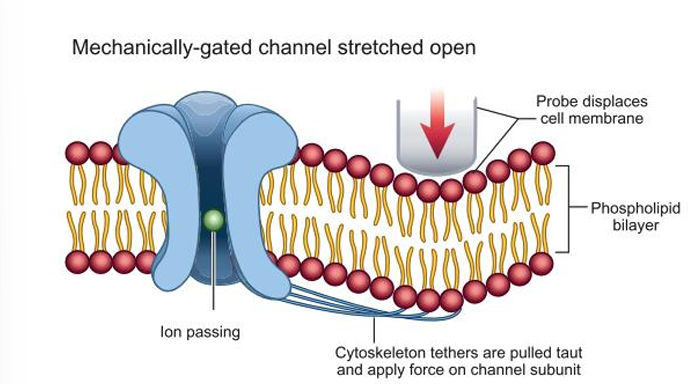
mechanically gated
which ion channel gets physically pulled open? (some form of external physical stimulus opens the gate) (this is what happens in inner hair cells)
ligand gated
which ion channel acts like a lock and key, a certain neurotransmitter must attach itself to the ion channel to open it?
-passive
-gated
-many different types of ions
-produces graded potentials at the postsynaptic membrane

Na+ leak channel
which ion channel randomly opens and closes?
-passive
-explains why resting potential sits slightly above the K+ equilibrium potential rather than exactly at it
voltage gated & ligand gated
which ion channels wait for binding to be able to open?
neurotransmitter ligands
chemical messengers that bind to specific receptor sites on neurons to alter brain activity
excitatory neurotransmitters
Signals the receiving neuron to fire an action potential (turns activity on).
inhibitory neurotransmitters
Prevents or reduces the likelihood that the receiving neuron will fire (turns activity down).
glutamate, gamma amino butyric acid, dopamine, serotonin, acetylcholine
key neurotransmitters
glutamate
main excitatory neurotransmitter (involved in synaptic plasticity, learning, memory -- pretty much everything!)
gamma amino butyric acid
the main inhibitory neurotransmitter (alcohol activates GABA receptors)
dopamine
neurotransmitter involved in pleasure/reward, motivation, reward-driven learning
serotonin
neurotransmitter involved in mood, appetite, sleep, memory, learning -- target for anti-depressants
acetylcholine
neurotransmitter involved in motor movement, attention, learning, memory
active transport pumps
how do you get ions back once equalized?
against concentration gradient (from low to high)
in active transport pumps how do ions transport?
sodium potassium pump (Na+/K+ ATPase)
one important pump where it pumps 2 K+ ions into the cell and 3 Na+ out of the cell for every molecule of ATP
-active (uses ATP)
-always working
-maintains the concentration gradients long term
K+ leak channel
-passive
-always open
-main river of resting membrane potential
sodium potassium pump because The pump moves 3$ positive charges out for every 2 it pulls in, which directly helps keep the inside negative. Stopping it causes an instant drop in voltage.
which single channel or pump would cause the most damage to the neuron’s resting potential if it stopped working? Why?