Skull/facial muscles
 Call Kai
 Learn
 Practice Test
 Spaced Repetition
 Match
 Flashcards
 Knowt Play
1/77

There's no tags or description
Looks like no tags are added yet.
78 Terms

Coronal suture
between frontal/parietal bones
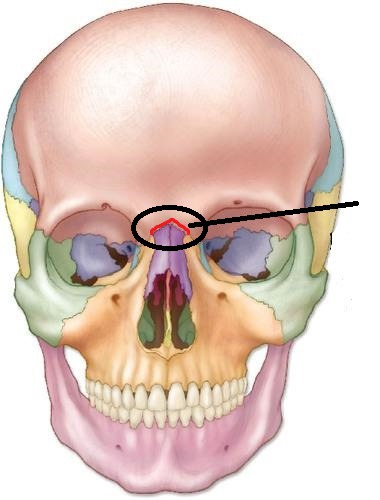
Frontonasal suture
between frontal/nasal bones

Frontal sinuses
part of paranasal sinuses

Orbital part
Forms roof of orbit; frontal bone

Sagittal suture
between L/R parietal bones

Inferior/superior temporal line
attachment site for temporalis muscle; parietal bone
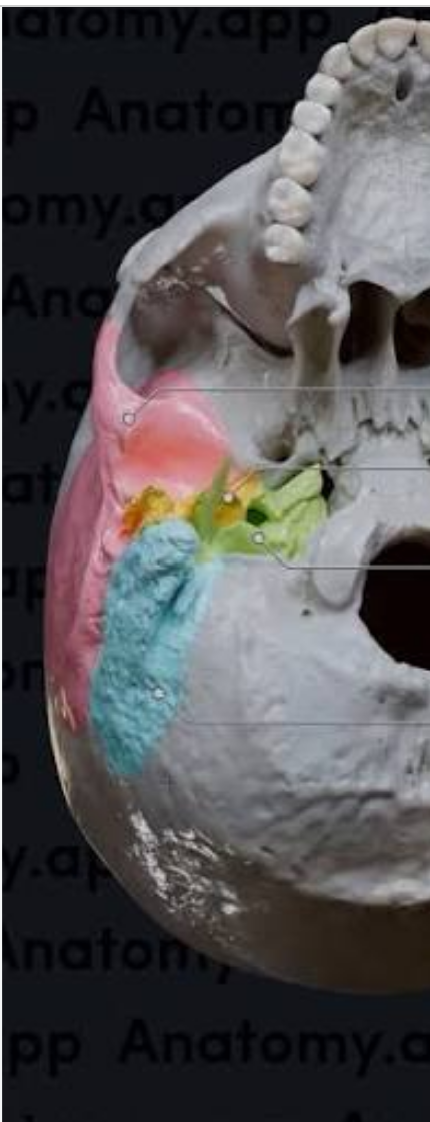
Petrous part
houses tympanic cavity > location of auditory ossicles; temporal bone (green area)
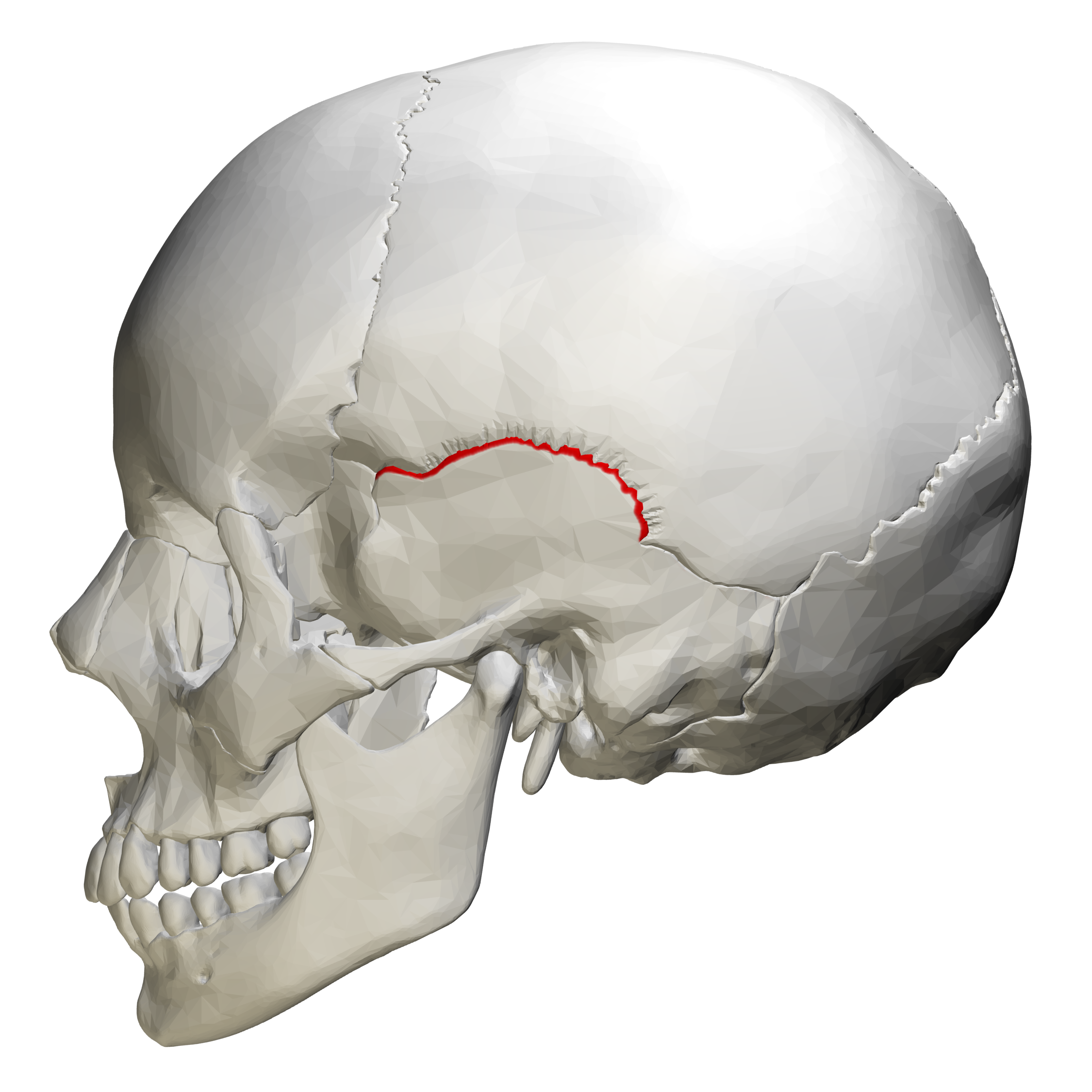
Squamous suture
between temporal/parietal bones

Mandibular fossa
articulates with mandible (TMJ)

Zygomatic process
articulates with zygomatic bone forming zygomatic arch

Mastoid process
attachment site of sternocleidomastoid and other neck muscles
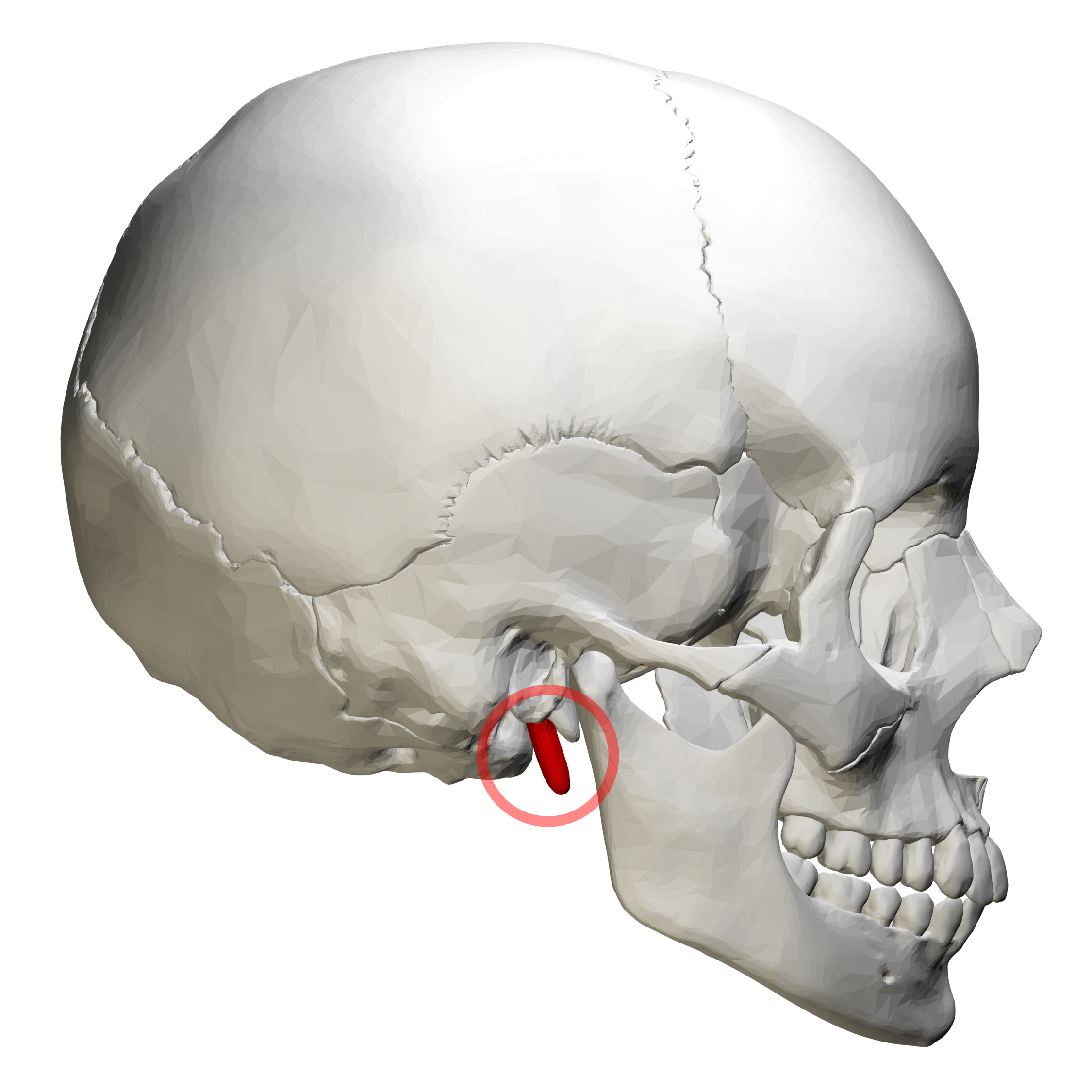
Temporal styloid process
attachment site for stylohyoid ligament (connects styloid process to
hyoid bone) and muscles of tongue and pharynx

Carotid canal
passageway for internal carotid artery

External acoustic meatus
ear canal
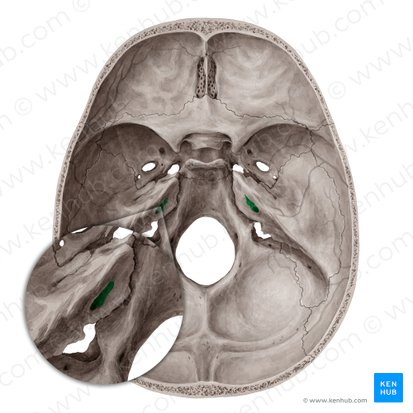
Internal acoustic meatus
passageway for facial nerve (CN VII) and
vestibulocochlear nerve (CN VIII)

Jugular foramen
passageway for internal jugular vein, glossopharyngeal nerve
(CN IX), vagus nerve CN X), and accessory nerve (CN XI)

Foramen magnum
passageway for medulla oblongata and spinal cord, and L/R
vertebral arteries
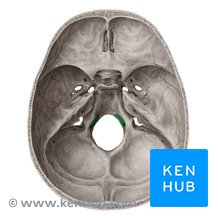
Hypoglossal canal
passageway for hypoglossal nerve (CN XII)

Occipital condyle
articulate with atlas to form the atlanto-occipital joint –
diarthrotic synovial condylar joint

External occipital protuberance
attachment of trapezius muscle

Superior nuchal line
attachment of trapezius and sternocleidomastoid

Lambdoid suture
between occipital/parietal bones

Sella turcica
houses pituitary gland

Medial and lateral pterygoid processes
attachment site for medial/lateral
pterygoid muscles (mastication)

Lesser wings
form part of anterior cranial fossa; contain optic canal

Greater wings
form part of middle cranial fossa and orbit
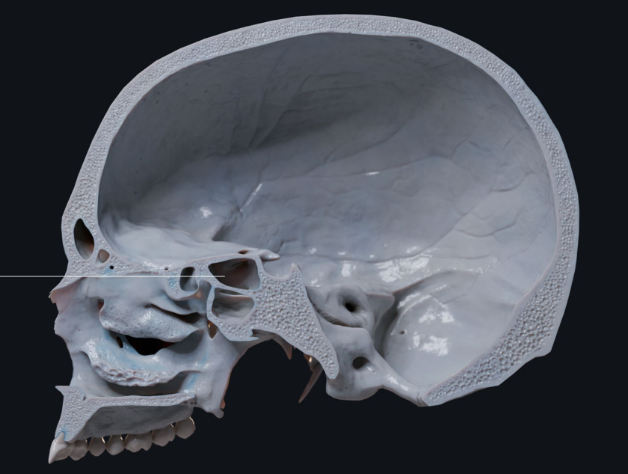
Sphenoidal sinuses
moisten inhaled air and give resonance to voice

Foramen rotundum
passageway for maxillary branch of trigeminal nerve (CN
V2)

Foramen ovale
passageway for mandibular branch of trigeminal nerve (CN V3)

Foramen lacerum
foramen shared with temporal and occipital bones

Foramen spinosum
passageway for middle meningeal artery and vein
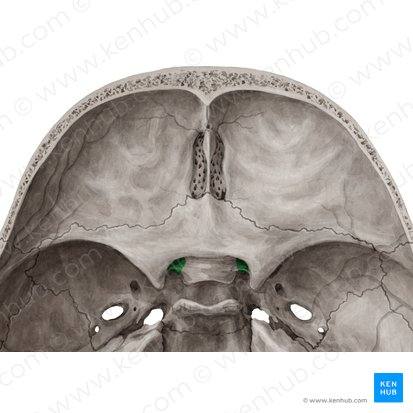
Optic canal
passageway for optic nerves (CN II)

Superior orbital fissure
passageways for oculomotor nerve (CN III), trochlear
nerve (CN IV), ophthalmic branch of trigeminal nerve (CN V1), and abducens
nerve (CN VI)

Crista galli
attachment site for cranial dural septa to help stabilize brain within
skull

Ethmoidal sinuses
lighten bone, moisten inhaled air, and give resonance to
voice (green area)

Superior and middle nasal conchae
increase airflow turbulence in nasal cavity
so air can be adequately moistened and cleaned by nasal mucosa

Orbital plate
forms part of medial wall of the orbit; ethmoid bone
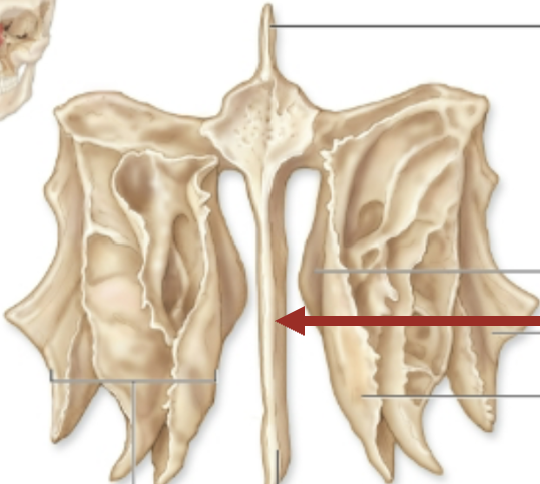
Perpendicular plate
forms superior part of nasal septum

Cribriform (olfactory) foramina
passageway for olfactory nerve (CN I)

Nasal bones
form bridge of nose

Lacrimal bones
contain lacrimal fossa

Inferior nasal conchae
increase airflow turbulence in nasal cavity

Palatine bones
horizontal plate which forms part of the hard palate

Frontal process
articulates with frontal bone

Maxillary process
articulates with maxilla

Temporal process
articulates with temporal bone to form zygomatic arch

Ala of vomer
articulates with the sphenoid bone

Vertical plate
articulates with perpendicular plate of ethmoid bone

Alveolar process of Maxillae
houses the teeth

Maxillary sinus
lightens bone

Palatine process
forms part of hard palate

Zygomatic process
More lateral side of zygomatic bone; part of temporal bone; lateral side of zygomaticotemporal suture

Alveolar process of mandible
houses the teeth
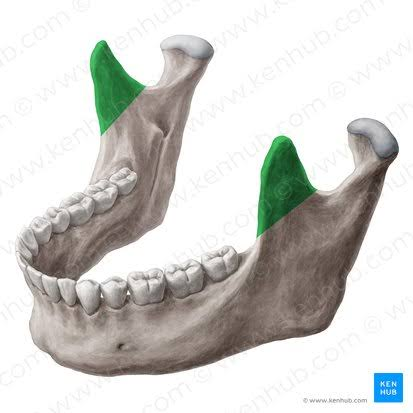
Coronoid process of mandible
attachment of temporalis muscle; protuberance opposite mandibular condyle

Condylar process with head of mandible
articulates with temporal bone toform the temporomandibular joint

Mental protuberance
forms the chin

Temporomandibular Joint (TMJ)
the articulation between the head of the mandible and the articular tubercle of the temporal bone anteriorly and mandibular fossa posteriorly; Diarthrotic, synovial hinge and plane joint

Auditory ossicles
3 tiny bones in petrous part of each temporal bone are for hearing

Hyoid bone
located between the mandible and larynx

Epicranius - Frontal belly
moves scalp, eyebrows, and wrinkles skin of forehead

Epicranius - Occipital belly
lower back of the skull

Procerus
between the eyebrows; above the glabella
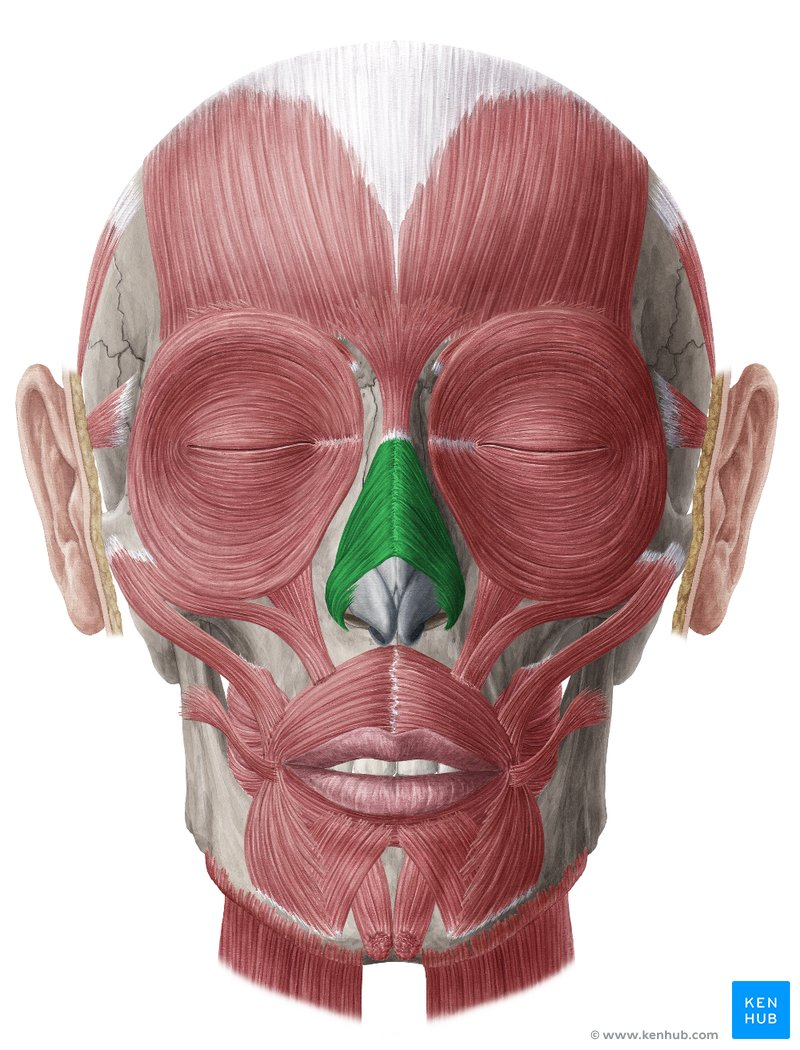
Nasalis
Nasal bones

Depressor anguli oris
Chin area; depresses the mouth at an angle

Depressor labii inferioris
Chin area; frowner

Levator labii superioris
Controls lip movements; extends vertically; most medial

Buccinator
compresses cheek; holds food between teeth during chewing

Mentalis
protrudes lower lip; most medial chin muscle
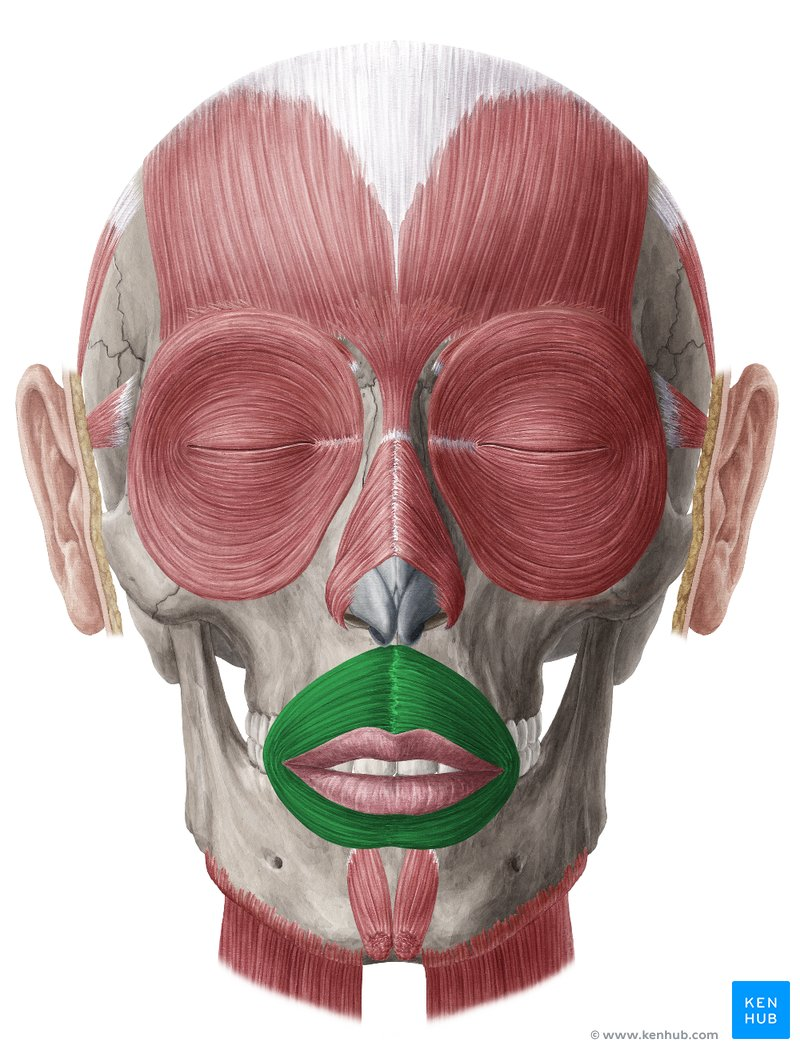
Orbicularis oris
compresses and purses lips

Risorius
retracts corners of mouth, as in a closed mouth smile; below buccinator

Zygomaticus major
elevates corner of the mouth – smile; next to zygomaticus minor

Zygomaticus minor
elevates corner of the mouth – smile; next to levator labii superioris

Corrugator supercilii
pulls eyebrows inferiorly and medially pulls eyebrows inferiorly and medially

Orbicularis oculi
closes eye; produces winking, blinking, squinting

Temporalis
elevates and retracts mandible; mastication
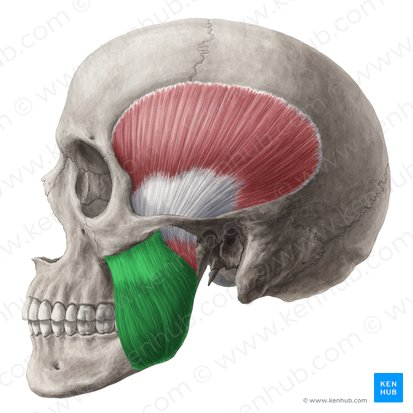
Masseter
elevates and protracts mandible; mastication

Sternocleidomastoid
Unilateral action: lateral flexion, rotation of head to opposite side; bilateral action: flexes neck

Sternohyoid
depresses hyoid bone