muscular skeletal all
 Call Kai
 Learn
Learn Practice Test
 Spaced Repetition
 Match
Match Flashcards
 Knowt Play
1/67

There's no tags or description
Looks like no tags are added yet.
Name | Mastery | Learn | Test | Matching | Spaced | Call with Kai | Chat |
|---|
No analytics yet
Send a link to your students to track their progress
68 Terms
Mitochondrial density
Moderate:
Respires both aerobically and anaerobically
Used for both strength and endurance
Neuron size
Large:
Medium force production
Recruited for more powerful movements
Large size allows for control of more muscle fibres creating a larger motor unit
Fibres per neuron
Many:
Fast contraction time
Increase force production for short, powerful bursts of movement
Capillary density
Moderate:
Provides oxygen for aerobic respiration
Also respires anaerobically so does not require as much oxygen as T1
Phosphocreatine store = a high-energy compound stored in the muscles that rapidly regenerates ATP for explosive, high-intensity activities lasting up to 10 seconds
High:
Used in anaerobic respiration
Fuels explosive movement as energy is provided immediately
Crucial for first seconds of intense activity
Myoglobin content =
an oxygen-storing protein in muscle cells
Moderate:
Respires aerobically sometimes
So requires oxygen but not as much as T1
Medium resistance to fatigue
Mitochondrial density
Low:
Respires anaerobically
Low resistance to fatigue
Neuron size
Large:
High force production
Fastest speed of reaction
Large size allows for control of more muscle fibres creating a larger motor unit
Fibres per neuron
Many:
Fastest contraction time
Large motor unit allows for powerful, explosive movements
Capillary density
Low:
Oxygen is not needed for respiration
Waste products build up quickly
Easily fatigued
Phosphocreatine store = a high-energy compound stored in the muscles that rapidly regenerates ATP for explosive, high-intensity activities lasting up to 10 seconds
High:
Used in anaerobic respiration
Fuels explosive movement as energy is provided immediately
Crucial for first seconds of intense activity
Myoglobin content =
an oxygen-storing protein in muscle cells
Low:
Respires anaerobically so does not require oxygen
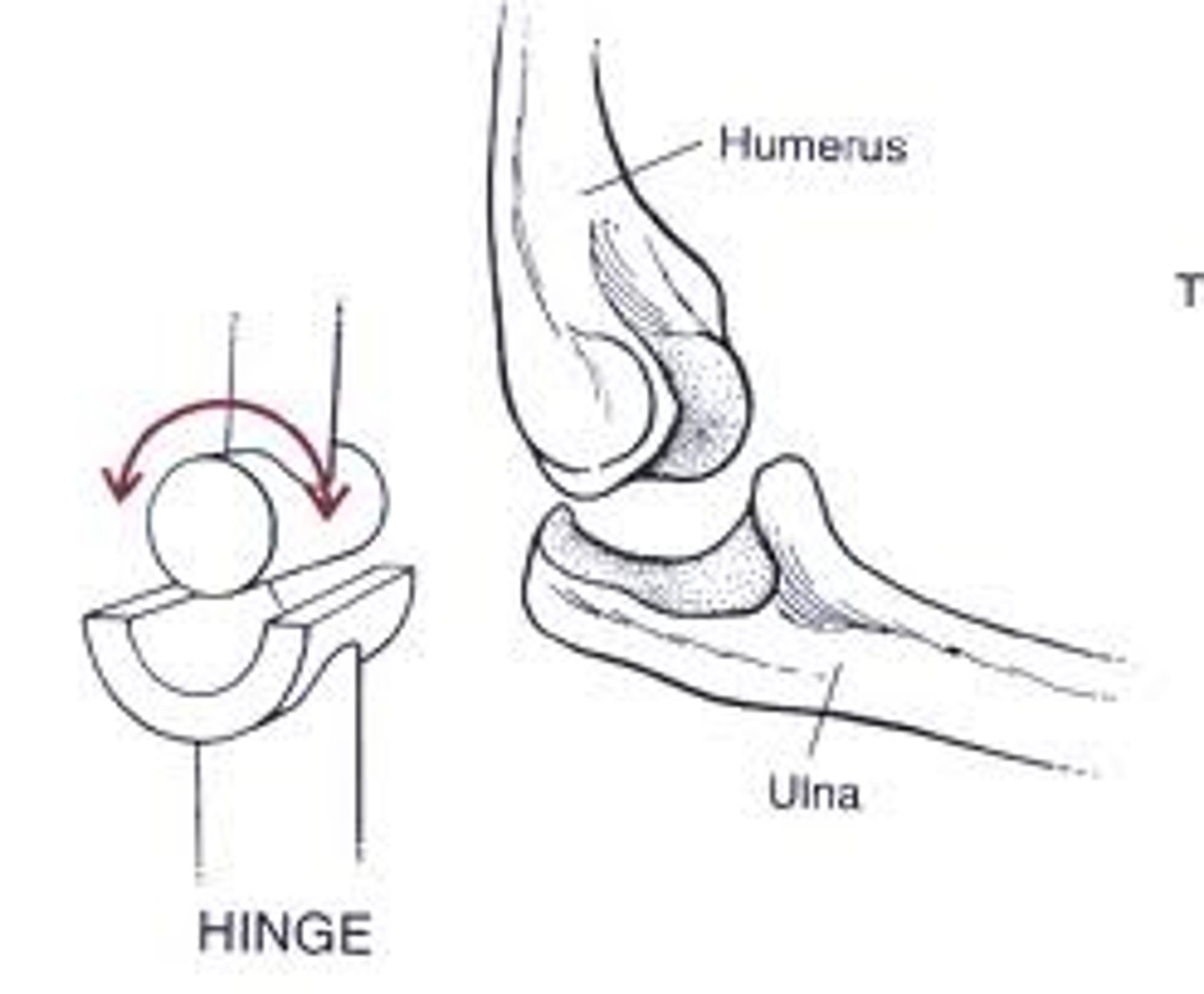
Hinge joint
A cylindrical bone articulates with a trough shaped bone held tightly by ligaments which limit sideways movement
Motion restricted to one plane
E.g. Elbow, knee and ankle joints
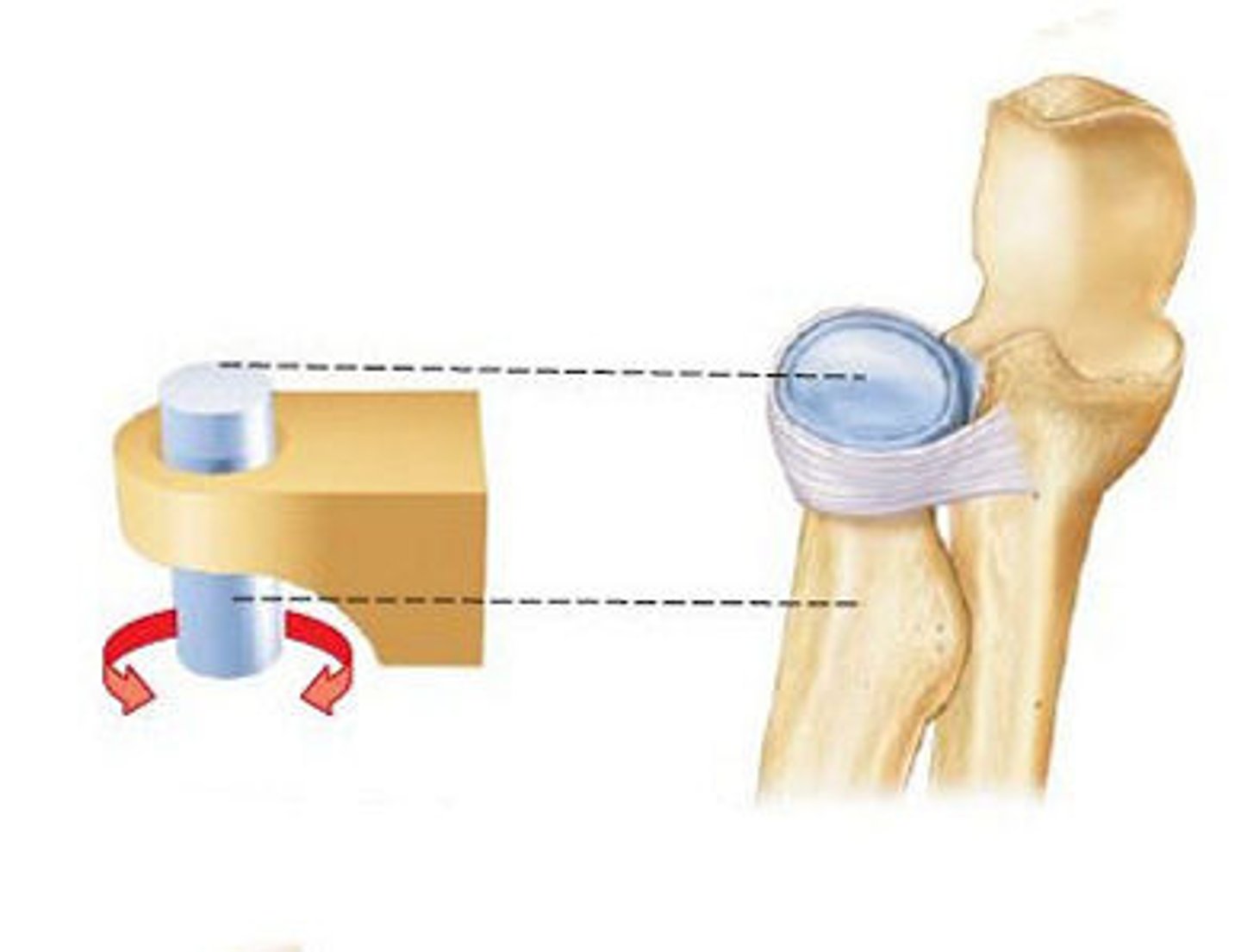
Pivot joint
A rounded bone articulates with a ring-shaped bone which restricts motion to one plane
E.g. the atlantoaxial joint in the neck that allow you to rotate your head
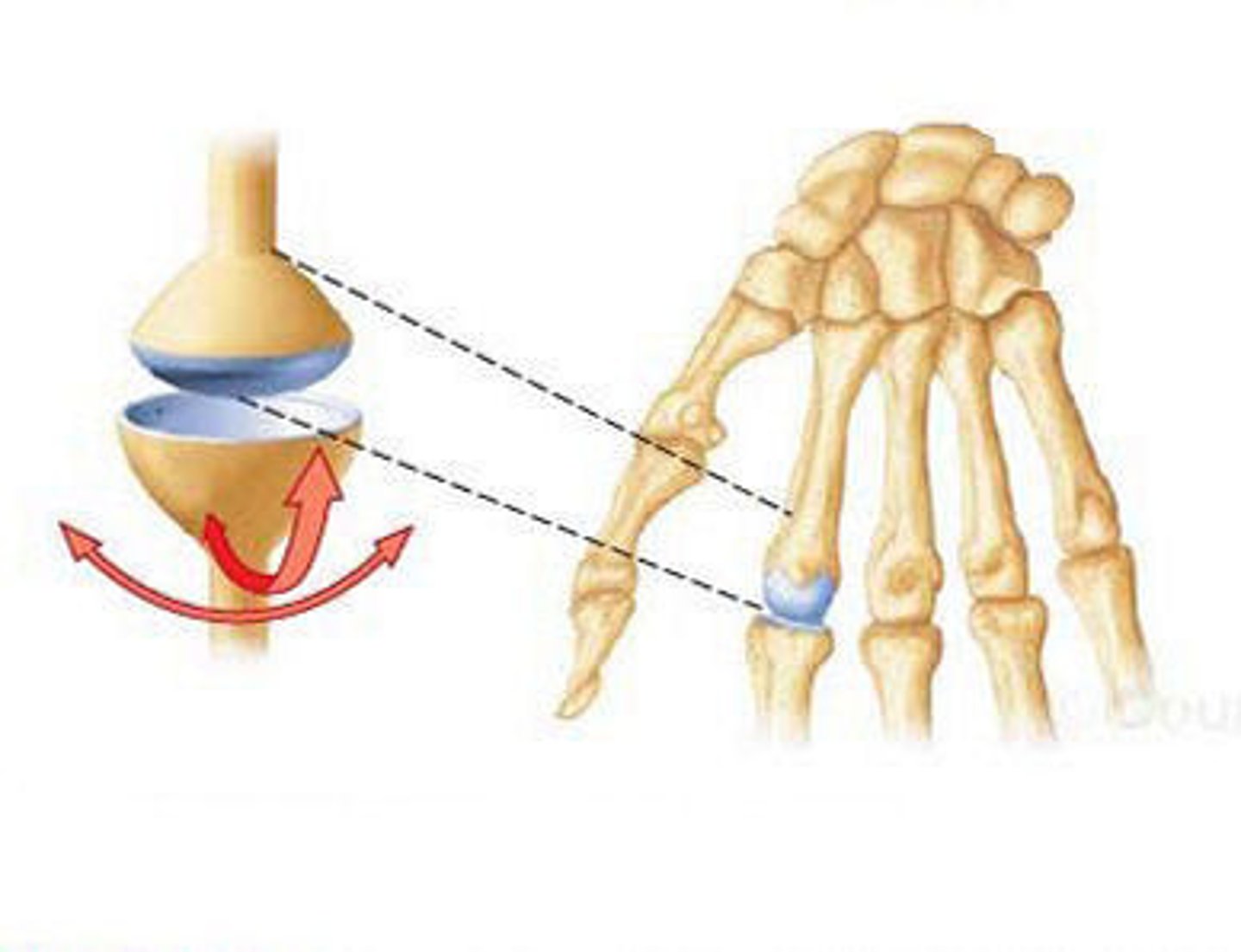
Condyloid joint
Similar to ball and socket joint
With flatter bone surfaces to allow motion in two planes
E.g. the wrist joint
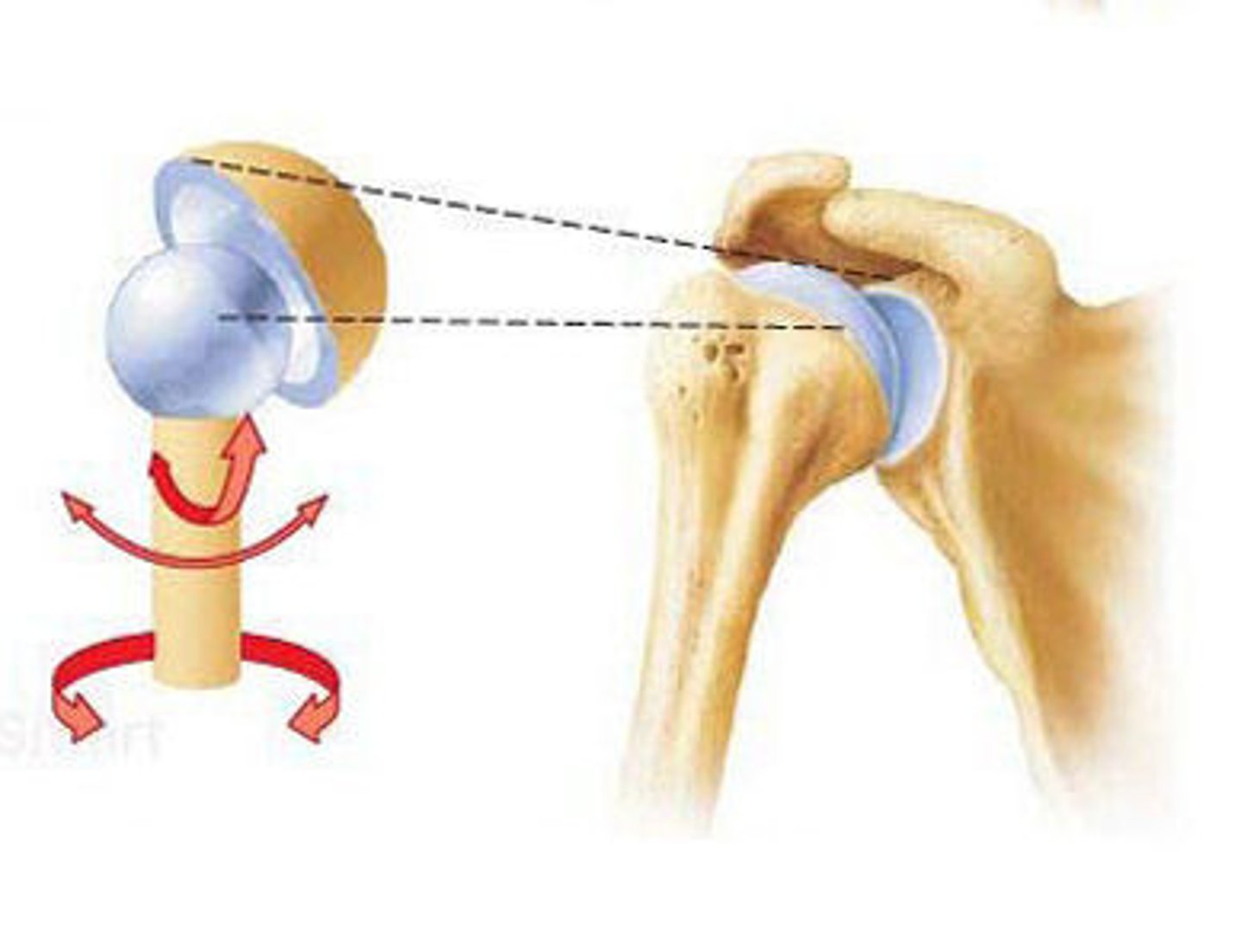
Ball and socket joint
A ball shaped head articulates with a cup shaped socket
A large range of motion in all three planes
E.g. hip and shoulder joints
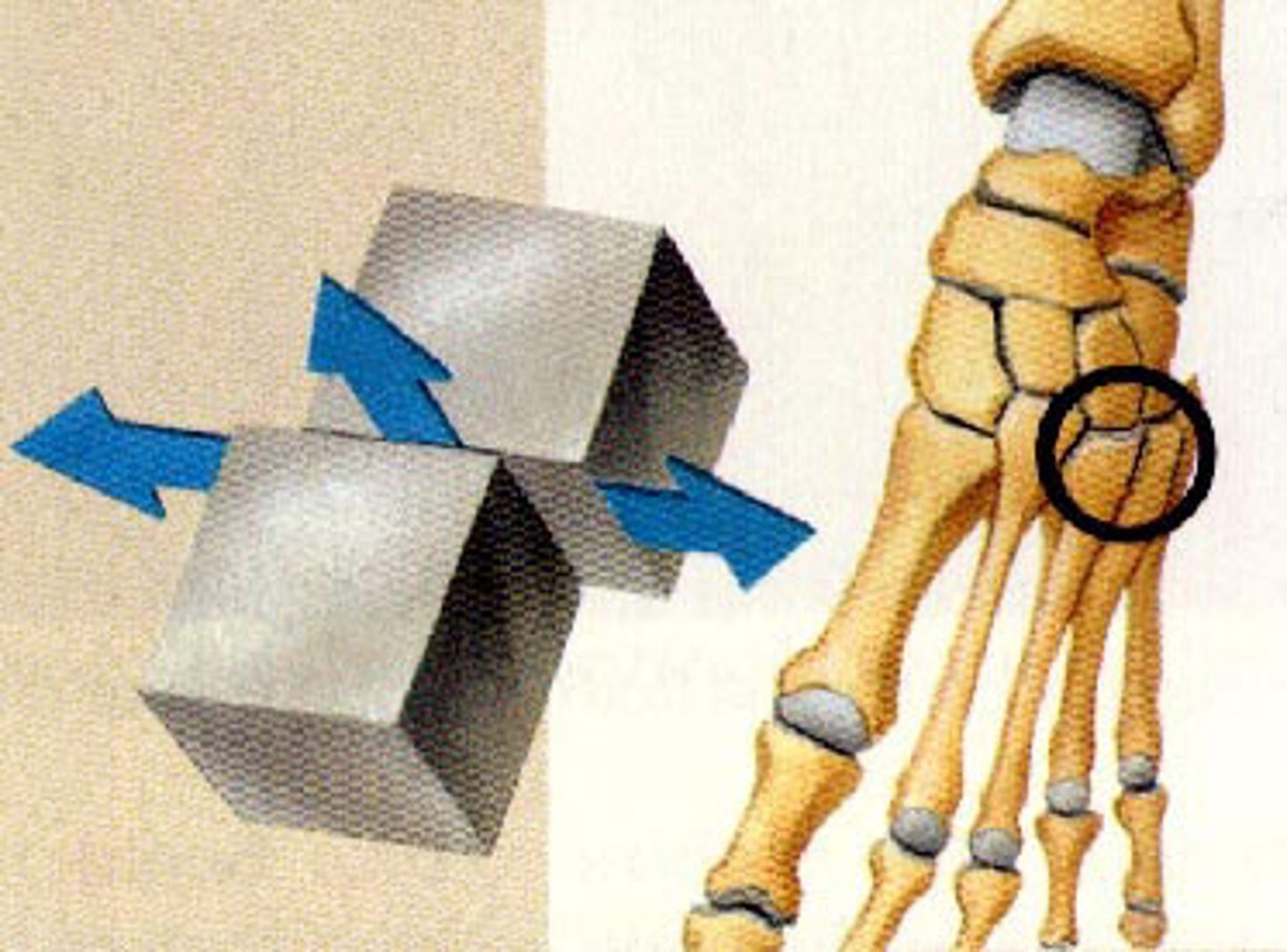
Gliding joint
Between two flat or nearly flat bones
Allows for sliding or gliding
E.g. between the small carpal bones of the wrist
Slow-twitch - type 1
Small and red; Produces small amount of force; High amount of mitochondria in cells; Use oxygen as source of energy; Highly fatigue resistant; Used during low intensity activities with steady oxygen consumption.
Moderate fast-twitch - type 2a
Moderate size and red; Use a combination of glucose and oxygen as source of energy; Quicker contracting speed and higher force output; Lower fatigue resistant; Used during anaerobic activities that are moderate in duration.
Fast-twitch - type 2x
Large and white; Large stores of glycogen meaning extremely high levels of glucose; Fastest contraction speed and most force; Fatigues quickly (15-30 secs); High impact, heaving resistance activities use them.
Recruitment order
Type 1, type 2a, type 2x; This order is known as the Henneman's size principal; Helps minimize muscle fatigue; Allows precise motor control by using no more than the force necessary to complete the movement.
Axial
Central skeleton
Appendicular
Extremities
Long
Create leverage
Help generate speed, force and power
E.g. the femur helps generate speed when running
Short
Used for fine movements
E.g. the carpals when putting spin on a ball in cricket
Flat
Protect vital organs
E.g. the cranium protects the brain when a footballer carries out a header
Irregular
Protects the body
E.g. the patella stops hyperextension at the knee and provides movement based stability
Sesamoid
A small bone commonly found embedded within a muscle or tendon near joint surfaces
Protect the tendon from excessive stress and wear
Reduce friction
Alter the tendon's angle to improve muscle force and leverage
E.g. the patella
What are the key structures of the Central Nervous System (CNS)?
The key structures include the cell body, axons, and motor end plate.
Where is the cell body of a motor neuron located?
In the spinal cord.
What is the function of axons in motor neurons?
Axons branch off the cell body and send impulses to the motor end plate.
What is the motor end plate?
The motor end plate is where the action potential travels to stimulate a muscle.
What is a motor neuron?
A specialized cell that transmits nerve impulses from the CNS to muscle fibers.
What is the difference between a motor unit and a motor neuron?
A motor unit includes the muscle, while a motor neuron does not.
How does the number of muscle fibers in a motor unit relate to movement control?
The number of muscle fibers within a motor unit depends on the control a movement requires.
What determines the number of motor units recruited?
The size of the contraction required determines the number of motor units recruited.
What is an action potential?
An electrical impulse that acts as a signal.
How is a nerve impulse conducted in a motor neuron?
It is initiated in the motor neuron cell body and conducted down the axon to the synaptic cleft.
What neurotransmitter is secreted into the synaptic cleft during a nerve impulse?
Acetylcholine (Ach) is secreted to conduct the nerve impulse across the gap.
What happens if the electrical charge in a muscle fiber exceeds a threshold?
The muscle fiber will contract in an 'all or none' fashion.
What is the All or None Law in muscle contraction?
An individual muscle fibre will either contract completely and to its maximum extent, or not at all, once a stimulus exceeds its threshold potential.
How can we increase the strength of muscle contraction?
By recruiting more motor units, which involves the stimulation of additional motor units.
What is the advantage of having fewer muscle cells per motor unit?
It allows for the generation of precise movements.
What characterizes large motor units in muscles that generate gross movements?
A single neuron is connected to a large number of muscle cells.
How is muscle tone maintained?
By asynchronous stimulation of random motor units.
Type 1 at sub-maximal intensity
Around 90 seconds
Type 2A at sub-maximal intensity
Seconds / minutes
Type 2B at sub-maximal intensity
Minutes / hours
Type 1 at maximal
Days
Type 2A at maximal
Hours / days
Type 2B at maximal
4-10 days
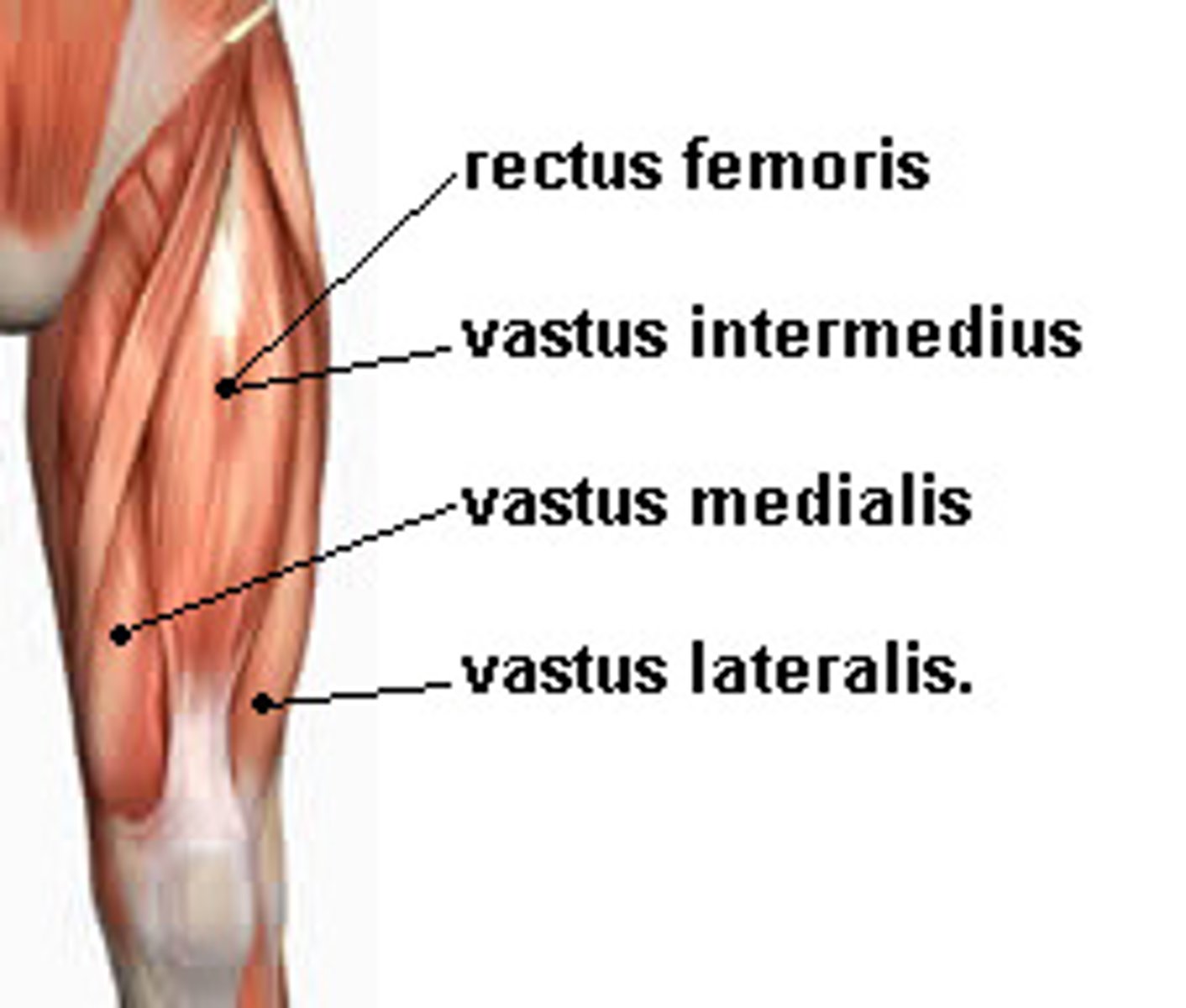
Quadriceps
Rectus femoris
Sartorius
Vastus intermedius
Vastus medialis
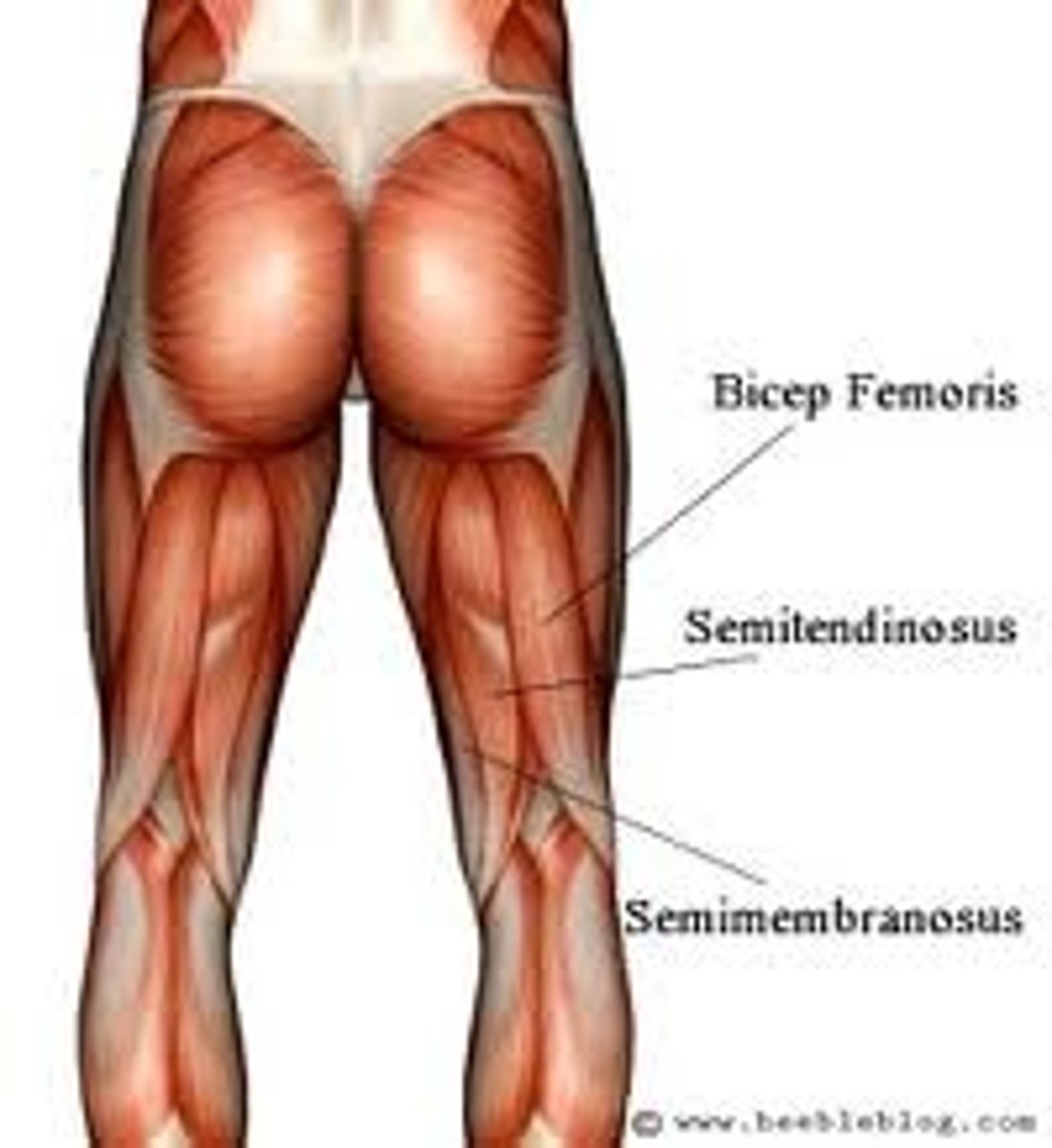
Hamstrings
Bicep femoris
Semitendinosus
Semimembranosus
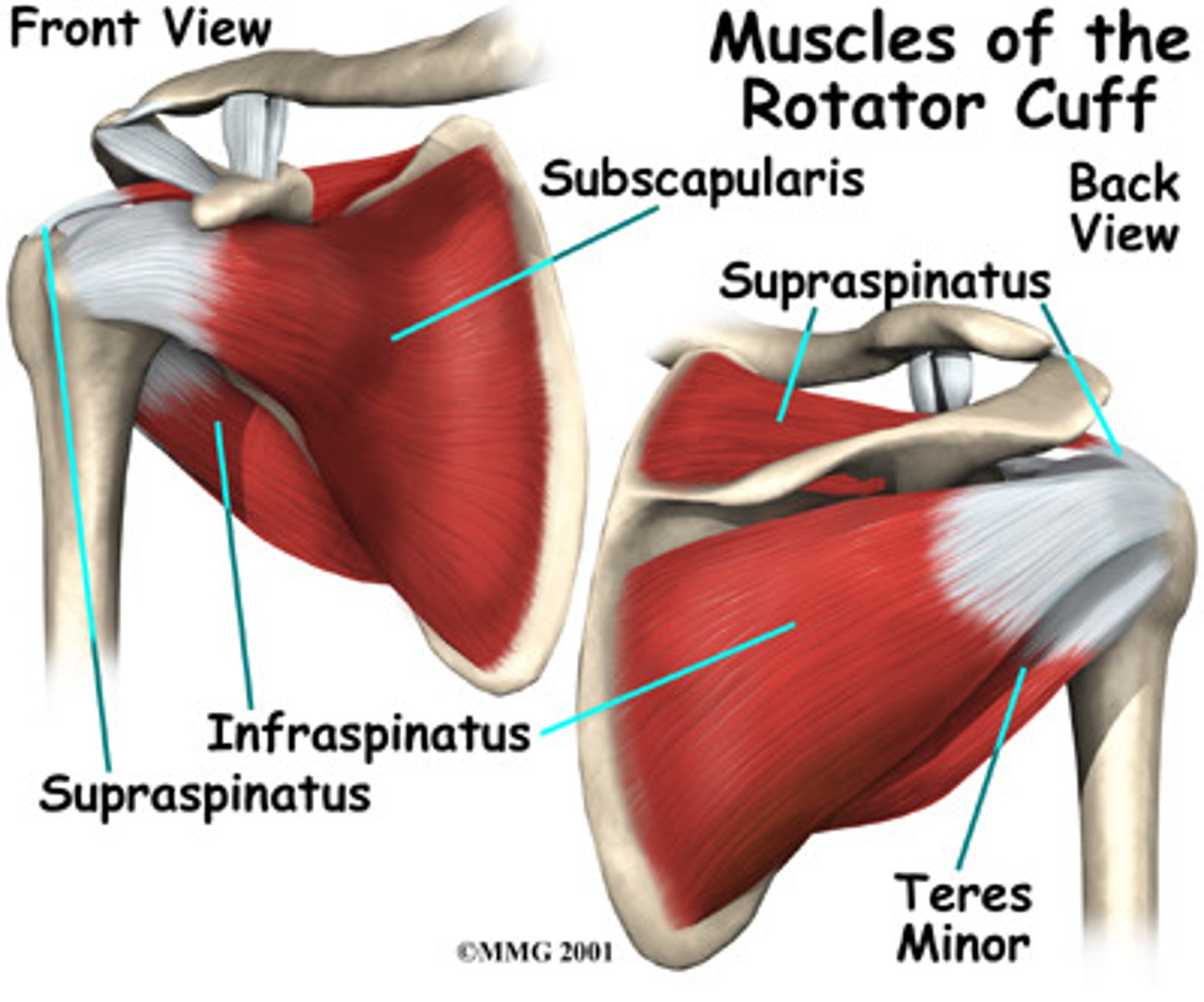
Rotator cuff
Supraspinatus
Infraspinatus
Teres minor
Subscapularis
Official name of hip flexor
Iliopsoas
What are the three planes of movement?
Sagittal, frontal and transverse
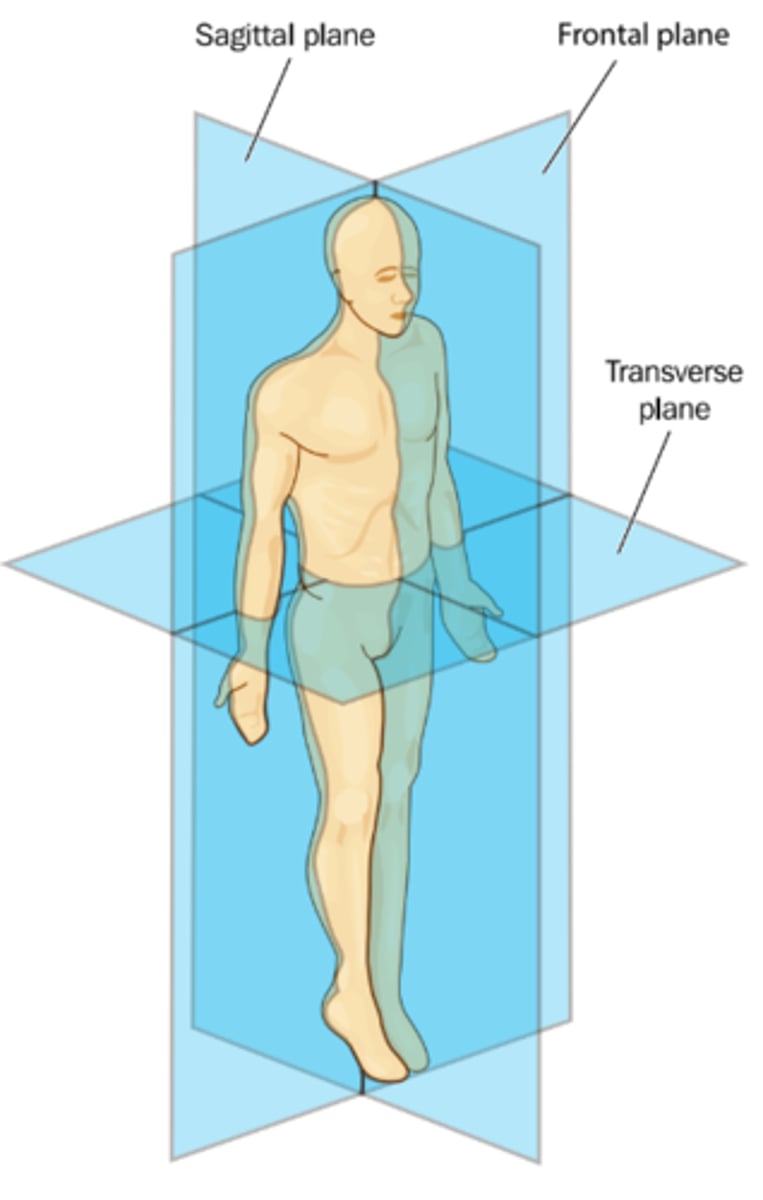
What are the three axes of movement?
Transverse sagital and longitudinal
What movements are carried out in the sagittal plane and transverse axes?
Flexion and extension
What movements are carried out in the frontal plane and sagittal axes?
Adduction and abduction
What movements are carried out in the transverse plane and longitudinal axes?
Rotation
Mitochondrial density
High: Respires aerobically to release energy, High resistance to fatigue.
Neuron size
Small: Lowest force of contraction, Slowest speed of reaction.
Fibres per neuron
Few: Lowest force contraction, Slowest speed of reaction. Few fibres per neuron means a small motor unit which cannot carry out more powerful contractions.
Capillary density
High: Supplies oxygen for aerobic respiration, Removes waste products from cells, High resistance to fatigue.
Phosphocreatine
A high-energy compound stored in the muscles that rapidly regenerates ATP for explosive, high-intensity activities lasting up to 10 seconds.
Phosphocreatine store
Low. Rely on aerobic respiration so do not require phosphocreatine in order to release energy.
Myoglobin
An oxygen-storing protein in muscle cells.
Myoglobin content
High. Supplies oxygen to mitochondria for aerobic respiration, High resistance to fatigue.