art history- midterm 2
 Call Kai
 Learn
 Practice Test
 Spaced Repetition
 Match
 Flashcards
 Knowt Play
1/12

There's no tags or description
Looks like no tags are added yet.
13 Terms
Christianity/buddhism follow a
God/faith
ANICONIC
describes a tradition of representation that is symbolic or abstract, ie most often that do not show a religion’s deity in human form – often because that is forbidden
ICONOCLASM
destruction of images, especially because they are thought to be False worship

Head of a man (Brutus)
300BCE
early Roman republican “Verism”
Cultural ID: ancient Roman republic

Portrait of an elder
80 BCE+ 60BCE
Ancient Roman republic
Verism
Extreme realism in depiction
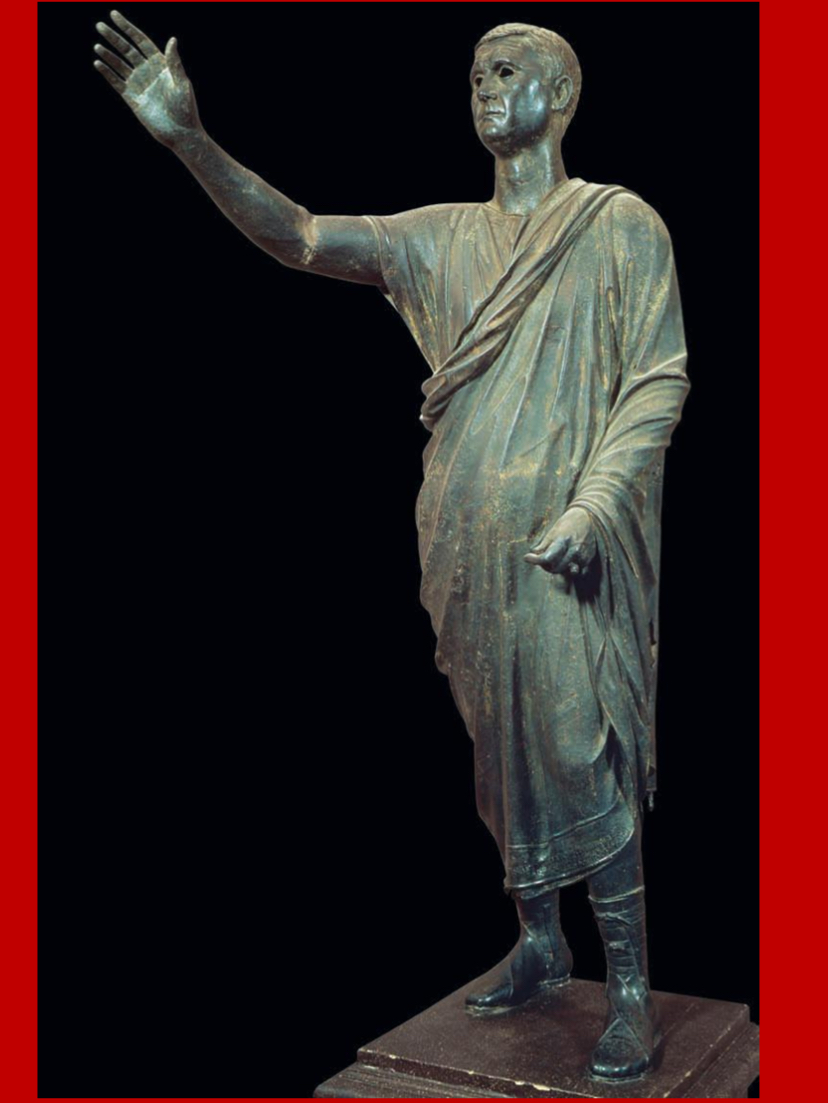
The orator aka Aúlus metellus
80 BCE
Ancient Roman republic

Temple of portunus
Roman republic - earlier BUT was rebuilt in 2nd BCE -100BCE

Augustus of Primaporta.
Early 1st century CE.
Cultural ID: Ancient Roman Empire
Possibly marble copy of bronze original,
originally painted.
NOT Greek because he’s got clothes, hair detail, armour, and filled with symbols like dolphins and Cupid.

Left:Young Flavian Woman
90 CE.
ID: Ancient Roman Empire
Right: Middle-Aged Flavian Woman
Late 1st century CE
Cultural ID: Ancient Rome

Types of Roman
Architecture and Statues designed to promote Empire: equestrian monuments, triumph arches and altars
Equestrian Statue of Marcus Aurelius.
176 CE
Gilded Bronze
Cultural ID: Ancient Roman Empire

Triumphal Arche
The Arch of Titus.
81 CE
(heavily restored 1820s).
Monumental forms for political purposes
Cultural ID: Ancient Roman Empire
