Game meat public health hazards & inspection
 Call Kai
 Learn
Learn Practice Test
 Spaced Repetition
 Match
Match Flashcards
 Knowt Play
1/36

There's no tags or description
Looks like no tags are added yet.
Name | Mastery | Learn | Test | Matching | Spaced | Call with Kai | Chat |
|---|
No analytics yet
Send a link to your students to track their progress
37 Terms
What are examples of farmed game species?
Deer (‘venison’)
Boar
Lagomorphs
Other land animals except domestic livestock (e.g. ostrich)
Game birds e.g. partridge, pheasant, red grouse, quail
(produced by farming, killed and processed in slaughterhouses)
What is the meaning of wild game?
Hunted for human consumption by trained person
Mammals living in enclosed territory under conditions of freedom, cf. to wild game
What are the pre-requisites necessary for game meat production?
Trained person’s declaration (wild game)
Traceability requirements
HACCP
Surveillance systems at abattoirs
How is a Game Handling Establishment approved?
Approved by FSA
Ov needs to verify:
The hunter’s status as a trained person
HACCP in place
Approved protocols for handling ABP
What is required if the game is slaughtered on farm?
Inspected at ante-mortem by an OV or Approved Veterinarian (AV) within 3 days of slaughter
Carcasses accompanied by:
Veterinary health certificate,
FCI
Humane slaughter declaration -> FBO
If >2 hrs transport: refrigerated
What does the ante-mortem inspection consist of with wild game?
Hunters' declaration/documentation
Pre-processing
FBO should examine carcase prior to entry into processing area for death other than hunting or contamination
What enables traceability of deer within farmed game?
Deer: Ear-tags (TB order) and passports:
Defra herd number, or British Deer Farmers Association (BDFA) herd registration number
animal’s own unique number
Breeder - FCI with:
identity
veterinary products /treatments administered inc. dates and withdrawal periods
Enforcement/reporting
Describe the traceability with wild game
Much less traceability
If you don't have the head and the viscera with the carcass may have to be discarded as ABP
How does post-mortem inspection differ between farmed and wild game?

(inspection requirements for wild game if shot for private consumption or family & friends on occasional basis)
How does post-mortem inspection differ between large and small game?

What could some reasons for rejection of carcasses be?
Exposure to pests? E.g. Blowfly
Unacceptable storage E.g high temp
Decomposition
What health marks can be used for deer, wild boar and ratites?
Halves
Quarters
Sixth (half carcase into 3 parts)
What are the temperature requirements for the transport of game?
4°C small wild game
7°C large wild game
What are abnormal behaviours of wild game?
Non apprehensive towards humans
Aggression
Isolation from herd
Locomotive difficulties
Head tilt
Abnormal gait
Abnormal posture
Slow @ escape
What contributes to environmental contamination of wild game?
Pollution e.g. factories
Heavy metals
Phytosanitary treatments
What could be causing abnormal behaviour and locomotion in wild game?
Parasites
CWD
Tumour
Infection
Lyme disease
Louping ill
Pigeon paramyxovirus
Toxaemia
After slaughter what needs to be done in wild game?
Viscera removed asap and the following examined:
Odor
Colour
Gas
Perforation
Oedema/Transudate/Exsudate
Haemorrhages
Adherences and other ex. mass (tumour or abcess), parasites
If abnormal: must accompany the carcase
Identification of carcase & completion of reporting paperwork
What does the trained person need to examine about the body of wild game?
Muscle bulk
Highly active animals but no nutritional support
Lean vs emaciated
Adipose tissue
Coat
Mucosae
Natural orifices
Traumatic lesions
Aging
Systemic repercussions
What are the main hazards to public health during game meat inspection?
Handlers during processing —> ringworm, ticks
Machinery during processing —> bacterial cross-contam
Storage —> inadequate temp
Consumption
In what locations do you need to look out for TB lesions?
Lungs
LNs of head —> mandibular & submaxillary
Thorax
Liver
Abdo
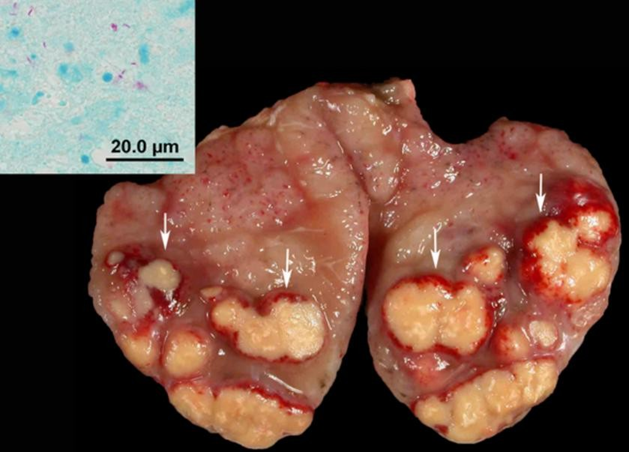

Why is it important to have the diaphragm accompany the carcass?
Trichenella surveillance
Freezing not an alternative to testing
What is a difference between large & small game slaughter?
Large = eviscerated, free bullet in head, neck or anterior chest perforations
Small = not eviscerated, multiple shot pellets
What are the pathogens that are considered a higher risk to wild game?
Mycobacterium bovis
E coli
Campylobacter jejuni
Chlamydophilia psittaci
What are the zoonotic diseases we are most worried about in game?
Toxoplasma gondii (wild birds, deer and boars)
Brucellosis (Europe: wild boar, brown hares)
Direct contact —> ringworm, ticks - louping ill, lyme dx
Rabies
What are the notifiable diseases in deer?
Foot & mouth disease
Bovine tuberculosis
Bluetongue
Epizootic haemorrhagic virus disease
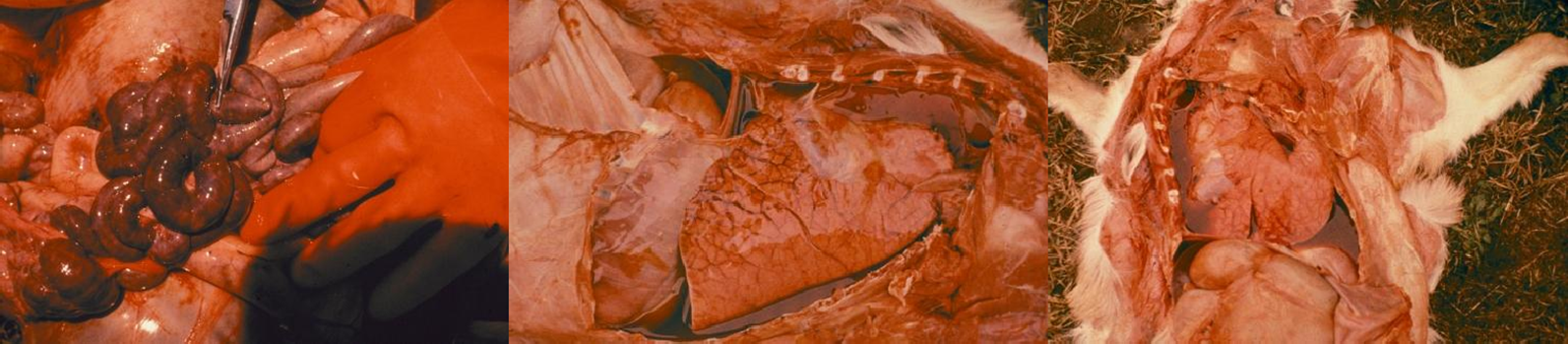
Chronic wasting disease, zoonotic?
How is chronic wasting disease transmitted?
body fluids like faeces, saliva, blood, or urine, direct contact or indirectly
What are the clinical signs of chronic wasting disease?
poor body condition
separation from herd,
difficulty swallowing, drooling
increased thirst & urination
nervousness & excitement, lowering of head
apathy, stumble, walk in repeated patterns, tremors, paralysis
What will be seen on PM with chronic wasting disease?
Serous atrophy of adipose tissue
Muscular atrophy
Aspiration pneumonia
Liquid or frothy ruminal contents
What are the notifiable diseases in swine?
African Swine Fever
Anthrax
Aujeszky’s disease
Classical Swine Fever
FMD
Rabies
Swine Vesicular Disease
Teschen
Vesicular stomatitis
What are the notifiable diseases of poultry?
Newcastle disease
Avian Influenza
Pigeon Paramyxovirus
What does Borrelia burgdorferi cause?
Non-erosive inflammatory arthropathy
Arthritis
Renal failure: immune-mediated
Handler most at risk
Tick vectors
(other dx potentially carrid = loupingg ill, tick-borne encephalitis, babesiosis
What else do you have to consider which could cause adverse wild game health?
Trauma
Environmental chemicals —> pollution/ heavy metals
Parasites
Nutritional imbalances/ toxins
Gas-producing bacteria e.g. E.col & clostridia
Necrosis of extremities (due to thermal diferences)
What legislation deals with protected species and what are examples of these species?
The Wildlife and Countryside Act 1981 safeguards several mammal species.
Include badgers, bats, wild cats, dolphins, dormice, hedgehogs, pine martens, otters, polecats, shrews, and red squirrels.
Who carries out residue surveillance and how does this take place?
FSA does this
Farmed and wild game
Most by random selection
Large - kidney, kidney fat, liver and muscle
Small - entire carcass

Scenario:
It is August and you are the OV @ an AGHE
A deer carcass (pic) arrived for further processing
The trained person declaration states the time of death to be 3hrs earlier
What would your decision be?
August = warm month
Must be chilled within 2hrs —> not fit for human consumption
If you came across this as an OV what would you do?
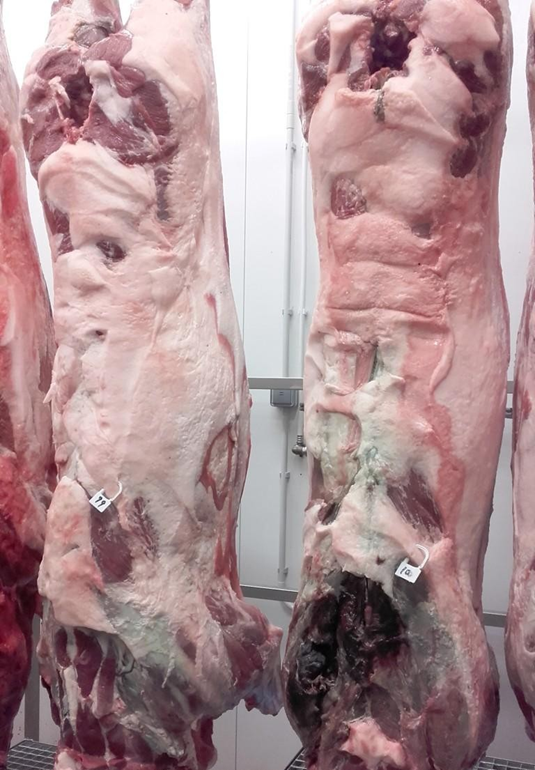
Contamination / decompostion —> green area
overgrowth of bacteria?
Would not accept
If you came across this as an OV what would you do?
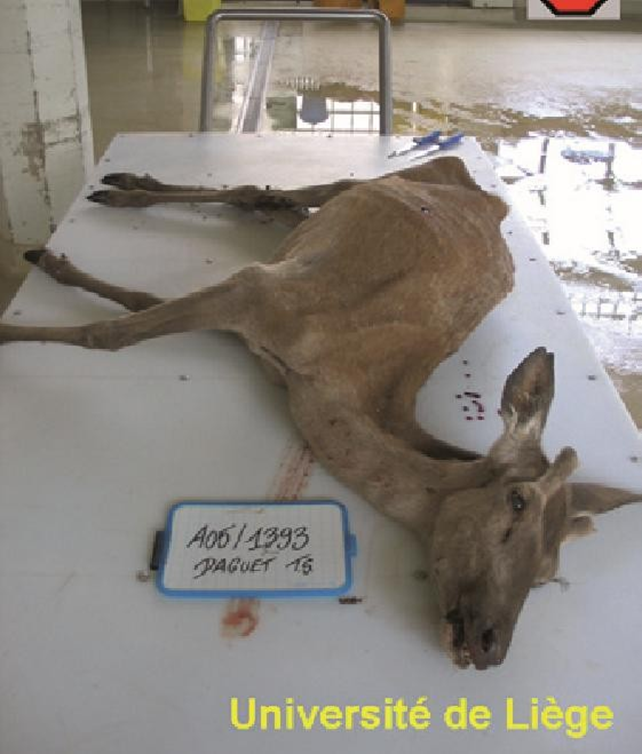
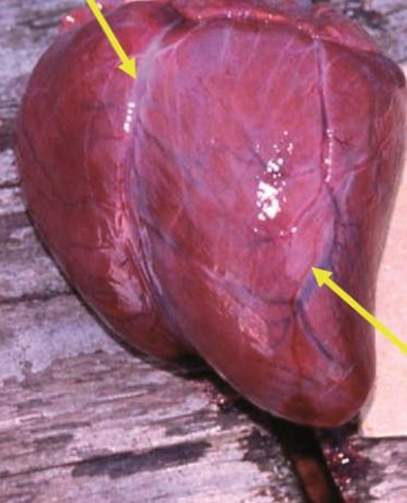
Emaciated —> starvation
Oedema of the heart (jelly-like grey area)
Would not accept