⭐ ECME FINAL STUDY GUIDE
 Call Kai
 Learn
 Practice Test
 Spaced Repetition
 Match
 Flashcards
 Knowt Play
1/317

There's no tags or description
Looks like no tags are added yet.
318 Terms
When is hearing protection needed?
If exposed to 85db or more for 8 hours
How many feet above the deck is considered working aloft?
6 feet
What is the Nominal Pipe Size?
The approximate inside diameter of Standard Pipe (Schedule 40).
What does the Nominal Pipe Size go by for pipes with an Outside Diameter greater or equal to 12 inches?
Outside diameter.

What happens as the schedule number increases?
The wall thickness of the pipe will increase

What are External threads cut with?
a DIE
What are Internal Threads cut by?
a TAP
What are LP Gaskets made out of? HP Gaskets?
LP Gaskets are made out of rubber and paper. HP Gaskets are metallic.
Do Tube installations EVER run straight?
No

What is this?
PLUG

What is this?
CAP

What is this?
NIPPLE
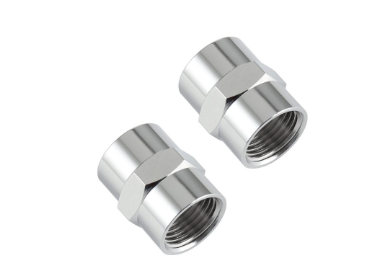
What is this?
COUPLING
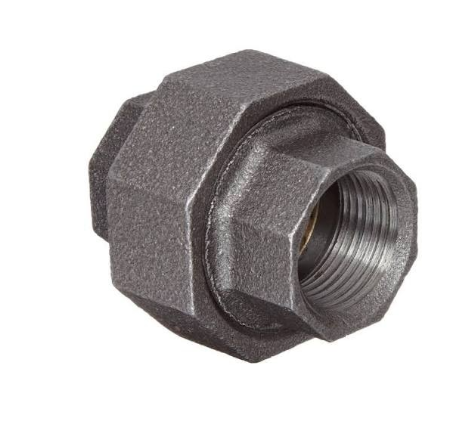
What is this?
UNION

What is this?
BELL REDUCER
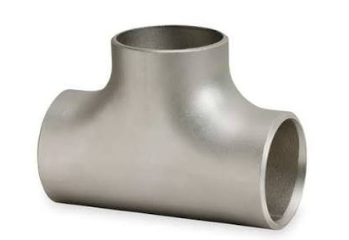
What is this?
TEE

What is this?
REDUCING TEE

What is this?
Y-BEND

What is this?
ELBOW

What is this?
STREET ELBOW
What do Check Valves do?
Permit flow in one direction only: open when upstream pressure is greater than downstream, closed when downstream pressure is higher.
What do Stop-Check Valves do?
Act as stop valve when closed, check valve when fully opened; may be throttled to control flow (in one direction)
What do Regulating Valves do?
control the flow at one location in a system in response to a signal (flow, temperature, pressure, level, etc.) from another portion of the system.
What do Relief Valves do?
open & reset at same pressure.
What do Safety Valves do?
reset at a pressure below their “popping” level.

What kind of valve is this?
Gate Valve. Functions as a Stop Valve.

What is this?
HANDWHEEL

What is this?
YOKE

What is this?
STEM

What is this?
PACKING GLAND

What is this?
BONNET

What is this?
BODY

What is this?
DISC

What is this?
SEAT
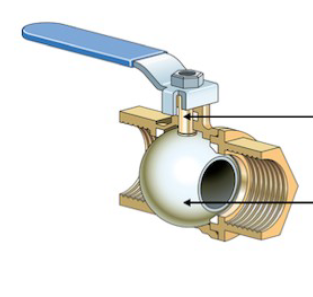
What kind of valve is this?
Ball Valve. Acts as a Stop Valve.

What kind of valve is this?
Globe Valve. Can act as a Stop Valve or Throttling Valve.

What kind of valve is this?
Butterfly Valve. Can act as a Stop Valve or Throttling Valve.
How are Swing Check Valves mounted?
Horizontally or vertically
How are Lift Check Valves mounted?
Horizontally
Pump Energy Function
Pumps deliver energy to a given volume and add energy to a system; they never take away energy.
Three Kinds of Liquid Energy
Potential Head, Static Pressure Head, and Velocity Head.
Total Pump Head
The difference in energy per pound of liquid between the discharge side and the suction side.
Two Main Categories of Pumps
Kinetic pumps (such as centrifugal) and Positive Displacement pumps.
Centrifugal Pump Characteristic
A constant pressure pump
Shut-off Head in Centrifugal Pumps
A no-flow condition causing heat buildup, which can cause the solution to boil or evaporate.
Positive Displacement Pump Characteristic
A constant volume pump.
Positive Displacement Safety Requirement
They must ALWAYS have a relief valve, either routed back to suction or into the atmosphere.
Discharge Restriction in Positive Displacement Pumps
Never restrict too much; pressure builds up and the pump can explode when trapped volume must escape.
Reciprocating Pump Action (Single vs Double)
Single-acting produces one volume per cycle; double-acting discharges and suctions simultaneously for two volumes per cycle.
Double-Acting Duplex Pump Output
Four volumes per cycle.
Diaphragm (Wilden) Pump Use
Air-operated pumps mainly used as bilge pumps at the lowest point on a ship, typically made of lightweight aluminum.
Gear Pump vs Lobe Pump Lubrication
Gear pumps require a fluid lubricant to avoid damage, whereas lobe pumps use timing gears and do not require lubrication.
Jet Pumps and Ejectors
Devices with no moving parts and no wear and tear that mix high and low pressure to create a vacuum.
Cavitation Definition
The rapid formation and violent collapse of tiny vapor-filled bubbles when local pressure drops below vapor pressure.
Cause of Cavitation
Restrictions on the suction side (such as a throttled valve) that cause local pressure to drop below the liquid's vapor pressure.

What kind of heat exchanger is this?
Shell & Tube

What kind of heat exchanger is this?
Plate
What is Sensible Heat?
Heat energy released or absorbed with no change in state TEMP CHANGES
What is Latent Heat?
Heat energy released or absorbed during phase change TEMP DOES NOT CHANGE
What does the Basic Refrigeration Cycle look like?

What are the Refrigerant Properties
Safe: Non-toxic, non-flammable, non-explosive, environmentally friendly
Chemically Inert: non-corrosive, does not react with lubricants
Detectable: Leaks can be located
Operating Range: Saturation conditions on high side and low side at
reasonable temperature and pressures
Economical: Good Pumping characteristics, good thermodynamic properties
for absorbing and rejecting heat
What does the TXV do?
Senses refrigerant temp leaving the evaporator. Throttles refrigerant flow to maintain a superheat vapor at outlet. Ensures no liquid returns to compressor. Does not control box temp only superheat.
What does Solenoid Valve do?
Senses BOX temperature. Opens/ Closes in response to high or low box temp. Does not control superheat or refrigerant.
What does the LP Cut-out do?
Senses compression suction pressure. Starts and stops compressor under normal operating conditions.
What does the HP Cut-out do?
Senses compression discharge pressure. Starts and stops compressor under Emergency conditions.
What is the refrigeration unit start up process?
Box Temperature – Exceeds set point. Solenoid Valve opens. Refrigerant can flow to the TXV. TXV will be open. Refrigerant will flow to evaporator. TXV will throttle down reducing the flow of refrigerant to meet the needs of the super-heated vapor on the outlet of the evaporator. Piping from TXV to Compressor fills with refrigerant increasing the pressure. LP Cut-out senses high pressure thus turning on the compressor.
What is the refrigeration unit shut down process?
Box Temperature – meets set point. Solenoid Valve closes. Refrigerant cannot flow to the TXV. TXV will be open due to lack of refrigerant in the evaporator, thus increasing the superheat at the discharge of the evaporator. Refrigerant will stop flowing to evaporator. LP cut-out will sense the lack of pressure due to the lack of refrigerant flow. Compressor shuts off.

What is this and what does it do?
Dry Pipe. The dry pipe is a perforated pipe just below the steam outlet that pulls steam in through many small holes.

What is this and what does it do?
Cyclone Steam Separator. The cyclone steam separator spins the steam-water mixture coming up from the generating tubes, and the centrifugal force flings the heavier water droplets outward against the walls, where they drain back down into the drum. The drier steam then continues upward through the scrubber and dry pipe before leaving the drum. Think about the cartoon tornado with cows and houses on the outside and steam on the inside.

What is this and what does it do?
Scrubber. The scrubber is a set of closely spaced corrugated plates that the steam passes through after leaving the cyclone separators. The steam has to weave through the zigzag channels, and the remaining fine moisture droplets stick to the plate surfaces and drain back down into the drum, so the steam that reaches the dry pipe is already very dry.

What is this and what does it do?
Feedwater Pipe. The feedwater pipe brings makeup water into the steam drum. Keeps circulation going.

What is this and what does it do?
Screen Plate. The steam passes through it after leaving the cyclone steam separator. It evens out the steam flow and catches some of the remaining droplets before the steam moves on to the scrubber and dry pipe.

What is this and what does it do?
Chemical Feed Pipe. The chemical feed pipe injects water treatment chemicals into the drum's water, keeping it at the right pH and preventing scale and corrosion.

What is this?
Front Downcomers (to water drum)

What is this?
Front Downcomer (to sidewall header)

What is this and what does it do?
Steam Drum. Produces Steam. The pure steam goes to the superheater from the steam drum.

What is this and what does it do?
Air Inlet from FDF. The air inlet from the FDF is the duct that delivers combustion air to the furnace. The fan pushes air in under pressure, and passes it to the burners, where it mixes with fuel so the flame burns completely.

What is this and what does it do?
Header (Lower Water Wall). The lower water wall header collects water from the downcomers and distributes it into the water wall tubes.

What is this and what does it do?
Side Wall (Roof Tubes). They absorb radiant heat directly from the fire, so the water inside partly boils and rises to the steam drum.

What is this and what does it do?
Down-commers. The downcomers are large tubes that carry cool water down from the steam drum to the lower parts of the boiler.

What is this and what does it do?
Generating Bank. The boiling happens here.
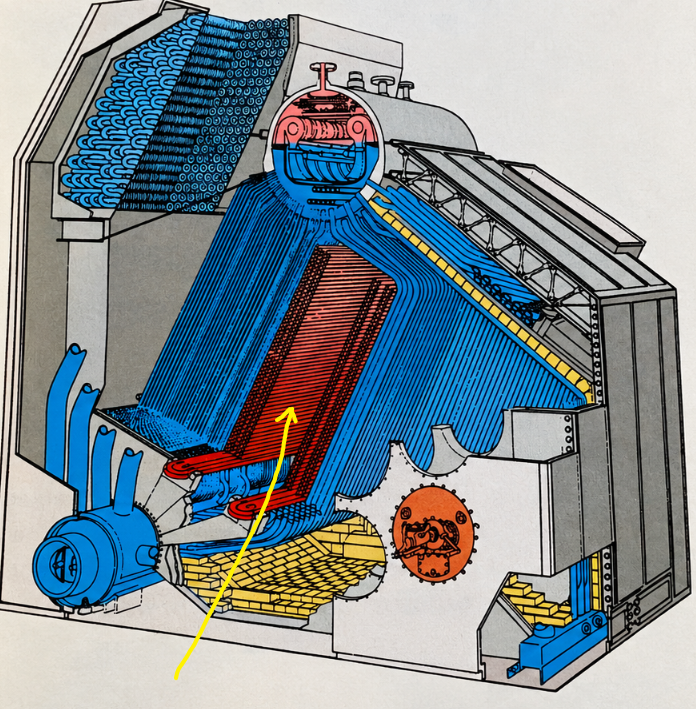
What is this and what does it do?
Super Heater Tubes. The superheater tubes take steam from the steam drum and heat it further with the furnace gases.

What is this and what does it do?
Economizer. The economizer uses leftover heat to preheat the feedwater before it enters the steam drum.

What is this and what does it do?
Water Drum. Connected to the steam drum by the generating bank tubes. Cooler water from the downcomers collects here and then rises through the generating bank as it heats, while the heavier sediment and sludge settles to the bottom.
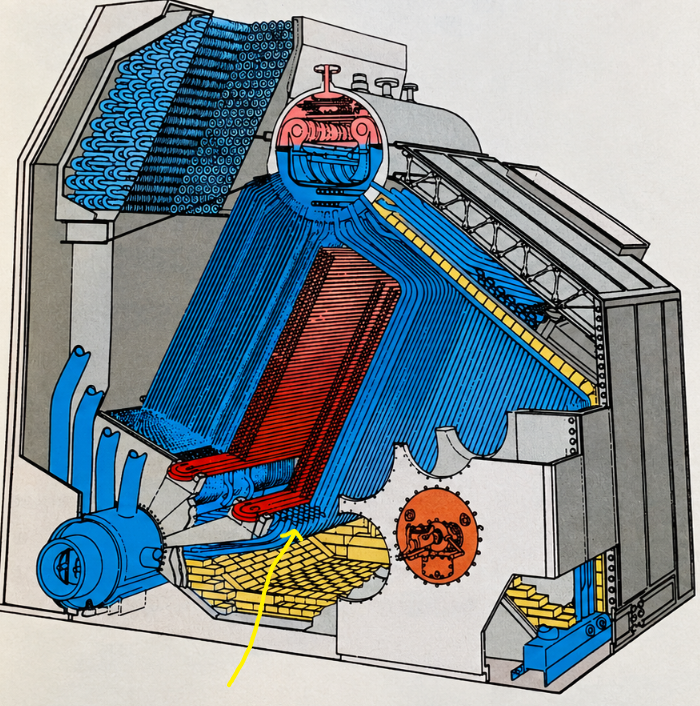
What is this and what does it do?
Screen Tubes. They absorb heat so the water inside boils and rises to the steam drum.
Basic Steam Water Cycle
Boiler
Super Heater
Main Steam Stop
Throttles
HP Turbine
LP Turbine
Main Condenser
Main Condensate Pumps
Air Ejector
1st Stage Heater
DC Heater
Main Feed Pumps
Economizer
Boiler
Main Steam starts and ends at which component?
Main Steam starts at the Superheater, and ends at the Main Condenser
Condensate starts and ends at which component?
Condensate starts at the Main Condenser, and ends at the DC Heater
Feed Water starts and ends at which component?
Feed Water starts at the DC Heater, and ends at the Economizer
What is a Fire Tube Boiler?
Low Pressure boilers, used in auxiliary systems along with commercial facilities. The fire is located in the tubes and the shell is full of water.
What is a Water Tube Boiler?
High Pressure boilers, used for main propulsion systems on ships. D-Type is the most popular. The water is located in tubes while the shell contains the fire.
What does a Superheater do?
Creates super-heated steam by increasing the sensible heat. Ensures that no moisture is present before it goes to the turbines.

What kind of turbine is this?
Impulse. High Pressure. Converts pressure into steam velocity.

What kind of turbine is this?
Reaction. Low Pressure. Converts steam pressure into velocity.
What does a Stage consist of?
A set of nozzles and a set of blades.
What does a Steam Chest do?
The Steam Chest dictates how many nozzles will be accessible to the HP steam. This corresponds to a particular Engine RPM.
What happens if the water goes too low in the Hotwell under the Shell & Tube type heater?
Air goes into the Centrifugal Pump, and the pump loses suction.
What happens if the water goes too high in the Hotwell under the Shell & Tube type heater?
Water covers up the tubes, and the condensate goes down in temperature. This decreases the quality of the steam.
What does the Main Condenser do?
Condenses steam into condensate in a near perfect vacuum (28.5” Hg). It’s cooled with salt water by the Main Circulating Pump. The Hotwell lies below it, and it acts as a collection point for the condensate.