HAPE Exam 3
 Call Kai
 Learn
 Practice Test
 Spaced Repetition
 Match
 Flashcards
 Knowt Play
1/97

There's no tags or description
Looks like no tags are added yet.
98 Terms
where is the umbilicus located
L3/L4
superior to arcuate line
aponeurosis of internal oblique splits to enclose rectus abdominis
inferior to arcuate line
3 aponeuroses pass anterior to rectus abdominius, leaving only traveersalis fascia posterior to rectus abdominis
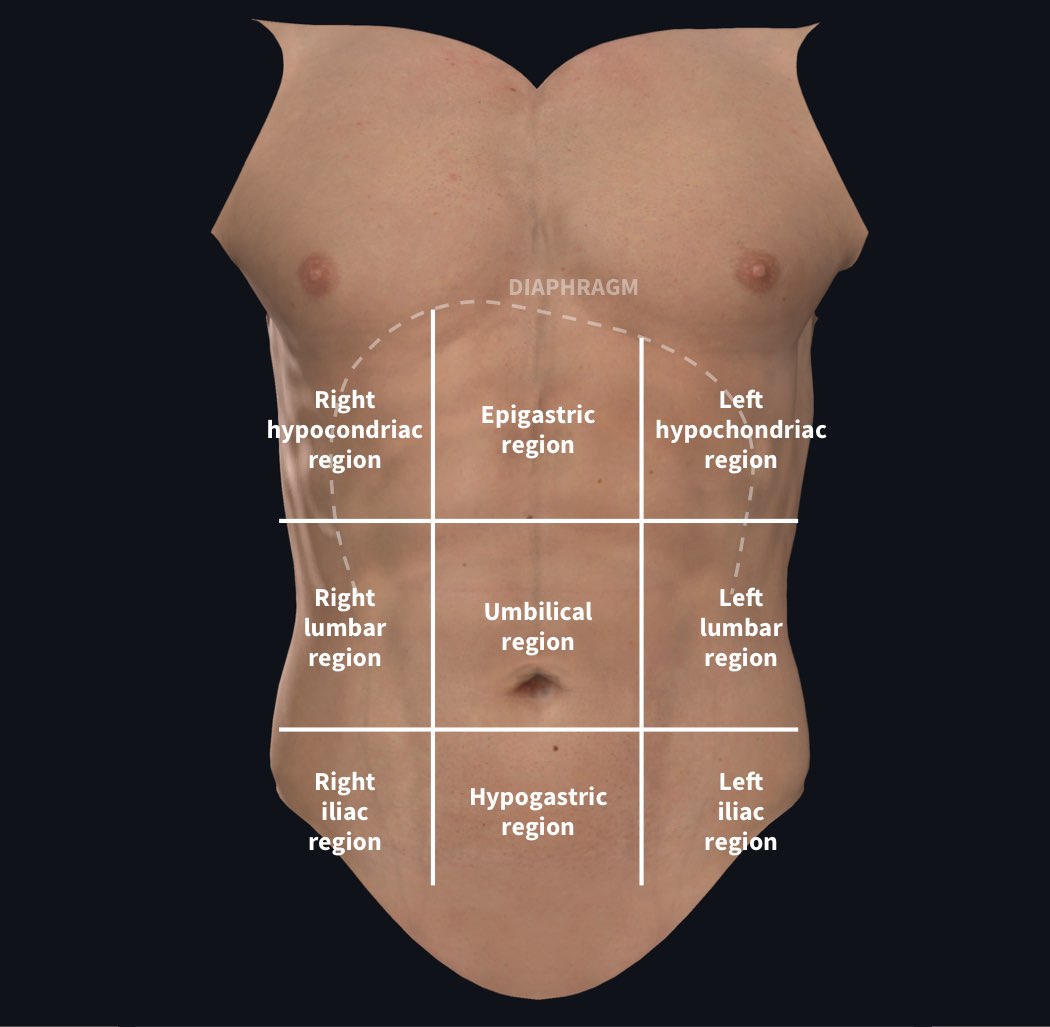
abdominal regions
RUQ
liver, gallballder, pylorus, duodenum, hepatic flexure, head of pancreas
LUQ
spleen, splenic flexure, stomach, body, tail of pancreas
LLQ
sigmoid colon, descending colon, left ovary
RLQ
cecum, appendix, ascending colon, terminal ileum, right ovary
costervertbral angle
formed by lower border of 12th rib and transverse process of upper lumbar vertebra
lie posteriorly in abdominal cavity
where does abdominal aorta bifurcate into the common iliac arteries
at L4
visceral pain
non-specific and hard to locatlize
gnawing, cramping, aching
sweating, pallor, nausea, vomiting, restlessness
parietal pain
inflammation of peritoneum
localized over affected structure
steady, achy, pain, more severe than visceral
aggrevated by movement
colicky
can be due to obstruction
localized pain over affected areas
crampy, intermittent
nausea, vomiting, abdominal distention
referred pain
pain felt in distant sights from origin
variable but follows pattern - palpation at site is usually not tender
referred pain
pain that originates at different sites but shares innervation from same spinal level
dyspepsia
chronic or recurrent discomfort or pain center in upper abdomen
epigastric pain or burning and postprandial fullness or early satiety
heartburn
rising retrosternal pain or discomfort occurruing weekly or more often
dysphagia
difficulty swallowing
odynophagia
painful swallowing
constipation criteria
present for last 3 months with symptom onset at least 6 months prior to diagnosis
must have at least 2 of following:
< 3 BM per week
>25% or more defecations with straining or sensation of incomplete emptying
lumpy or hard stools
need for manual facilitation
melena
black tarry stools
loss of >60mL of blood in GI tract, which is result of GI bleed above ligament of Trietz
hematochezia
stools that are red or maroon colored
what is an important question with jaundice
what is the color of your urine and stools
what is the inspection order of the abdominal exam
inspection
auscultation
percussion
light palpation
deep palpation
special tests
what are signs of retropieronteal hemorrhage
cullen’s sign and grey turner’s sign
what is the normal frequency of bowel soudns
5-34 sounds per minute
where is traube’s space
left lower anterior chest wall starting from border oc cardiac dullness at 6th rid to anterior axillary line down to costal margin
Castell’s sign
lowest interspace in left anterior axillary line
shift from tympany to dulllness suggests enlarged spleen
can spleen normally be palpated with deep inspiration
no-palpating splenic tip may indicate splenomegaly
risk factors for AAA
age >65
history of smoking
male gender
first degree relative with history of AAA repair
rebound tenderness
if pain increases when examiner decreases pressure
ascites
dullness should be along he lateral sides while anterior part should be tympanic
proteuberant abdomen with bulging flanks should be suspicious for ascites
hymen
circular fold of tissue that may partially or completely occlude vaginal introitus
mons pubis
hair-covered fat pad overlying symphysis pubis
hair distribution inverted triangle
labia majora
rounded folds of adipose and connective tissue
labia minora
thinner, medial, pink-red folds that extend anteriorly to form prepuce and clitoris
prepuce
cutaneous covering of clitoris, female foreskin
what is clitoris innervated by
dorsal nerve branches off pudendal nerve to innervate
vestibule
between clitoris and vaginal introitus and extends to posterior fourchette
vaginal introitus
contains hymen and is opening to vagina
perineum
very sensitive area between vagina and anus
skene’s glands
paraurethral glands
openings lie on either side of urethral meatus
bartholin’s glands
greater vestibular glands
normally should not be visible or palpable
secrete watery fluid that serves as lubricant
pundendal nerve
innervates majority of vulva
responsible for proper functioning and control of urination, defecation, orgasm
ilioninguinal nerve and genitofemoral nerve innervate anterior to urethra
where is vulva blood supply from
predominating internal pudendal arteries
what do superifical cells of vagina contain
glycogen → produces lactic acid with normal vaginal flora
fornices
anterior fornix
posterior fornix (anterior to rectovaginal pouch/pouch of douglas)
lateral fornix
where is a fertilized egg implanted
in uterine corpus main body of fundus
isthmus
connects corpus to cervix and elongates in late pregnancy
what is uterus supported by
broad ligament
uterosacral ligament
pelvic floor
what is cervix lined by
simple columnar epithelium
adenxa
female reproductive organs which lie close to uterus
ovaries, fallopian tubes, ligaments hold uterus in place
pelvic floor muscles
support pelvic organs, aid in sexual function, urinary and fecal contience, stabilization of connecting joints
pelvic diaphragm
sacral nerve root S3-S5
separates pelvic cavity from perineum
levator ani and coccygeal muscles
perineal membrane
pudendal nerve
trangular sheet of fibromuscular tissue
anchors urethra, vegina, perineal body to ischiopubic rami
who needs pelvic exam
routein pap/GYN exam
menstrual abnormalities
abdominal pain
vaginal complaints
pregnancy
some contraception
sexual assault
menarche
onset of menses
menopause
absence of menses for 12 consecutive months, usually between 48-55
postmenupausal bleeding
bleeding occuring 6 months or more after cessation of menses
amenorrhea
absence of menses
dysmenorrhea
pain with menses, often with bearing down, aching, or cramping sensation in lower abdomen or pelvis
premenstrual syndrome (PMS)
at least oen symptom asscoiate with dysfunction that occurs during five days before onset of menses and is present in at least three consecutive menstrual cycles
abnormal uterine bleeding
bleeding between menses; includes infrequent, excessive, prolonged, postmenopausal bleeding
gravidity
number of times woman has been pregnant
parity
number of pregnancies that have been carried to viable gestational age (>20 weeks)
TPAL
t - term births
P - preterm birth
A - abortions
L - living children

cystocele
bulging of anterior wall

rectocele
bulging of posterior wall
nulliparous
round
multiparous
linear
PAP smear
spatula into cervical os and endocervical brush placed into the os
endocervical broom
allows for collection of single specimen containing all necessary cells (squamous and columnar)
bimanual ex
palpation of cervix, uterine body, adnexa
when to perform rectovaginal exam
performed if colon cancer, incontinence, rectocele, or cul-de-sac tumors are suspected
what is the most important risk factor for cervical cancer
HPV - can be prevented with condom use
Human pilloma virus
persistent infection assocaited with cervical cancer
HPV subtypes 16 & 18 are oncogenic
HPV subtypes 6 & 11 associated with genital warts
what is the appropriate size of vaginal speculum determined by
patient’s age, sexual activity, parity
cervical os
external opening of cervix that leads into endocervical canal
bimanual exam technique
insert indiex and middle fingers of dominant hand into vagina while placing non-dominant hand on lower abdomen to palpate uterus and adnexa
lymphatics
pectoral nodes
subscapular nodes
supraclavicular nodes
infraclavicular nodes
lateral nodes
central axillary nodes
montegomery glands
small glands on surface of areola formed by sebaceous, sweat, accessory areolar glands
what can be indicative of breast mass
dimpled skin
physiologic nipple discharge
occurs with compression of nipple
usually from hormonal imbalance
pregnancy/lactation
spontaneous nipple discharge
may indicate pathology
unilateral or bilateral
color/consistency/quality
what to look for in change of appearance in skin with breast
dimpling
nipple retraction (shorening of larger mammary ducts by cancer)
rash/ulceration
edema/thickening
erythema
change in position of nipple can indicate underlying cancer
parts of clinical breast exam
patient sitting up (inspect breast and palpate lymph nodes)
performed supine (systemically palpate entire breast)
which positions to inspect in breast exam
arms at sides
arms over head
hands on hips
what to look for in breast inspect
symmetry
contour
skin changes
what can edema in breast indicate
underlying malignancy
what can erythema indicate in breast
may indicate infection or malignancy such as inflammatory carcinoma of breast
what is proper technique of supine breast exam
supine with one brast exposed
patient’s arm over head
use flat pads of 3 middle fingers
what to palpate for in breast exam
consistency, tenderness, masses, nodules
how many segments of breast
5 - 4 quadrants and tail of beast
when does an enlarged lymph node indicate malignancy
>1cm, firm, non-tender, fixed, suggest malignancy
what to note about discharge in nipple
color, consistency, quantity
what to note in pregnant women
breast enlargement
fullness
nipple enlargement
areolae darken
dried colostrum
coarse nodularity
clogged milk ducts
mastitis
irritated, cracked, bleeding nipples
regression of changes after pregnancy
how to document a breast mass
location (quadrant or clock)
size (cm)
shape
consistency
delimination (well circumscribed or not)
tenderness
mobility