Week 4: phonetic transcription
 Call Kai
 Learn
Learn Practice Test
 Spaced Repetition
 Match
Match Flashcards
 Knowt Play
1/5

There's no tags or description
Looks like no tags are added yet.
Name | Mastery | Learn | Test | Matching | Spaced | Call with Kai | Chat |
|---|
No analytics yet
Send a link to your students to track their progress
6 Terms
Why do we care about phonetic transcription
english orthography (rules & conventions for writing a lnaguage) does not allow to accurately write down how people with different accents or speech disorders pronounce words
one word can have many spellings, one spelling can have many sounds, one word can have different pronunciations
What is transcription important for
universal system for how people speak
when working with children with SSD:
analysis
differential diagnosis
goal setting
monitor response to intervention
types of transcription
broad- for simple cases, substitutions
narrow- more complex, distoritions
f1, f2, f3
First Formant (F1): Linked to jaw opening and vowel height.
Second Formant (F2): Linked to tongue position (front or back).
Third Formant (F3): Influenced by lip rounding and tongue tip position, helping define finer voice color.
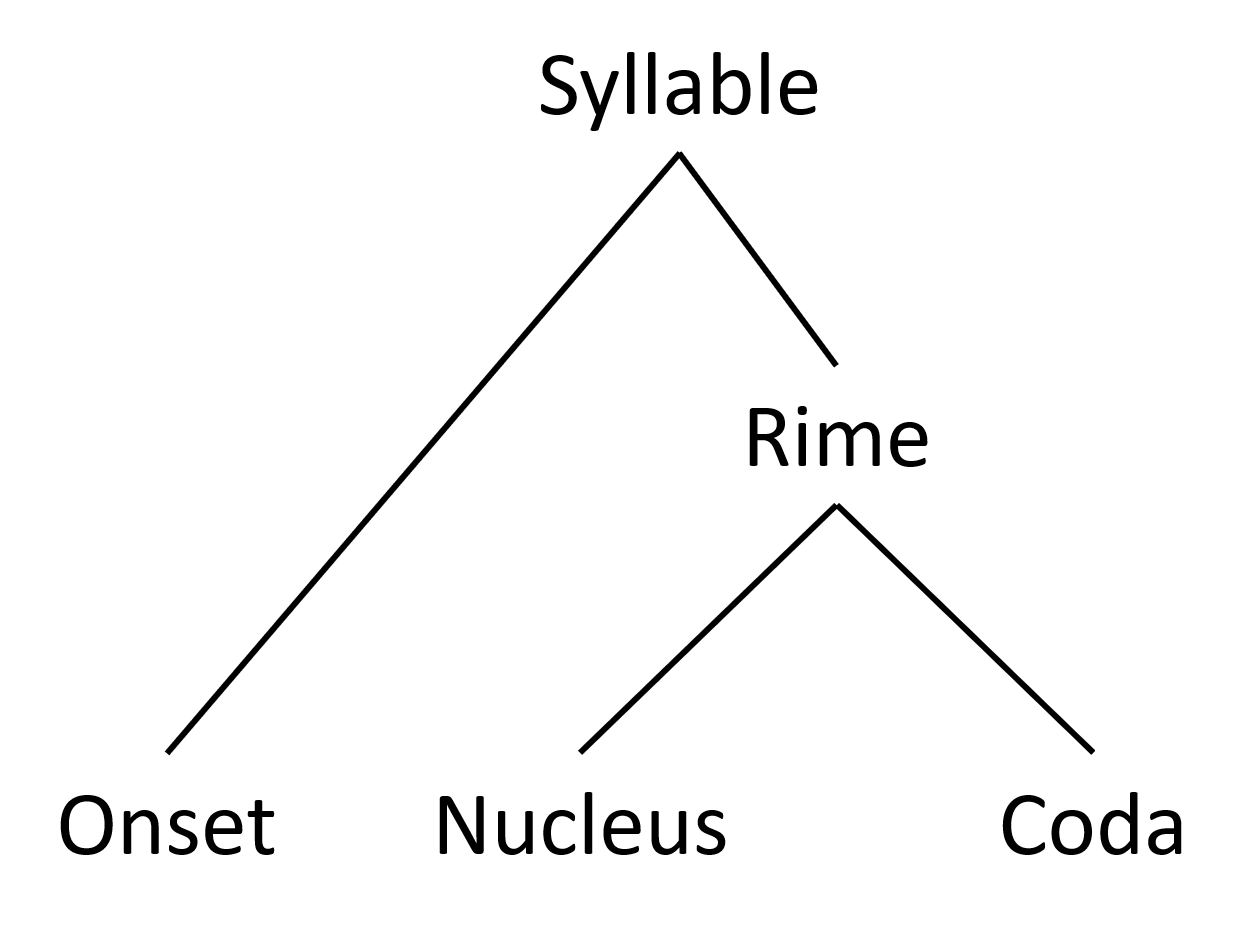
onset etc
Consonants that come before the nucleus of a syllable are know as onsets and those that come after it are called codas. The nucleus and coda of a syllable form a group called a rime. These onsets and codas can be complicated or simple depending on what is allowed in a language. English allows up to three consonants in the onset and at least as much in the coda. Consider the word ‘twelfths’ /twɛlfθs/. It has two consonants in the onset and four consonants in the coda. Generally, the onset is more restricted in what is consonants are allowed.
phonotactics
rules that govern how sounds may be combined segmentally and suprasegmentally
ie: number, type, and location of consonants in consonant clusters, number and type that form a syllable, number of allowable syllables,
presennce or absence of final consonants, diphthongs, lexical tone
harmony patterns etc.