(bus/class) Botany - Diseases and Defects
 Call Kai
 Learn
 Practice Test
 Spaced Repetition
 Match
 Flashcards
 Knowt Play
1/18

There's no tags or description
Looks like no tags are added yet.
19 Terms
3 fungal diseases
Powdery mildew (white-grey, powdery patches)
Plant rust (powdery, blister-like, rust-color pustules)
Corn smut (turns parts of corn into swollen growths filled with a black powder)

3 rows
Powdery mildew (white-grey, powdery patches)
Plant rust (powdery, blister-like, rust-color pustules)
Corn smut (turns parts of corn into swollen growths filled with a black powder)
3 bacterial diseases
Crown gall: Enters through wounds; causes woody, tumor-like growths that interrupt flow of water/nutrients
Bacterial blight: Spots of brown surrounded by yellow ring; premature leaf drop; wilting
Bacterial wilt: Clogs xylem (and therefore water transport)

3 rows
Crown gall: Enters through wounds; causes woody, tumor-like growths that interrupt flow of water/nutrients
Bacterial blight: Spots of brown surrounded by yellow ring; premature leaf drop; wilting
Bacterial wilt: Clogs xylem (and therefore water transport)
1 viral disease; 2 nematode diseases
Tobacco Mosaic Disease: Mottled, mosaic-like yellow and green patterns on leaves, stunted growth
Root knot disease: Invades roots, creating galls/knots in them.
Pine wilt: Interferes with water transport

3 rows
Tobacco Mosaic Disease: Mottled, mosaic-like yellow and green patterns on leaves, stunted growth
Root knot disease: Invades roots, creating galls/knots in them.
Pine wilt: Interferes with water transport
Polycyclic vs monocyclic
For diseases.
Polycyclic: One infection cycle (from landing on healthy plant to multiplication and spread) per growing season
monocyclic: Many infection cycles per growing season

What illness or disease is this?
Edema aka oedema.
Build-up of water in plant tissues faster than the leaves can transpire, which bursts cell membranes.
Appearance: Growths on underside of leaves e.g. needle-like hairs,cork growths, etc
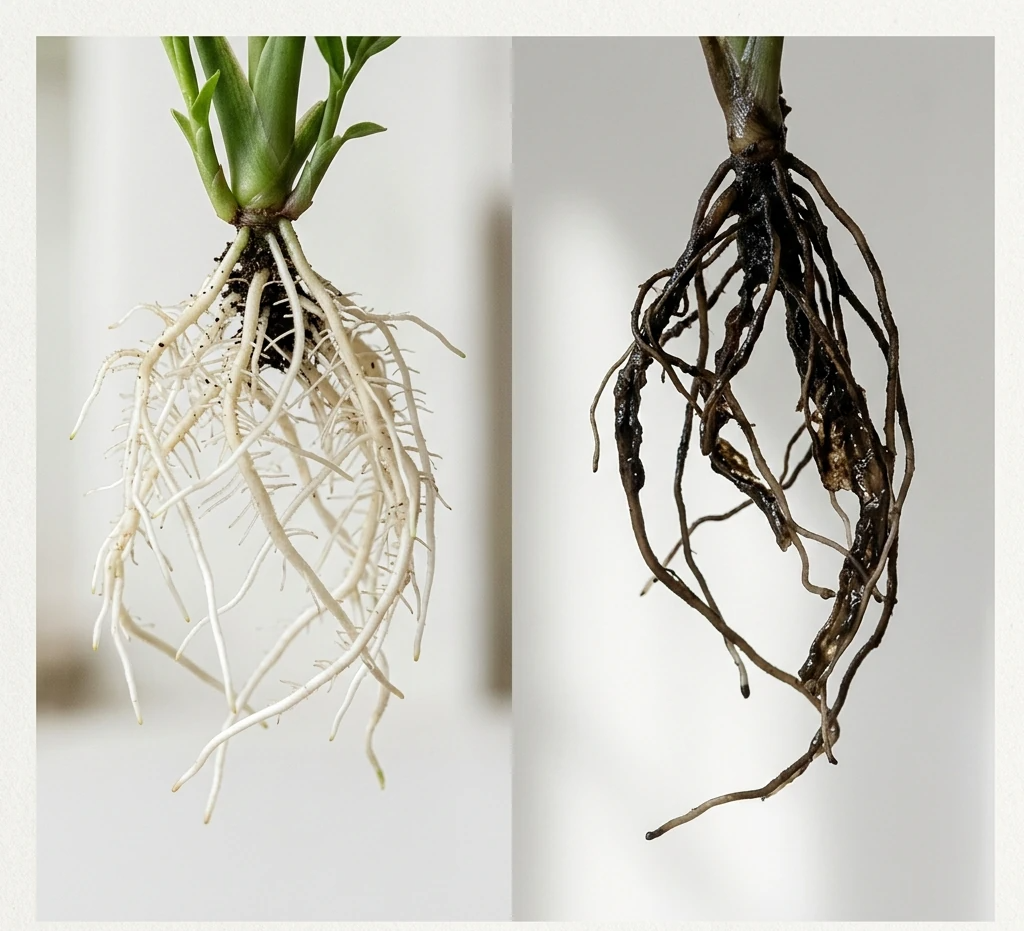
What illness or disease is this?
(right image)
Root rot caused by excess of standing water (leading to lack of oxygen), leading to e.g. damage by water molds.

What deficiency is this?
Iron deficiency

What deficiency is this?
Potassium deficiency

What deficiency is this?
Phosphorus deficiency

What deficiency is this?
Nitrogen deficiency
much more aggresive yellow than iron
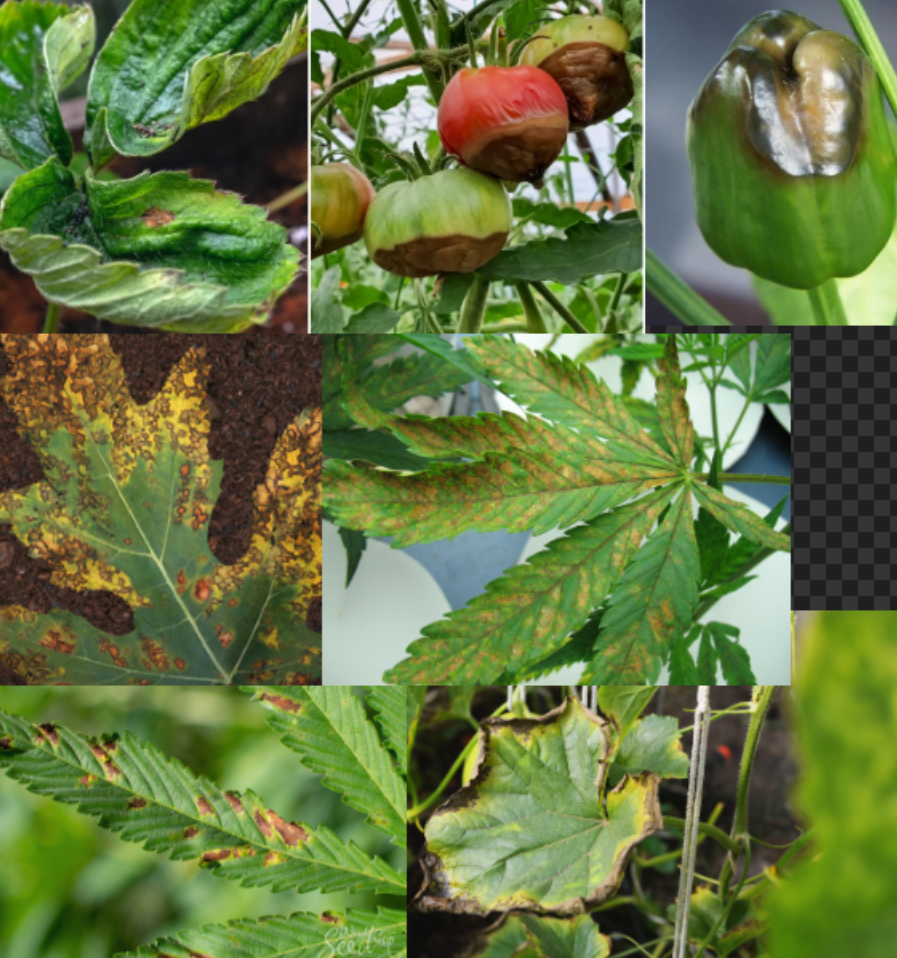
What deficiency is this?
Calcium deficiency

What deficiency is this?
Magnesium deficiency

What deficiency is this?
Sulfur deficiency
Symptoms first appear in new parts of plant due to relative immobility
General methods of preventing/controlling the spread of a disease (2 examples for #3)
Eradication: Eradication consists of eliminating, destroying or inactivating a disease organism after it has become established, e.g. destroying the plant or soil disinfection
Exclusion: Keeping diseased plants out of disease-free areas by e.g. restricting its shipment/spread to a specific area
Resistance: Two types: vertical and horizontal.
Vertical: provides very high level resistance, or immunity, to specific strains of disease organisms, e.g. hypersensitivity (programmed cell death where the disease is)
Horizontal: lower level of resistance, or tolerance, to more strains of disease organisms. In other words, just slows down the spread.
General methods of treating disease
Managing moisture: Many fungi and bacteria thrive in humid conditions e.g. irrigation earlier in day so it dries faster in the sun
Removal: Completely removing the diseased/damaged parts of the plant
Chemicals: Chemical biofungicides, pesticides, etc
Tell me the components of the disease triangle.
