Lab 4: Respiratory system
 Call Kai
 Learn
 Practice Test
 Spaced Repetition
 Match
 Flashcards
 Knowt Play
1/18

There's no tags or description
Looks like no tags are added yet.
19 Terms


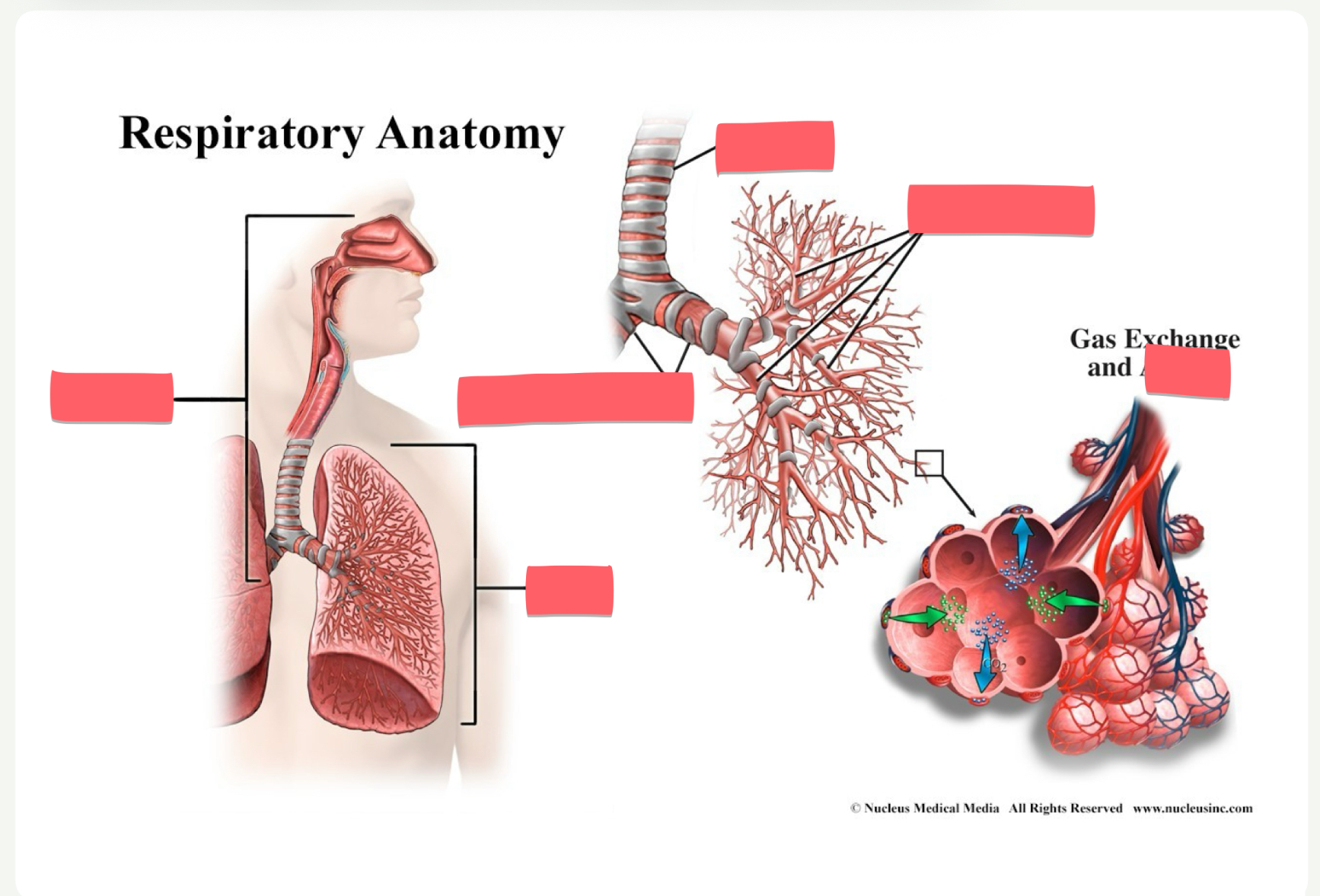



Muco-ciliary escalator
Cilia projecting from cell surface
Goblet cells secrete mucus
Mucus moves upward by coordinated movement of cilia. Functions as an efficient filter for dust particles

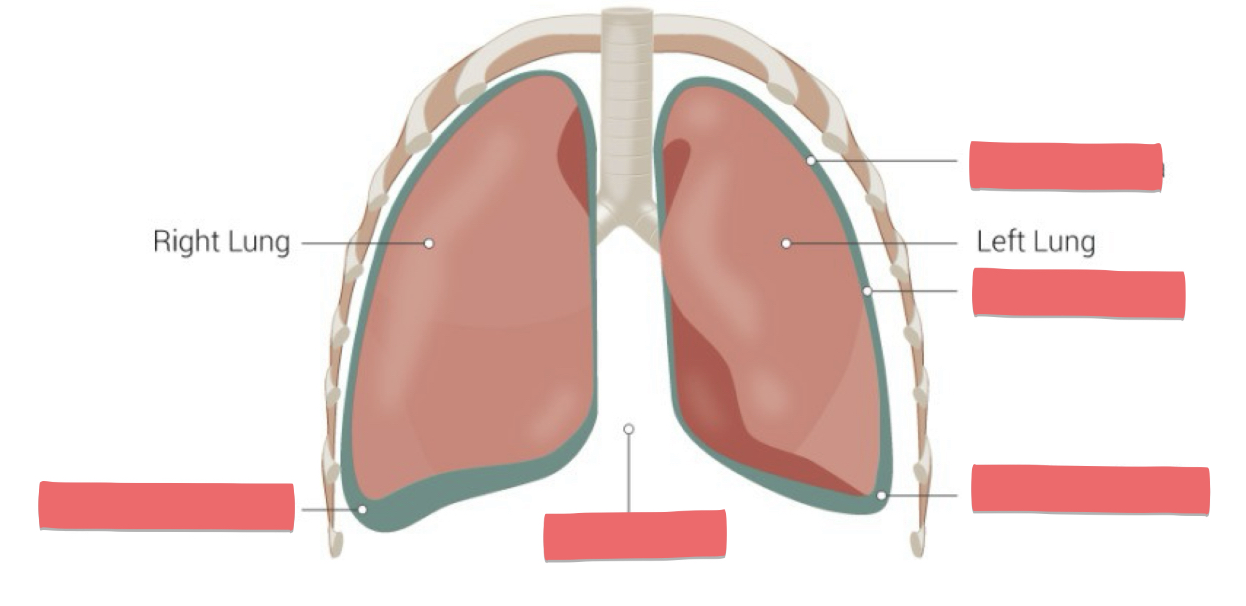
Structure of trachea
Cartilage rings are there to maintain open airways, when there is a drastic pressure change
‘C’ shape allows food to move down the Esophagus

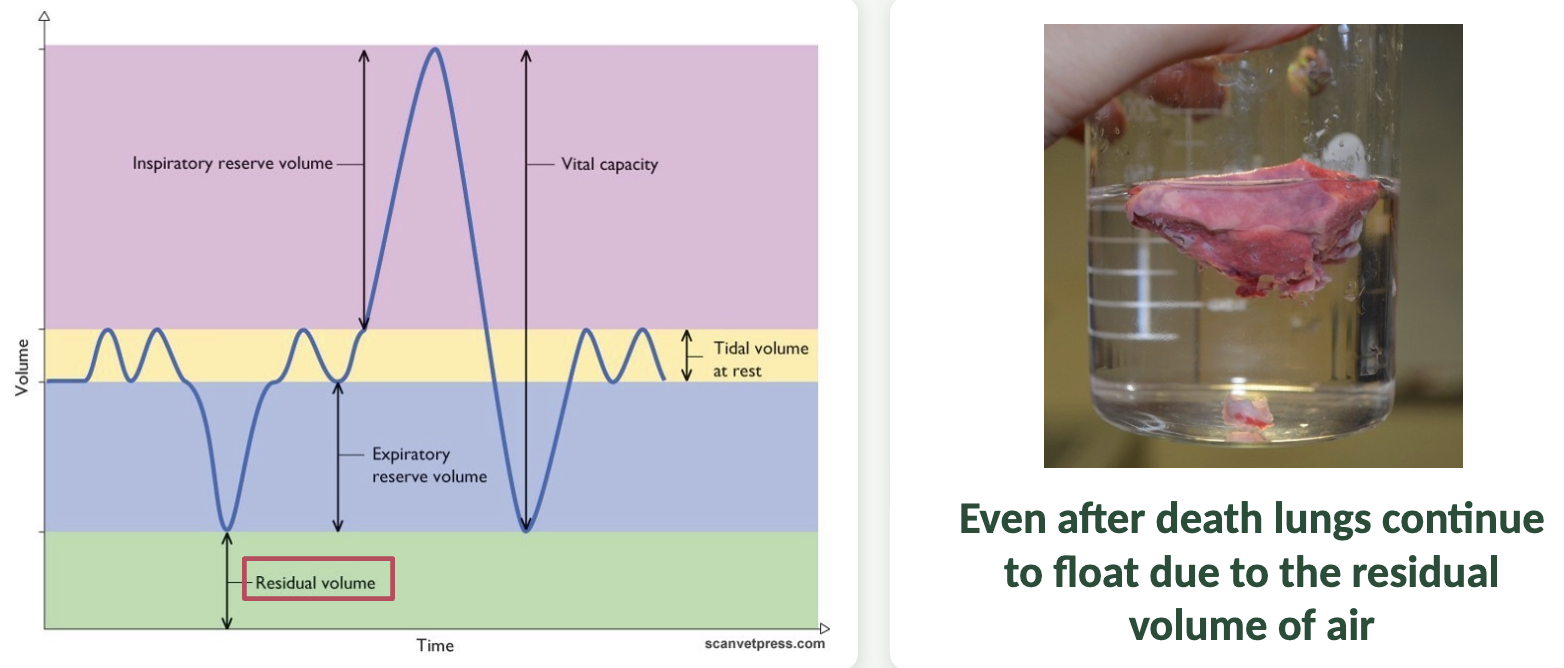
What helps keel alveoli and bronchioles open
Alveoli carry residual air, keeping the alveoli and bronchioles open
Lung recoil


Ventilation
the bulk flow of air between the atmosphere and the respiratory zone (alveoli)
What law does the pressure in the thoracic cavity follow
Boyle’s law of gases: P1V1 = P2V2
P1 = Atmospheric pressure (constant*)
V1 = Atmospheric volume (constant)
P2 = Pressure within the alveolar
V2 = Volume within the alveolar

Air flow is controlled by
changing the pressure in the lungs

How does inspiration occur
Active mechanism that expands the thoracic cavity by contracting the inspiratory muscles
lung volume increases, pressure in lungs lowers below atmospheric pressure
air flows into lungs until an equilibrium is
reached

How does expiration occur
PASSIVE mechanism by relaxing the inspiratory muscles, allowing the lungs to RECOIL (due to elasticity)
thoracic cavity shrinks
lungs volume decreases which compresses the gas within the lungs to a pressure higher than the atm pressure
air flows out of lungs until an equilibrium is reached

Tidal volum
air flowing through the airways at rest
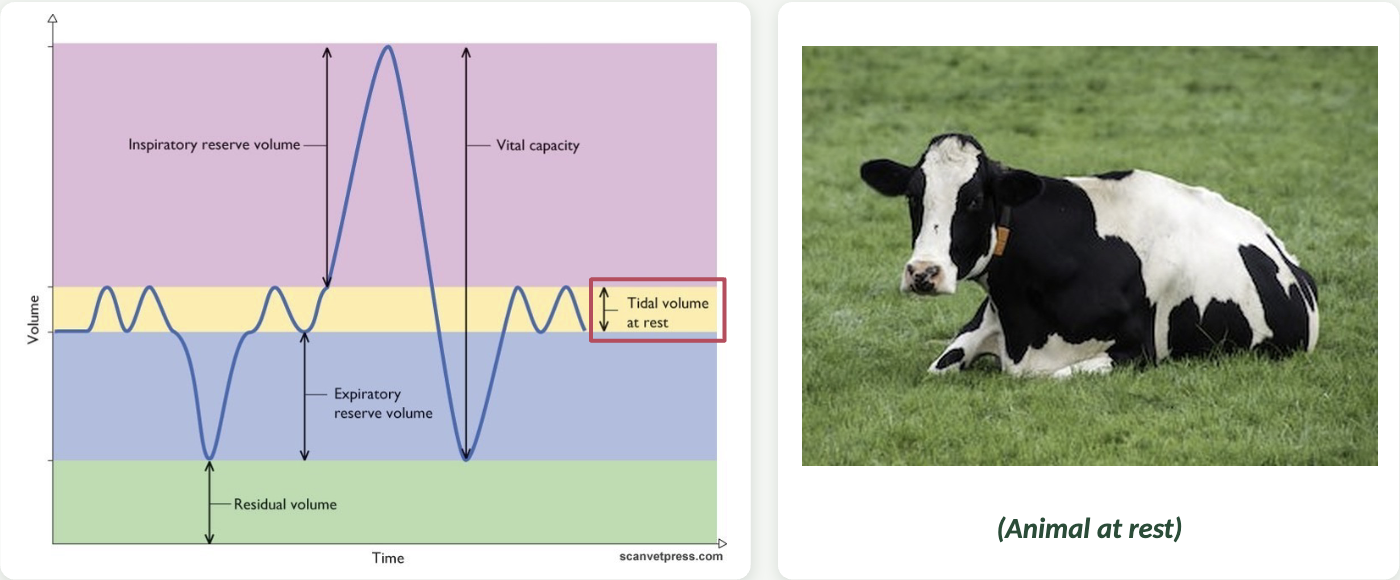
Inspiratory reserve volume

Expiratory reserve volume

Vital capacity

Residual volume