Physiology: Skeletal Muscle 4
 Call Kai
 Learn
 Practice Test
 Spaced Repetition
 Match
 Flashcards
 Knowt Play
1/38

There's no tags or description
Looks like no tags are added yet.
39 Terms
define economy
the ratio of force to the energy needed to maintain that force
smooth muscle myosin is more economical than skeletal muscle
economy is dictated by what? myosin ATPase activity not by the amount of…
myosin ATPase activity
not by the amount of ATP
ATP is always saturated in cell
what is the native state of tropomyosin without troponin?
in the unblocked position
what muscle switch type is this
fast skeletal muscle
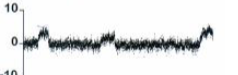
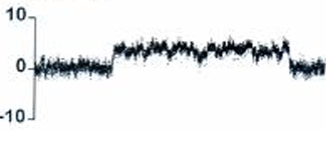
what muscle twitch type is this
smooth muscle
slow twitch is slightly less than this
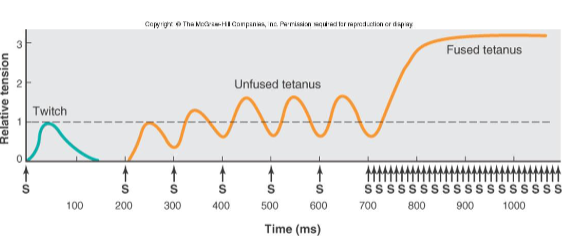
What happens to skeletal muscle tension if a second action potential arrives before the muscle has fully relaxed from the first?
the second contraction builds directly on top of the remaining tension from the first
creating a stronger overall contraction
increasing calcium saturation

What is complete (fused) tetanus, and how much relaxation occurs during it?
smooth, sustained, maximum contraction with no relaxation
continious AP keep calcium continiously available
calcium is saturated maximally

the more calcium made available… the more myosin’s you can activate…
in series
increased speed
in parallel
increased force
all skeletal muscle fibers are electrically ____ from one another
electrically insulated
do motor units cross-innervate fibers?
no
slow motor units innervate slow fibers
fast motor units innervate fast fibers
slow muscles use what kind of ATP source?
mitochondria
can stay contracted without fatigue
whats the cost of mitochondria in slow twitch
so much mitochondria packed in because although the diameter may be the same…
slow fiber has less force
less contractile apparatus
do fast-fibers have a lot of blood flow? what are the consequences?
no
they don’t need oxygen because they use glycolysis
they have a lot of by-product build up
fatigue really quickly
what happens to build up of phosphate in fast fibers
product inhibition
slower to spit out phosphate and produce force
safety mechanism to NEVER run out of ATP
what’s fatigue at the molecular level
by-product build up of phosphate
whats fatigue at the neurological level
brain does not want to send out signals
do you ever run out of ATP
no!
you do build up by-products that inhibits the cycle
simply describe how action potential frequency impacts muscle tension
more frequent action potential…
more force sustained for longer periods
simply describe how fiber length impacts muscle tension
skeletal muscle is designed to work in optimal force-length relationship
too stretched… too little overlap…
more passive force… less active force
too compressed… too much overlap…
less active force

simply describe how fiber diameter impacts muscle tension
increased force
more myosin in parallel
simply describe how fatigue impacts muscle tension
decreased cycling
more product inhibition… must reach equilibrium first
describe how the number of active motor units impacts muscle tension
increased contraction
more myosin activated in parallel
describe how the type of motor units impacts muscle tension
slow motor unit
slow fiber
recruited first
fast motor unit
fast fiber
recruited later


describe how the geometry of muscle impacts muscle tension
lever arm geometry increases speed…
at the cost of force
describe the relationship between myosin and increasing load
you must at least have as many myosins bound at a given time to meet and hold the load… (isometric contraction always first)
and if there is any extra myosin available…
they can shorten the muscle and move the load (isotonic contraction
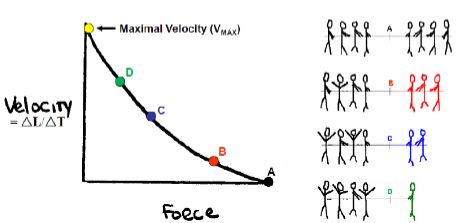
you have to build enough myosins to ____ before you can ____
you have to build enough myosin’s to meet the load before you can move the load
what are factors that affect your movement
environment
colder… less efficient
body type.. organism
lever arm length…
muscle group arrangements
how you can modulate force of the organ at the cellular level
different muscle groups
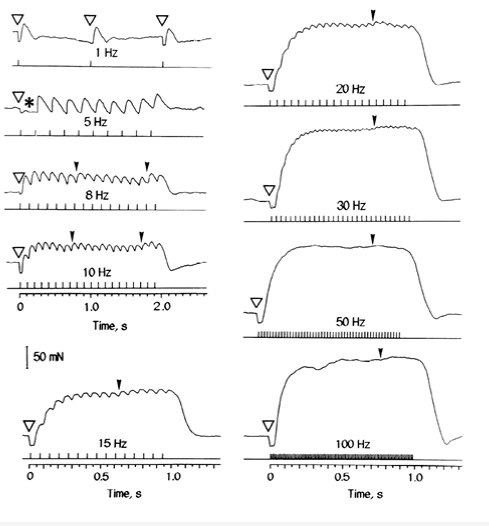
at what point here do you see 50% of force efficiency
10 hz

what what point here do you see almost 100% of force efficiency
20-30 Hz

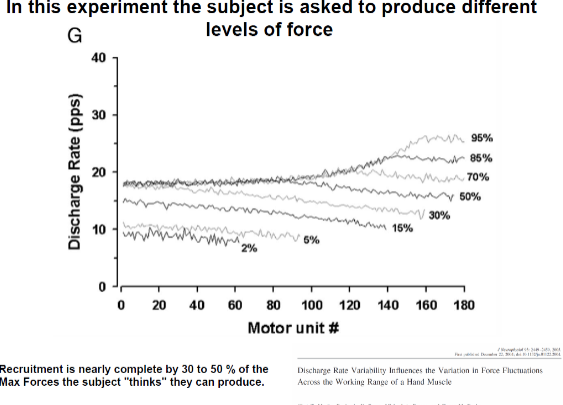
describe this image
the lightest force a participants thinks they generated…
recruited 60 motor units at 8-9 hz
about 30% of force possible
you’re already recruiting at the most efficient contraction
above 30% of efficieny…
the discharge rate increases a lot more
at what point do most motor units get recruited
30% of muscle efficiency

whats the takeaway message?
we’ve already recruited most motor neurons at 30%
beyond that, we increase force by summing up our action potentials
when is muscle recruitment complete
30 to 50%
this is when we begin to see summation of action potentials to really drive up force
what are the factors that affect speed of contraction
type of myosin
slow vs fast myosin
number of sarcomeres in series
load that the muscle is contracting against
lever arm geometry

what are the things that affect myosin contraction in skeletal muscle
geomtery of muscle
lever arm: sacrifices force for speed
number of active fibers
type of motor unit/myosin type
number of motor units
number of fibers per motor unit
tension developed
action potential frequency (calcium release)
filament overlap
fiber diameter (parallel arrangement)
fatigue
define motor unit
the motor neuron and its accompanying myofibrils that it innervates
describe the order of motor unit recruitment
fibers that are more economical are recruited first
slow twitch
fast twitch
super fast twitch
how is contraction strength graded
motor units are recruited first
then temporal summation rapidly increases force

List the factors that determine force generation by a skeletal muscle in the body.
geometry
increased length at the cost of force
motor unit
type of motor unit/myosin
number of motor units
amount of muscle fiber per motor unit
tension developed
action potential frequency (calcium)
force length relationship
optimal overlap = more force
number of sarcomeres
fatigue