Chapter 29, nonvascular and seedless plants
 Call Kai
 Learn
 Practice Test
 Spaced Repetition
 Match
 Flashcards
 Knowt Play
1/53

There's no tags or description
Looks like no tags are added yet.
54 Terms
Where did plants orginate and when
from green algae 470 million years ago
what are traits of plants fasicllating life on earth, and when did they appear
reproductive structures, photosynthetic branches, structures that anchor the plant to the soil, 425 million years ago
what are the closest living relatives to plants
certain charophyte algae are the closest living relatives of plants, since they have similarities in morphological and biochemical traits, as well as similarities in nuclear and chloroplast genes
Charophytes possess phragmoplasts, a trait also seen in land plants duing cell division.
sporopollenin
a protective layer allowing charophytes to tolerate occasional drying along the edges of ponds and lakes.
first evolved trait as a terestial adaptation in early land plants to protect zygotes from drying out
charophytes
Charophytes possess phragmoplasts, a trait also seen in land plants duing cell division.
a diverse group of mostly freshwater green algae that are the closest living relatives to land plants
what do fossils show
Fossils show that plants arose more than 470 million years ago.
and that plants diverged into several major groups, including nonvascular plants (bryophytes); seedless vascular plants, such as lycophytes and ferns; and the two groups of seed plants: gymnosperms and angiosperms.
life cycle of mosses and other non vascular plants
dominated by gametophytes, responsible for photosynthesis and nutient acquisition
what are the three extant clades of non vascualr plants
bryophytes/liverworts, mosses, and hornworts
They diverged early in plant evolution.
liverworts first to step on land
Which generation is dominant in bryophytes (nonvascular plants)?
The haploid gametophyte generation (the visible green carpet).
The stage that produces spem cells and egg cells.
What does "haploid" mean in the gametophyte generation?
It means the cells contain one single set of chromosomes (n).
What structures anchor bryophyte gametophytes to the ground?
Rhizoids (root-like structures that anchor them but do not absorb water like true roots).
Rhizoids; they are unicellular or filamentous stuctures lacking vascular tissue.
What organ produces sperm in bryophytes, and what type of sperm is it?
The antheridia; they produce flagellated sperm (sperm with tails).
What organ produces eggs in bryophytes?
The archegonia
Why do bryophytes need a film of water to reproduce?
So their flagellated sperm can swim from the antheridia to the eggs in the archegonia.
What is the "sporophyte" stage, and is it haploid or diploid?
It is the spore-producing stage, and it is diploid (2n), two sets of chromosomes)
makes microspores(pollen) and megaspores (embryo sac)

Where do bryophyte sporophytes grow, and how do they get nutrition?
They grow directly out of the archegonia and are completely dependent on the gametophyte for nourishment.
What are the three main parts of a typical bryophyte sporophyte?
Foot (absorbs nutrients)
Seta (the stalk)
Sporangium (the capsule that produces spores)
What is Sphagnum, and where is it commonly found?
Peat moss; it is common in large regions called peatlands,
peat = partially decayed organic material
What is one major practical human use for Sphagnum (peat moss)
It is commonly harvested and used as a fuel source
What milestone is unique to ferns and seedless vascular plants compared to earlier land plants?
they were the first plants to grow tall thanks to the evolution of a vascular system.
When do the fossils of the earliest ancestors of vascular plants date back to, and what two traits did they have?
About 425 million years ago. They featured independent, branching sporophytes and a vascular system.
In seedless vascular plants, which generation is dominant?
The sporophyte generation (this is a major shift from bryophytes, where the gametophyte was dominant).
seedless vascular plants need spores to rreproduce thus the dominant generation and is independent of the gametophyte,
What is "lignified vascular tissue," and what is its role?
It is plant tissue strengthened by a complex polymer called lignin. It provides the mechanical strength and structural support needed for plants to fight gravity and grow tall.
What are "sporophylls"?
Modified leaves that bear sporangia (haploid spore-producing structures). Examples include the mature fronds of ferns or pine cones.
What are the two main phyla/groups of living seedless vascular plants?
Lycophytes: Club mosses, spikemosses, and quillworts.
Monilophytes: Ferns, horsetails, and whisk ferns.
Do seedless vascular plants form a true evolutionary clade?
No. They share structural similarities, but current evidence shows they do not share a single exclusive common ancestor that separates them from other vascular plants.
How do ancient lycophytes compare to present-day lycophytes?
Ancient lineages included large trees that helped form early forests, whereas present-day lycophytes are all small herbaceous plants.
When did the earliest forests form, and what major climate event did they contribute to?
385 million years ago. Their rapid growth extracted carbon dioxide from the air, and increased atmospheic oxygen, contributing to a major global cooling period during the Carboniferous period.
What eventually became of the decaying remnants of these first ancient forests?
They were compressed over millions of years to become coal (fossil fuel).
What traits allowed vascular plants to grow tall, and why was increased height advantageous?
Traits: Lignified vascular tissue (xylem and phloem reinforced with lignin) provided the rigid structural support needed to stand upright against gravity.
Advantages: Taller plants can overtop shorter neighbors to capture unfiltered sunlight for photosynthesis. Height also helps them disperse their spores over much greater distances.
What is alternation of generations
A biological life cycle in which an organism alternates between two distinct multicellular phases: a sexual gametophyte stage and an asexual sporophyte stage, each stage suited to different environmental conditions.
All land plants (and many algae) have both gametophytes and sporophytes in their life cycle (alternation of generations)

What is this and it’s function
Fern gametophyte, produce sperm and eggs
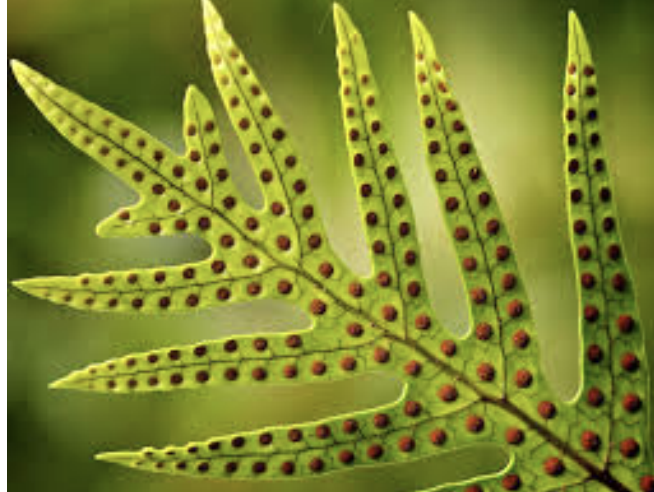
What is this and it’s fucntion
Spore carrying structures that protect developing spores and release them into the environment for dispersal and reproduction
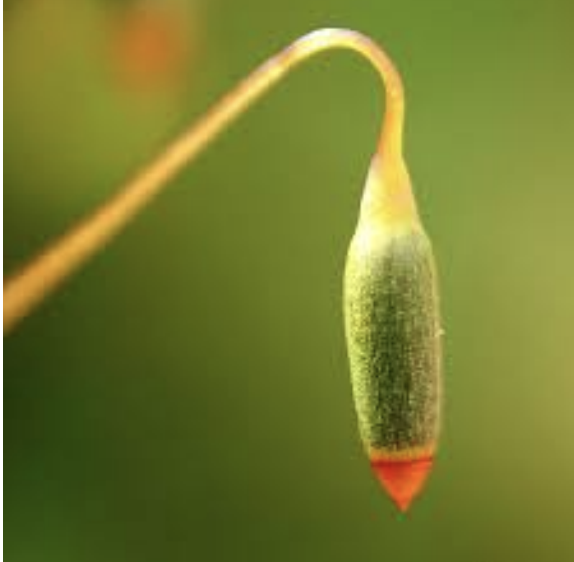
This grows out of a moss plant. What is it?
Moss sporophyte, produce spores
Why do non vascular plants or bryophytes, such as moss, rely on standing water to suvive and reproduce?
they need standing water to reproduce sexually
they lack vascular tissue to transpot water and nutients

These are club mosses Lycopodium). What is illustrated here?
Altenation of generations
What is one significant ecological role of mosses in peatlands?
They act as carbon sinks, stoing large quantities of organic carbon.
What significant challenge did early land plants face when transitioning from an aquatic to a terestial environment?
Avoiding desiccation and maintaining water balance
Which adaptation in seedless vascular plants allows for more efficient photosynthesis compared to nonvascular plants?
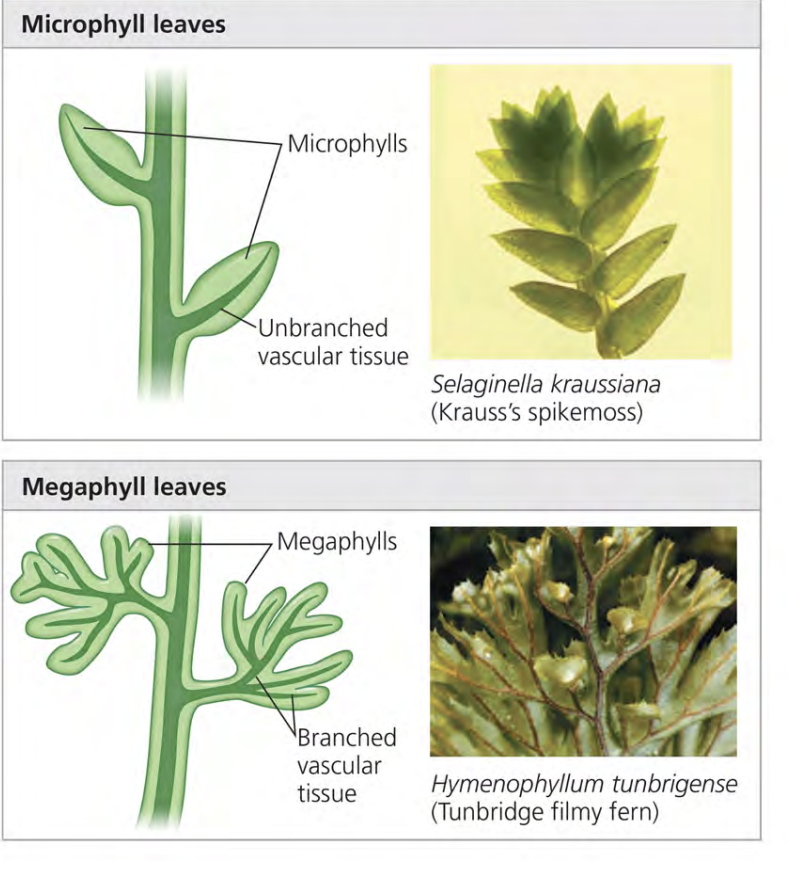
The presence of megaphylls with a highly branched vascular system
What was a major evolutionary advantage of having a multicellular, dependent embryo in land plants?
Protection and nourishment provided by the parent plant
How is the sporophyte of a byophyte typically stuctured, and what are its pimay components?
It has a foot, seta, and capsule for anchoing, suppot, and spore production.
What are soi, and where are they commonly found?
Clusters of sporangia typically located on the undersides of fen fronds
How does the alternation of generations in land plants differ from that in their algal ancestors
Land plants have a multicellular haploid gametophyte and a multicellular diploid sporophyte, while algal ancestors only have unicellular stages.
How do microphylls differ from megaphylls in seedless vascular plants?
Microphylls have a single, unbranched vein.
megaspores are larger spores that develop into female gametophytes (producing egg cells), while microspores are smaller spores that develop into male gametophytes (producing sperm cells)
Why do seedless vascular plants like fens require a moist environment for reproduction?
Their sperm are flagellated and need water to reach the egg
How does the presence of a cuticle benefit terestial plants compared to their aquatic ancestors?
It reduces water loss from the aerial pats of the plant.
What is a major difference between lycophytes and monilophytes, two types of seedless vascular plants?
Monilophytes have megaphylls, whereas lycophytes have microphylls
In the context of early land plants, why was the development of stomata cucial?
Stomata allowed for controlled water consevation and gas exchange.
Almost all land plants have stomata, with the single major exception of liverworts, (non vascular plant)
Why is the development of multicellular gametangia significant in the adaptation of land plants to terestial life?
They protect gametes from desiccation and environmental damage.
(seed plants dont have this)
How do byophyte spores typically disperse to new locations?
They are carried by wind, often aided by stuctures that assist in spore release.
What role does the capsule play in the byophyte sporophyte?
It produces and releases spores for dispersal.
Which component of the vascular tissue is responsible for transpoting water and nutients from the roots to the rest of the plant?
Xylem
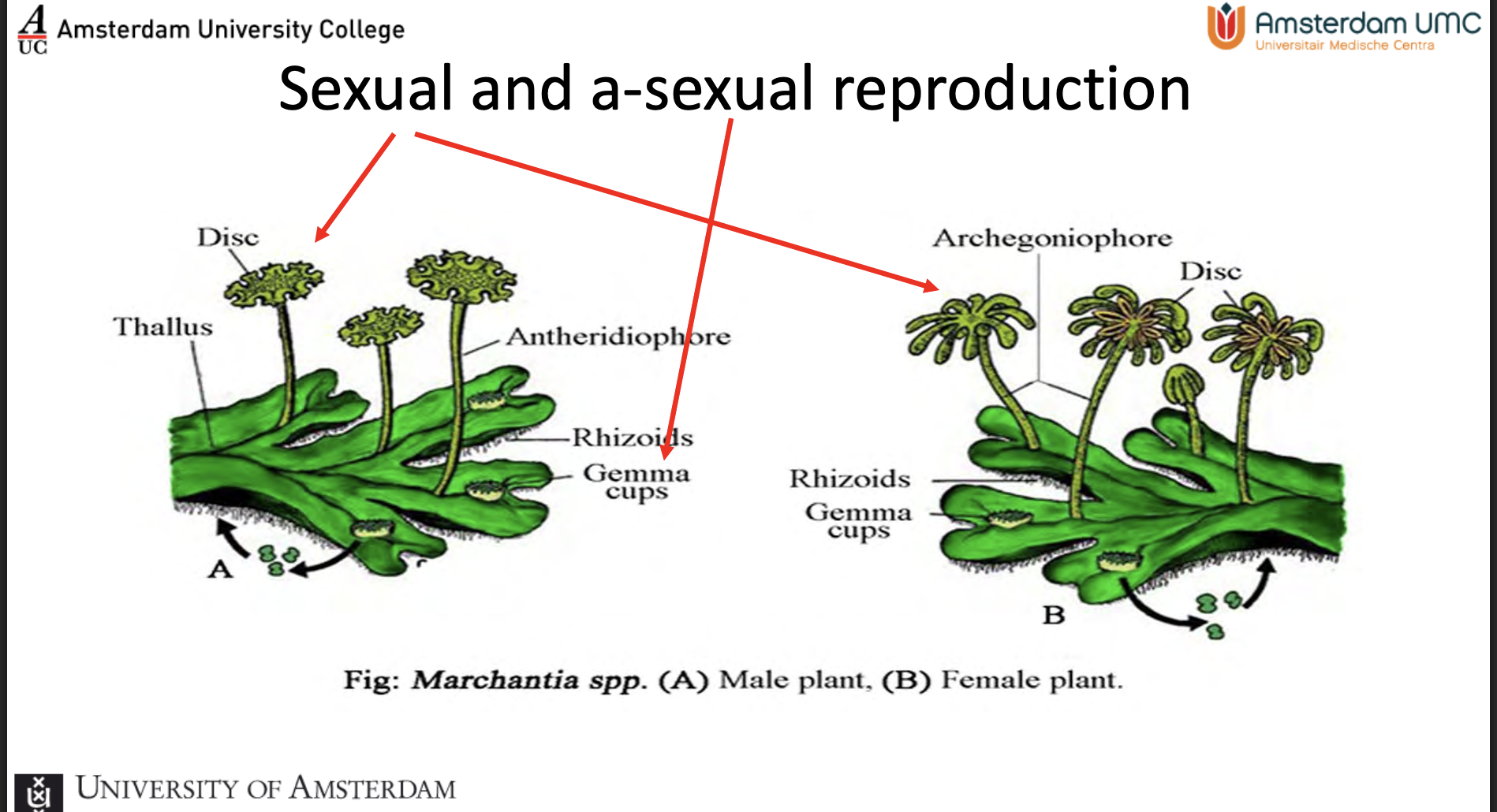
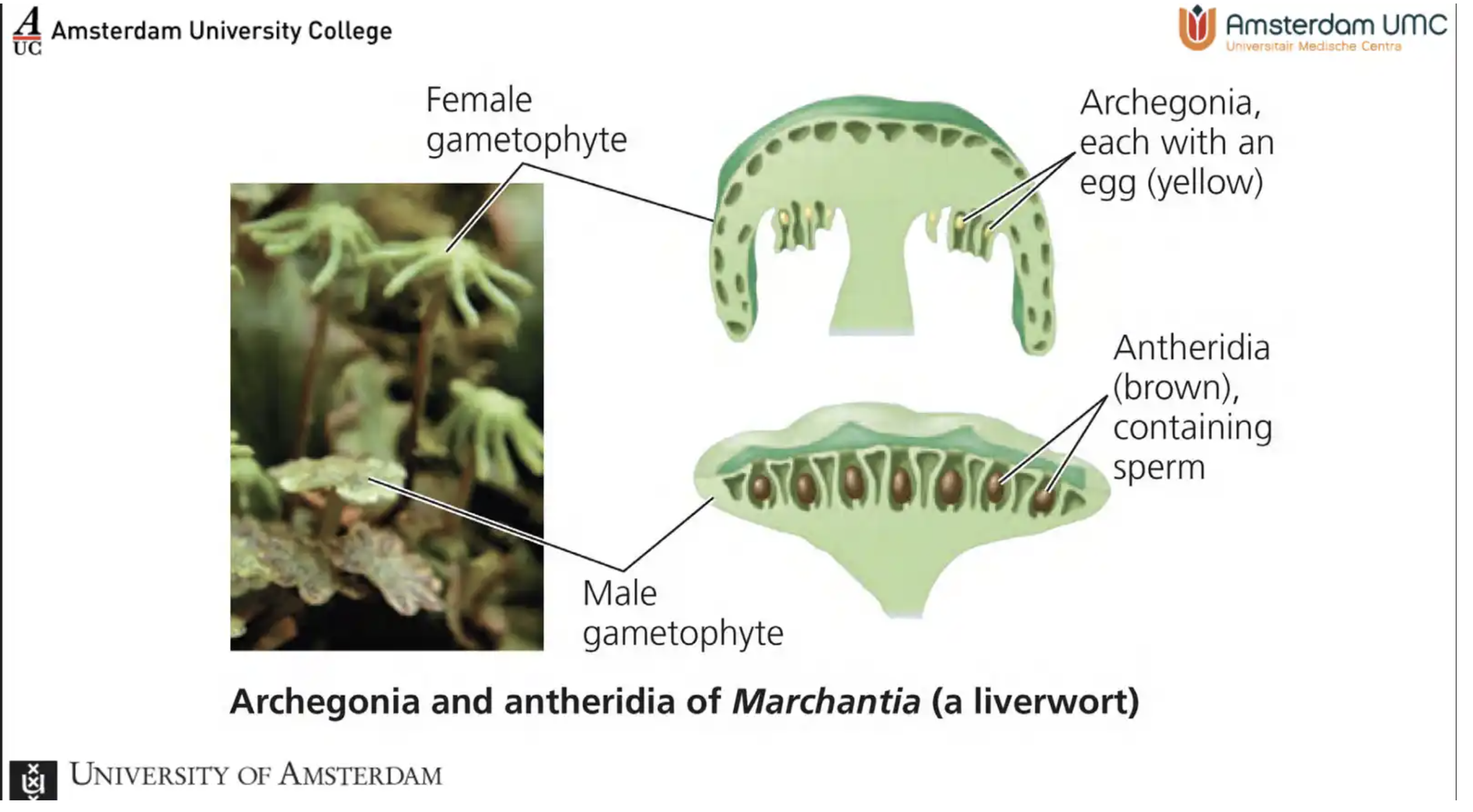
Sexual vs Asexual reproduction on liverworts
sexual:
on the male plant (A), this stalk holds up a flattened, scalloped disc. Inside the upper surface of this disc are antheridia, which produce flagellated sperm.
on the female plant (B), this stalk holds up an umbrella- or palm-like disc with finger-like rays. Hanging underneath these rays are archegonia, which house the eggs.
Fertilised through water, splashing sperm from the male disc onto the female disc, allowing sperm to swim down into the archegonia to fertilize the eggs and form a diploid sporophyte.
asexual:
Gemma Cups (Middle Arrow): Small, cup-like structures growing directly on the dorsal surface of the thallus.
Gemmae: Inside the cups are tiny, lens-shaped discs of green tissue called gemma
When raindrops hit the cups, the gemmae are splashed out onto the soil, where each one grows into a genetically identical clone of the parent plant.
vascular vs non-nonvascular
the vascular system is a network of specialized internal tubes, mainly xylem and phloem, that moves water, minerals, and food throughout the plant,
non-vascular plants lack this tube system and move water and nutrients slowly from cell to cell or directly across their surface