ch. 17 cell bio flashcards
 Call Kai
 Learn
 Practice Test
 Spaced Repetition
 Match
 Flashcards
 Knowt Play
1/19

Earn XP
Description and Tags
dewfrgfwdqefrw
20 Terms
cytoskeleton
gives cell its shape + helps cell move
allows organization of internal organelles
made of 3 types of protein filaments
intermediate filaments, microtubules, actin filaments
intermediate filaments
thick + strong
absorb physical pressure of living
found by nucleus
intermediate filaments and cytoplasm
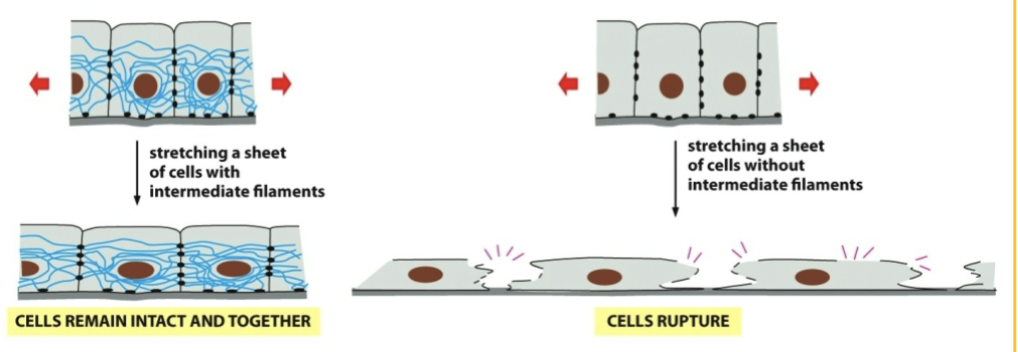
filaments form strong network in cytoplasm
withstand mechanical stress when cells stretch
anchored to plasma membrane at cell-cell junctions
how does intermediate filaments strengthen the cell
cells that can endure more mechanical stress has more filaments
like reinforced concrete
4 classes of intermediate filaments
keratins (epithelia)
vimentin+vimentin-related
neurofilaments (nerve cells)
nuclear lamins (in all animal cells)

keratins
most diverse family of intermediate filaments
make up hair and skin
epidermolysis bullosa simplex = keratin mutation = more prone to blisters
nuclear lamina
intermediate filaments providing structure to nuclear envelope
lamina defects = dna dmg = progeria = premature + accelerated aging

microtubules
thick, made of proteins
quaternary structure
“reads” directions for traveling + all point in one direction to organize cell + transport cargo
can grow or shrink independent of neighbors
can be stabilized by interaction with capping protein (polarizes cell)
+ end points toward axon terminal

centrosomes
major microtubule-organizing center in animal cells
away from centrosome = + end
close to centrosome = - end

drugs that block microtubule formation
taxol, colchicine, vinblastine, all target microtubules, used in cancer treatment + chemo
motor proteins
transport cargo along microtubules in one direction
use repeated ATP hydrolysis cycles to move
specific kinesins/dyneins for each different cargo
cilia + flagella
cilia allow eukaryotic cells to move fluid over their surface
flagella propel sperm + protozoa through fluid
perform power strokes together to move
how do all elements of cytoskeleton work together
further stabilize filaments and link up different networks of structural proteins

plectin mutations
lead to muscular dystrophy + neurodegeneration
actin filaments
unstable like microtubules
thin flexible protein threads
have + and - end
are roads for protein to travel
actin-binding proteins control stability + behavior of actin
different interactions determine stiffness of structure
extracellular cell signaling controls what actin becomes

cortex
actin-rich network under cytoplasm
gives cell its shape + helps cell move
cell crawling
relies on actin
moves along extracellular matrix
uses integrins

integrins
transmembrane proteins that bind to ECM
myosin + actin in muscle contraction
ATP needed for muscle contraction, no ATP = death + rigor mortis, myosin + actin stay bound = stiff muscles
when ATP binds → myosin lets go of actin
hydrolyze ATP to prepare for power stroke + change myosin shape

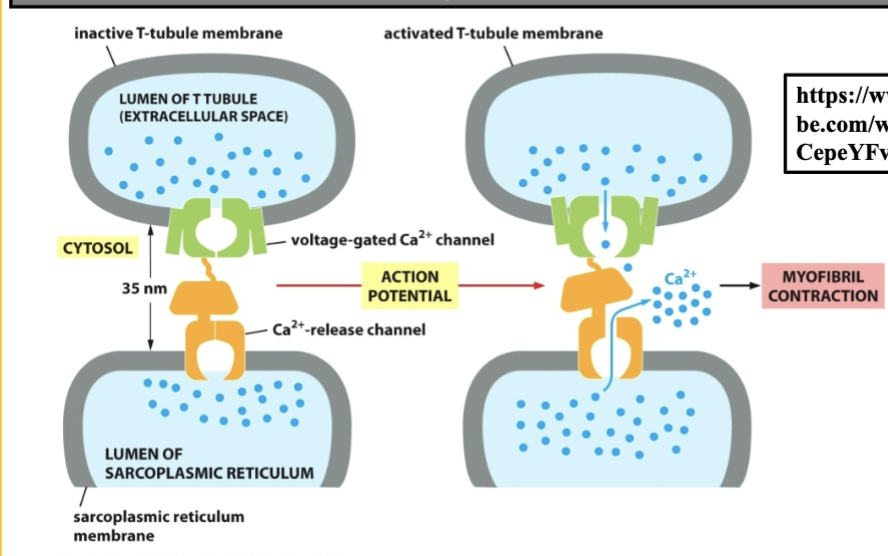
Ca2+
most controlled ion inside cell
Ca2+ conc. lowest inside cell of all ions
Ca2+ and SNAREs release neurotransmitter in neurons