Bio Lab II Test #1
 Call Kai
 Learn
 Practice Test
 Spaced Repetition
 Match
 Flashcards
 Knowt Play
1/80

There's no tags or description
Looks like no tags are added yet.
81 Terms
Taxonomy
Branch of science that classifies biological organisms based on shared characteristics.
Eukaryotes
Have membrane bound organelles
Multicelluloar
10x larger than prokaryotes
chromosomes
complex flagellum that whip back and forht
Prokaryotes
single celled
circular DNA
no membrane bound organelles
no nucleus
circular DNA
Singular flagella
Dif forms of metabolic activity
Archaebacteria
Prokaryotes that were classified as bacteria but have genes and metabolic pathways similar to eukaryotes. they are found in extreme climates. they use organic compounds for energy. they play a role in carbon and nitrogen cycles.
What are the levels of life?
Life
domain
kingdon
phylum
class
order
family
genus
species
Describe kingdom bacteria
5×10^ 30 bacteria on earth. described based on morphology, biochemistry, and metabolism. Live in symbiotic or parasitic relationships with plants and animals. They live in soil, water, acidic offsprings, and radioactive waste. They are found in the gut and sin of humans. Some can be treated with antibiotics.
Botulism
clostridium botulinum
lives in improperly prepared food
contracted through ingestion or contact with a wound.
can be fatal
What type of feeders are bacteria?
Heterotrophic (gets energy from organic compounds made by their host. also decomposers who feed on dead organic matter and release nutrients) .
Autotrophic (Derive energy from photosynthesis).
What are the 3 shapes of eubacteria (found in everyday life)?
Bacillus (Rod shaped)
Cocci (spherical shaped)
Spirillum (Spiral shaped)
What type of reproduction does bacteria do?
Asexually reproduce through binary fision.
Attachment of chromosomes
to plasma membrane
• Enlargement of cell volume
and size
• DNA replication
• Inward growth of the cell wall
and plasma membrane
• Pulling apart of
chromosomes
• Distribution of the cytoplasm
• Division of daughter cells
Gram stain
A way of classification of bacteria based on structural
and chemical composition of the bacterial cell wall
• Gram-positive – bacteria that have thick cell wall and retain
purple dye; are more susceptible to antibiotics
Streptococcus, Micrococcus
• Gram-negative – bacteria that have thin wall and do not
retain dye; are less susceptible to antibiotics
Escherichia coli, Serratia
Bacterial colony morphology
The physical appearance of the bacteria on the agar surface.
Nitrogen fixation
a proceses in which bacteria and cyanobacteria transform atmospheric Nitrogen into other Nitrogenous compounds which plants use as nutrients. They use an enzyme called Nitrogenase.
Rhizobium
A bacteria which colonizes plant cells of roots and legumes and can fix nitrogen. its a symbiotic relationship with the plants.
Sensitivity plate
Determines which antibiotic are most effective against certain bacteria. If theres a bigger clear ring around the bacteria, means the antibiotic was more effective.
Phylum Cyanobacteria
They are photosynthetic and can be free living or symbiotic.
Not related to other algaes
Not eukaryotes
Have different pigments
Oscillatoria
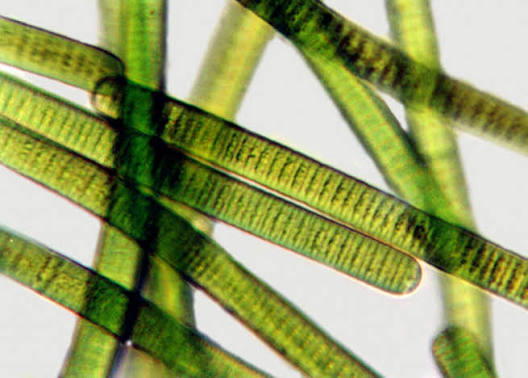
fillamntus in nature
under low power you see strands
Lungs of a ladder
Merismopedia

makes a geometric shape
Gloeocapsa

Very small, circular things
Nostoc and Anabena

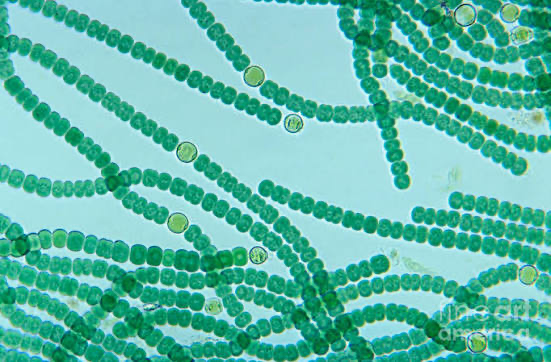
Exists in chains
Kingdom Protista
Encompasses all Eukaryotes that aren’t fungi, animals, and plants. its very diverse.
Microscopic
Live in moist places
Simple level of organization
Divided in algae, protozoa, and slime mold.
Thought to have given rise to the animal kingdom.
Algae
Informal grouping of autotrophic protists based on their type of photopigment, energy storage, and composition of cell walls.
consist of 10 protists that are mainly photosynthetic.
Have more than one common ancestor
Help with oxygen production
Help control pollution
Major food source in the ecosystem
Unicellular and multicellular
Different types of cellular organization of algae: (3)
Unicellular
Fillamentuos (chains of cells attached to each other: branched or unbranched).
Colonial (attached to each other, not in filamentous manner (they are in circular or other 3D things).
Phylum chlorophyta (green algae)
in fresh and salt water
protists, not plants.
Called chlorophytes
There are unicellular, filamentous, and colonial.
Chlamydomonas
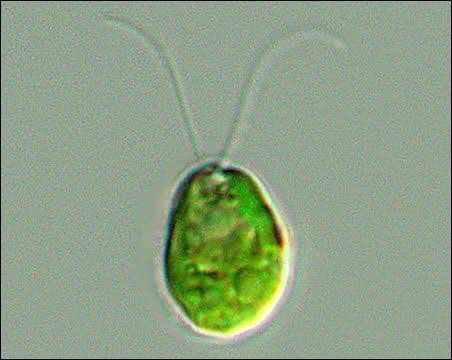

Found in soil, lakes, and ditches.
Has large chloroplasts
Produce and store starch
have both sexual and asexual reproduction.
Sexual - under harsh or unfavorable
conditions
• Covers with a thick, resistant wall- zygospore
• Undergoes meiosis to produce 4 haploid spores
asexual - most common via mitosis, haploid
Spirogyra
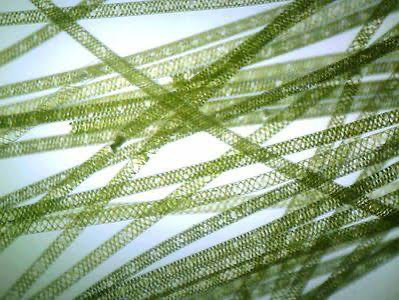
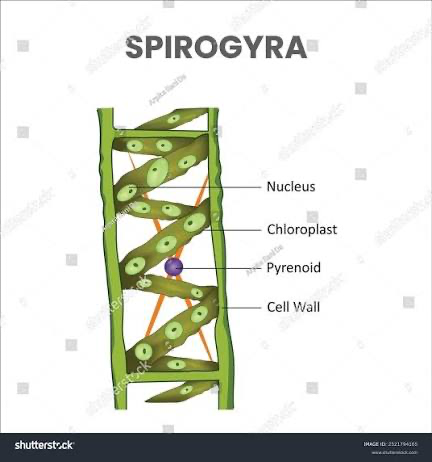
fillamentuos green algae
slippery
grows in streams of fresh water
reproduces by conjugation (through cross bridges)
Cladophora

fillamentuos green algae
coarser
reproduces by alteration of generation
Volvox
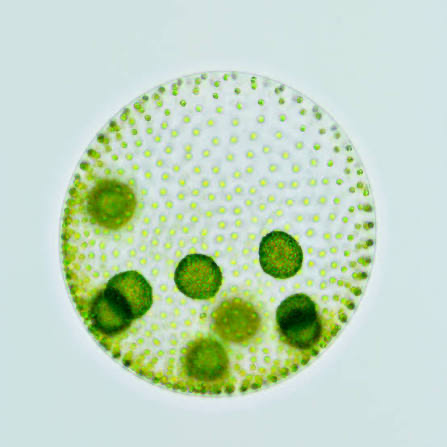
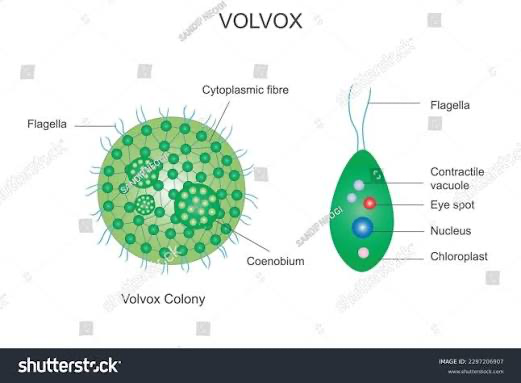
Lots of spherical cells
synchronized beating of flagella spins colony through the water
parent colonies have asexual daughter colonies
can also reproduce sexually
Phylum Phaeophyta (brown algae)
marine, multicellular algae
Brown
important for food and habitat
microscopic and big (theres a range)
Phylum Rhodophyta (red algae)
Warm, marine enviornment
red
attached or free floating
could be food
Phylum Heterokontophyta (Diatoms)

Unicellular algae
golden brown
photosynthetic
food source
hard cell wall made of silicon dioxide (glass)
geometric shape (have a transparent look).
Phylum Dinoflagellates

Unicellular
weird shaped cellulose plates
have 2 flagella perpendicular to each other
autotrophic and heterotrophic.
oval shaped. lots of chloroplasts.
They aren’t a plant or an animal
Phylum Euglenozoa (Euglena)
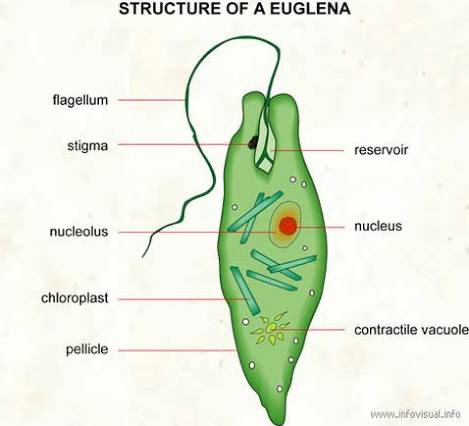
Fresh water
unicellular
no cell wall
2 flagella
Can be sutotrophic, heterotrophic, and saprophytic. (oval shaped. lots of chloroplasts
Not plant or animal
Protozoa
First animal
Heterotrophic eukaryotes
Energy from organic molecules made by organisms
have vacuoles and contractile vacuoles
some have flagella, some have cilia, and some have pseudopods (all different ways of movement).
Phylum amoebozoa (Amoeba)
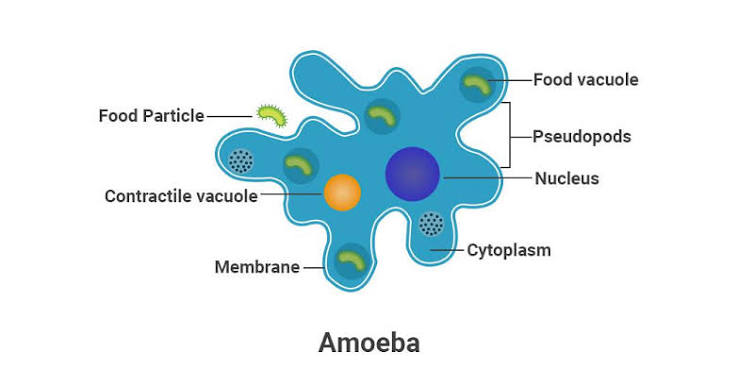
marine and freshwater environment
have pseudopods (finger like things that help with moving and food gathering)
Intake food through vacuoles (phagocytosis)
no cell wall or chloroplasts
Phylum Sarcomastigophora (flagellates)

At least one flaggelum
free living or parasitic
Tryponsoma- Tropical pathogen that causes African sleeping sickness. spread thofuth biting insects. fever, headache, joint pain.
Phylum Cilliophora (Ciliates)
Lots of cillia
have 2 types of nuclie
Paramecium: free living, in fresh water. reproduces sexually and asexually through conjugation.

Vorticella: Has contractile stalks to attach to a substrate. cell body with cilia. filter dees through cilia beating rapidly to capture food.


Plasmodium

No cilia, flagellates, or pseudopods.
unicellular
parasitic
causes malaria through mosquitos
look for abnormal shape in blood cell
Domain Eukarya: Kingdom fungi
Eukarytic
Unicellular and multicellular
Cell wall made of Chitin
heterotrophic (specifically absorptive—they secret enzymes and feed on the organic material that they grow on).
Have varied uses (food poison, antibiotics, disease, recycle nutrients, kill crops).
Hypha
Basic structure of fungi. They arise from spores. A group of them are called mycelium.
Secret enzymes for extracellular digestion
absorb digested nutrients (absorptive heterotrophs)
Two types of fungi feeders:
1) Saprophytes- Get food from organic, dead matter.
2) Parasites- feed off of living organisms.
How do fungi reproduce?
Sexually through meiosis, vegetative growth, nuclear fusion, genetic recombination
Asexually through spores (mitotic division of haploid vegetative cells), budding (mitosis followed by uneven distribution of the cytoplasm (which happens in yeast)), and fragmentation (breaking of the organism into one or more pieces)
How are fungi classified?
Based on their sexual structures
What are the 4 phyla of fungi?
Chytridiamycota
zygomycota
ascomycota
basidiomycota
Phylum chitridiomycota (Chytrids)

mainly aquatic
Motile spore with flagella
grown in freshwater algae
Phylum zygomycota


Most common genus is Rhizopus (bread mold).
appears dark because of thousands of black sporangia
strains grow towards each other and form gamentangia (reproductive structure).
Phylum ascomycota

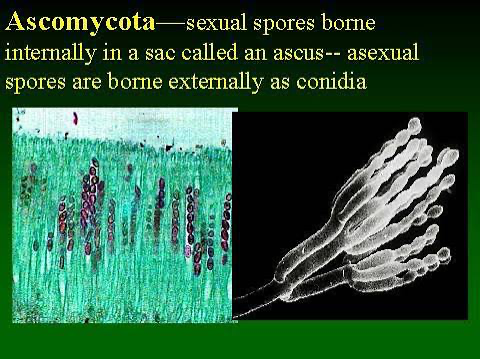
Sac fungi
Includes yeast, mold, and morels.
They have microscopic sac-shaped reproductive structures (ascus).
They reproduce asexually by forming spores.
used for penicillin, food, and yeast.
Sacchaaromytes are yeast.
Peziza and Aspergillus are other types
Phylum basidiomycota

Club fungi
mushrooms
Basidia are external club shaped structures on the surface of gills (hypha) that are sights of sexual reproduction
Lichens

Usually bright colored, live on a variety of hard substances in nature. They are made of ascomycetes and live symbiotically with photosynthetic algae and cyanobacteria. They reproduce asexually.
Stages of the cell cycle
INTERPHASE: G1- Cell growth
S- DNA replication
G2- Prep for mitosis
M PHASE: Mitosis
takes 10-30 hours in total
How does DNA arrange into chromosomes?
Before mitosis, DNA condenses into chromosomes. They start as chromatin and condense into X-shaped chromosome with two telomeres (arms) and a centromere (holds structure together).
Homologus chromosomes and sister chromatids

Homologus chromosomes are near each other in the cell.
Sister chromatids are the identical copies of a single chromosome that are held together by a centromere
What is mitosis?
It is DNA replication that results in 2 identical daughter cells.
10% of the cell cycle time is spent on it.
Stages of Mitosis:
Interphase
prophase
prometaphase
metaphase
anaphase
telophase
(cytokenesis)
Interphase

G1, S, G2
Prophase

Loose DNA condense into chromosomes
Prometaphase

Nucleur membrane disintegrates and spindles connect to the chromosomes.
Metaphase

Chromosomes align in the middle
Anaphase

Chromosomes seperate into chromatids and migrate to polls.
Telophase and cytokinesis

Cleavage furrow (plants). spindles disintegrated. New nuclear membrane forms. cell splits into two.
Chromosome #
(n)- haploid number of chromosomes (23 for humans)
(2n)- diploid number of chromosomes. All somatic cells have 2x number of haploid cells.
Meiosis
starts with 1 (2n) cells and ends in 4 (n) cells. It does two rounds of cell division.
There is genetic recombination (crossing over) during prophase I.
Meiosis I is Division of homologous chromosomes (2n)—> 2n and 2n.
Meisis II is Division of sister chromatids (2n)—> n and n
Gametiogenisis
Process of meiosis that produces haploid daughter cells that turn into gametes.
spermatogenesis is forming sperm.
Oogenisis is forming eggs.
Kingdom Animalia
Multicellular, Eukaryotic, heterotrophic.
They are classified by body symmetry, tissue organization, type of body cavity, and structure+function of organs.
3 types of body symmetry:
Asymetrical- however you cut it, you get different cross sections
bilateral symmatry- When cut down the middle, you get identical right and left
radial symmetry- However you cut, you get identical cross sections
Phylum Porifera


They are asymmetrical sponges.
No distinct tissues or organs'
saclike body consists of two layers
have pores on outside that allows water to move in
internal cavity is lined with food filtering choanocytes. Choanocytes have flagella coming out to keep water flowing and helps digest as well.
Phylum porifera: Grantia

one of simplest sponges
filter feeder
many have color bc of symbiotic algae that live in them.
have a folded wall with canals lined with choanocytes
Phylum Porifera: Euplectella

Have spicules
• Crystal-like skeletal structure
• Shrimp species can live in it
Called glass sponge
Phylum Cnidaria (4 classes)
They are marine carnivores with radial symmetry
Cubozoa (boxed jellyfish)
Hydrozoa (hydra)
Anthozoa (coral)
Scyphozoa (moon jellyfish)
2 body patterns of cnidaria
Polyp form (tentacles facing up). Mouth surrounded by tentacles.
Medusa form (tentacles facing down). mouth facing down surrounded by tentacles.
Class Hydrozoa
Hydra
predominantly in polyp stage
live in freshwater ponds

Obelia
has both polyp and Medusa stage

Class Scyphozoa
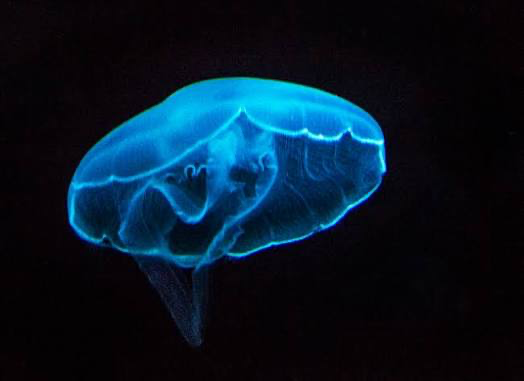
known as jellyfish
medusa stage is main life cycle
Gastrovascular cavity is divided into 4 pouches (radial symmetry)
Class anthozoa
Metridium (anemones)
Attach to a substrate but can slide along it
• Reproduce by fragmentation (asexual)
• Gastrovascular cavity is partitioned by a thin septa

Corals
Smaller than anemones
• Secrete hard skeleton composed of calcium carbonate (CaCO3)
• Small depression are formed where polyps used to be

Class Cubozoa
Box jellyfish. Medusa

Phylum Platyhelminthes
Flatworms.
• Live in a wide range of habitats
• Marine, freshwater, terrestrial and parasitic
• Have more complex morphology
• Have three embryonic germ layers: ectoderm, endoderm and
mesoderm
• Have organs composed of interdependent tissue
• Bilateral symmetry
• Acoelomate- no internal cavity, mesoderm is a solid mass of tissue
Phylum Nematoda
Round worms.
• Live in a wide range of habitats
• Marine, freshwater, terrestrial and parasitic
• Have more complex morphology
• Have three embryonic germ layers: ectoderm, endoderm and
mesoderm
• Have organs composed of interdependent tissue
• Bilateral symmetry
• Roundworms
• Pseudocoelomates- have body cavity with internal organs in it
Phylum Platyhelminthes continued/specific
free living
gastrovascular cavity with one opening (sac body)
Acoelomate with bilateral symmetry
Nervous system more advanced that that of Cnidarians
Consists of Class Turbellaria, Class Trematode, and Class Cestoda
Class Turbellaria
Can live in freshwater, saltwater and moist terrestrial
environments
• Are hermaphroditic- each worm has both male and female
sex organs
• Feed on small animals
• Dugesia also called planaria
• Eyespots- lateral sensory organs on the head
• Pharynx- intaken food travels along into gastrovascular cavity
• External digestion in the gastrovascular cavity followed by
intracellular digestion of small particles
• Mesoderm- mass of cells between ectoderm and endoderm
• Can regenerate

Class Trematoda
Are parasites a few mm long
• Also called fluke
• Infect hosts and can live inside the host
or on the surface of the host
• Lack epidermis and are covered by
apicuticle (proteins and lipids)
• Helps respiration and absorption of
nutrients
• Have two adhesive oral suckers on the
ventral surface

Class Cestoda
Tapeworms
• Are endoparasites of the gut of vertebrates
• Lack mouth and digestive tract
• Scolex- anterior end that attaches to host’s
intestinal wall
• Proglottids- segments of the body that grow
• Can self-fertilize or cross-fertilize
• Can be up to 10m in infected humans

Phylum Nematoda
Roundworms.
Many cause diseases in humans, animals or plants
• Elephantiasis caused by Filaria resulting in swelling of arms or legs caused by clogging of the lymphatic system
• Loa loa- parasitic nematode that is the eye worm
• Are covered with a flexible cuticle that resists digestive enzymes but is permeable to water, ions and dissolved gasses
• Have pseudocoelom with a digestive tract and internal organs
suspended in the cavity
