4.7 AND 4.8 - COMMON AND STATUE LAW W
 Call Kai
 Learn
 Practice Test
 Spaced Repetition
 Match
 Flashcards
 Knowt Play
1/13

There's no tags or description
Looks like no tags are added yet.
14 Terms
What are the two ways of making laws?
Statue law and Common law
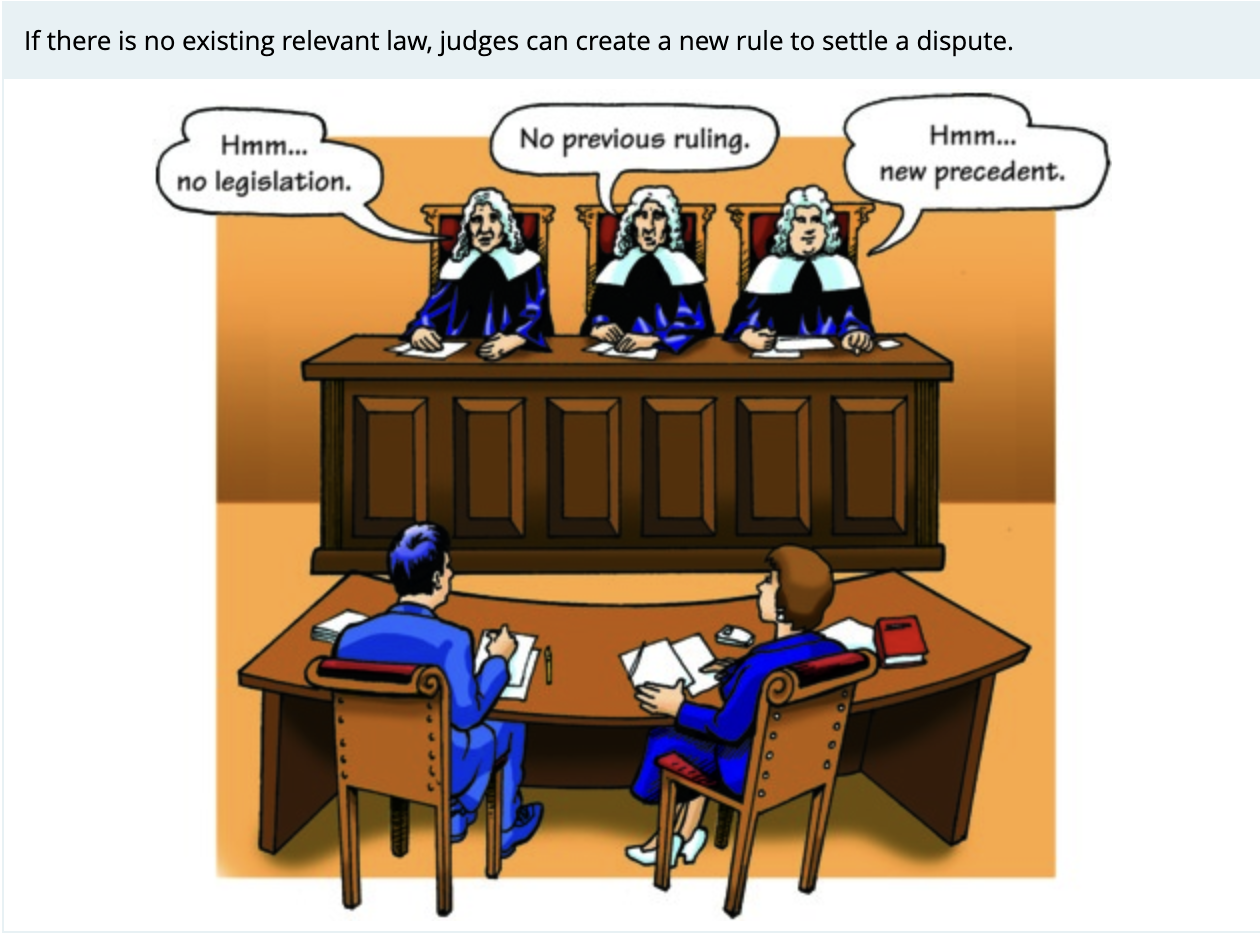
What is common law?
Known as ‘judge-made law’
Happens when judges make decisions because there isn’t a clear statute law applicable
Created piece by piece by judges as they come across new problems in cases they hear
These decisions placed in books called ‘Law Reports’ and become legal precedents
Basically a system of precedents.
What is a legal precedent?
A previous legal decision that serves as as a rule or pattern in future cases
What is an act of precedent and why is it necessary?
When traditionally, judges give similar decisions in cases that are alike. Precedents help the legal system achieve fairness and justice as similar cases are dealt with in the same way.
What is statutory interpretation?
When courts make laws when they interpret words in a law made by Parliament
Although only Parliament can change the wording of a law, when a court interprets a word, this new meaning applies as law from then on (principle of precedent)
Therefore, when a judge decides on the meaning of a word/phrase, this must be followed by the judges in lower courts
Give an example of the principle of precedent?
1936 Dr Grant of Adelaide
Underwear was itch so he sued Australian Knitting Mills
Relied on decision made in a previous case (Donoghue v. Stevenson) when a lady sued for finding snail in her cordial
What is statute law?
Law (legalisation) created at state and federal levels
One parliament at federal level (Federal/Commonwealth Parliament) that makes laws on issues that affect the whole country
NSW Parliament makes laws applicable to NSW only
Delegates some law-making power to local councils
Commonwealth Parliament ➡ NSW Parliament ➡ Local Council
Why is the Federal Government so powerful (What are the three things it can do)?
Supreme law-making authority
Make laws on whatever it wants
Change laws
Overcome effects of precedent
No court can change statute law (Statue law > Common law)
Only exception is the HIGH court, which has the power to overturn a law if it is unconstitutional
What is a constitution ?
A document that outlines the powers of the parliament
Which constitution limits the Federal Parliaments powers?
The Australian Constitution
Which constitution limits the State Parliament’s powers?
The state’s constitution, and to some extent, the Australian constitution as well
In what instance would the state government NOT retain the power to make laws?
If the Constitution hands this power to the Australian government
What happens if there are disagreements between the Australian and state governments over who has the power to make laws on certain issues?
High court will decide
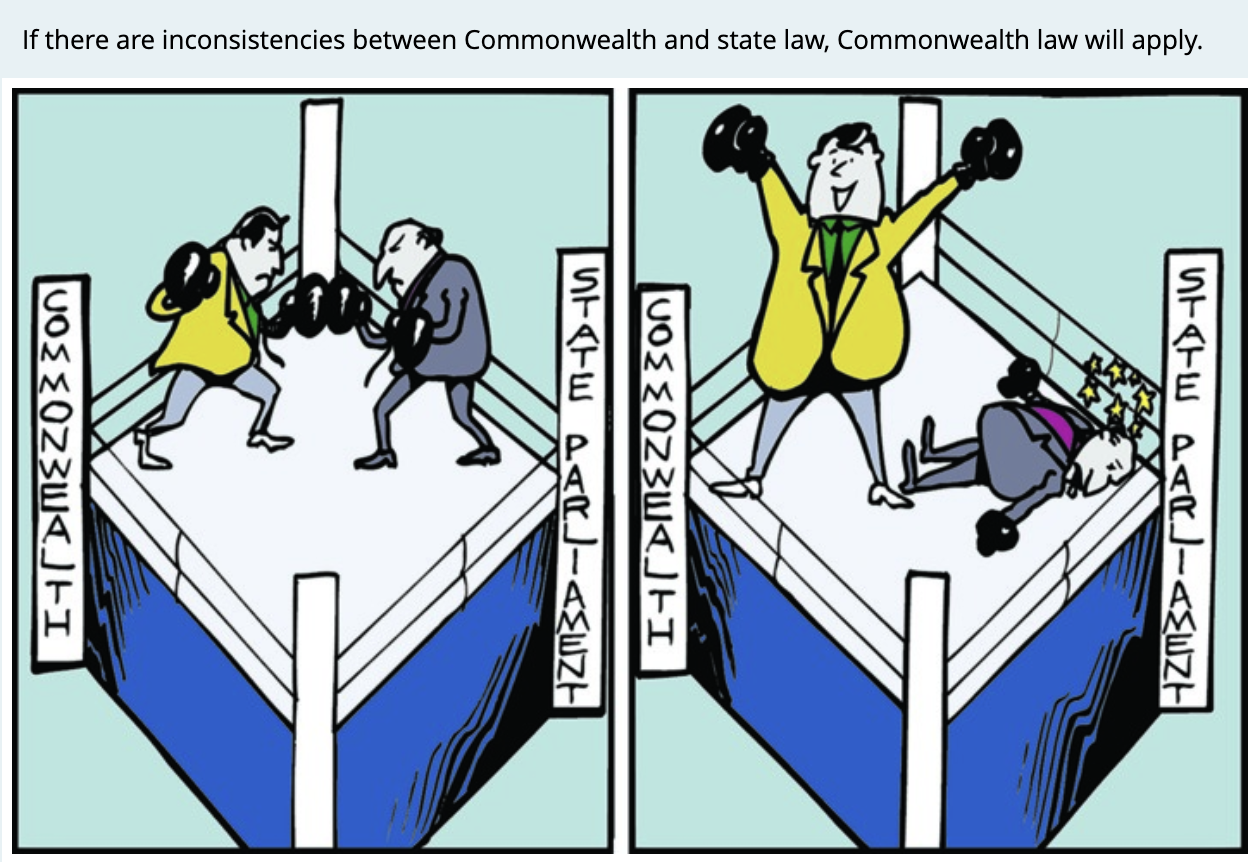
What happens if there are inconsistencies between the Commonwealth and state legislation?
Commonwealth laws will apply
Commonwealth > State